Korean Braised Tofu and Mushrooms
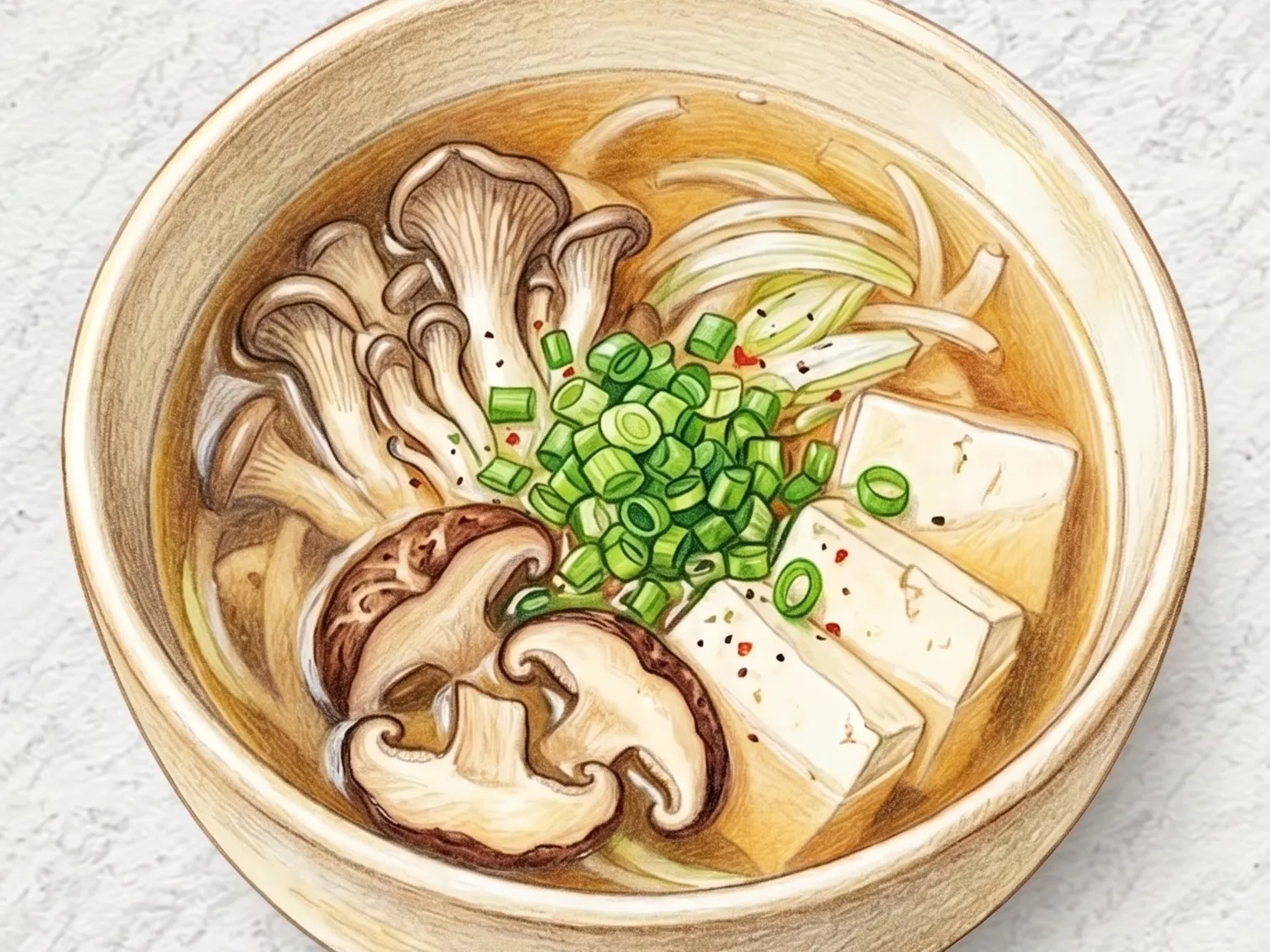
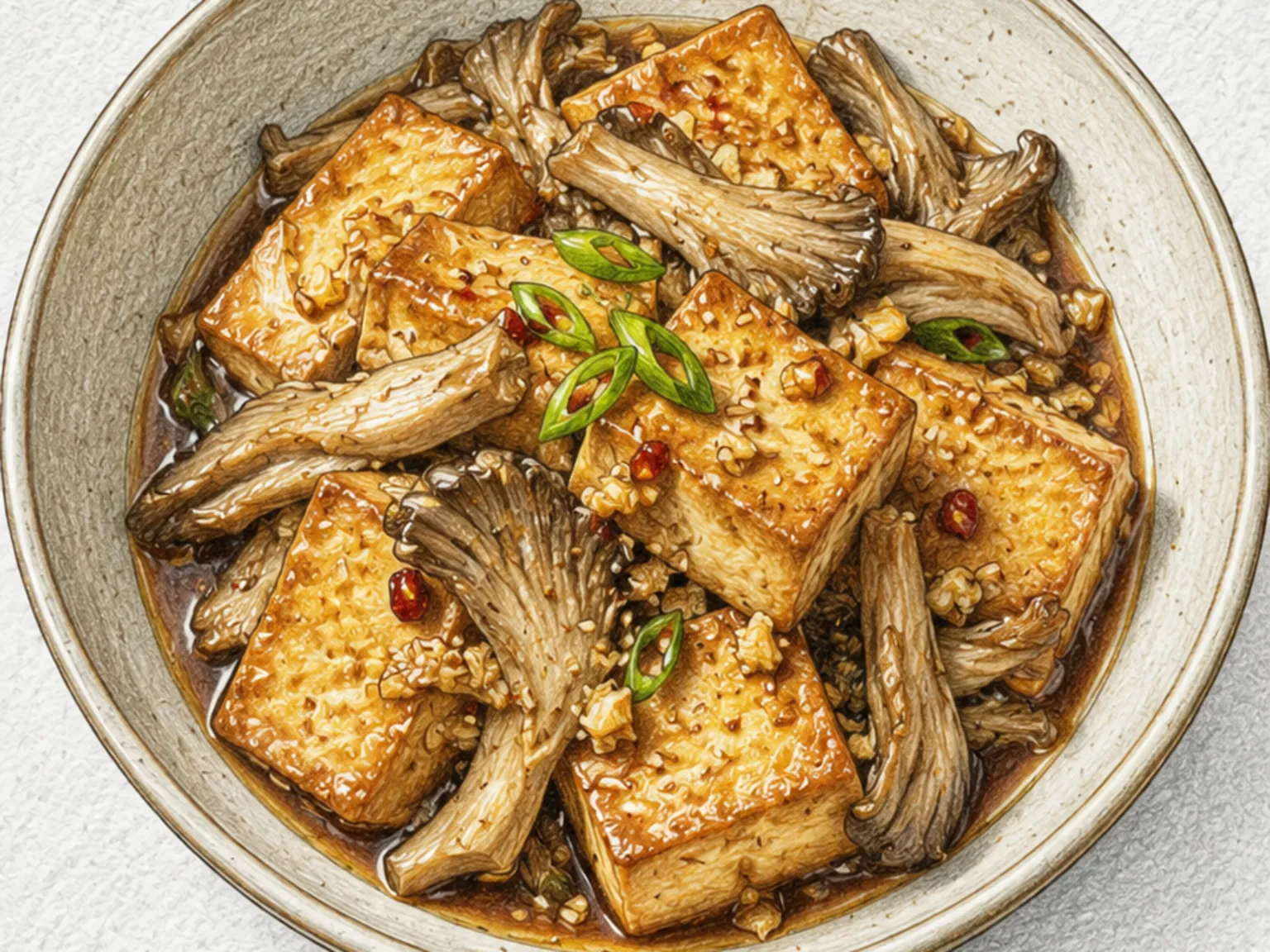
Dubu-beoseot-jorim is a Korean braised dish of firm tofu and oyster mushrooms simmered in a soy-based sauce. The tofu develops a lightly firm exterior while staying soft inside as it absorbs the seasoning. Oyster mushrooms contribute a chewy bite and natural umami that deepens the overall flavor without additional stock. It is a straightforward braise that requires only soy sauce, water, and a few basic seasonings to produce a satisfying result.
Adjust Servings
Instructions
- 1
Slice tofu thickly and pat dry.
- 2
Slice onion and green onion, and tear mushrooms.
- 3
Layer tofu in a pan and top with mushrooms and onion.
- 4
Mix soy sauce, chili flakes, garlic, and water, then pour in and boil.
- 5
Braise 12 minutes on medium-low heat, then add green onion for 2 minutes.
As an Amazon Associate, we may earn from qualifying purchases.
Tips
Nutrition (per serving)
More Recipes

Korean Braised Shiitake Mushrooms
Pyogo-beoseot-jorim braises whole shiitake mushrooms in soy sauce with oligosaccharide syrup and minced garlic over low heat until glossy. The mushrooms' natural umami intensifies as they absorb the soy-based braising liquid, while the syrup caramelizes into a lacquer-like sheen on the surface. Each mushroom releases a burst of salty-sweet juice when bitten. A finishing touch of sesame oil and toasted sesame seeds adds a layer of nuttiness to the earthy base.

Korean Soy-Braised King Oyster Mushrooms
Saesongi-beoseot-jorim braises 300 grams of king oyster mushrooms in a soy-based sauce after an initial sear that drives off moisture and firms up the texture. The mushrooms are halved lengthwise, cut into bite-size pieces, and pan-fried in oil for about two minutes until lightly golden before the braising liquid - soy sauce, water, oligosaccharide syrup, and garlic - is poured in. Five minutes of simmering over medium heat reduces the liquid to a sticky glaze that clings to every surface. Sesame oil is drizzled in just before removing from heat, and chopped scallion adds a fresh green contrast. The finished dish stores well, making it a reliable make-ahead side for weekday meals.

Korean Soy Braised Eggplant
Gaji-jorim is a Korean braised eggplant dish simmered in soy sauce until the flesh is thoroughly tender and saturated with seasoning. The sweet-salty sauce permeates evenly through the eggplant as it cooks down. A finishing drizzle of sesame oil and a sprinkle of sesame seeds add a nutty aroma to each serving. Despite using only eggplant as the main ingredient, the slow braising concentrates the flavors into a compelling rice accompaniment.

Korean Spicy Braised Tofu
Spicy dubu-jorim pan-sears firm tofu slabs cut 1.5 centimeters thick until golden on both sides, then braises them in a sauce of soy sauce, gochugaru, garlic, and sugar. Searing first firms the tofu so it holds its shape through the eight-minute simmer, during which onion and green onion cook alongside in the reducing liquid. The chili flakes deliver a direct, persistent heat that penetrates the tofu as the sauce thickens, balanced by the sugar's sweetness. A final circle of sesame oil ties the flavors together with a roasted, nutty aroma.

Korean Soy Braised Quail Eggs
Al-jorim - soy-braised quail eggs - is one of Korea's most universal banchan, found in school cafeterias, office lunch boxes, and home refrigerators alike. The dish has roots in the broader Korean jorim tradition of slow-simmering proteins in sweetened soy sauce until the glaze penetrates to the core. Peeled quail eggs simmer in a mixture of soy sauce, water, sugar, cooking wine, and garlic for ten minutes, rolling occasionally to ensure even color. The soy sauce stains each egg a glossy chestnut brown on the outside while the yolk inside stays bright yellow. A sliced cheongyang chili dropped in near the end adds a subtle heat that keeps the sweet-salty profile from becoming one-note. This banchan improves after a night in the refrigerator as the seasoning continues to penetrate, and keeps well for nearly a week.

Korean Braised Tofu with Shrimp
Dubu-saeu-jorim pairs pan-fried tofu with whole shrimp in a soy-based braising sauce - a combination that bridges the protein gap in banchan beyond the usual tofu-only preparations. The tofu is seared first until golden, then set aside while shrimp cook briefly in the same pan, picking up the fond. The braising sauce - soy sauce, garlic, sugar, cooking wine, and a touch of gochugaru - goes in next, and both proteins return to simmer together for five minutes. The shrimp release their marine sweetness into the sauce, which the porous tofu absorbs alongside the soy seasoning. The textural pairing matters: the tofu is yielding and soft, while the shrimp curl and firm up with a springy bite. A banchan that works equally well as a main dish over rice when made in larger quantity.