Korean Crispy Glazed Tofu Bites
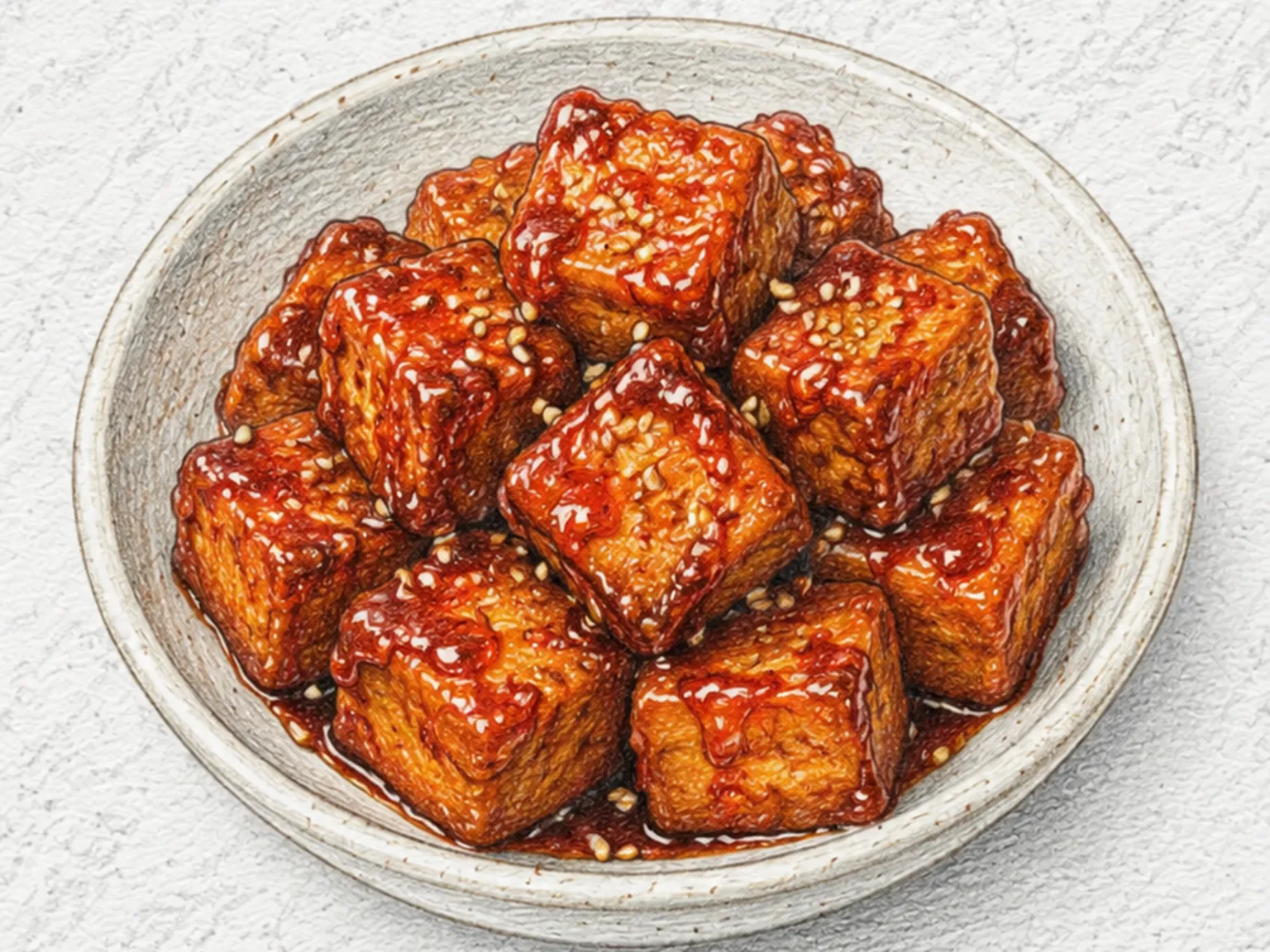
Dubu gangjeong borrows the double-coating technique from Korean fried chicken - starch-dredged tofu is fried until the shell shatters, then tossed in a sticky glaze. The tofu must be pressed dry and cubed before coating in potato starch, which produces a thinner, crispier crust than wheat flour. The glaze - gochujang, soy sauce, sugar, and rice syrup cooked until it forms large bubbles - is poured over the hot tofu and tossed quickly so each piece gets an even, lacquered finish. The dish originated as a temple-cuisine adaptation of meat gangjeong and has become a popular anju (drinking snack) in Korean bars. The contrast between the caramelized, slightly chewy shell and the custard-soft interior defines the eating experience. Best consumed within ten minutes, before the coating absorbs moisture and loses its snap.
Adjust Servings
Instructions
- 1
Press tofu with paper towels for 10 minutes, then cut into 2.5 cm cubes.
- 2
Coat tofu evenly with potato starch in a thin layer.
- 3
Pan-fry tofu in oil over medium heat, turning until all sides are crisp.
- 4
In another pan, boil gochujang, ketchup, soy sauce, syrup, garlic, and water for 1 minute.
- 5
Add crisp tofu to the sauce and toss quickly for 30 seconds to glaze.
- 6
Turn off heat, sprinkle sesame seeds, and serve immediately.
As an Amazon Associate, we may earn from qualifying purchases.
Tips
Nutrition (per serving)
More Recipes

Korean Spicy Braised Tofu
Spicy dubu-jorim pan-sears firm tofu slabs cut 1.5 centimeters thick until golden on both sides, then braises them in a sauce of soy sauce, gochugaru, garlic, and sugar. Searing first firms the tofu so it holds its shape through the eight-minute simmer, during which onion and green onion cook alongside in the reducing liquid. The chili flakes deliver a direct, persistent heat that penetrates the tofu as the sauce thickens, balanced by the sugar's sweetness. A final circle of sesame oil ties the flavors together with a roasted, nutty aroma.

Korean Braised Tofu in Spicy Sauce
Dubu-jorim is arguably the single most frequently made tofu dish in Korean home kitchens. The technique is straightforward but the sequence matters: tofu must be fried first to build a crust that holds its shape during braising, then simmered in a sauce that penetrates through that crust into the soft interior. The braising liquid - soy sauce, gochugaru, garlic, sugar, and water - reduces around the tofu slabs for eight to ten minutes, concentrating into a thick, spicy-sweet glaze. The finished tofu has three distinct zones: a dark, slightly chewy exterior where sauce has caramelized, a transitional layer where seasoning has seeped in, and a pristine white center that provides a bland, creamy contrast. Korean home cooks often make a double batch on Sunday, refrigerating half for weekday lunches. The dish dates back to Buddhist temple cooking traditions where tofu was the primary protein.

Korean Crumbled Tofu Stir-fry
Dubu seoboro - crumbled tofu stir-fry - is a Korean banchan that transforms a block of tofu into something resembling a dry, granular scramble. The tofu is crumbled by hand into rough, irregular pieces rather than diced, creating varied textures from large curds to fine crumbs. Squeezed thoroughly in a cloth to remove as much moisture as possible, it then goes into a hot pan with diced carrot, onion, and zucchini. The key technique is cooking on high heat without stirring too often, allowing the tofu crumbles to develop lightly golden edges before seasoning with soy sauce and sesame oil. The result is a fluffy, granulated side dish that soaks into rice like a savory topping. Popular in Korean daycare and school lunches because it delivers plant protein in a form that children eat willingly, and it travels well in lunchboxes without leaking.

Korean Tofu with Spicy Soy Dressing
This banchan takes pan-fried tofu in a sharper direction than the classic dubu-buchim by building the dressing around cheongyang chili - Korea's hottest common pepper variety. The tofu is seared hard in a hot pan until a mahogany crust forms, creating a barrier that keeps the interior creamy while providing textural contrast. The dressing is raw - soy sauce, minced cheongyang chili, scallion, garlic, and a drop of sesame oil - poured over while the tofu is still steaming. Cheongyang peppers deliver a clean, immediate heat that dissipates quickly, unlike the slow burn of gochugaru. The dish works well alongside mild soups like miyeok-guk, where the chili's sharpness provides a counterpoint to the broth's gentleness.

Korean Steamed Shishito Pepper Banchan
Kkwarigochu-jjim steams flour-dusted shishito peppers rather than frying them, yielding an oil-free banchan with a moist, tender bite. The wrinkled surface of shishito peppers catches flour naturally, and that thin coating traps steam during cooking to keep the flesh juicy - but too much flour causes the peppers to clump into a sticky mass, so the trick is to toss them in a sieve with a light dusting. Five to six minutes of steaming wilts the peppers and turns the flour coat translucent. A quick toss in soy sauce, gochugaru, garlic, and sesame oil layers savory-spicy seasoning over the pepper's own mild sweetness. Because no oil is used, the calorie count stays low, and the steaming method preserves more of the pepper's vitamin C compared to stir-frying. This is a go-to for anyone looking for a lighter approach to shishito pepper banchan.

Korean Gondre Dubu Doenjang Bokkeum (Thistle Tofu Doenjang Stir-fry)
Gondre dubu doenjang bokkeum pan-sears firm tofu in perilla oil until golden, then stir-fries it with blanched gondre thistle greens in a doenjang sauce. Searing the tofu separately keeps its shape intact and adds a crisp edge that contrasts with the soft greens. Doenjang dissolved in a splash of water coats the gondre, letting the fermented soybean paste's deep umami seep into every strand. Soup soy sauce fine-tunes the seasoning without making the dish overly salty. Sliced cheongyang chili introduces gentle heat. The perilla oil ties everything together with its distinctively nutty, herbal aroma.