Korean Braised Tofu and Egg
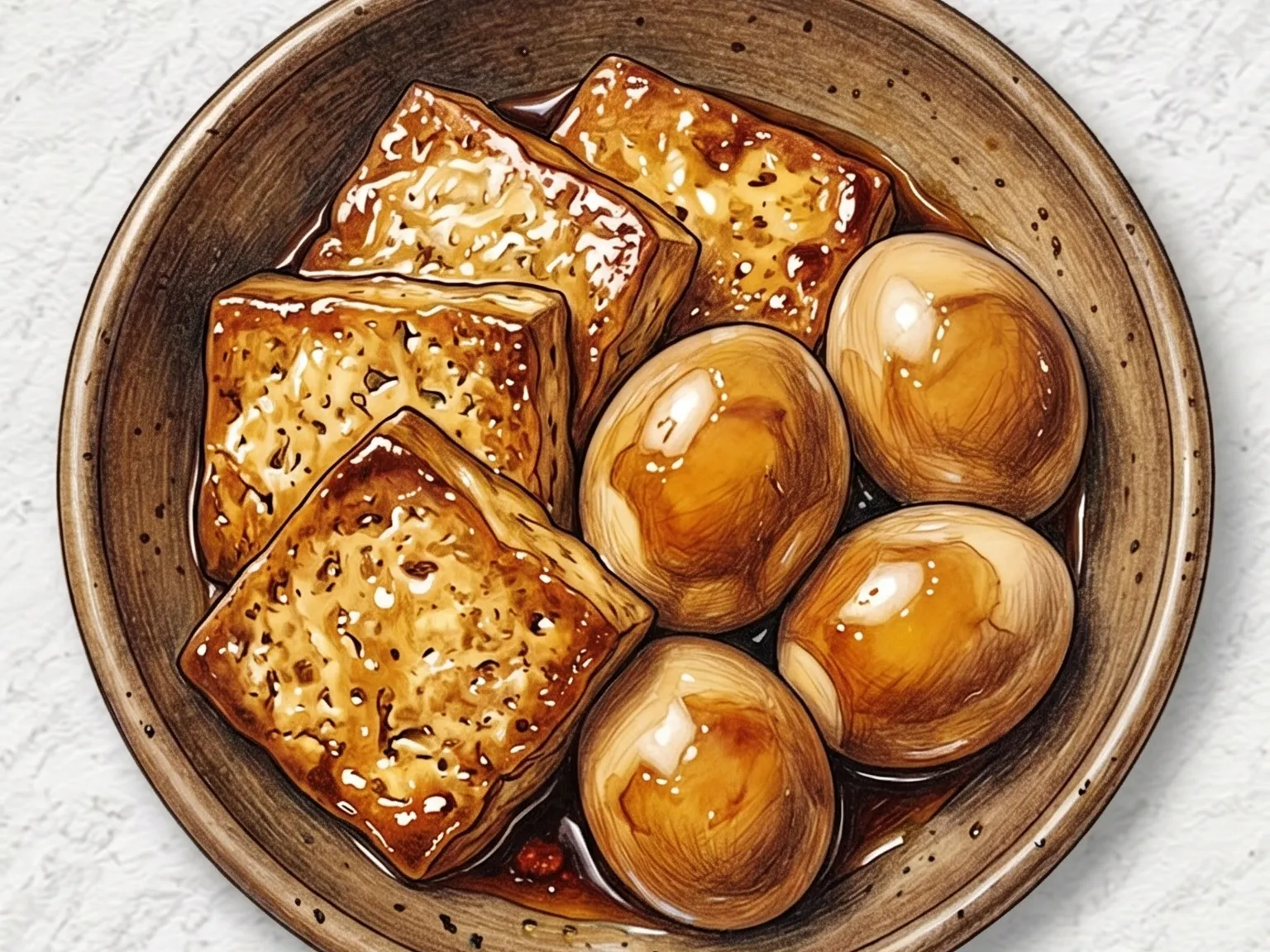
Dubu-gyeran-jorim combines two of Korea's most affordable protein sources - tofu and eggs - in a single soy-braised banchan that stretches a modest grocery run into several days of side dishes. Hard-boiled eggs and pan-fried tofu slabs simmer together in a sauce of soy sauce, sugar, garlic, and water. The tofu's porous surface acts as a sponge, pulling the dark braising liquid deep into its structure, while the eggs develop a tan exterior with a firm, seasoned white surrounding a still-yellow yolk. As the sauce reduces over fifteen minutes of gentle simmering, it thickens into a glossy coat clinging to every surface. This banchan is a fixture of Korean school cafeterias and packed lunches, valued for its staying power - it keeps refrigerated for up to five days, improving as the seasoning continues to penetrate.
Adjust Servings
Instructions
- 1
Hard-boil and peel the eggs; cut tofu into thick slices.
- 2
Pan-fry tofu until golden on both sides.
- 3
Pour soy sauce, sugar, and water over tofu and eggs; braise until sauce thickens.
- 4
Garnish with chili and serve.
As an Amazon Associate, we may earn from qualifying purchases.
Tips
Nutrition (per serving)
More Recipes

Korean Braised Tofu in Spicy Sauce
Dubu-jorim is arguably the single most frequently made tofu dish in Korean home kitchens. The technique is straightforward but the sequence matters: tofu must be fried first to build a crust that holds its shape during braising, then simmered in a sauce that penetrates through that crust into the soft interior. The braising liquid - soy sauce, gochugaru, garlic, sugar, and water - reduces around the tofu slabs for eight to ten minutes, concentrating into a thick, spicy-sweet glaze. The finished tofu has three distinct zones: a dark, slightly chewy exterior where sauce has caramelized, a transitional layer where seasoning has seeped in, and a pristine white center that provides a bland, creamy contrast. Korean home cooks often make a double batch on Sunday, refrigerating half for weekday lunches. The dish dates back to Buddhist temple cooking traditions where tofu was the primary protein.

Korean Tofu Stew (Spicy Kimchi & Firm Tofu Pot)
A straightforward jjigae that highlights firm tofu and kimchi in a spicy anchovy broth. Gochugaru dissolves into the stock to create a vivid red, peppery base, while the kimchi's fermented tang adds complexity with each passing minute on the stove. Green onion rounds out the aromatics. Despite using only five main ingredients, the fermented kimchi does the heavy lifting, producing a broth with layered acidity and depth.

Korean Tofu and Kimchi Stir-Fry
Dubu-kimchi-bokkeum is a Korean classic that combines pan-fried tofu with well-fermented napa cabbage kimchi in a quick stir-fry. The tofu offers a mild, creamy contrast to the tangy, spicy fermented kimchi. A small amount of pork belly is often added, its rendered fat softening the kimchi's acidity and binding the flavors together. It is a versatile dish served equally well as a drinking snack or a hearty side with steamed rice.

Korean Perilla Braised Tofu
Deulkkae dubu-jorim is a Korean braised tofu side dish finished with ground perilla seeds for a distinctly nutty, creamy character. Firm tofu slabs are lightly pan-seared, then simmered in a soy sauce and garlic broth with sliced onion. Ground perilla powder is stirred in toward the end, thickening the sauce into a pale, velvety coating that clings to each piece. A final drizzle of sesame oil and a scattering of green onion rounds out the dish with fragrant warmth.

Korean Braised Tofu and Mushrooms
Dubu-beoseot-jorim is a Korean braised dish of firm tofu and oyster mushrooms simmered in a soy-based sauce. The tofu develops a lightly firm exterior while staying soft inside as it absorbs the seasoning. Oyster mushrooms contribute a chewy bite and natural umami that deepens the overall flavor without additional stock. It is a straightforward braise that requires only soy sauce, water, and a few basic seasonings to produce a satisfying result.

Korean Braised Tofu with Shrimp
Dubu-saeu-jorim pairs pan-fried tofu with whole shrimp in a soy-based braising sauce - a combination that bridges the protein gap in banchan beyond the usual tofu-only preparations. The tofu is seared first until golden, then set aside while shrimp cook briefly in the same pan, picking up the fond. The braising sauce - soy sauce, garlic, sugar, cooking wine, and a touch of gochugaru - goes in next, and both proteins return to simmer together for five minutes. The shrimp release their marine sweetness into the sauce, which the porous tofu absorbs alongside the soy seasoning. The textural pairing matters: the tofu is yielding and soft, while the shrimp curl and firm up with a springy bite. A banchan that works equally well as a main dish over rice when made in larger quantity.