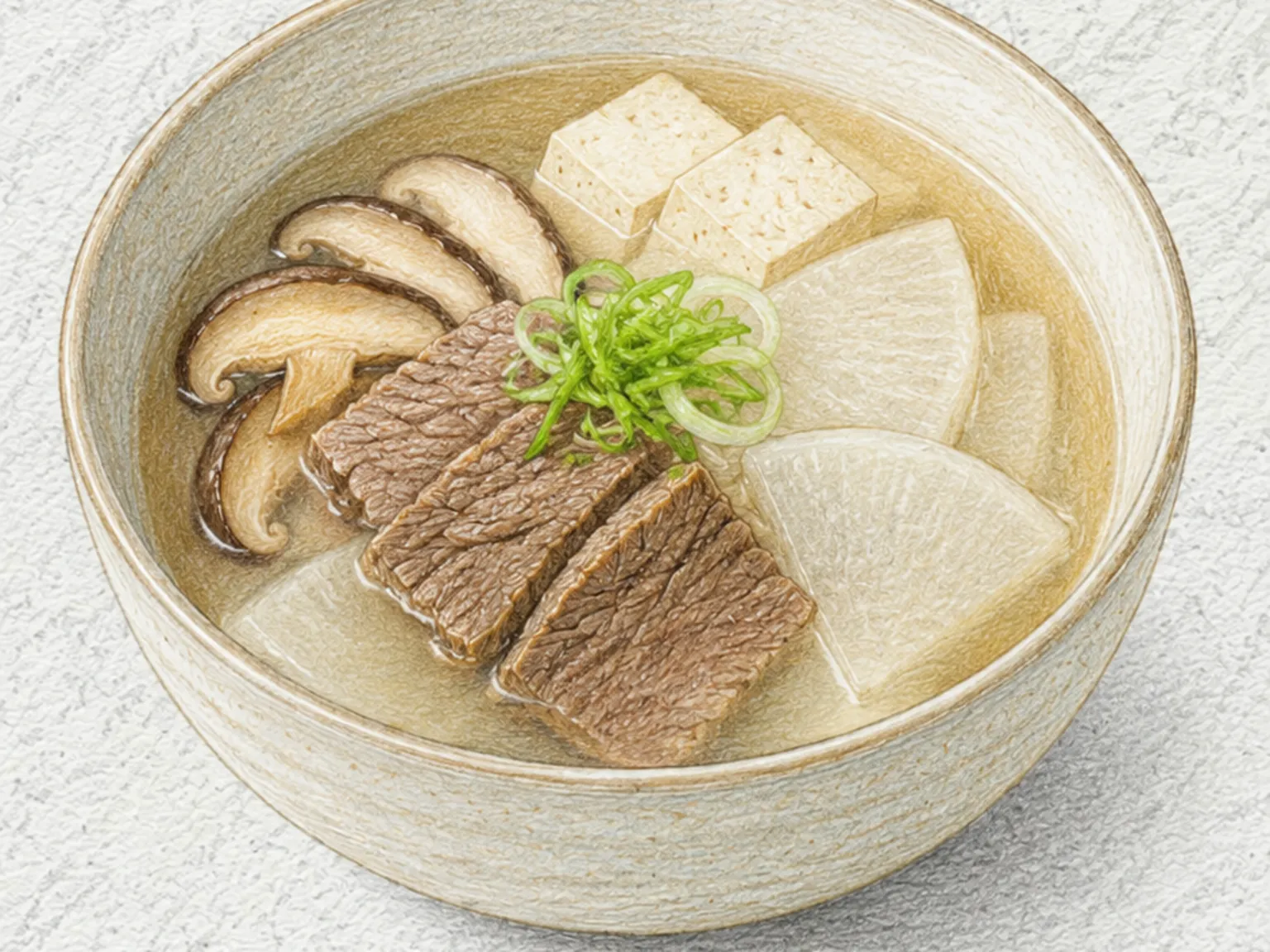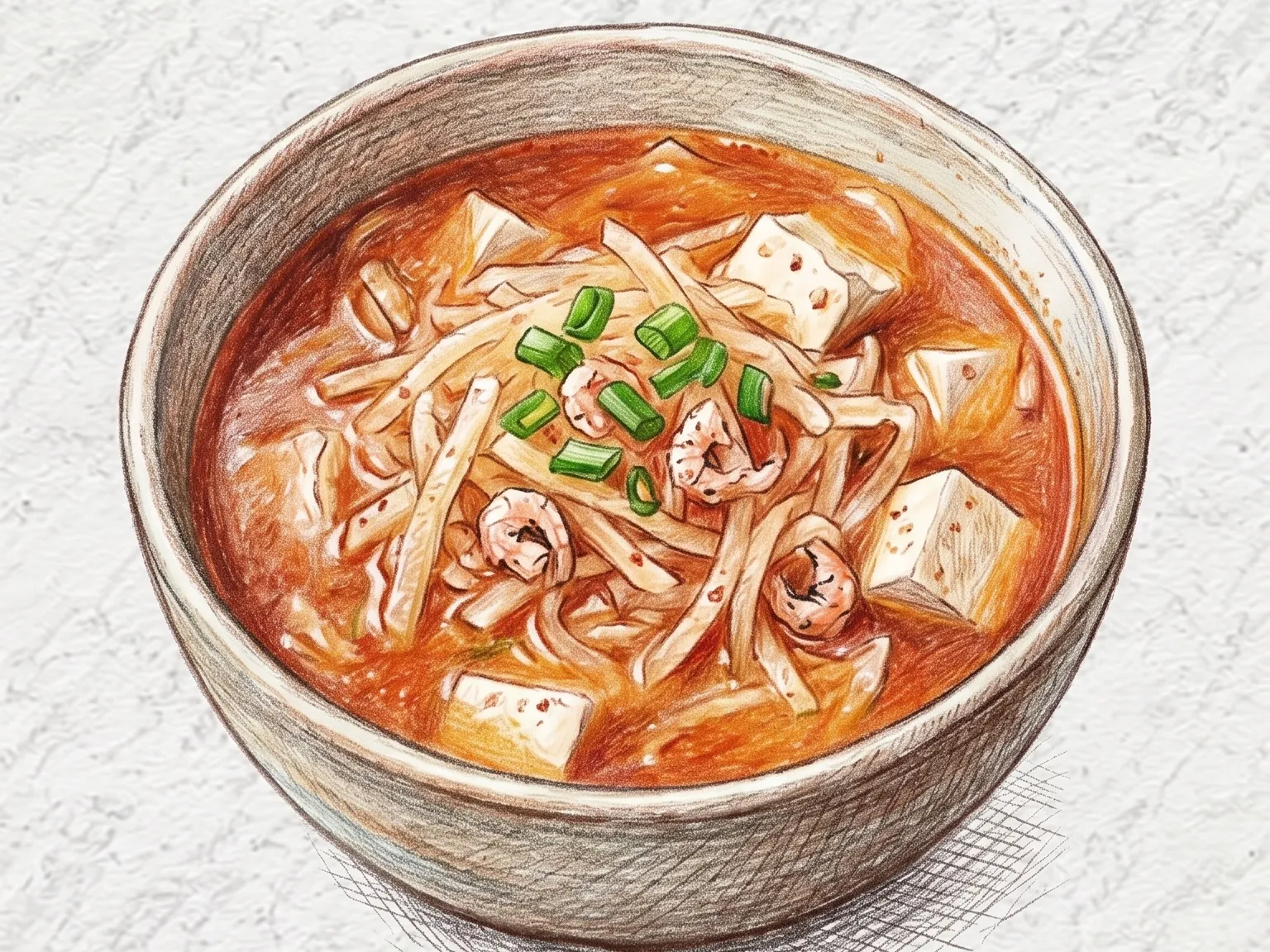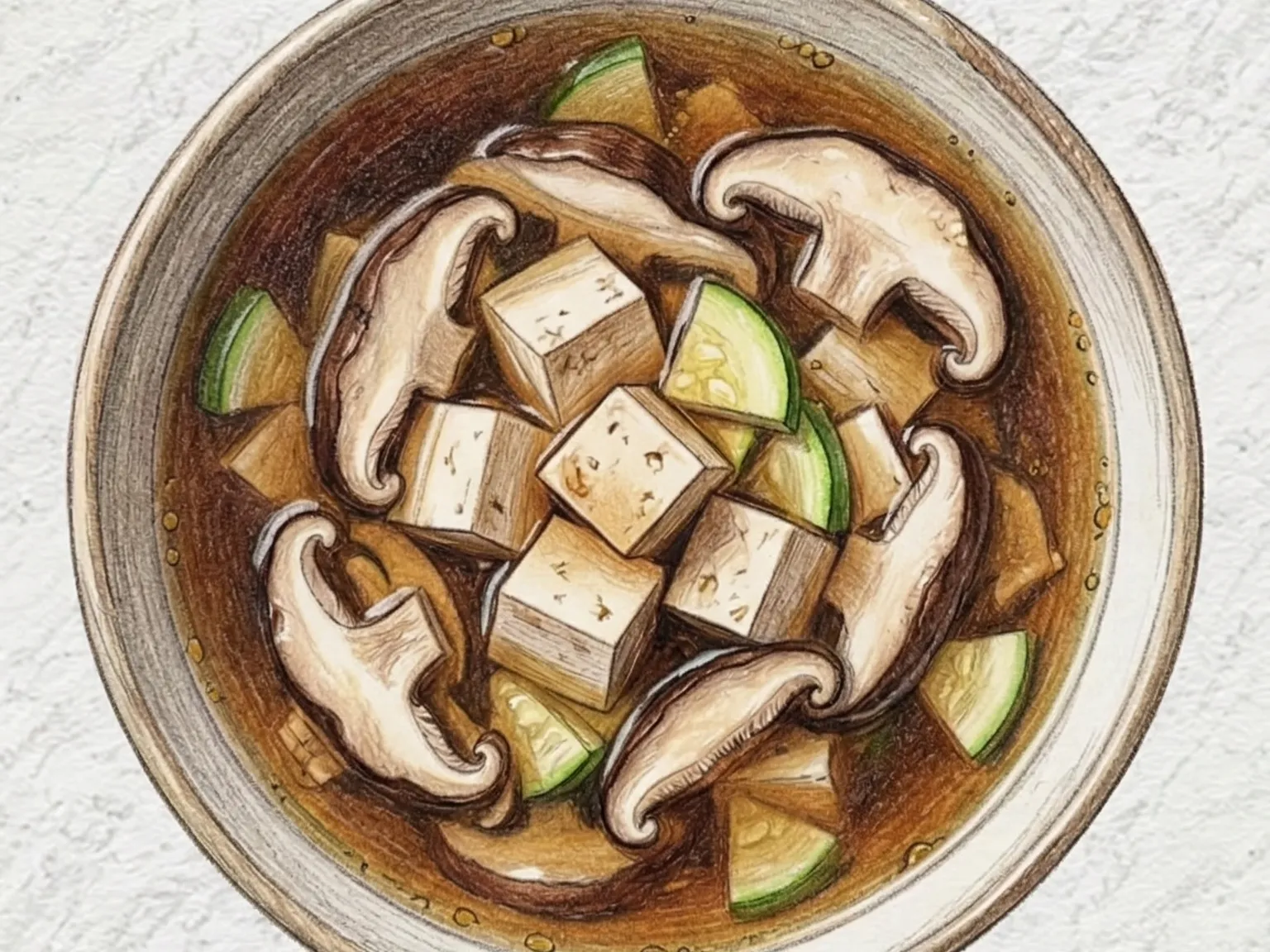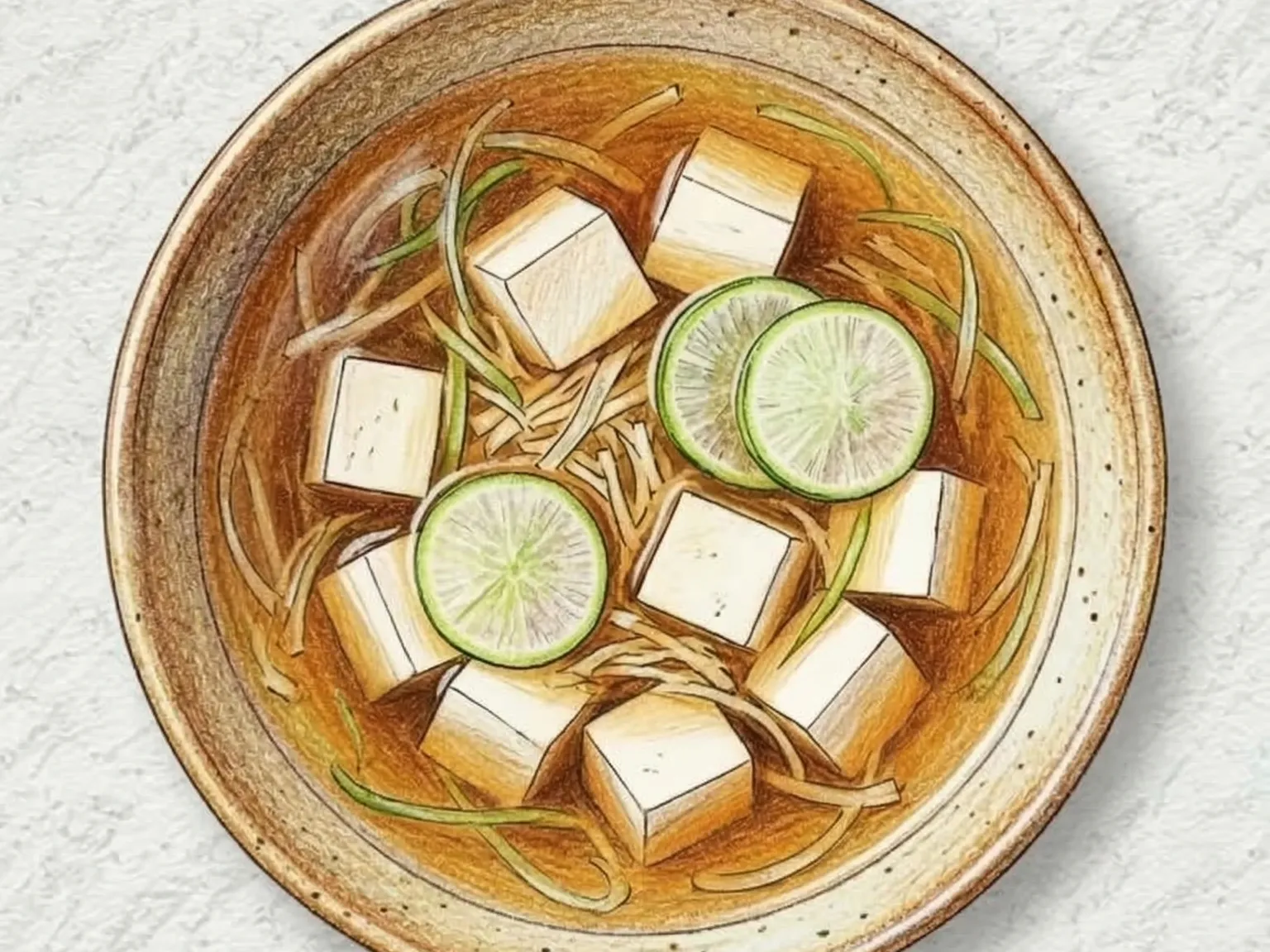
Dubu Guk Recipe (Dubu Jangguk, Plain Korean Tofu Soup)
Soups Easy

Dubu Guk Recipe (Dubu Jangguk, Plain Korean Tofu Soup)

Quick answer

Dubu guk is the basic Korean clear tofu soup, also called dubu jangguk, made with tofu, radish, shiitake mushrooms, and soup soy sauce in a clean broth.

What makes this special

  • Dubu-jangguk is the plain clear dubu guk, a light Korean tofu soup without seafood or chili heat.
  • Shiitake guanylate umami with soy sauce creates layered depth using only water as base
  • Tofu added last on low heat for 3 minutes keeps its white face intact
Total time
25 min
Level
Easy
Servings
4 servings
Ingredients
7
Calories
110 kcal
Protein
8 g

Key ingredients

firm tofukorean radishshiitake mushroomsoup soy saucewater

Core cooking flow

  1. 1 Slice 120g Korean radish into thin 4mm squares, then slice 70g shiitake mushrooms about 3mm thick.
  2. 2 Put 1200ml water and the sliced radish in a pot over medium heat.
  3. 3 Add the shiitake mushrooms, 1 tsp minced garlic, and 2 tbsp soup soy sauce.

Dubu guk is the basic Korean clear tofu soup, also called dubu jangguk, made with tofu, radish, shiitake mushrooms, and soup soy sauce in a clean broth. Among the dubu-guk family, this is the plain home version, distinct from oyster gul-dubu-guk or herb chamnamul dubu-guk. The radish goes in first and simmers for seven minutes, releasing a mild sweetness that forms the foundation of the broth. Shiitake and garlic follow for another four minutes, adding guanylate-rich umami that layers onto the radish base. The result is a broth with real depth even though the seasoning remains simple. Tofu is added last so the cubes stay clean-edged and tender instead of breaking apart. This is the best fit when you want a light Korean tofu soup rather than a spicy sundubu-style stew.

Prep 10min Cook 15min 4 servings

Instructions

Read the steps as a cooking flow: prep, heat, seasoning, doneness control, and finish.

6 steps
  1. 1
    Prep

    Slice 120g Korean radish into thin 4mm squares, then slice 70g shiitake mushrooms about 3mm thick.

    Scoop 300g firm tofu into large uneven pieces with a spoon so the rough surfaces can hold more broth.

  2. 2
    Control

    Put 1200ml water and the sliced radish in a pot over medium heat.

    Once it begins to boil, skim any foam and simmer for 7 minutes, until the radish looks slightly translucent and the broth tastes lightly sweet.

  3. 3
    Control

    Add the shiitake mushrooms, 1 tsp minced garlic, and 2 tbsp soup soy sauce.

    Keep the heat at medium and simmer for 4 minutes, letting the mushroom aroma season the broth without reducing it too much.

  4. 4
    Season

    If the broth is boiling hard, lower the heat and check the seasoning before adding tofu.

    When using anchovy broth instead of water, use a little less soup soy sauce so the soup stays clean and not overly salty.

  5. 5
    Control

    Reduce to low heat, then gently add the spooned tofu pieces and warm them for only 3 minutes.

    Do not stir hard with a ladle. Move the pot lightly instead so the tofu keeps its shape.

  6. 6
    Finish

    Slice 1 green onion on the diagonal and add it at the end.

    Bring the soup to one brief boil over high heat, then turn off the heat as soon as the onion aroma rises and serve while hot.

After the steps

Pick a recipe that fits this dish.

Continue with shared ingredients, meal pairings, or a similar method.

Recipes That Go Well With This

More Soups →

Based on shared ingredients and meal pairing

Gul Dubu-guk (Korean Oyster Tofu Soup Recipe)
Shared ingredient: firm tofu Soups

Gul Dubu-guk (Korean Oyster Tofu Soup Recipe)

Gul-dubu-guk is the oyster variation of Korean tofu soup, pairing plump seasonal oysters with soft tofu in a clear kelp-based broth. Unlike plain dubu-jangguk, this version is seafood-forward, with briny oyster aroma leading the bowl. Timing the oysters precisely is the central technique of the dish: they go in just before the broth reaches a full boil, and even a minute too long on the heat turns them tough and grainy. Large-cut tofu blocks absorb the shellfish-infused liquid as they simmer, carrying the briny depth of the oysters into each spoonful. Thinly sliced radish adds natural sweetness, while soup soy sauce and garlic keep the seasoning clean.

Korean Clear Mushroom Tofu Soup
Shared ingredient: firm tofu Soups

Korean Clear Mushroom Tofu Soup

This clear Korean soup draws its umami from oyster and shiitake mushrooms simmered in plain water for four minutes, seasoned with only soup soy sauce and salt to keep the broth light and direct. Two varieties of mushrooms working together - oyster for soft texture, shiitake for depth - produce a broth that holds its own without meat. Cubed tofu goes in near the end so the pieces stay intact, and chopped green onion finishes the bowl with a clean, mild sharpness. At 155 calories per serving, the dish is genuinely low-calorie without sacrificing the layered, savory quality that makes it worth returning to.

Korean Seasoned Tofu Pouch Sushi (Yubu Chobap)
Serve together Rice

Korean Seasoned Tofu Pouch Sushi (Yubu Chobap)

Yubu chobap consists of seasoned tofu pouches filled with sushi rice. The preparation begins by mixing rice vinegar, sugar, and salt into hot rice, using a cutting motion to preserve the grains. Sesame oil and toasted sesame seeds are added for aroma, along with finely diced carrot and cucumber to bring color and a crisp texture. The tofu pouches are lightly pressed and filled to about 80 percent of their capacity, preventing the skin from tearing during shaping. With each bite, the pouch releases a sweet and savory sauce absorbed by the tofu, which goes well with the seasoned rice. Since they are convenient to carry and eat by hand, they are popular for lunchboxes, quick snacks, and picnics.

Chamnamul Dubu-guk (Korean Pimpinella Tofu Soup)
Similar recipe Soups

Chamnamul Dubu-guk (Korean Pimpinella Tofu Soup)

Chamnamul dubu-guk is the herb-forward Korean tofu soup in the dubu-guk family, built around chamnamul, or Korean pimpinella greens, in anchovy-kelp stock. Tofu goes in first and simmers for four minutes, absorbing the savory broth before the seasoning of soup soy sauce and salt is added. The chamnamul enters only at the end, kept barely long enough to wilt so its sharp, grassy fragrance stays intact rather than cooking off. The herbal edge of the greens cuts through the mild tofu and gives this clear soup a fresher profile than plain dubu-jangguk.

Serve with this

Ogeurakji (Dried Radish Strips)
Side dishes Medium

Ogeurakji (Dried Radish Strips)

Ogeurakji muchim is a traditional Gyeongsang-do style side dish made of dried radish strips. The cooking process starts by soaking the dried radish strips in cold water for exactly twenty minutes to retain a firm and chewy texture. After soaking, the strips are rinsed and squeezed firmly to remove excess moisture, preventing the seasoning from watering down. The dressing combines chili powder, anchovy fish sauce, soy sauce, and rice syrup. Using rice syrup instead of sugar gives the strips a heavy, glossy coating. The radish strips are massaged firmly by hand to help the spicy, salty, and sweet flavors penetrate. Minced garlic, chopped chives, and sesame seeds are folded in at the end. This side dish can be served immediately, but maturing it in the refrigerator for one day deepens the taste.

🔥 Trending Now 🏠 Everyday
Prep 30min Cook 10min 4 servings
Korean Garlic Scape Soy Pickles
Kimchi Easy

Korean Garlic Scape Soy Pickles

Maneul jong jangajji is a Korean garlic scape pickle made by cutting fresh scapes into 5 cm lengths, packing them into a sterilized jar along with cheongyang chili peppers, and pouring over a freshly boiled brine of soy sauce, vinegar, sugar, and dried kelp. The scapes' sharp garlic bite melds gradually with the soy's salty, savory depth to produce a flavor that builds with every chew, while the kelp dissolves a subtle seaweed umami into the brine over the course of steeping. The vinegar keeps the salt in check so the overall taste stays clean rather than heavy, and the cheongyang chili adds a slow, lingering warmth at the end of each bite that prevents the pickle from tasting one-dimensional. Reboiling the brine and pouring it back over the scapes after two days is an important step for both preservation and even pickling, and repeating this process once more ensures the scapes absorb flavor uniformly throughout. Handled this way, the finished banchan keeps reliably for over a month in the refrigerator.

🍱 Lunchbox 🏠 Everyday
Prep 20min Cook 10min 4 servings
Korean Dried Radish Greens Pancake
Pancakes Easy

Korean Dried Radish Greens Pancake

Boiled dried radish greens are combined with doenjang and pan-fried into a dense, rustic jeon with deep fermented character. The fibrous texture of the radish greens gives the pancake a satisfying chew, and the soybean paste saturates the batter so thoroughly that no dipping sauce is necessary. Buckwheat flour adds an earthy coarseness that suits the greens well. Cheongyang chili provides a spicy accent throughout. Minced garlic benefits from a brief saute in oil before being mixed into the batter-the raw edge cooks off and the garlic's savory depth integrates fully into the finished pancake. Cooking over low heat lets the inside set without burning the outside, producing a crisp surface and a tender, flavorful center.

🍺 Bar Snacks ⚡ Quick
Prep 18min Cook 10min 2 servings

Similar recipes

Muguk (Korean Radish Anchovy Broth Soup)
Soups Easy

Muguk (Korean Radish Anchovy Broth Soup)

Muguk is the most elemental expression of Korean soup: radish cut generously and simmered in anchovy-kelp stock until the broth runs clear, sweet, and gently savory. The simplicity of the ingredient list is deceptive. As the radish cooks, its starch and natural sugars dissolve into the water, building a broth that tastes mild on the surface but carries real depth underneath. Cutting the radish in thick cubes or wide slabs preserves its shape through the long simmer while allowing the interior to soften completely. Slicing too thin causes the radish to disintegrate and the broth to turn cloudy. Seasoned with nothing more than soup soy sauce, garlic, and sliced green onion, muguk is versatile enough to sit beside any banchan without competing. It serves equally well as a framework: add beef strips and it becomes sogogi-muguk, add dried pollock and it becomes hwangtae-muguk, swap the soup soy for salted shrimp and the character shifts toward briny and refreshing. All that is needed to start a pot are a single radish, a handful of dried anchovies, and a strip of dried kelp, which is why Korean households return to this soup more frequently than almost any other. Reheated the next day, the radish softens further and the broth deepens, making leftovers better than the original.

🏠 Everyday 🥗 Light & Healthy
Prep 10min Cook 25min 2 servings
Korean Clear Broth Tofu Stew
Stews Easy

Korean Clear Broth Tofu Stew

This clear Korean tofu stew is prepared by simmering tofu cubes, shiitake mushrooms, and zucchini in seasoned beef stock. The base relies on a rich beef broth, enhanced by the earthy umami of sliced shiitake mushrooms. Zucchini slices add a mild sweetness as they cook to a tender, translucent state. Seasoned simply with Korean soup soy sauce, salt, and minced garlic, the broth maintains a clean, savory taste without chili heat. To prevent the tofu from breaking, the cubes are gently settled into the pot and simmered over medium-low heat. Sliced green onions are added at the end of cooking to infuse a mild herbal note. Serving the stew hot after letting it rest briefly highlights the natural flavors of the ingredients. The tofu can be lightly pan-seared beforehand to add a nutty flavor and firmer texture.

🏠 Everyday ⚡ Quick
Prep 10min Cook 15min 2 servings
Korean Tofu Hot Pot (Tofu & Beef Kelp Broth Pot)
Stews Medium

Korean Tofu Hot Pot (Tofu & Beef Kelp Broth Pot)

Dubu jeongol is a Korean hot pot centered on tofu and beef simmered in kelp broth at the table. Shiitake mushrooms contribute a deep savory note, while napa cabbage and green onion add freshness and textural variety. The broth is seasoned with soup soy sauce, keeping it light and clear enough to let each ingredient's flavor come through without becoming heavy. Thin-sliced or ground beef works equally well; marinating it briefly in soy sauce and minced garlic before adding it to the pot layers the broth with additional depth. Pan-frying the tofu slices lightly in oil before placing them in the jeongol prevents them from breaking apart during the long simmer and gives each piece a slightly firmer exterior. Traditionally served bubbling directly on the table, this is a communal dish meant to be eaten at a relaxed pace, with diners adding broth and pieces to their own bowls throughout the meal.

🎉 Special Occasion 🥗 Light & Healthy
Prep 25min Cook 20min 4 servings

Tips

Add tofu near the end to keep its shape.
Use anchovy broth instead of water for deeper umami.

Nutrition (per serving)

Calories
110
kcal
Protein
8
g
Carbs
6
g
Fat
5
g