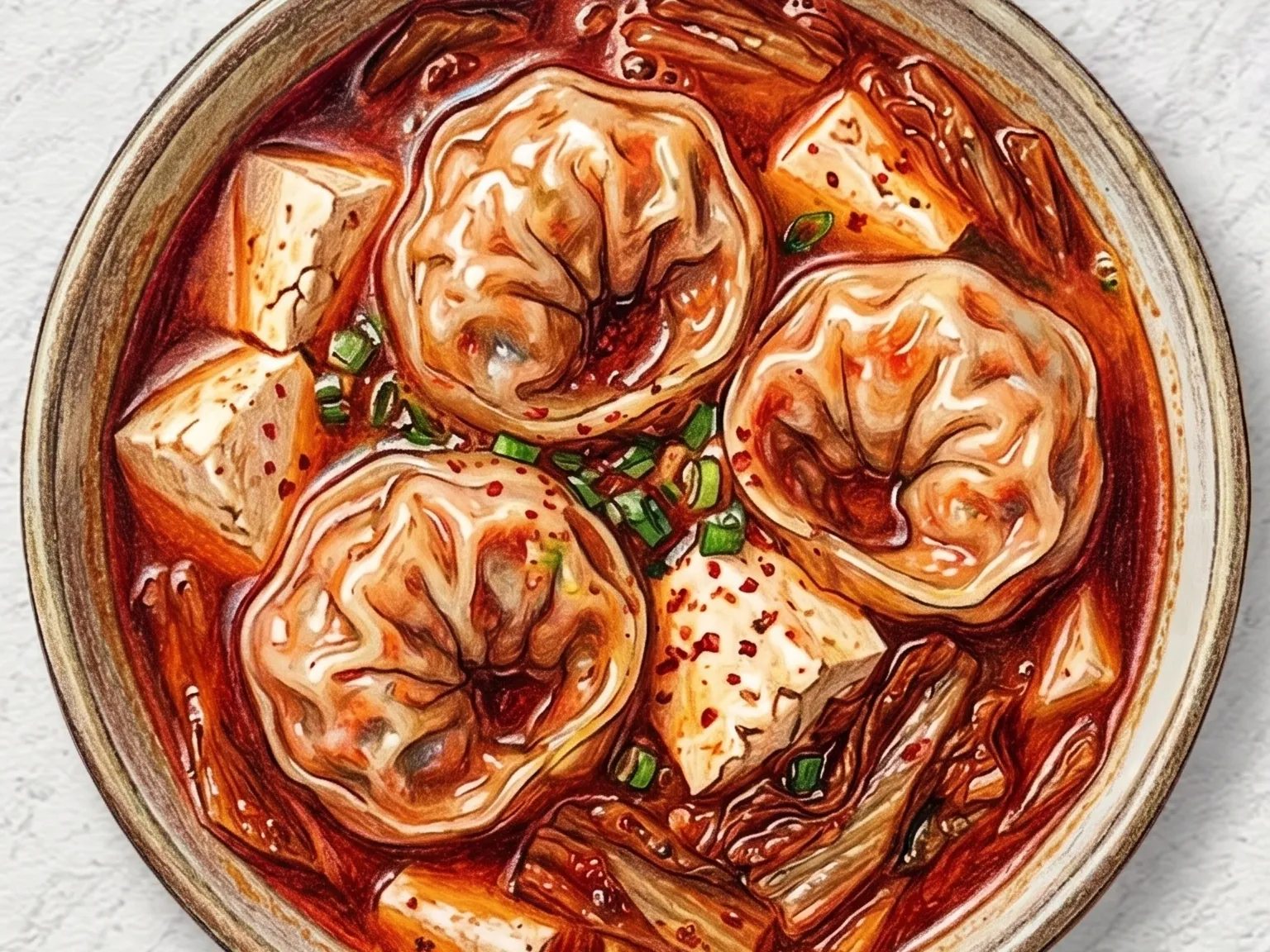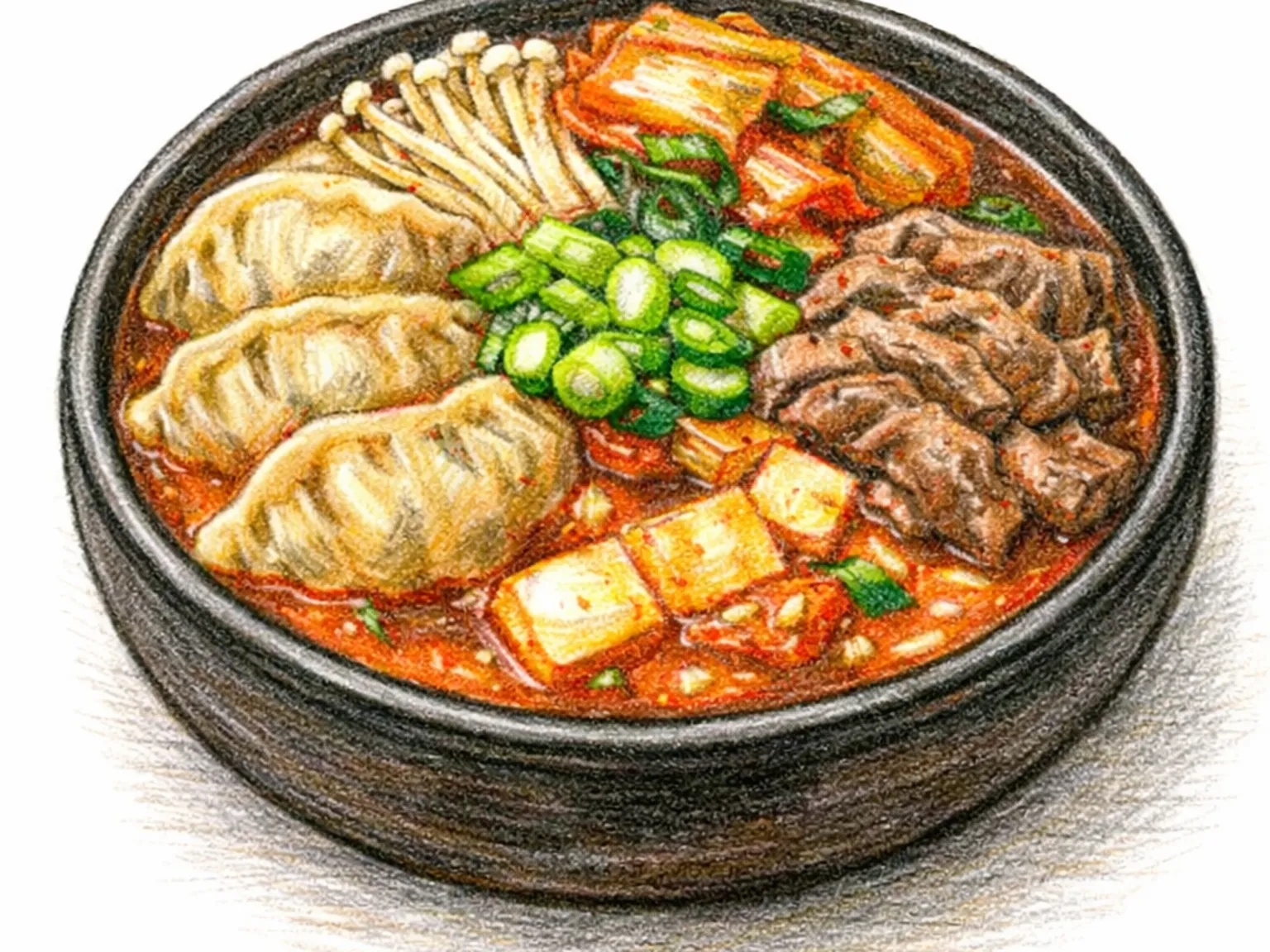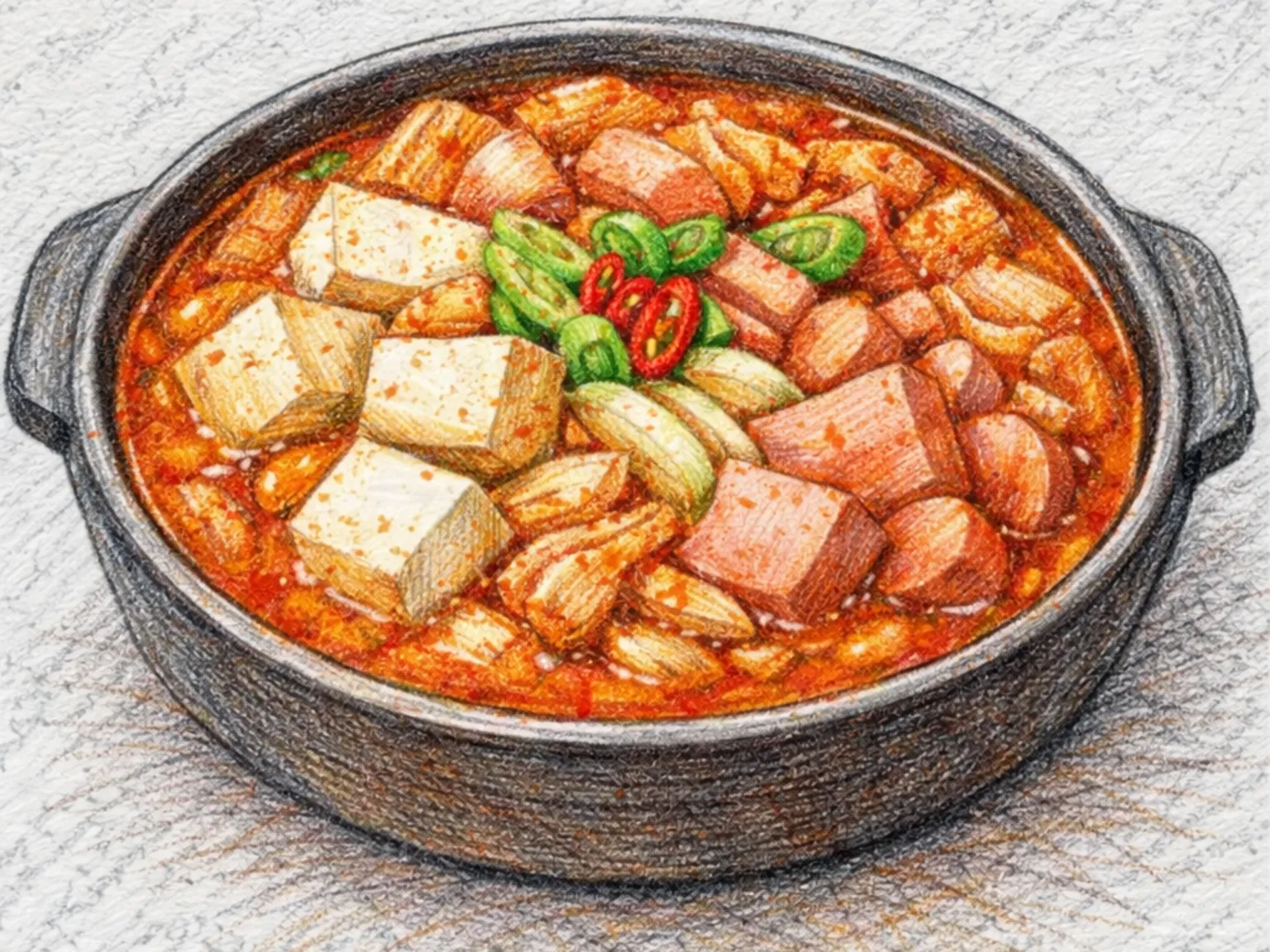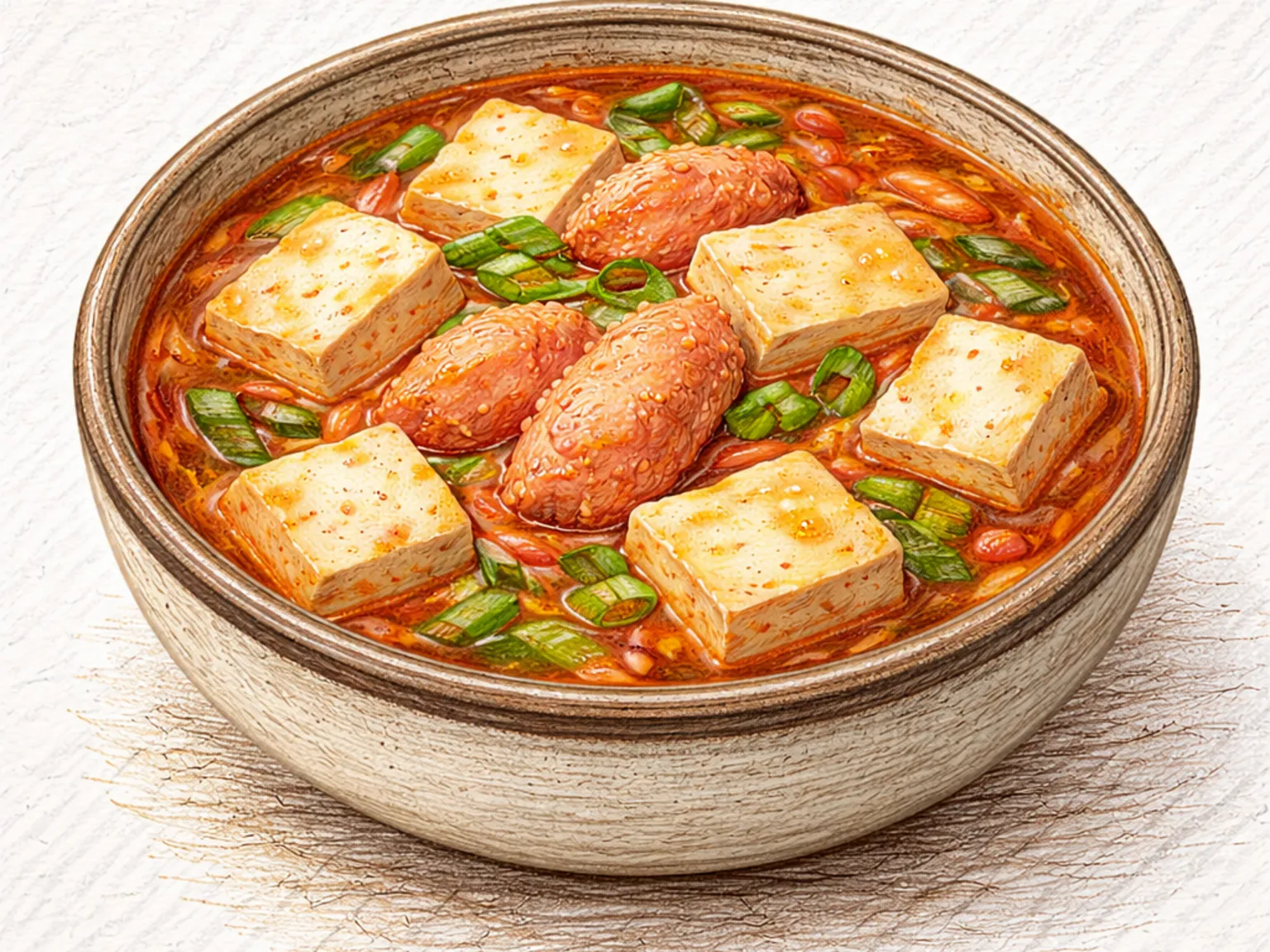
Korean Tofu Stew (Spicy Kimchi & Firm Tofu Pot)
A straightforward jjigae that highlights firm tofu and kimchi in a spicy anchovy broth. Gochugaru dissolves into the stock to create a vivid red, peppery base, while the kimchi's fermented tang adds complexity with each passing minute on the stove. Green onion rounds out the aromatics. Despite using only five main ingredients, the fermented kimchi does the heavy lifting, producing a broth with layered acidity and depth.
Adjust Servings
Instructions
- 1
Cut the tofu into large cubes.
- 2
Bring anchovy broth and red pepper flakes to a boil.
- 3
Add tofu and kimchi and simmer together.
- 4
Add green onion and garlic, season with salt.
As an Amazon Associate, we may earn from qualifying purchases.
Tips
Nutrition (per serving)
More Recipes

Korean Pollack Roe Tofu Stew
Myeongnan jjigae features whole pollack roe (mentaiko) simmered in anchovy broth, where the roe gradually breaks apart and disperses its briny, umami-rich flavor throughout the stew. Tofu absorbs the savory liquid, and red pepper flakes plus green onion add color and mild spice. The grainy texture of the roe sets this stew apart, and spooning the broth over steamed rice is the best way to enjoy it.

Korean Octopus Soft Tofu Stew
This jjigae pairs silky soft tofu (sundubu) with small octopus in a spicy anchovy broth seasoned with red pepper flakes. The contrast between the pillowy tofu and the springy octopus gives each bite variety. A cracked egg stirred in at the end adds richness and smooths out the heat. The key is adding the octopus near the finish so it stays tender rather than turning rubbery.

Korean Squid Stew
Ojingeo jjigae simmers a whole scored squid in an anchovy broth enriched with gochujang, yielding a sweet-spicy stew. Tofu and zucchini cook alongside, soaking up the bold red pepper paste flavor. Scoring the squid allows the seasoning to penetrate, so each bite releases the savory broth. The natural sweetness of gochujang pairs well with the mild squid, making this a straightforward but flavorful side dish stew.

Korean Mushroom Doenjang Stew
Three types of mushrooms - shiitake, oyster, and enoki - are simmered together in doenjang-seasoned anchovy broth. Each mushroom contributes a distinct texture: the meaty chew of shiitake, the silky tear of oyster mushroom, and the delicate crunch of enoki. Cubes of soft tofu round out the stew, absorbing the fermented soybean broth into every bite.

Korean Tofu and Kimchi Stir-Fry
Dubu-kimchi-bokkeum is a Korean classic that combines pan-fried tofu with well-fermented napa cabbage kimchi in a quick stir-fry. The tofu offers a mild, creamy contrast to the tangy, spicy fermented kimchi. A small amount of pork belly is often added, its rendered fat softening the kimchi's acidity and binding the flavors together. It is a versatile dish served equally well as a drinking snack or a hearty side with steamed rice.

Korean Braised Tofu and Egg
Dubu-gyeran-jorim combines two of Korea's most affordable protein sources - tofu and eggs - in a single soy-braised banchan that stretches a modest grocery run into several days of side dishes. Hard-boiled eggs and pan-fried tofu slabs simmer together in a sauce of soy sauce, sugar, garlic, and water. The tofu's porous surface acts as a sponge, pulling the dark braising liquid deep into its structure, while the eggs develop a tan exterior with a firm, seasoned white surrounding a still-yellow yolk. As the sauce reduces over fifteen minutes of gentle simmering, it thickens into a glossy coat clinging to every surface. This banchan is a fixture of Korean school cafeterias and packed lunches, valued for its staying power - it keeps refrigerated for up to five days, improving as the seasoning continues to penetrate.