Korean Steamed Tofu with Soy Sauce
Quick answer
Dubu-jjim is firm tofu steamed and topped with a seasoning sauce of soy sauce, gochugaru, chopped green onion, garlic, and sesame oil.
What makes this special
- Dubu-jjim focuses on oil-free steaming to deliver a clean soy flavor and soft tofu texture.
- Oil-free steam cooking delivers clean tofu flavor without frying odor
- Thick-cut slices create a taut exterior with soft interior when steamed
Key ingredients
Core cooking flow
- 1 Wrap 400g firm tofu in paper towels and press gently for about 5 minutes to remove surface moisture.
- 2 Cut the tofu into thick, even slabs about 2cm wide so they hold their shape.
- 3 Arrange the tofu in the steamer without overlapping, then cover and steam for 5 to 6 minutes.
Dubu-jjim is firm tofu steamed and topped with a seasoning sauce of soy sauce, gochugaru, chopped green onion, garlic, and sesame oil. Cutting the tofu into thick slabs before steaming lets heat penetrate evenly, producing pieces with slight resistance on the outside and a silky interior. The soy and chili sauce drizzled over the warm tofu seeps into each slice, delivering salty and mildly spicy flavors throughout. Sesame oil and seeds finish with a toasted aroma. Cooked without any added oil, it is a clean, protein-rich banchan that fits well on a vegetarian spread. Lightly salting the tofu before steaming draws out excess moisture, which allows the seasoning sauce to absorb more deeply and firms up the texture.
Instructions
Read the steps as a cooking flow: prep, heat, seasoning, doneness control, and finish.
- 1Season
Wrap 400g firm tofu in paper towels and press gently for about 5 minutes to remove surface moisture.
Sprinkle lightly with salt so the tofu firms up and absorbs the seasoning more evenly later.
- 2Control
Cut the tofu into thick, even slabs about 2cm wide so they hold their shape.
Add water to the pot, bring it to a boil over high heat, and wait until strong steam fills the steamer.
- 3Control
Arrange the tofu in the steamer without overlapping, then cover and steam for 5 to 6 minutes.
Cook until the outside feels slightly springy and the center is fully warm, but avoid steaming so long that it breaks.
- 4Season
Mix 1.5 tbsp soy sauce, 20g chopped green onion, 0.5 tbsp minced garlic, and 0.5 tbsp gochugaru in a bowl.
Stir until the chili flakes hydrate and the sauce becomes slightly thick, not watery.
- 5Finish
Move the steamed tofu to a plate carefully so the slabs do not crumble.
Spoon the sauce over the top while the tofu is hot, then let it sit for about 1 minute so the seasoning seeps in.
- 6Finish
Drizzle 1 tsp sesame oil evenly over the tofu and sprinkle with 0.5 tsp sesame seeds.
Serve while warm, when the tofu is soft inside and the soy, chili, and sesame aromas are most noticeable.
After the steps
Pick a recipe that fits this dish.
Continue with shared ingredients, meal pairings, or a similar method.
Recipes That Go Well With This
More Steamed →Based on shared ingredients and meal pairing
Korean Steamed Tofu with Pollock Roe
Myeongran dubu jjim is a Korean steamed tofu dish topped with a sauce of pollock roe mixed with egg and garlic. As the roe heats through, its tiny granules pop with a briny, savory burst against the silky tofu underneath. The egg binds the sauce into a soft set that melds with the warm tofu, and a light seasoning of soup soy sauce keeps the overall saltiness in check given the roe's own salinity. Red chili and green onion add color and a touch of freshness on top. Cooked without oil in about ten minutes, this is a clean, high-protein banchan that comes together with minimal effort.
Korean Steamed Tofu with Spinach
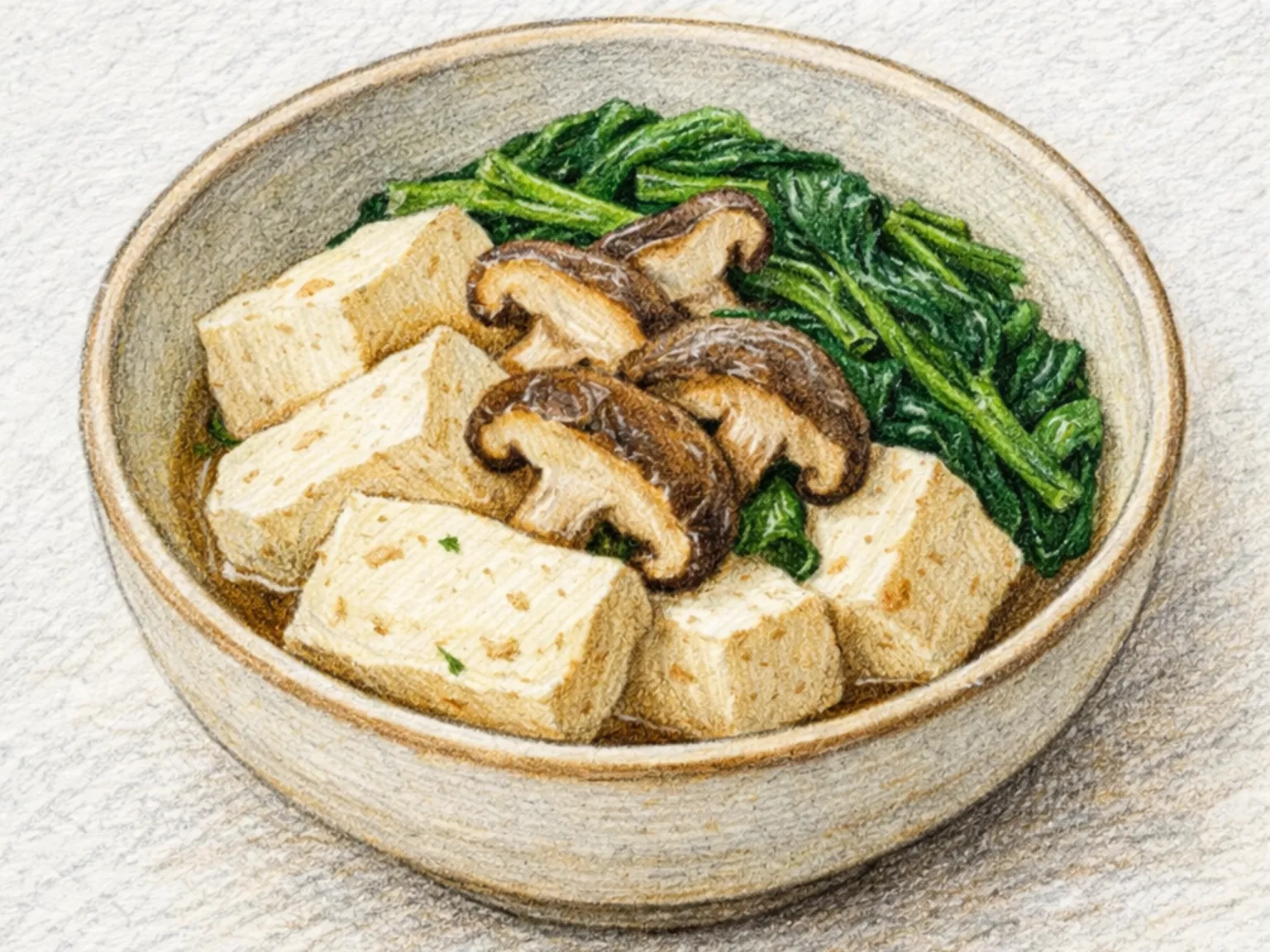
Sigeumchi dubu jjim is a Korean steamed side dish of firm tofu, spinach, and shiitake mushrooms seasoned with soy sauce and soup soy sauce, then covered and cooked over gentle heat until everything is just done. Pressing the tofu firmly between layers of kitchen paper to remove excess moisture is a necessary first step; water left in the tofu dilutes the seasoning and turns the cooking liquid murky. When the spinach and mushrooms are arranged alongside the tofu and the seasoning is spooned over everything before the lid goes on, the steam released by the vegetables cooks the dish evenly without any added water. Shiitake mushrooms bring a concentrated umami that gives unexpected depth to what is otherwise a very simple soy-based seasoning. A drizzle of perilla oil and a scattering of sesame seeds at the end add a distinctly nutty, aromatic finish that lifts the entire dish. Low in calories and rich in plant protein, it fits naturally into a light weeknight dinner as a side dish that is as nourishing as it is unfussy.
Korean Seasoned Mung Bean Jelly Salad
Cheongpo muk - mung bean jelly - is made by dissolving starch in water, boiling it until thick, then leaving it to set into a translucent, firm block. It has appeared in Joseon-era palace banquet records as a traditional food. The jelly is blanched briefly, cut into matchstick strips, and tossed with julienned cucumber and carrot. A dressing of soy sauce, vinegar, and sugar gives a clean, sharp edge. The jelly itself is nearly flavorless, functioning as a cool, slippery carrier for the seasoning. The crunch of the vegetables contrasts with the smooth jelly, and the vinegar keeps the whole dish light. Gentle tossing is essential to avoid breaking the blocks apart. Served well-chilled, this is a classic Korean summer banchan.
Korean Stuffed Tofu Steam
Dubu-seon is a traditional Korean court dish in which pressed and crumbled firm tofu is shaped around a seasoned filling of ground beef, rehydrated shiitake mushrooms, and carrot, then steamed until the filling sets. Squeezing out excess moisture from the tofu before shaping is essential - too much water causes the exterior to collapse during steaming and prevents the filling from binding properly. The filling is seasoned with soy sauce, sesame oil, minced scallion, and garlic so that the aromatics infuse into the surrounding tofu while it cooks. A garnish of julienned egg jidan, thin shreds of red chili, and water parsley is placed on top before serving, giving the otherwise pale dish a carefully composed color contrast that reflects its palace-cuisine origins. A dipping sauce of soy sauce, sesame oil, and a touch of vinegar accompanies the dish and complements its mild, clean flavor. Dubu-seon provides a high-protein, vegetable-rich bite in a single piece, making it suitable as a banchan or as a light accompaniment to drinks.
Serve with this
Korean Scallion Egg Soup (Quick Two-Ingredient Clear Broth)
Daepa gyeran-guk is a Korean scallion and egg soup that comes together in under ten minutes with just two main ingredients. Adding the green onion in two separate stages is what gives the broth complexity: the first portion simmers for three minutes, sweetening and deepening the stock, while the second goes in raw at the very end for a sharp, grassy bite. The egg must be drizzled in a thin, steady stream over reduced heat and left completely undisturbed for thirty seconds - this produces silky, delicate ribbons rather than broken scrambled pieces. Adding the egg over high heat or stirring immediately causes the broth to turn cloudy and the egg to clump. Soup soy sauce seasons the broth cleanly without darkening it, and a single drop of sesame oil finishes the bowl with a subtle, nutty fragrance that underscores the sweetness of the green onion.
Korean Kimchi Fried Rice (Kimchi Bokkeumbap)
Finely chopped aged kimchi is stir-fried together with ground pork until the fermentation tang of the kimchi and the fat rendered from the pork combine into a deep, layered umami base. Kimchi juice is added to the pan along with gochujang and a measured touch of sugar, glazing the rice in a spicy-sweet coating. High heat throughout the stir-fry is what keeps each grain separate and lightly crisp rather than soft and clumped; the pan also needs to be fully heated before the ingredients go in, or the rice will stick. A soft-fried egg placed on top lets the runny yolk temper the heat when it is broken and mixed in, and using well-fermented, deeply soured kimchi noticeably shifts the depth of the flavor. Adding spam or canned tuna are equally common household variations, and the dish adapts readily to whatever is available. A drizzle of sesame oil just before serving lifts a toasty, nutty fragrance over the finished bowl.
Korean Pepper Leaf Soy Pickle
Gochuip jangajji is a Korean soy pickle made from pepper leaves, a summer byproduct of chili cultivation, washed and submerged in a boiled brine of soy sauce, vinegar, and sugar. Unlike the chili fruit, pepper leaves carry almost no heat. What they bring instead is a grassy, mildly bitter fragrance that blends naturally with the savory and sour notes of the brine. Boiling the pickling liquid first and letting it cool before pouring it over the leaves preserves some of their texture while ensuring even seasoning throughout. Garlic and cheongyang chili contribute a sharp, pungent edge to the liquid, and the thin leaves absorb the brine fully within a single day. Over time, the pickling liquid penetrates deeper and the umami grows more pronounced. Laying one leaf over rice and folding it into a small parcel combines the roles of banchan and ssam in a single, compact bite.
Similar recipes
Korean Tofu with Spicy Soy Dressing
Dubu cheongyang ganjang muchim is a pan-fried tofu banchan that takes the classic dubu buchim in a sharper direction by centering the dressing on cheongyang chili, the hottest pepper in everyday Korean cooking. The most important part of the technique is getting a proper mahogany crust on the tofu. The pan must be hot before the tofu goes in, and the heat must stay high throughout. Too low a flame causes the tofu to steam in its own released moisture rather than sear, resulting in a soft surface with no textural contrast. When seared correctly, the outer layer becomes a firm, slightly chewy barrier while the interior stays silken and creamy. The dressing is raw and uncooked: soy sauce, minced cheongyang chili, scallion, garlic, and sesame oil combined without heat. It is poured over the tofu while the tofu is still steaming hot, which causes the raw garlic and chili to bloom slightly in the residual heat and release their full aromatic sharpness. Cheongyang pepper heat is clean and immediate rather than slow-building - it registers on the tongue quickly and fades without lingering the way dried gochugaru does. The dish is a natural pairing for mild, smooth soups like miyeok-guk, where the chili's sharpness provides a sharp counterpoint to the gentle seaweed broth. It also works alongside plain steamed rice as a standalone side.
Korean Steamed Whole Garlic
Maneul-jjim is a Korean steamed whole garlic dish where cloves are slowly braised in soy sauce, oligosaccharide syrup, and sesame oil until completely tender. The raw garlic's sharp bite disappears entirely with heat, transforming into a mellow sweetness with a creamy, almost buttery texture. The syrup creates a glossy coating on each clove, and the sesame oil wraps everything in a nutty fragrance. This banchan works as a side to grilled meats or as a drinking snack, offering all of garlic's depth without any of its usual pungency. Placing a softened clove on a spoonful of rice is the simplest and most satisfying way to enjoy it.
Korean Pan-Fried Tofu with Seasoned Soy Sauce
Dubu buchim yangnyeom is one of the most common Korean home banchan, a dish that appears on the table because the technique is straightforward and the ingredients are always in the kitchen. Firm tofu is cut into thick slices, salted lightly to pull moisture from the surface, then pan-fried in a minimal amount of oil until both faces develop a golden, crackling crust while the interior stays soft and warm. The yangnyeom jang, the seasoned sauce, is assembled directly at the stove: soy sauce, gochugaru, chopped scallion, garlic, and sesame oil stirred together, then spooned over the hot tofu the moment it comes out of the pan. The residual heat of the tofu gently wilts the raw scallion and opens the sesame oil, releasing its fragrance into the sauce without any additional cooking. The ratio of ingredients in the sauce varies from household to household, with some reducing the gochugaru and adding toasted sesame seeds, and others adding cheongyang chili for extra heat. In Korean temple cuisine, this preparation has served for centuries as the primary protein source in meat-free meals.