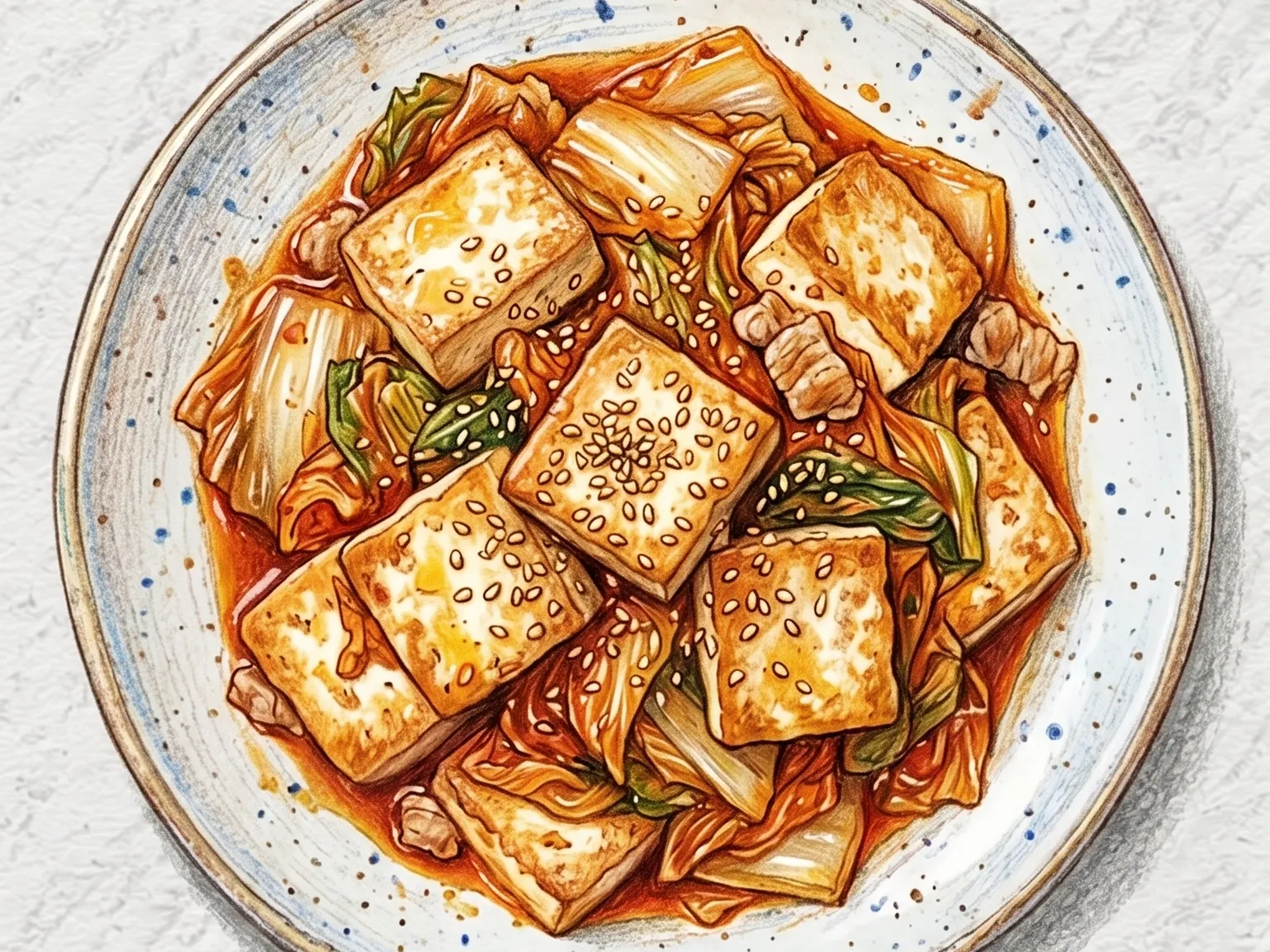
Korean Tofu and Kimchi Stir-Fry

Korean Tofu and Kimchi Stir-Fry

Quick answer

Dubu-kimchi-bokkeum is a Korean home-cooking classic that pairs pan-fried tofu with well-fermented napa cabbage kimchi in a quick stir-fry.

What makes this special

  • Dubu-kimchi-bokkeum pairs pan-seared tofu with the sharp acidity of aged napa cabbage kimchi.
  • Aged kimchi acidity mellows under high stir-fry heat
  • Small amount of pork fat wraps kimchi tang into a rounder flavor
Total time
25 min
Level
Easy
Servings
2 servings
Ingredients
5
Calories
290 kcal
Protein
20 g

Key ingredients

Firm tofuKimchiPork bellySesame oilSesame seeds

Core cooking flow

  1. 1 Cut 300 g firm tofu into 1.5 cm thick pieces, then press and pat the surfaces dry.
  2. 2 Coat the pan lightly with oil and heat it over medium-high heat before adding the tofu.
  3. 3 Add 100 g pork belly to the same pan and stir-fry over medium-high heat for about 2 minutes.

Dubu-kimchi-bokkeum is a Korean home-cooking classic that pairs pan-fried tofu with well-fermented napa cabbage kimchi in a quick stir-fry. The tofu is browned first on both sides until a thin crust forms, which keeps the pieces intact during the subsequent frying and gives each bite a firm exterior against the softer interior. A small amount of pork belly, rendered first, contributes fat that mellows the sharp acidity of the kimchi and acts as a flavor bridge between the two main components. The contrast between the mild, slightly nutty tofu and the tangy, spicy kimchi is the defining dynamic of the dish: neither dominates, and each makes the other taste more distinct. Deeply fermented kimchi, aged past the fresh stage, works best here because the stir-fry heat drives off the raw sourness and amplifies the underlying umami. Sesame oil and toasted sesame seeds are scattered over the finished dish, adding a nutty fragrance that rounds out the heat. Served as a snack with drinks or as a side over steamed rice, it occupies a reliable place on the Korean home table.

Prep 10min Cook 15min 2 servings
Recipes by ingredient → firm tofu sesame oil

Instructions

Read the steps as a cooking flow: prep, heat, seasoning, doneness control, and finish.

6 steps
  1. 1
    Prep

    Cut 300 g firm tofu into 1.5 cm thick pieces, then press and pat the surfaces dry.

    If the tofu stays wet, it will steam instead of browning and the outside will not firm up.

  2. 2
    Control

    Coat the pan lightly with oil and heat it over medium-high heat before adding the tofu.

    Brown each side for about 2 minutes, until a thin golden crust forms, then move the tofu aside.

  3. 3
    Control

    Add 100 g pork belly to the same pan and stir-fry over medium-high heat for about 2 minutes.

    When the meat changes color and releases fat, scrape up the browned bits so they season the stir-fry.

  4. 4
    Control

    Squeeze excess liquid from 200 g kimchi, chop it into bite-size pieces, and add it to the pan.

    Stir-fry over medium-high heat for 3 to 4 minutes, until the color deepens and the edges soften.

  5. 5
    Control

    Return the browned tofu to the pan and reduce the heat to medium.

    Do not stir hard with a spatula; shake the pan and turn pieces gently for 2 minutes to coat them in kimchi oil.

  6. 6
    Finish

    Turn off the heat and drizzle in 1 teaspoon sesame oil so the residual heat releases its aroma.

    Sprinkle 1 teaspoon sesame seeds, fold lightly without crushing the tofu, and serve while the surface is still glossy.

After the steps

Pick a recipe that fits this dish.

Continue with shared ingredients, meal pairings, or a similar method.

Recipes That Go Well With This

More Stir-fry →

Based on shared ingredients and meal pairing

Korean Tofu Stew (Spicy Kimchi & Firm Tofu Pot)
Shared ingredient: firm tofu Stews

Korean Tofu Stew (Spicy Kimchi & Firm Tofu Pot)

Dubu jjigae is a spicy Korean stew built on firm tofu and fermented kimchi simmered together in anchovy stock. Gochugaru goes into the broth first to establish a vivid red, peppery base; from that point, the kimchi releases its fermented tang with each additional minute over heat, steadily deepening the broth. Green onion adds fragrance, and the tofu absorbs the surrounding liquid the longer it cooks. With only five or so main ingredients, this is an efficient dish - the fermented kimchi handles the complexity, producing layered acidity and depth that reads far richer than the short ingredient list would suggest.

Korean Tofu and Vegetable Stir-Fry
Shared ingredient: firm tofu Stir-fry

Korean Tofu and Vegetable Stir-Fry

Dubu-yachae-bokkeum is a Korean stir-fry of pan-fried tofu with carrots, onions, and bell peppers in a light soy-based sauce. Before anything else, the tofu has to be pressed to expel excess moisture, then pan-fried on both sides until a firm golden crust develops, which keeps the pieces from breaking apart when they go back into the wok with the vegetables. Because the vegetables cook at different rates, they are added in sequence to preserve each one's texture. The seasoning of soy sauce, sesame oil, minced garlic, and a small amount of sugar sits on the lighter side, letting the natural sweetness and fragrance of the vegetables come through without being masked. Gochugaru or a spoonful of gochujang can be incorporated for a spicier variation. Sesame seeds and a final drizzle of sesame oil finish the dish with a nutty fragrance that ties all the elements together. The combination of plant protein from the tofu and dietary fiber from the vegetables makes it both nutritious and satisfying, and it is commonly packed into Korean lunch boxes.

Korean Braised Tofu and Egg
Serve together Side dishes

Korean Braised Tofu and Egg

Dubu-gyeran-jorim is a practical braised banchan that combines two of the most affordable protein sources in Korean cooking -- tofu and hard-boiled eggs -- in a single soy-based sauce. The tofu is pan-fried until golden on each side, building a lightly crisped surface that holds up during braising. The eggs are hard-boiled, peeled, and added alongside the tofu in a sauce made from soy sauce, sugar, minced garlic, and water. Over fifteen or more minutes of gentle simmering on low heat, the tofu draws the dark braising liquid into its porous interior, becoming dense with savory flavor throughout. The eggs develop a tan exterior as the soy sauce stains the outer white, while the inside remains fully set with a pale yellow yolk. As the liquid reduces, it thickens into a glossy coat that clings to every curve of both ingredients. This banchan is a staple of Korean school cafeterias and lunchboxes alike, valued for its keeping power -- it refrigerates well for up to five days, and the seasoning continues to deepen overnight, making day-two leftovers often better than the freshly cooked batch.

Korean Cabbage Doenjang Stir-Fry
Similar recipe Stir-fry

Korean Cabbage Doenjang Stir-Fry

Baechu doenjang bokkeum is a Korean home-style side dish where napa cabbage is stir-fried with doenjang (fermented soybean paste) in perilla oil. The cabbage goes into a hot pan first and is tossed until slightly wilted, then the doenjang is added and the heat lowered so the paste spreads evenly and coats every piece. Minced garlic goes in with the cabbage, its sharpness merging into the fermented depth of the doenjang as both cook together. The thicker stem sections go into the pan before the leaves to preserve their crunch, and the leafy parts follow later so they stay tender rather than limp. A final drizzle of perilla oil just before removing the pan from heat reinforces the nutty aroma, finished with a scatter of toasted sesame seeds. The seasoning is minimal, but the salty intensity of the doenjang and the natural sweetness of napa cabbage strike a balance that makes this side dish a reliable staple with steamed rice. No soup or stew is needed alongside it.

Serve with this

Korean Gimbap-Style Rice Bowl
Rice Easy

Korean Gimbap-Style Rice Bowl

Gimbap-bap is a rice bowl that takes all the standard gimbap fillings - egg strips, imitation crab, blanched spinach, and stir-fried carrot - and serves them over sesame-oil-seasoned rice without rolling them in seaweed. The familiar flavor combination of gimbap is preserved while the rolling step is eliminated, which cuts preparation time considerably and allows each topping to be adjusted to taste. Adding pickled radish and fish cake on the side brings the result closer to the complete profile of traditional gimbap. The rice seasoned with sesame oil and salt serves as the unifying base that holds the individual flavors of each component together. It is particularly well-suited to quick solo meals.

🏠 Everyday 🍱 Lunchbox
Prep 20min Cook 10min 1 servings
Korean Mallow Soup (Joseon-Era Doenjang Mallow Soup)
Soups Easy

Korean Mallow Soup (Joseon-Era Doenjang Mallow Soup)

Auk-guk - mallow doenjang soup - has been part of Korean home cooking since the Joseon era, when auk (mallow) was among the most commonly grown leafy greens in household kitchen gardens. An anchovy-kelp stock provides the base, and doenjang is pushed through a sieve directly into the simmering liquid so it dissolves without lumps. Garlic contributes a quiet, pungent undercurrent beneath the fermented paste. Mallow leaves, torn roughly by hand, wilt into the broth in under a minute. What separates auk-guk from other doenjang-guks is textural: the mallow's natural mucilage thickens the soup slightly and gives it a slippery, almost coating quality on the tongue, unlike the clean, transparent broth of spinach or radish versions. Korean folk tradition holds that nursing mothers ate auk-guk to support milk production, a belief that reflects how deeply the plant was embedded in everyday domestic life. The soup reaches its best in early summer when fresh mallow leaves are at their most tender.

🏠 Everyday 🥗 Light & Healthy
Prep 10min Cook 15min 2 servings

Similar recipes

Korean Potato and Sausage Stir-Fry
Stir-fry Easy

Korean Potato and Sausage Stir-Fry

This Korean side dish features thinly sliced potatoes and bite-sized sausages stir-fried in a sweet and savory sauce. The potatoes are sliced into half-moons and cooked in a hot pan with oil for three minutes until their edges turn translucent. Sausages are then added, and the heat is reduced to medium to cook for two more minutes, allowing the rendered sausage fat to coat the potatoes. The dish is seasoned with a quick blend of soy sauce, ketchup, and sugar. Because the sauce can burn easily, it is crucial to toss the ingredients rapidly for thirty seconds until a glossy glaze forms. Ketchup provides a mild acidity that balances the saltiness of the soy sauce and the sweetness of the sugar. This stir-fry is a popular lunchbox staple that comes together in under ten minutes, making it highly practical for busy mornings.

🏠 Everyday 🍱 Lunchbox
Prep 10min Cook 15min 2 servings
Korean Pork and Kimchi Stir-Fry
Stir-fry Easy

Korean Pork and Kimchi Stir-Fry

Dwaejigogi kimchi bokkeum is a stir-fry of pork and well-aged napa cabbage kimchi and one of the most common home-cooked dishes in Korean households. The sharp, deep acidity of the fermented kimchi meets the fat in the pork, and the longer the two cook together, the more they absorb each other and change in character. A handful of Korean chili flakes is added to intensify the color and build a second layer of heat on top of the kimchi. The dish asks for no special technique and appears on the set-meal menu of nearly every Korean restaurant as a result. The quality of the kimchi makes a noticeable difference: kimchi that has been aging in the refrigerator for several weeks produces a far richer stir-fry than freshly made kimchi.

🏠 Everyday 🌙 Late Night
Prep 10min Cook 15min 2 servings

Tips

Pressing the tofu dry ensures it browns properly rather than steaming.

Nutrition (per serving)

Calories
290
kcal
Protein
20
g
Carbs
10
g
Fat
18
g