Korean Stuffed Tofu Steam
Quick answer
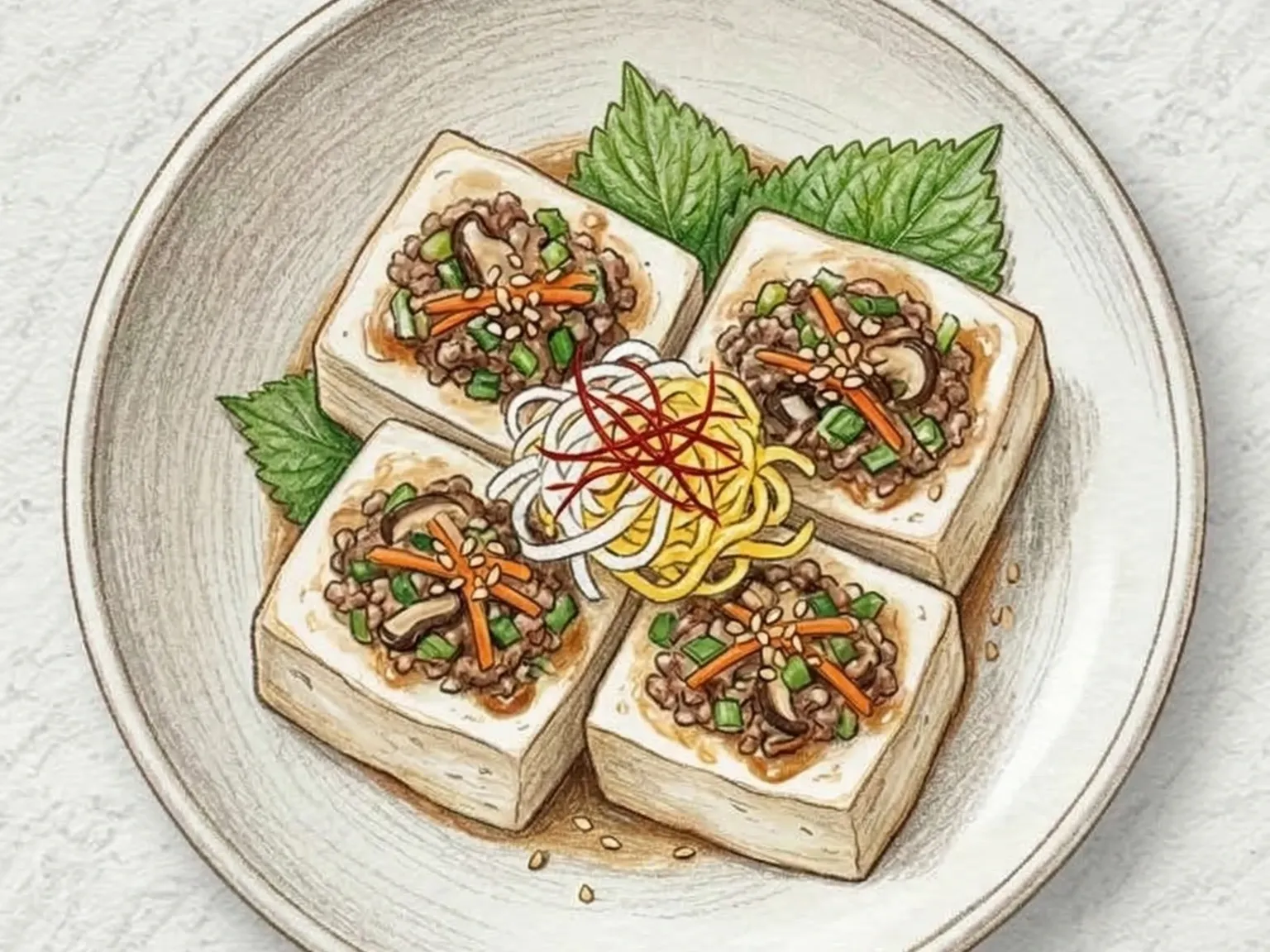
Dubu-seon is a traditional Korean court dish in which pressed and crumbled firm tofu is shaped around a seasoned filling of ground beef, rehydrated shiitake mushrooms, an...
What makes this special
- Dubu-seon serves a court dish of pressed tofu stuffed with seasoned beef and shiitake.
- Classic court-cuisine technique: pressed tofu stuffed with beef, shiitake, carrot
- Egg jidan, chili thread, and dropwort garnish create vivid cross-section color
Key ingredients
Core cooking flow
- 1 Cut 400 g firm tofu into 4 equal blocks, scoop a 1 cm cavity in the center o...
- 2 Combine the scooped tofu crumbs, 120 g ground beef, 60 g finely chopped shii...
- 3 Add 1 tbsp soy sauce, 1 tbsp sesame oil, 1 tsp minced garlic, and 1 tbsp sta...
Dubu-seon is a traditional Korean court dish in which pressed and crumbled firm tofu is shaped around a seasoned filling of ground beef, rehydrated shiitake mushrooms, and carrot, then steamed until the filling sets. Squeezing out excess moisture from the tofu before shaping is essential - too much water causes the exterior to collapse during steaming and prevents the filling from binding properly. The filling is seasoned with soy sauce, sesame oil, minced scallion, and garlic so that the aromatics infuse into the surrounding tofu while it cooks. A garnish of julienned egg jidan, thin shreds of red chili, and water parsley is placed on top before serving, giving the otherwise pale dish a carefully composed color contrast that reflects its palace-cuisine origins. A dipping sauce of soy sauce, sesame oil, and a touch of vinegar accompanies the dish and complements its mild, clean flavor. Dubu-seon provides a high-protein, vegetable-rich bite in a single piece, making it suitable as a banchan or as a light accompaniment to drinks.
Instructions
Read the steps as a cooking flow: prep, heat, seasoning, doneness control, and finish.
- 1Prep
Cut 400 g firm tofu into 4 equal blocks, scoop a 1 cm cavity in the center of each with a spoon, then pat dry thoroughly.
- 2Prep
Combine the scooped tofu crumbs, 120 g ground beef, 60 g finely chopped shiitake, 50 g finely chopped carrot, and 30 g chopped green onion in one bowl.
- 3Season
Add 1 tbsp soy sauce, 1 tbsp sesame oil, 1 tsp minced garlic, and 1 tbsp starch, then knead by hand until the filling holds together.
- 4Control
Fill each tofu cavity generously, mounding the filling slightly above the surface, then steam over medium heat for 12-15 minutes.
- 5Finish
Simmer the remaining 1 tbsp soy sauce with 2 tbsp water in a small pot until just warmed through as a light finishing sauce.
- 6Finish
Plate the steamed tofu seon and spoon the light sauce over each piece.
Serve warm.
After the steps
Pick a recipe that fits this dish.
Continue with shared ingredients, meal pairings, or a similar method.
Recipes That Go Well With This
More Steamed →Based on shared ingredients and meal pairing
Korean Crumbled Tofu Stir-fry
Dubu seoboro - crumbled tofu stir-fry - is a Korean banchan that transforms a block of tofu into something resembling a dry, granular scramble. The tofu is crumbled by hand into rough, irregular pieces rather than diced, creating a range of textures from large curds to fine crumbs that hold seasoning differently. Squeezed thoroughly in a cloth to remove as much moisture as possible, it then goes into a hot pan with diced carrot, onion, and zucchini. The key technique is cooking on high heat without stirring too often, allowing the tofu crumbles to develop lightly golden edges before soy sauce and sesame oil go in at the end. The result is a fluffy, granulated side dish that soaks into rice like a savory topping - satisfying without being rich. Popular in Korean daycare and school lunches because it delivers plant protein in a form that children eat willingly, and it travels cleanly in lunchboxes without leaking. The ingredient cost is low and the cooking time short, which makes it one of the first recipes to reach for when the refrigerator is running low on banchan.
Korean Steamed Tofu with Pollock Roe
Myeongran dubu jjim is a Korean steamed tofu dish topped with a sauce of pollock roe mixed with egg and garlic. As the roe heats through, its tiny granules pop with a briny, savory burst against the silky tofu underneath. The egg binds the sauce into a soft set that melds with the warm tofu, and a light seasoning of soup soy sauce keeps the overall saltiness in check given the roe's own salinity. Red chili and green onion add color and a touch of freshness on top. Cooked without oil in about ten minutes, this is a clean, high-protein banchan that comes together with minimal effort.
Korean Stir-Fried Burdock Root
Burdock root is julienned into thin strips and stir-fried with soy sauce and Korean grain syrup until each piece is coated in a glossy, sweet-salty glaze. Burdock carries an earthy, almost woody flavor unique among root vegetables, and soaking the cut strips in vinegared water before cooking prevents oxidation and keeps the color clean. A quick initial fry in oil seals the surface and drives off moisture, preserving the root's natural crunch. Adding soy sauce and grain syrup transforms the pan into a bubbling reduction that clings to every strand as it thickens. The grain syrup's gentle sweetness softens the soy sauce's salinity into a balanced, caramelized coating, while the heat converts burdock's raw earthiness into a toasted, nutty aroma. Reducing the sauce completely yields a chewy, almost candy-like texture; leaving a trace of moisture produces a crunchier, more succulent result. The finished banchan stores well under refrigeration for a week or more, making it a practical side to prepare in bulk.
Korean Steamed Tofu with Soy Sauce
Dubu-jjim is firm tofu steamed and topped with a seasoning sauce of soy sauce, gochugaru, chopped green onion, garlic, and sesame oil. Cutting the tofu into thick slabs before steaming lets heat penetrate evenly, producing pieces with slight resistance on the outside and a silky interior. The soy and chili sauce drizzled over the warm tofu seeps into each slice, delivering salty and mildly spicy flavors throughout. Sesame oil and seeds finish with a toasted aroma. Cooked without any added oil, it is a clean, protein-rich banchan that fits well on a vegetarian spread. Lightly salting the tofu before steaming draws out excess moisture, which allows the seasoning sauce to absorb more deeply and firms up the texture.
Serve with this
Korean Grilled Short Rib Patty Rice Bowl
Minced short-rib meat is seasoned with soy sauce, pear juice, and sesame oil, shaped into flat patties, and pan-seared until a caramelized crust forms on both sides. The exterior turns sweet and slightly charred while the interior stays moist and full of juice. Sauteed onion and green onion are added to sharpen the meat's savory depth and bring a fragrant note. Placed over hot rice with a spoonful of the pan sauce, the patty's sweetness melds with the warm grains for a quickly disappearing bowl.
Korean Pickled Taro Stems
Torandae jangajji is a Korean pickled side dish made from taro stems. The outer fibrous skin is peeled away first, and the stems are salted and then blanched. Raw taro stems contain calcium oxalate crystals that cause an unpleasant prickling sensation in the throat, and blanching effectively neutralizes this before the stems are packed into the pickling liquid. The brine is made by bringing soy sauce, vinegar, and sugar to a boil, and it is poured over the stems while still hot so the seasoning penetrates quickly and evenly. Sliced garlic and ginger are simmered in the brine before it is poured, which infuses the liquid with deep aromatic warmth without any of the sharp pungency those ingredients carry raw. After two to three days of refrigerating, each piece develops a layered depth of salty, savory flavor with a clean vinegar brightness underneath. The defining characteristic of this pickle is its distinctive fibrous crunch, which stays satisfying even after the stems have fully absorbed the brine. It works as a rice accompaniment throughout the week and doubles as a drinking snack alongside soju.
Korean Seafood Hot Pot Soup
Haemul-tang is a Korean seafood hot pot that throws together crab, shrimp, clams, and squid in a fiery, brick-red broth. The liquid starts with gochugaru and plenty of garlic, building a spicy base that the seafood then amplifies with its own briny juices. Radish chunks soften as the pot bubbles, thickening the broth slightly and adding a cool sweetness behind the heat. Green onions and cheongyang peppers go in toward the end for a sharp, vegetal bite. The magic of haemul-tang lies in the convergence of flavors: crab shells release a sweet, crustacean stock; clams open to spill their liquor; shrimp and squid contribute distinct textures from snappy to chewy. The pot is brought to the table still at a rolling boil, and diners pick through the shells and tentacles while the broth continues to concentrate.
Similar recipes
Korean Steamed Tofu with Spinach
Sigeumchi dubu jjim is a Korean steamed side dish of firm tofu, spinach, and shiitake mushrooms seasoned with soy sauce and soup soy sauce, then covered and cooked over gentle heat until everything is just done. Pressing the tofu firmly between layers of kitchen paper to remove excess moisture is a necessary first step; water left in the tofu dilutes the seasoning and turns the cooking liquid murky. When the spinach and mushrooms are arranged alongside the tofu and the seasoning is spooned over everything before the lid goes on, the steam released by the vegetables cooks the dish evenly without any added water. Shiitake mushrooms bring a concentrated umami that gives unexpected depth to what is otherwise a very simple soy-based seasoning. A drizzle of perilla oil and a scattering of sesame seeds at the end add a distinctly nutty, aromatic finish that lifts the entire dish. Low in calories and rich in plant protein, it fits naturally into a light weeknight dinner as a side dish that is as nourishing as it is unfussy.
Korean Stuffed Steamed Zucchini
Hobakseon is a Korean royal court dish of zucchini hollowed out and stuffed with a filling of ground beef, mashed tofu, and chopped shiitake mushroom seasoned with soy sauce and sesame oil. Steaming allows the beef juices to permeate the filling while the zucchini shell stays intact and turns tender. The mild, slightly sweet flavor of the zucchini contrasts with the savory, meaty stuffing inside, and the textural gap between the yielding vegetable exterior and the firmer filling is one of the dish's defining characteristics. Proper preparation of the filling is important: the tofu must be wrapped in a cloth and pressed until most of the moisture is squeezed out, or the stuffing will become watery during steaming. The shiitake mushrooms should likewise be stir-fried briefly beforehand to cook off their liquid. A garnish of thin egg strips adds a second color against the pale green shell. Its refined appearance and gentle flavors make it a fitting choice for holiday tables and formal occasions.
Korean Braised Tofu with Shrimp
Dubu-saeu-jorim pairs pan-seared tofu with whole shrimp in a soy-based braising sauce, stepping well beyond the usual tofu-only preparations that appear in everyday banchan. The tofu is seared first until golden on both sides to develop a lightly firm crust that resists breaking apart during the braising stage, then set aside while shrimp cook briefly in the same pan, picking up the fond left by the tofu. The braising liquid -- soy sauce, minced garlic, sugar, cooking wine, and a touch of gochugaru -- goes in next, and both proteins return to the pan to simmer together for five minutes over medium heat. The shrimp release their marine sweetness into the sauce as they tighten and curl, and the porous interior of the tofu absorbs that combined soy-seafood flavor throughout each cube. Adjusting the simmer time controls the final sauce concentration: shorter for a looser, silkier coat; longer for a more intensely reduced glaze. The textural pairing is the dish's central appeal -- yielding, custardy tofu against the springy, snapping bite of the shrimp. Adding sliced green onion or fresh chili introduces another layer of fragrance, and scaled up in quantity, the dish works just as well spooned over steamed rice as a satisfying one-bowl meal.