Korean Tofu and Vegetable Stir-Fry
Quick answer
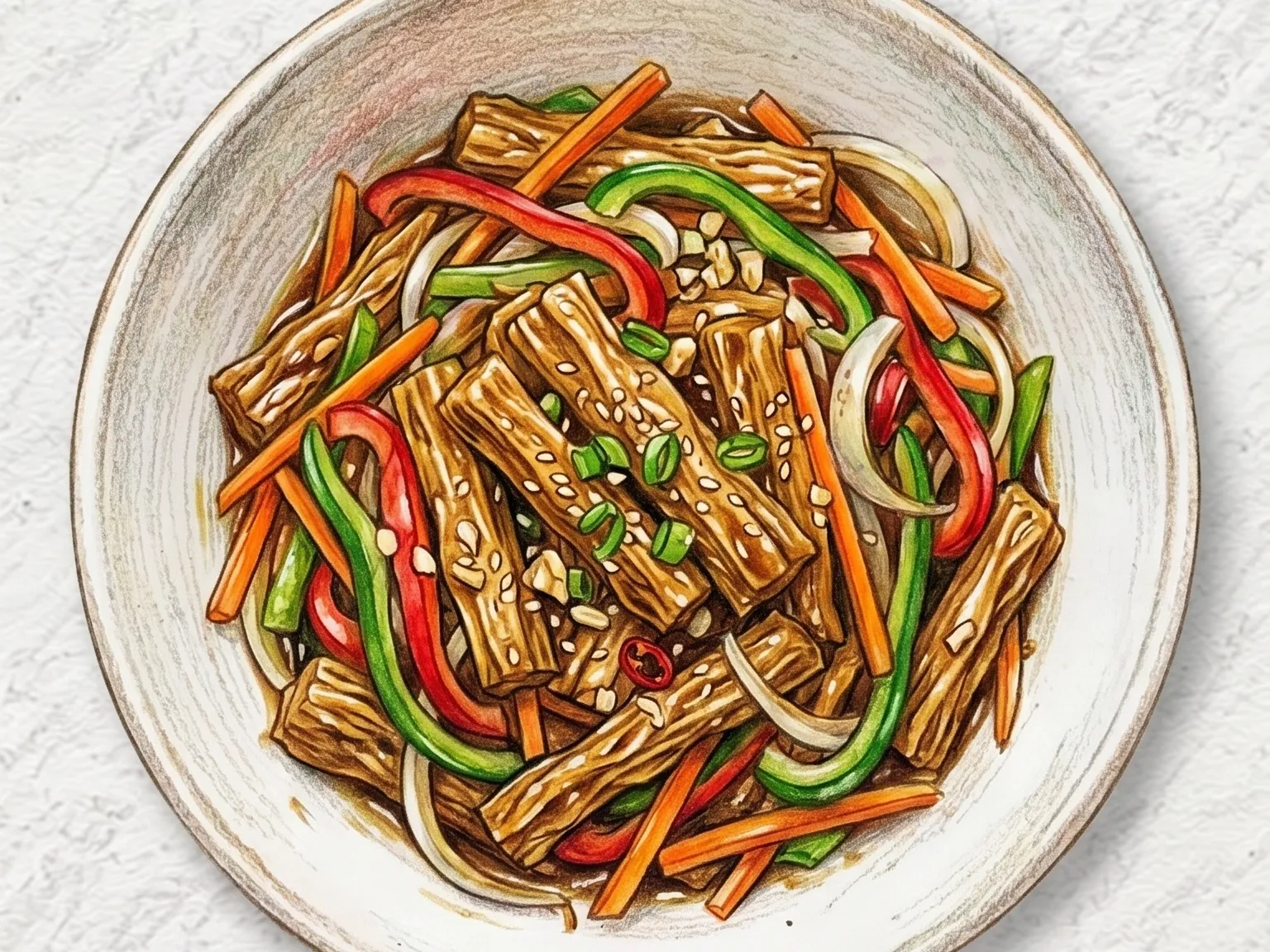
Dubu-yachae-bokkeum is a Korean stir-fry of pan-fried tofu with carrots, onions, and bell peppers in a light soy-based sauce.
What makes this special
- Pressed tofu and crisp vegetables are tossed in light soy sauce for a balanced texture.
- Vegetables added in sequence to match their different cooking rates
- Tofu pressed dry and seared first stays intact through the stir-fry
Key ingredients
Core cooking flow
- 1 Cut 300g firm tofu into 2cm cubes, then press the pieces gently with kitchen...
- 2 Heat a thin layer of oil in a pan over medium-high heat, then place the tofu...
- 3 Slice half a carrot, half an onion, and half a green bell pepper into 0.3cm strips.
Dubu-yachae-bokkeum is a Korean stir-fry of pan-fried tofu with carrots, onions, and bell peppers in a light soy-based sauce. Before anything else, the tofu has to be pressed to expel excess moisture, then pan-fried on both sides until a firm golden crust develops, which keeps the pieces from breaking apart when they go back into the wok with the vegetables. Because the vegetables cook at different rates, they are added in sequence to preserve each one's texture. The seasoning of soy sauce, sesame oil, minced garlic, and a small amount of sugar sits on the lighter side, letting the natural sweetness and fragrance of the vegetables come through without being masked. Gochugaru or a spoonful of gochujang can be incorporated for a spicier variation. Sesame seeds and a final drizzle of sesame oil finish the dish with a nutty fragrance that ties all the elements together. The combination of plant protein from the tofu and dietary fiber from the vegetables makes it both nutritious and satisfying, and it is commonly packed into Korean lunch boxes.
Instructions
Read the steps as a cooking flow: prep, heat, seasoning, doneness control, and finish.
- 1Prep
Cut 300g firm tofu into 2cm cubes, then press the pieces gently with kitchen towels until the surfaces feel dry.
Remove as much moisture as possible so the tofu browns in the pan instead of steaming or breaking.
- 2Control
Heat a thin layer of oil in a pan over medium-high heat, then place the tofu in one layer without crowding.
Fry about 2 minutes per side until the outside turns golden and firm enough to handle.
- 3Finish
Slice half a carrot, half an onion, and half a green bell pepper into 0.3cm strips.
Move the browned tofu to a plate for the moment so it keeps its shape while the vegetables start cooking.
- 4Control
Add the carrot to the same pan first and stir-fry over medium heat for 1 minute.
Add the onion and green bell pepper, then cook 1 minute more until the colors brighten and the vegetables soften only slightly.
- 5Control
Return the browned tofu to the pan and pour 2 tablespoons soy sauce around the edge so it heats quickly.
Stir-fry over medium-high heat for about 1 minute, turning gently to coat everything without crushing the tofu.
- 6Finish
Turn off the heat, then add 1 teaspoon sesame oil and sesame seeds.
Toss with the residual heat only, and serve when the tofu is still warm and the vegetables remain lightly crisp rather than limp.
After the steps
Pick a recipe that fits this dish.
Continue with shared ingredients, meal pairings, or a similar method.
Recipes That Go Well With This
More Stir-fry →Based on shared ingredients and meal pairing
Korean Mixed Vegetable Stir-Fry
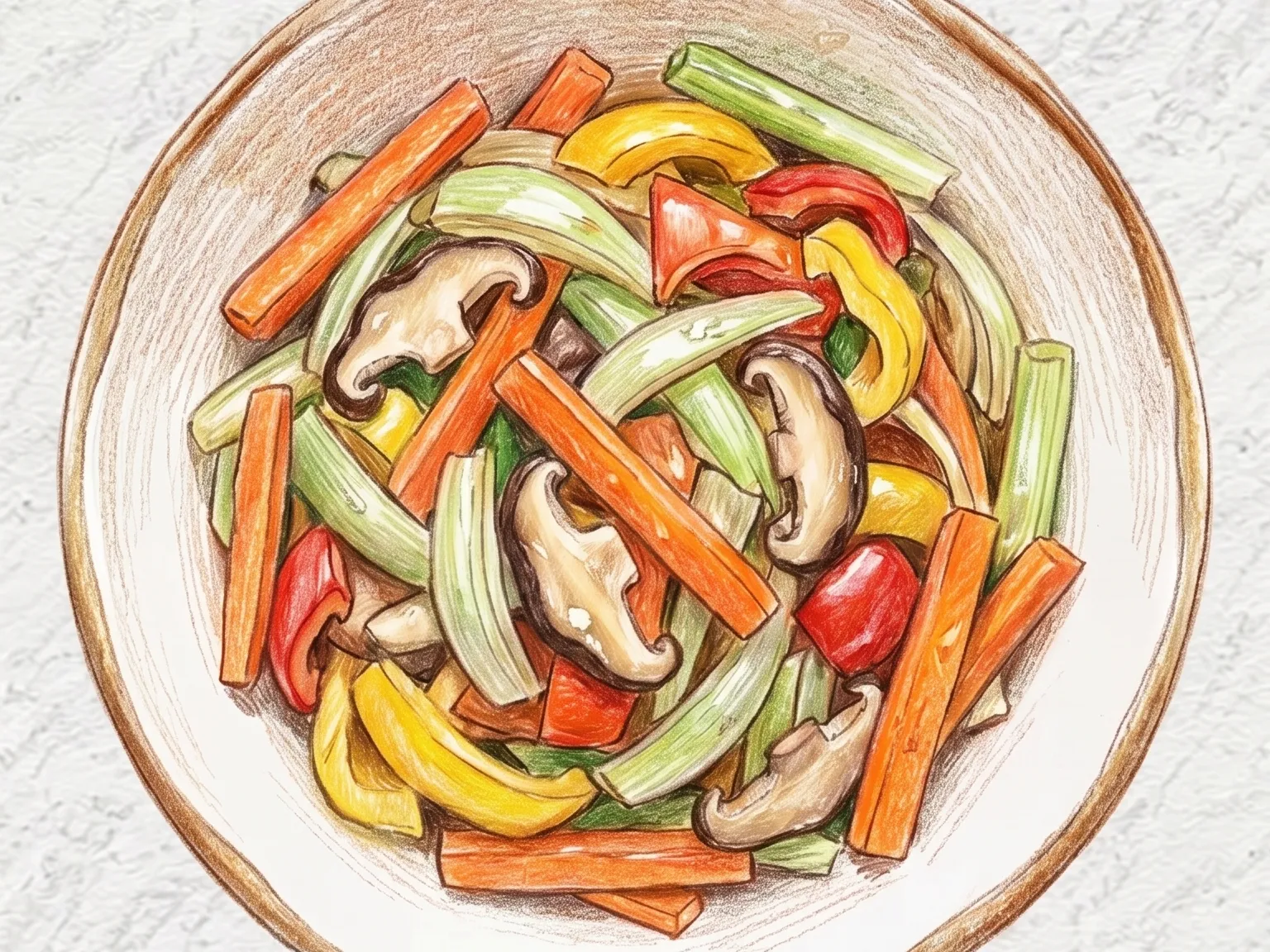
Yachae-twigim-bokkeum is a straightforward Korean stir-fry of mixed vegetables - carrot, onion, bell pepper, and shiitake mushroom - seasoned with oyster sauce and sesame oil. Firmer vegetables go into the hot pan first, with softer ones added later so each retains its crunch. The oyster sauce provides a thin layer of umami and the sesame oil a nutty finish, but the light seasoning lets the natural sweetness and flavor of the vegetables come through. It is a low-fat, fast-cooking dish that works as an everyday side when time is short.
Korean Tofu and Kimchi Stir-Fry
Dubu-kimchi-bokkeum is a Korean home-cooking classic that pairs pan-fried tofu with well-fermented napa cabbage kimchi in a quick stir-fry. The tofu is browned first on both sides until a thin crust forms, which keeps the pieces intact during the subsequent frying and gives each bite a firm exterior against the softer interior. A small amount of pork belly, rendered first, contributes fat that mellows the sharp acidity of the kimchi and acts as a flavor bridge between the two main components. The contrast between the mild, slightly nutty tofu and the tangy, spicy kimchi is the defining dynamic of the dish: neither dominates, and each makes the other taste more distinct. Deeply fermented kimchi, aged past the fresh stage, works best here because the stir-fry heat drives off the raw sourness and amplifies the underlying umami. Sesame oil and toasted sesame seeds are scattered over the finished dish, adding a nutty fragrance that rounds out the heat. Served as a snack with drinks or as a side over steamed rice, it occupies a reliable place on the Korean home table.
Korean Pickled Green Peppers
Gochu jangajji - soy-pickled green peppers - is a traditional Korean preservation method that traces back to the era before refrigeration, when summer's abundance of green peppers had to be kept edible through leaner months. Each pepper is stemmed and pierced several times with a toothpick so the brine can penetrate through the thick walls of the flesh and reach the seeds inside. A brine of soy sauce, vinegar, sugar, and water is brought to a full boil and poured directly over the peppers while still scalding hot; this flash of heat slightly blanches the exterior, brightening the green color, while the interior stays raw and crisp. Repeating this step the following day - draining the cooled brine, returning it to the pot, reboiling it, and pouring again - is what separates a well-made batch from a mediocre one. The second pour deepens the penetration of the seasoning, reinforces preservation, and allows the pickles to keep under refrigeration for over a month without losing crunch. Once fully pickled, the flavor is a layered combination of salty depth from the soy, gentle acidity from the vinegar, and the pepper's own lingering capsaicin heat, which mellows in brine but never entirely disappears. Placed on a bowl of plain rice, two or three pickled peppers are enough to make a full meal. Using cheongyang chili peppers instead of regular green peppers produces a sharper, hotter version, while kkwari peppers yield a milder and more tender result.
Korean Pineapple Chicken Stir-Fry
Pineapple dak-bokkeum stir-fries bite-sized chicken pieces with fresh pineapple chunks in a sauce of soy sauce, vinegar, and sugar. The chicken is dusted in cornstarch before cooking, which helps the glaze adhere and gives each piece a lightly thickened exterior. Pineapple's sharp acidity cuts through the soy-based sweetness, creating a pronounced sweet-sour cycle with every bite. The short cook time keeps the chicken moist inside while the fruit softens just enough to release its tropical fragrance.
Serve with this
Korean Hemp Seed Rice (Nutty Protein-Rich Grain Rice)
Cheongsam bap is a Korean nutritional rice cooked with toasted hemp seeds. The hemp seeds contribute a nutty, subtly grassy aroma and a gentle popping texture that transforms plain short-grain rice into something more layered. Hemp seeds are nutritionally notable for their high plant protein content and a well-balanced ratio of omega-3 to omega-6 fatty acids, which is why they have attracted attention as a functional food in Korea. The preparation requires no extra technique beyond standard rice cooking - the seeds and a small amount of salt go in with the rice before the cooker starts. Lightly toasting the seeds in a dry pan for about five minutes before adding them deepens their fragrance noticeably compared to untoasted seeds. The finished rice pairs well with virtually any Korean side dish, and the mild, toasty flavor holds up equally well when the rice is eaten on its own as a simple, wholesome bowl.
Korean Crab Doenjang Stew
Gejang-jjigae is a Korean stew made by simmering a whole blue crab in an anchovy broth base seasoned with doenjang, the fermented soybean paste. The crab shell and meat release a concentrated seafood stock as they cook, and that liquid merges with the doenjang to create a broth that is simultaneously briny, earthy, and deeply savory. Using anchovy broth as the foundation amplifies the oceanic notes rather than diluting them, so both the doenjang umami and the crab sweetness come through at the same time. Tofu and zucchini absorb the rich cooking liquid throughout the simmering process, becoming flavorful in their own right rather than acting merely as filler. The tofu in particular pulls in the solids that settle from the fermented paste, softening into a silky texture that contrasts with the firmer crab meat. Picking the sweet crab meat out of the shell with chopsticks is one of the characteristic pleasures of eating this stew, and the contrast between the naturally sweet crab flesh and the bold, fermented broth gives each mouthful a satisfying complexity.
Korean Clam Doenjang Soup
Bajirak doenjang guk is a Korean home-style soup that brings together manila clams and doenjang to layer oceanic umami with fermented soybean depth in a single, clean broth. Starting the clams in cold water and bringing everything slowly to a boil draws flavor from the shells gradually rather than shocking them, building a stock base that grows richer as the temperature rises. The doenjang must be dissolved through a strainer rather than stirred in directly, because undissolved paste left in the soup creates a grainy texture and uneven seasoning. Since clams carry their own salt, the quantity of doenjang should be noticeably less than usual to prevent the finished soup from becoming over-salted; seasoning should always be adjusted at the end after tasting. Soft tofu cut into cubes adds a gentle, yielding protein bite, and Korean zucchini releases a quiet sweetness into the broth as it cooks through, softening the overall profile. Minced garlic introduced mid-cooking harmonizes with the fermented aroma of the doenjang without overpowering it. Scallion added in the final minute preserves its fresh, sharp note rather than turning limp and faded. No anchovy stock, no dried kelp, and no dashi of any kind is needed here, because the clams alone provide enough umami to build genuine depth. That restraint is what defines the soup: when the ingredients are kept simple, the natural sweetness and marine character of good clams come through cleanly, producing a broth that tastes more substantial than its short ingredient list suggests.
Similar recipes
Korean Beef and Broccoli Stir-Fry
Sogogi broccoli-bokkeum stir-fries thinly sliced beef with broccoli florets in a glaze of oyster sauce and soy sauce. The beef is seared first over high heat to lock in its juices, then the broccoli -- blanched just enough to keep its bite -- joins the pan. Oyster sauce binds the two main ingredients with concentrated savory depth, and garlic plus a final drizzle of sesame oil layer on fragrance. The sauce coats every surface with a glossy sheen, making this a complete main dish that needs nothing beyond steamed rice.
Korean Braised Tofu and Egg
Dubu-gyeran-jorim is a practical braised banchan that combines two of the most affordable protein sources in Korean cooking -- tofu and hard-boiled eggs -- in a single soy-based sauce. The tofu is pan-fried until golden on each side, building a lightly crisped surface that holds up during braising. The eggs are hard-boiled, peeled, and added alongside the tofu in a sauce made from soy sauce, sugar, minced garlic, and water. Over fifteen or more minutes of gentle simmering on low heat, the tofu draws the dark braising liquid into its porous interior, becoming dense with savory flavor throughout. The eggs develop a tan exterior as the soy sauce stains the outer white, while the inside remains fully set with a pale yellow yolk. As the liquid reduces, it thickens into a glossy coat that clings to every curve of both ingredients. This banchan is a staple of Korean school cafeterias and lunchboxes alike, valued for its keeping power -- it refrigerates well for up to five days, and the seasoning continues to deepen overnight, making day-two leftovers often better than the freshly cooked batch.
Geundae-guk (Korean Swiss Chard Doenjang Soup with Tofu)
Geundae-guk is a homestyle Korean soup made by simmering Swiss chard leaves and stems in anchovy stock seasoned with doenjang. Swiss chard, called geundae in Korean, has broader leaves and thicker stalks than spinach, giving the soup a more substantial bite, and the greens' mild bitterness pairs naturally with the fermented depth of doenjang into an earthy, grounding flavor. Cubed tofu is typically added alongside for protein and a soft contrast to the chewy greens, while minced garlic rounds out the aroma of the broth. The entire cooking process takes barely ten minutes once the stock is boiling, making this one of the quickest doenjang soups in the Korean home-cooking repertoire. In Korean households, this soup appears most often in spring and autumn when fresh chard is in season, though frozen chard works through the rest of the year without significantly changing the flavor of the broth. Overcooking the greens after adding doenjang softens the leaves until they lose their texture, so pulling the pot off the heat three to four minutes after the paste dissolves preserves the chard's pleasant chew.