Korean Tofu Yuja Salad (Pan-Fried Tofu Citrus Dressing)
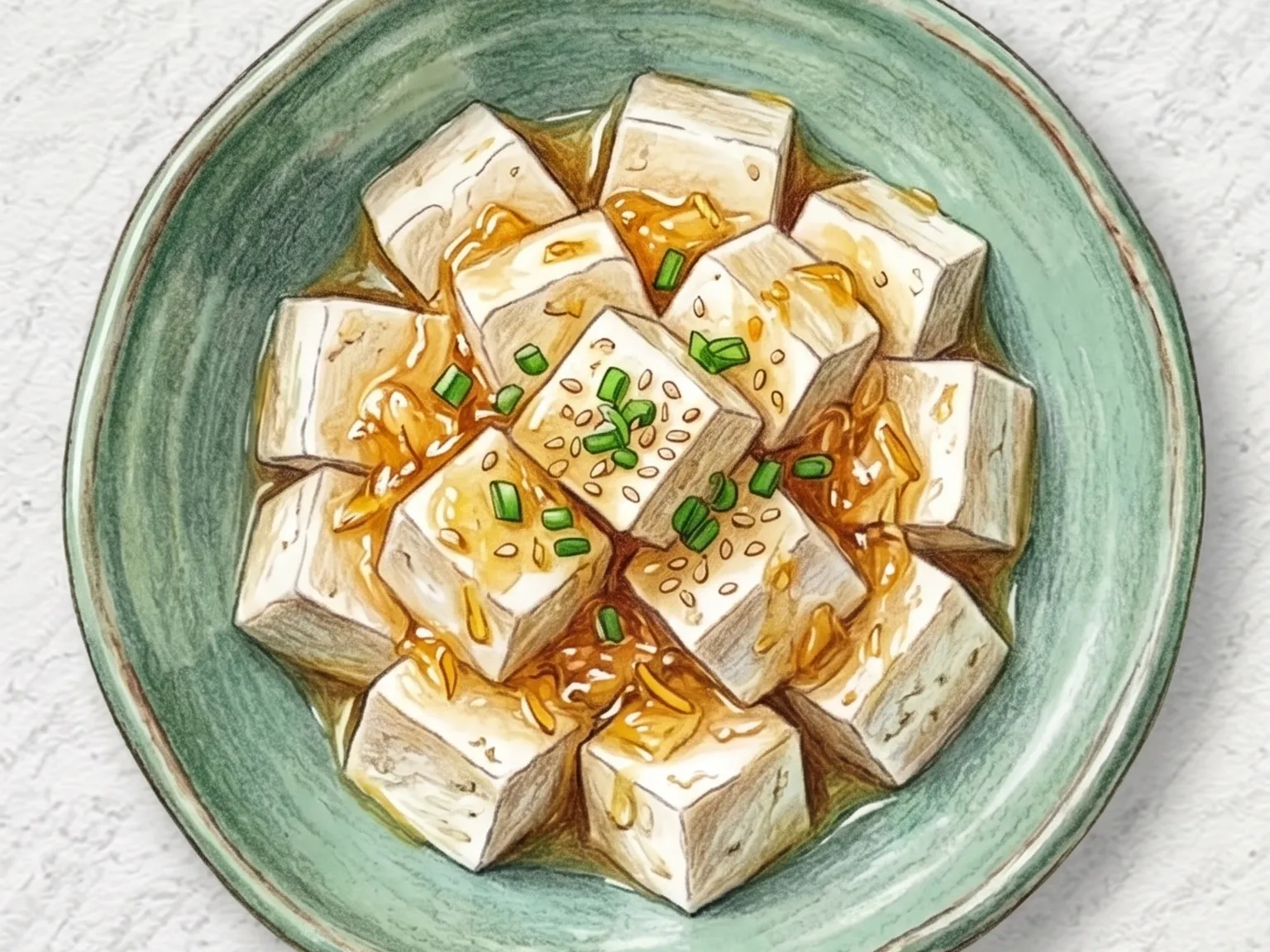
Dubu yuja muchim brings an uncommon citrus dimension to Korean tofu banchan by using yuja-cheong - a preserve of yuzu-like Korean citrus rind in honey or sugar. Soft tofu is blanched briefly to warm through and firm up slightly, then cut into bite-sized pieces and dressed while still warm so the pores open to absorb the vinaigrette. The dressing blends yuja-cheong with soy sauce, vinegar, and sesame oil - the citrus peel's fragrant bitterness cutting through the tofu's blandness in a way that soy sauce alone cannot. The dish sits in a category between Korean and Western salad sensibilities, light enough to serve as a starter. Yuja has been cultivated on Korea's southern coast - especially Goheung and Namhae - since the Joseon era. Best eaten cold or at room temperature within a few hours of assembly.
Adjust Servings
Instructions
- 1
Wrap tofu in paper towel and press out moisture for 10 minutes.
- 2
Pan-sear tofu on both sides until golden, then cool slightly.
- 3
Slice onion thinly and soak briefly in cold water.
- 4
Whisk yuja marmalade, soy sauce, vinegar, and olive oil.
- 5
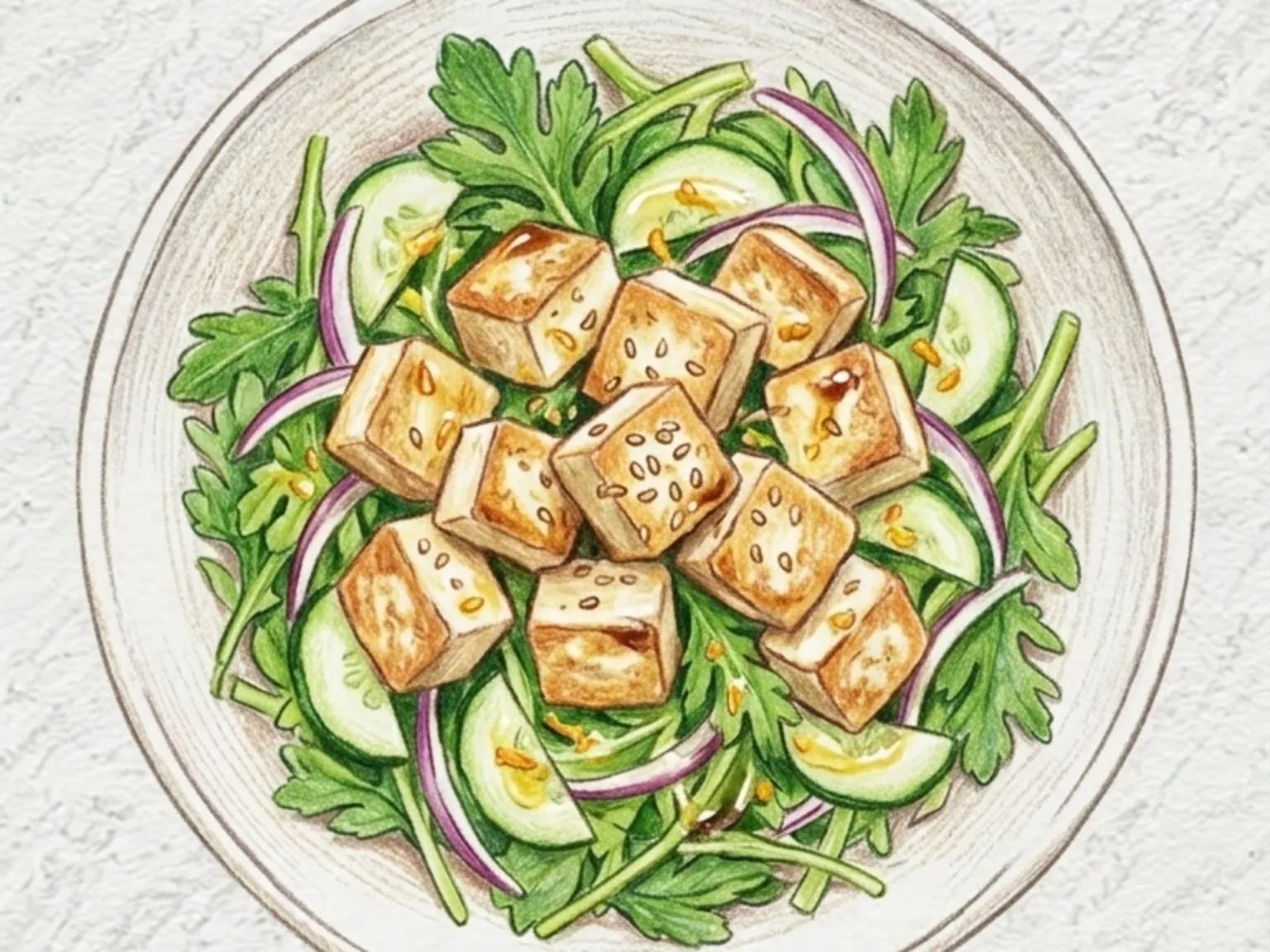
Arrange tofu, baby greens, and onion on a plate.
- 6
Drizzle dressing and finish with sesame seeds.
As an Amazon Associate, we may earn from qualifying purchases.
Tips
Nutrition (per serving)
More Recipes

Korean Spicy Ponytail Radish Salad
Chonggak - small ponytail radishes with green tops attached - are a fixture of Korean autumn markets. Unlike long-fermented chonggak kimchi, this fresh muchim salts sliced radishes for just 15 minutes to draw out water and concentrate crunch. Gochugaru, fish sauce, garlic, sugar, and vinegar coat the slices in a spicy-sour glaze. The radish bites back with a sharp, peppery heat typical of young Korean radishes. Best eaten the same day, before salt continues softening the texture.

Korean Tofu with Spicy Soy Dressing
This banchan takes pan-fried tofu in a sharper direction than the classic dubu-buchim by building the dressing around cheongyang chili - Korea's hottest common pepper variety. The tofu is seared hard in a hot pan until a mahogany crust forms, creating a barrier that keeps the interior creamy while providing textural contrast. The dressing is raw - soy sauce, minced cheongyang chili, scallion, garlic, and a drop of sesame oil - poured over while the tofu is still steaming. Cheongyang peppers deliver a clean, immediate heat that dissipates quickly, unlike the slow burn of gochugaru. The dish works well alongside mild soups like miyeok-guk, where the chili's sharpness provides a counterpoint to the broth's gentleness.

Korean Seasoned Green Seaweed
Cheonggak is a branching green seaweed from Korea's southern coast, prized for its oceanic perfume and cartilage-like crunch. A 10-second blanch brightens the color without destroying its snap. Squeezed and cut to finger lengths, it is dressed in a vinegar-forward sauce with soy, gochugaru, garlic, and sugar that cuts through the brininess. The seaweed must be served immediately - its texture collapses within hours. A specialty of Jeollanam-do coastal markets in winter and early spring.

Korean Seasoned Stonecrop Salad
Dollnamul - stonecrop, Sedum sarmentosum - is a succulent herb found along Korean stream banks in spring. Its plump, jade-green leaves burst with a mildly sour, grassy juice when bitten. Unlike most namul, dollnamul is never cooked - even seconds of heat destroy its crunch. Dressed immediately with gochugaru, vinegar, fish sauce, garlic, and sugar, it stays crisp and bright. The fish sauce provides a fermented undercurrent beneath the vinegar's sharpness. Must be eaten minutes after assembly.

Crown Daisy & Tofu Yuzu Salad
Crown daisy and tofu yuzu salad presses firm tofu dry, sears it in a pan for six to eight minutes until the surface develops a golden crust, and pairs it with crown daisy, half-moon cucumber slices, and thinly sliced red onion in a yuzu marmalade dressing. The yuzu's bright citrus fragrance and subtle bitterness meet crown daisy's bold herbal aroma, and the two botanical notes amplify each other rather than compete. Soy sauce and sesame oil anchor the dressing with fermented depth and nuttiness, preventing the floral top notes from floating untethered. The tofu's soft, creamy interior contrasts with the fibrous crown daisy stems, and cucumber's cool moisture keeps the overall impression light. Avoiding frequent flipping during searing lets a proper crust form on the tofu's surface.

Korean Spicy Braised Tofu
Spicy dubu-jorim pan-sears firm tofu slabs cut 1.5 centimeters thick until golden on both sides, then braises them in a sauce of soy sauce, gochugaru, garlic, and sugar. Searing first firms the tofu so it holds its shape through the eight-minute simmer, during which onion and green onion cook alongside in the reducing liquid. The chili flakes deliver a direct, persistent heat that penetrates the tofu as the sauce thickens, balanced by the sugar's sweetness. A final circle of sesame oil ties the flavors together with a roasted, nutty aroma.