Charim

2686 Korean & World Recipes

2686+ Korean recipes, clean and organized. Ingredients to instructions, all at a glance.

Duck a l'Orange

Duck a l'Orange

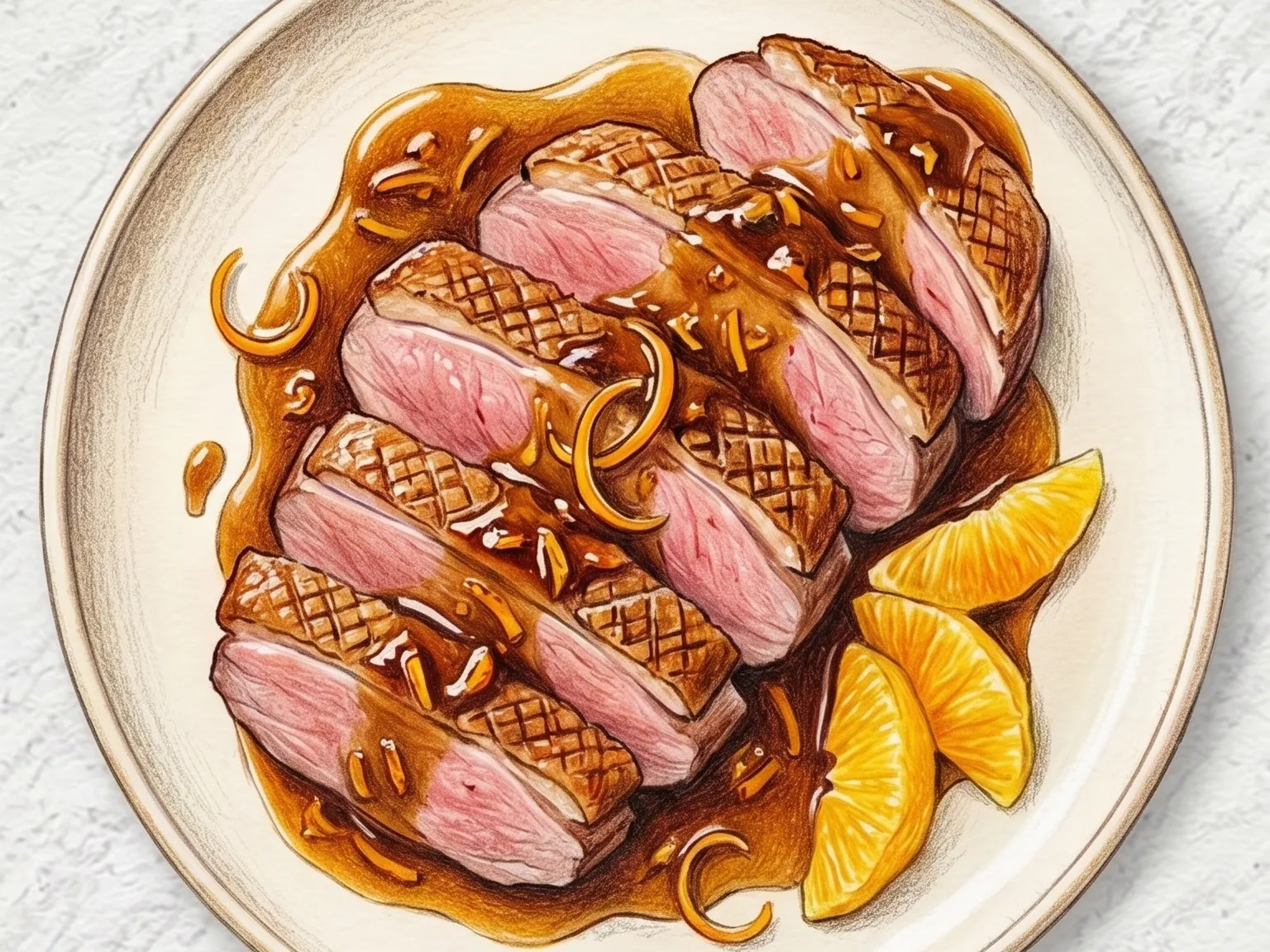
Duck à l'orange scores the skin of duck breast in a crosshatch pattern and seasons it with salt and pepper before placing it skin-side down in a cold pan. Rendering the fat slowly over medium-low heat is what produces the shatteringly crisp skin. After flipping and cooking two to three more minutes, the duck rests while the sauce is built in the same pan. Excess fat is poured off, then sugar and red wine vinegar caramelize together before orange juice and zest are added and reduced by half into a glossy sauce. A tablespoon of butter swirled in at the end adds body and sheen. The sauce can turn bitter if over-reduced, so careful timing when pulling it off the heat is essential.

Prep 20min Cook 25min 2 servings

Adjust Servings

2servings
servings

Instructions

  1. 1

    Score duck skin and season with salt and pepper.

  2. 2

    Place duck skin-side down in a cold pan and render fat over medium-low heat.

  3. 3

    Flip and cook 2-3 more minutes, then rest the duck.

  4. 4

    Pour off excess fat, then caramelize sugar with vinegar.

  5. 5

    Add orange juice and zest, reduce by half, then finish with butter.

  6. 6

    Slice the duck and spoon orange sauce over it.

🛒Shop Ingredients on Amazon

As an Amazon Associate, we may earn from qualifying purchases.

Tips

Render duck skin slowly over low heat for crisp texture.
Do not over-reduce the sauce or it can turn bitter.

Nutrition (per serving)

Calories
610
kcal
Protein
34
g
Carbs
16
g
Fat
45
g

More Recipes

Duck Confit
WesternHard

Duck Confit

Duck confit is a traditional French preservation technique that begins by rubbing duck legs with coarse salt, thyme, garlic, and black pepper, then curing them in the refrigerator for twelve hours to draw out moisture and concentrate flavor. After rinsing off the salt and patting dry, the legs are submerged in duck fat heated to 90 degrees Celsius and cooked for three hours at that gentle temperature. The prolonged low heat dissolves the connective tissue, yielding meat so tender it pulls apart with a fork. A final sear in a hot pan with the skin side down crisps the exterior into a shattering shell, creating the signature contrast between the silky interior and crackling skin. Leftover duck fat stores well and adds exceptional depth to roasted potatoes.

🎉 Special Occasion
Prep 20minCook 180min2 servings
Steak au Poivre (Peppercorn Sirloin with Brandy Cream Sauce)
WesternMedium

Steak au Poivre (Peppercorn Sirloin with Brandy Cream Sauce)

Steak au poivre presses coarsely crushed peppercorns into the surface of sirloin steaks before searing in a smoking-hot pan, then builds a sauce in the same pan using brandy, shallot, heavy cream, and Dijon mustard. Crushing the peppercorns rather than grinding them fine is essential - coarse pieces embed into the seared crust and release their sharp, aromatic bite when chewed, rather than just adding uniform heat. When brandy hits the hot pan, the alcohol ignites and burns off in seconds, leaving behind concentrated fruit sweetness and caramel notes that deepen the sauce. The cream tempers the pepper's aggressive heat into something rich and rounded, while the mustard adds a subtle acidic edge that keeps the sauce from feeling heavy. Bringing the steaks to room temperature for 20 minutes before cooking ensures even doneness from edge to center.

🍺 Bar Snacks🎉 Special Occasion
Prep 15minCook 20min2 servings
Chicken Chasseur
WesternMedium

Chicken Chasseur

Chicken chasseur is a French home-style braise where chicken thighs are seared skin-side down until golden, removed, and then button mushrooms, shallots, and garlic are sauteed in the same pan with butter. White wine deglazes the browned fond from the bottom, and after reducing by half, tomato puree, chicken stock, and thyme go in before the chicken returns for a covered twenty-five-minute simmer. The initial sear is essential - it creates the caramelized residue on the pan that becomes the backbone of the sauce's roasted depth. Mushrooms need a wide pan so their moisture evaporates before they start browning, which concentrates their earthy flavor rather than diluting it. The white wine's acidity intensifies as it reduces, and the tomato puree adds a gentle sweetness that balances it. Uncovering for the final five minutes thickens the sauce to the right consistency. Mashed potatoes or crusty bread are the traditional accompaniment for absorbing the sauce.

🎉 Special Occasion
Prep 20minCook 40min4 servings
Bouillabaisse (Provencal Saffron Seafood Stew)
WesternHard

Bouillabaisse (Provencal Saffron Seafood Stew)

Bouillabaisse is a Provencal seafood stew originating from Marseille fishermen cooking their unsold catch, distinguished by saffron's golden color and subtle floral aroma threaded through the broth. Fennel and tomatoes are first sauteed in olive oil to build an aromatic base, then saffron-infused fish stock is poured in and brought to a simmer. Firm-fleshed fish go in first, with shrimp and mussels added last to preserve their texture - overcooked shellfish turns rubbery and loses its snap. The broth derives its complexity from the layered contribution of multiple seafood varieties, each releasing a different aspect of ocean flavor into the pot. Traditionally, grilled baguette spread with garlicky rouille sauce is dipped into the broth alongside the stew.

🎉 Special Occasion
Prep 30minCook 40min4 servings
French Celeriac Remoulade
SaladsMedium

French Celeriac Remoulade

Celeriac remoulade shreds thickly peeled celeriac into fine matchsticks and dresses them in a mixture of Dijon mustard, mayonnaise, lemon juice, and white wine vinegar. Tossing the shreds with half the lemon juice immediately after cutting prevents enzymatic browning, while the remaining juice goes into the dressing for acidity. The Dijon's sharp heat balances the mayonnaise's richness, and a short 15-minute chill in the refrigerator lets the flavors meld evenly into the celeriac. Cutting the matchsticks as thin as possible increases surface area for faster dressing absorption, and overnight refrigeration deepens the flavor further.

🥗 Light & Healthy Quick
Prep 20min2 servings
Classic Croissant
BakingHard

Classic Croissant

A classic croissant is built through lamination - a process of folding cold butter into yeast-leavened dough in successive turns to create dozens of alternating layers. Three sets of folds produce a structure so layered that when baked, the butter melts and releases steam, forcing each layer apart from within. The exterior caramelizes into a shell so thin and crisp it shatters at the slightest pressure, scattering golden flakes. The interior, by contrast, is a honeycomb of soft, airy strands held together by the ghost of dissolved butter. Tearing a warm croissant apart releases a rush of butter fragrance that fills the room. The dough itself carries a faint sweetness from sugar and milk, but the dominant flavor is pure butter, amplified and transformed by heat.

🎉 Special Occasion
Prep 120minCook 18min8 servings
More Western →