Korean Seasoned Fatsia Shoots
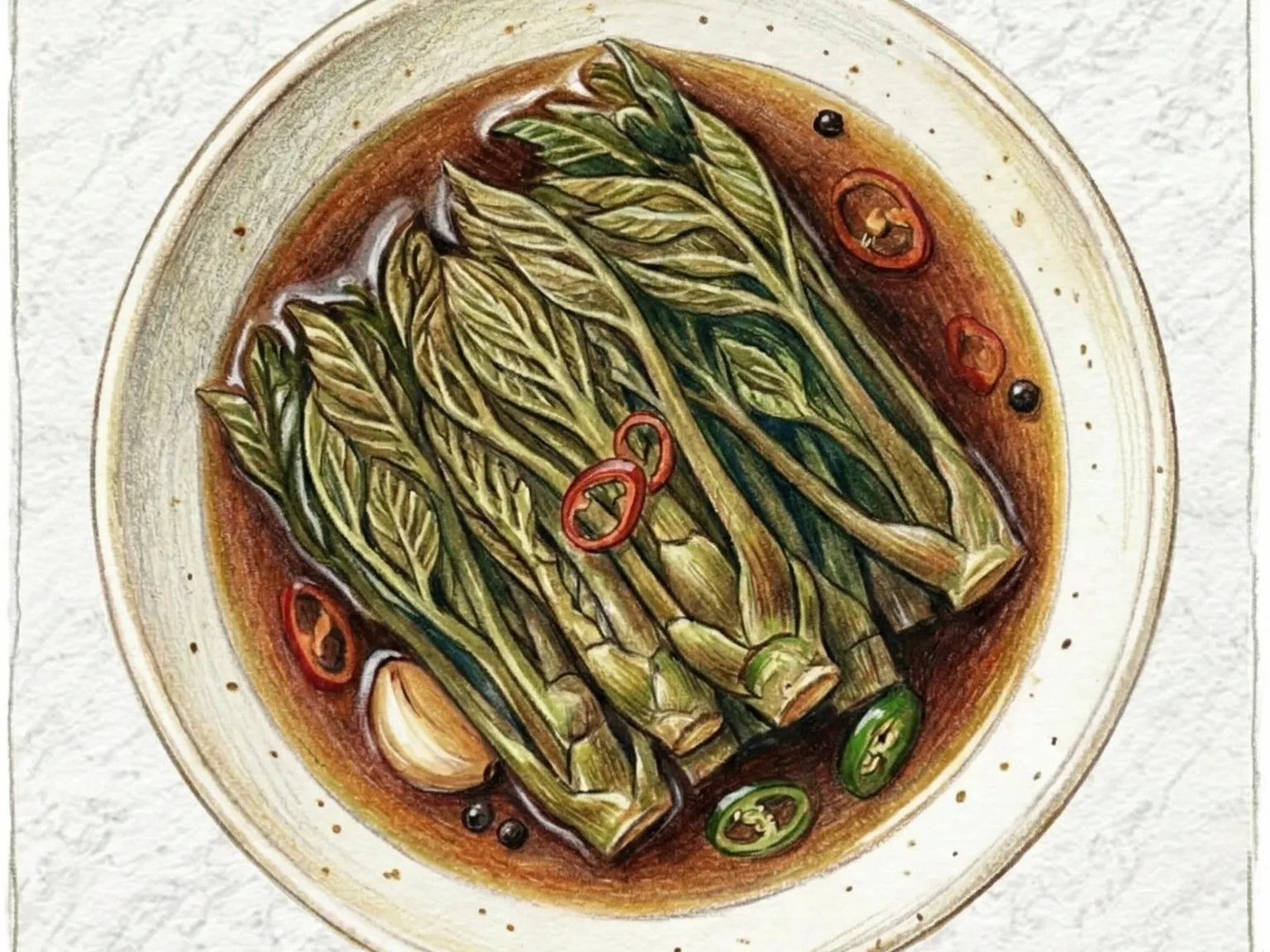
Dureup, the young shoots of aralia elata, emerge for barely three weeks each April from thorny stalks, ranking among the most prized of Korea's spring mountain vegetables. Each shoot carries a distinctive piney, slightly resinous fragrance that cannot be found in any other Korean namul. Blanching the shoots in salted water for exactly 40 seconds softens the fibrous base of the stalk while preserving the volatile aromatic oils concentrated at the leaf tips. The traditional dressing is cho-gochujang, a vinegared chili paste whose acidity and sweetness provide a flavor framework without overwhelming the shoots' natural bitterness. In Korean folk medicine, dureup has long been associated with blood sugar regulation, which contributes to the premium it commands at spring markets. The fragrance fades rapidly after harvest, so the shoots are best eaten the same day they are picked, and even refrigerated storage should not extend beyond one day.
Adjust Servings
Instructions
- 1
Cut off the tough base of the shoots and peel the outer skin.
- 2
Blanch shoots in boiling salted water for 1 minute 30 seconds.
- 3
Rinse in cold water, drain, split in half, and arrange on a plate.
- 4
Mix gochujang, vinegar, sugar, minced garlic, and sesame oil for the sauce.
- 5
Serve the sauce on the side or drizzle over the shoots.
As an Amazon Associate, we may earn from qualifying purchases.
Tips
Nutrition (per serving)
Goes Well With

Korean Gochujang Grilled Garlic Scapes
Maneuljjong-gochujang-gui is a Korean vegetable side dish where garlic scapes cut into six-centimeter pieces are blanched for just thirty seconds, then stir-grilled in a pan with a sauce built from gochujang, gochugaru, soy sauce, oligosaccharide syrup, and minced garlic. The thirty-second blanch is precisely timed to loosen the tough outer fibers of the scape so the sauce has a surface to cling to, while the crisp interior stays intact. Plunging the scapes into cold water immediately after blanching is necessary to halt carryover cooking and lock in the texture. The garlic scape's own sharp, pungent bite merges with gochujang's fermented depth to build a layered spiciness that carries more complexity than raw chili heat alone, and the oligosaccharide syrup contributes both a glossy coating and a restrained sweetness that rounds off the sauce. When the sauce starts catching on the pan, adding a tablespoon of water loosens it without washing out the flavor. Sesame oil and toasted sesame seeds go on at the very end to finish the dish with a nutty, roasted aroma.

Korean Steamed Tofu with Soy Sauce
Dubu-jjim is firm tofu steamed and topped with a seasoning sauce of soy sauce, gochugaru, chopped green onion, garlic, and sesame oil. Cutting the tofu into thick slabs before steaming lets heat penetrate evenly, producing pieces with slight resistance on the outside and a silky interior. The soy and chili sauce drizzled over the warm tofu seeps into each slice, delivering salty and mildly spicy flavors throughout. Sesame oil and seeds finish with a toasted aroma. Cooked without any added oil, it is a clean, protein-rich banchan that fits well on a vegetarian spread. Lightly salting the tofu before steaming draws out excess moisture, which allows the seasoning sauce to absorb more deeply and firms up the texture.

Korean Stir-fried Garlic Scapes
Maneul jong bokkeum is a Korean banchan of garlic scapes cut into 4 cm lengths and stir-fried with onion, then coated in a sauce of gochujang, soy sauce, and oligosaccharide syrup. The pungent, sharp character of garlic scapes meets gochujang's spicy heat and the syrup's glossy sweetness, producing a balanced three-way flavor of salty, sweet, and spicy that is immediately addictive. Timing is the most important variable in making this dish properly. Garlic scapes become tough and fibrous if overcooked, so pulling them from the heat while the color is still a vivid, saturated green is essential. When cooked to the right point, the exterior of each scape is lacquered with the glossy sauce while the interior stays crisp and slightly snappy. The onion caramelizes gently as it cooks, adding a background sweetness that rounds out the sauce without competing with the garlic. Sesame seeds scattered over the finished dish add a layer of toasted nuttiness. The banchan holds well in the refrigerator for three to four days, making it a practical dish to prepare ahead of time. It works equally well as a rice accompaniment or as a drinking snack.

Korean Garlic Chive Egg Soup
This simple home-style soup combines garlic chives, egg, and tofu in a light broth seasoned with soup soy sauce and garlic. Tofu cubes go in first to warm through for two minutes, then beaten egg is poured in a slow, circular stream and left undisturbed for thirty seconds to form silky ribbons. Chives and sesame oil are added in the final half-minute so their aroma stays vivid in the finished bowl. Because the ingredient list is short, cutting the tofu into even cubes and managing the heat carefully are what separate a polished result from a cloudy one. Pouring the egg too forcefully or stirring immediately breaks up the ribbons and muddies the broth.
More Recipes

Korean Seasoned Cedrela Shoots
Cedrela shoots appear for barely two weeks each April, making chamjuk one of Korea's most fleeting spring ingredients. The young tips carry a resinous, walnut-like scent found in no other cultivated or foraged green. A 40-second blanch in well-salted boiling water softens the fibrous stems while locking in that distinctive fragrance - go longer and the aroma disperses. Dressed with only soy sauce, garlic, and sesame oil, the dish keeps the shoots' natural perfume at the front. Traditionally gathered from mountainside groves and brought to spring holiday tables, chamjuk disappears from markets once the brief window closes, making it a seasonal green genuinely worth seeking out.

Korean Seasoned Perilla Sprout Namul
Kkaetsun-namul-muchim uses young perilla shoots rather than the mature leaves, blanched and dressed with doenjang and perilla oil. Kkaetsun has markedly more tender stems and a far more concentrated aroma than full-grown kkaennip, and it appears in traditional markets only during a short window from summer into early autumn, often sourced directly from growers. Trimming the thick lower stems before blanching is important -- they stay tough even after cooking -- and forty seconds in boiling salted water is the right interval to soften the stalks without cooking off the volatile fragrance. A cold-water rinse and a firm squeeze to remove excess moisture sets the texture before seasoning. Hand-dressing with doenjang, soup soy sauce, garlic, and perilla oil creates a layered herbal depth: the fermented paste's earthy umami meets the shoot's concentrated green perfume in a way neither ingredient achieves alone. Perilla oil is preferred over sesame oil because it comes from the same botanical family as the shoots, making the pairing feel coherent rather than incidental. This seasonal namul works well as an everyday banchan, a bibimbap component, or a substitute whenever a recipe calls for spinach namul.

Korean Seasoned Carrot Namul
Carrot namul is one of the five-color banchan Koreans prepare for ancestral rites, where the orange of carrot represents fire in the traditional symbolic scheme. Julienned thin, the carrots are salted briefly to pull out excess moisture, then stir-fried with minced garlic over medium heat for two to three minutes - just enough to cook off the raw edge while preserving an audible crunch in every strand. No soy sauce or chili powder enters the pan; seasoning is kept to salt alone so that the carrot's natural sweetness remains the central flavor rather than being buried under stronger condiments. A final drizzle of sesame oil and a scatter of sesame seeds round out this clean, single-ingredient side dish that earns its place on both ceremonial tables and everyday meals.

Korean Seasoned Stonecrop Salad
Dollnamul muchim is a spring banchan of raw stonecrop (Sedum sarmentosum) dressed in a seasoning mix of gochugaru, vinegar, fish sauce, garlic, and sugar. The plant grows on rocky stream banks and low walls across Korea; its plump, jade-green leaves carry a faintly sour, grassy juice that releases when bitten. Heat collapses the texture entirely - a few seconds of blanching is enough to destroy the crunch - so dollnamul is always dressed raw. The process is minimal: a quick rinse in cold water, a firm shake to remove excess moisture, and an immediate toss with the seasoning. The structural logic of the dressing has fish sauce providing fermented depth beneath the vinegar's sharp acidity; if either element dominates, the herb's clean, fresh aroma disappears. The dish must be eaten within minutes of dressing. Osmotic pressure begins pulling juice from the leaves almost immediately, and the texture softens to a limp mass within half an hour. Dollnamul muchim is a common addition to spring picnic lunches and is best served cold.

Korean Shepherd's Purse Kimchi
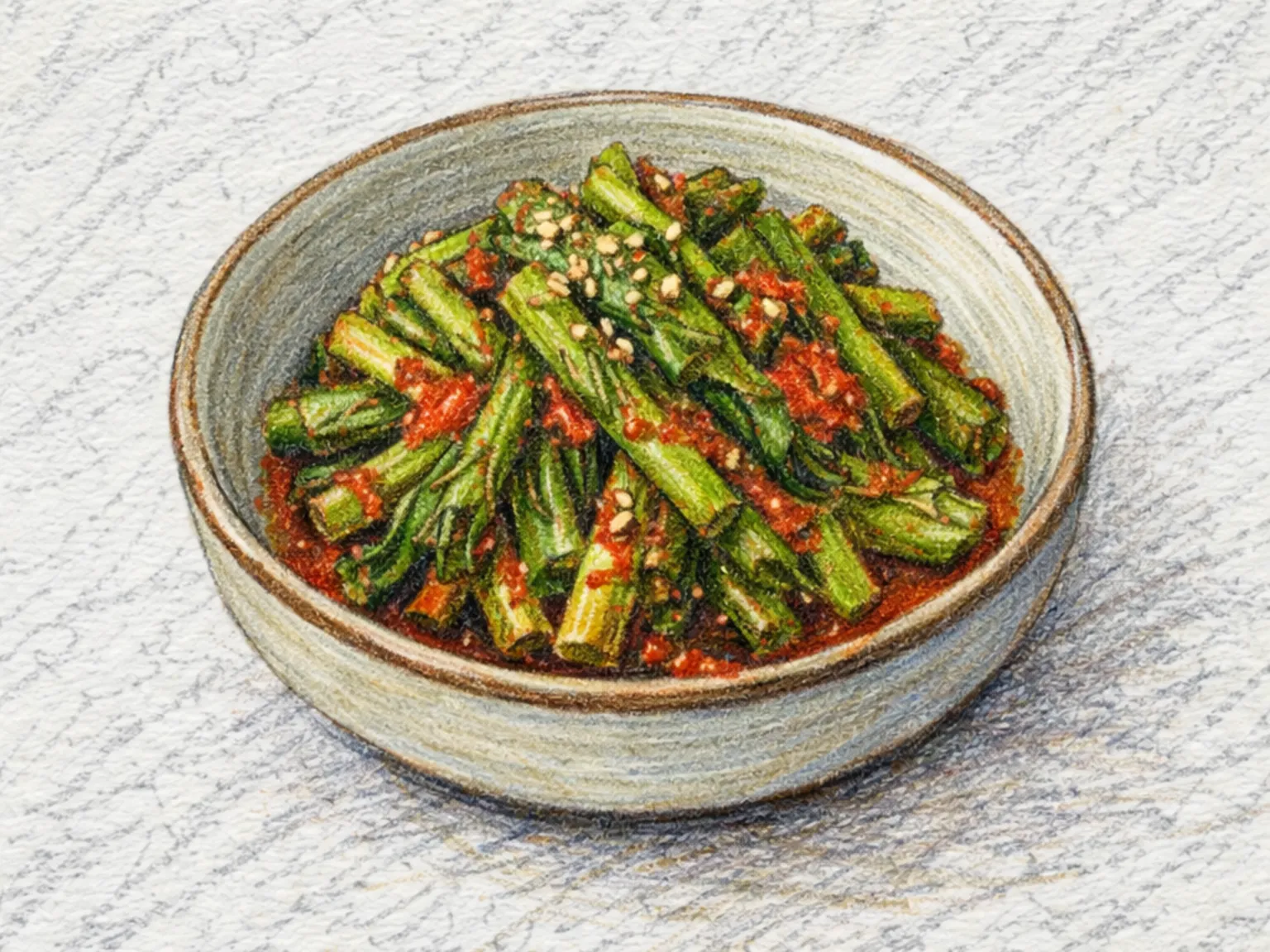
Naengi kimchi is a seasonal Korean side dish where shepherd's purse, an early-spring wild herb with a distinctive earthy fragrance, is blanched for just twenty seconds in boiling salted water. This brief blanching is the defining technique - long enough to strip away the raw bitterness and any soil odor, yet short enough to preserve the herb's own clean, spring-like aroma. The cooled and thoroughly squeezed greens are then dressed in a paste of gochugaru, anchovy fish sauce, minced garlic, and sweet rice paste, which provides enough body and viscosity to coat each slender stem evenly. The fish sauce's fermented depth meets the herb's green, earthy character, producing a layered flavor that neither ingredient achieves on its own. Sesame seeds scattered on top add a quiet toasted crunch. At least two hours of refrigeration allows the seasoning to settle and deepen before the kimchi is at its best.

Korean Aralia Shoot Jeon (Spring Herb Shoot Pancake)
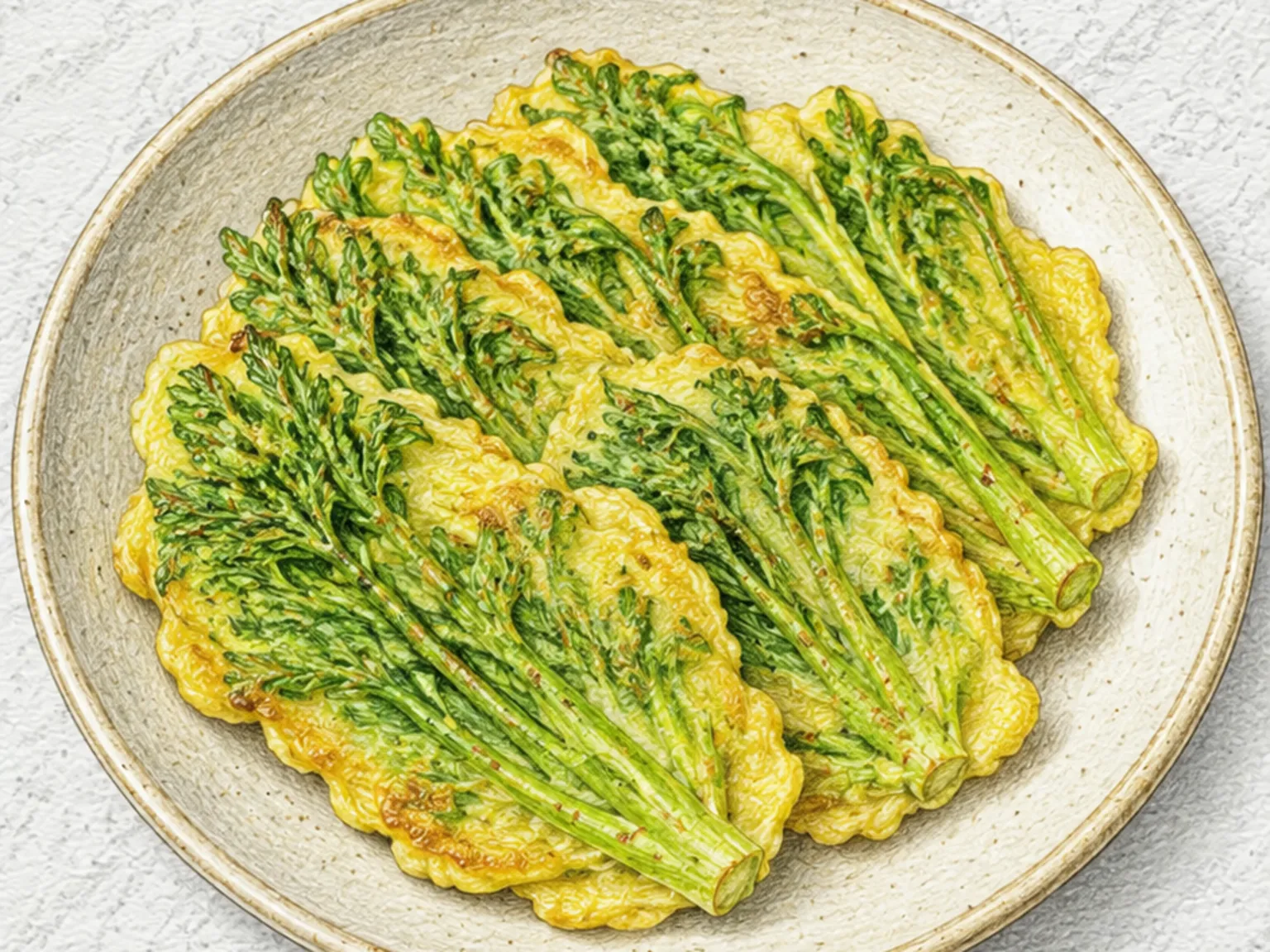
Durup-jeon is a seasonal Korean pancake made during the brief spring window when aralia shoots are available, wrapped in a thin coating of flour and egg wash to let the vegetable's bitter-herbal fragrance come through without interruption. The shoots are blanched for thirty seconds in vinegared boiling water to tone down their harshness while preserving the crunch of the stems, then patted thoroughly dry before a light dusting of flour ensures the egg coating clings evenly. Cooking over medium-low heat matters here because the egg browns steadily without scorching, giving time for the heat to reach the interior of each stem and soften it fully. Higher heat browns the outside quickly but leaves the inner stem tough and stringy. Dipping the finished pancakes in cho-ganjang, a mixture of soy sauce and vinegar, sharpens the distinctive wild mountain herb character that defines aralia. Because the shoots appear only in early spring, this pancake marks the season at the table in a way no other dish does.