Korean Spicy Pork Duruchigi
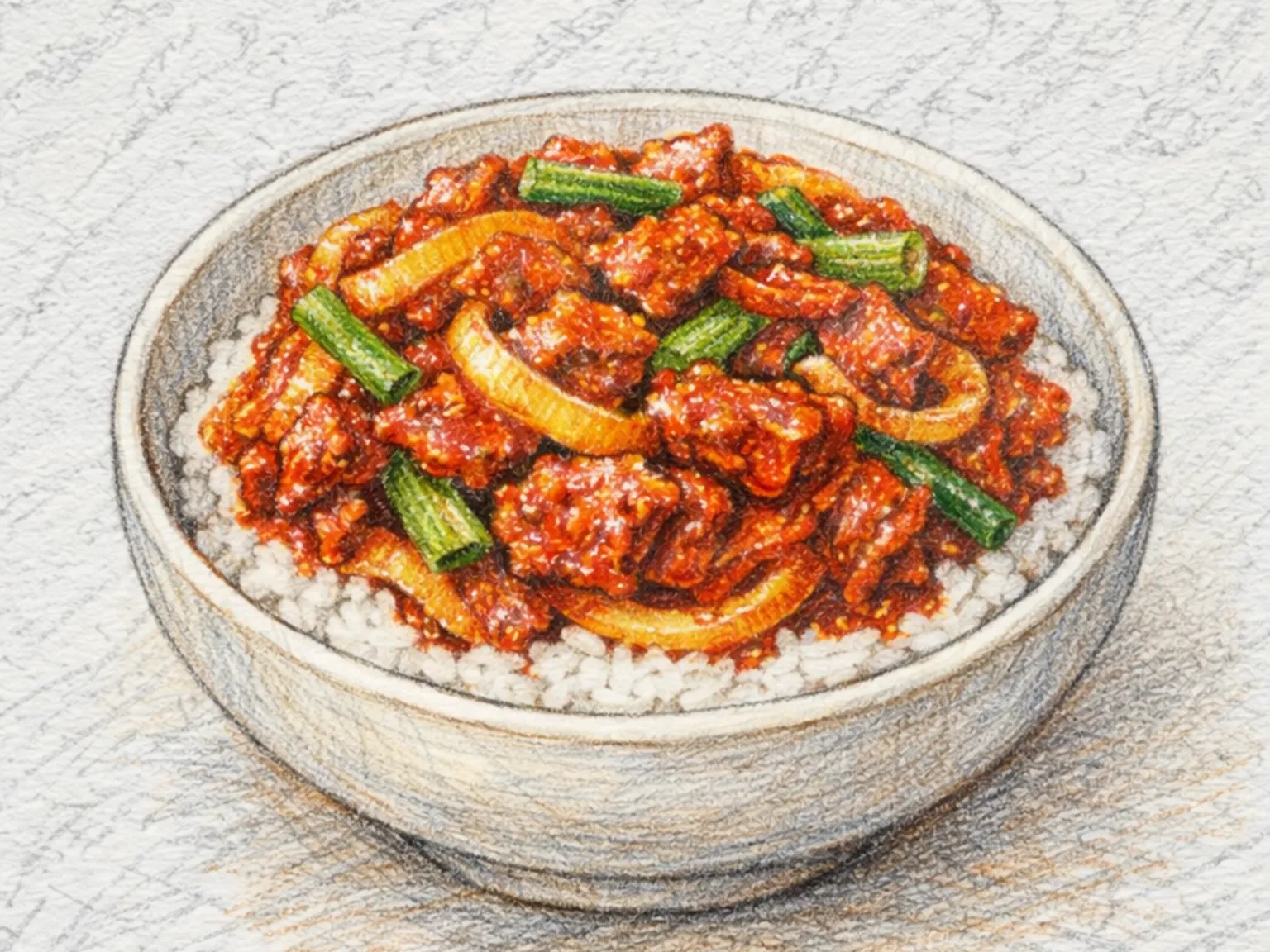
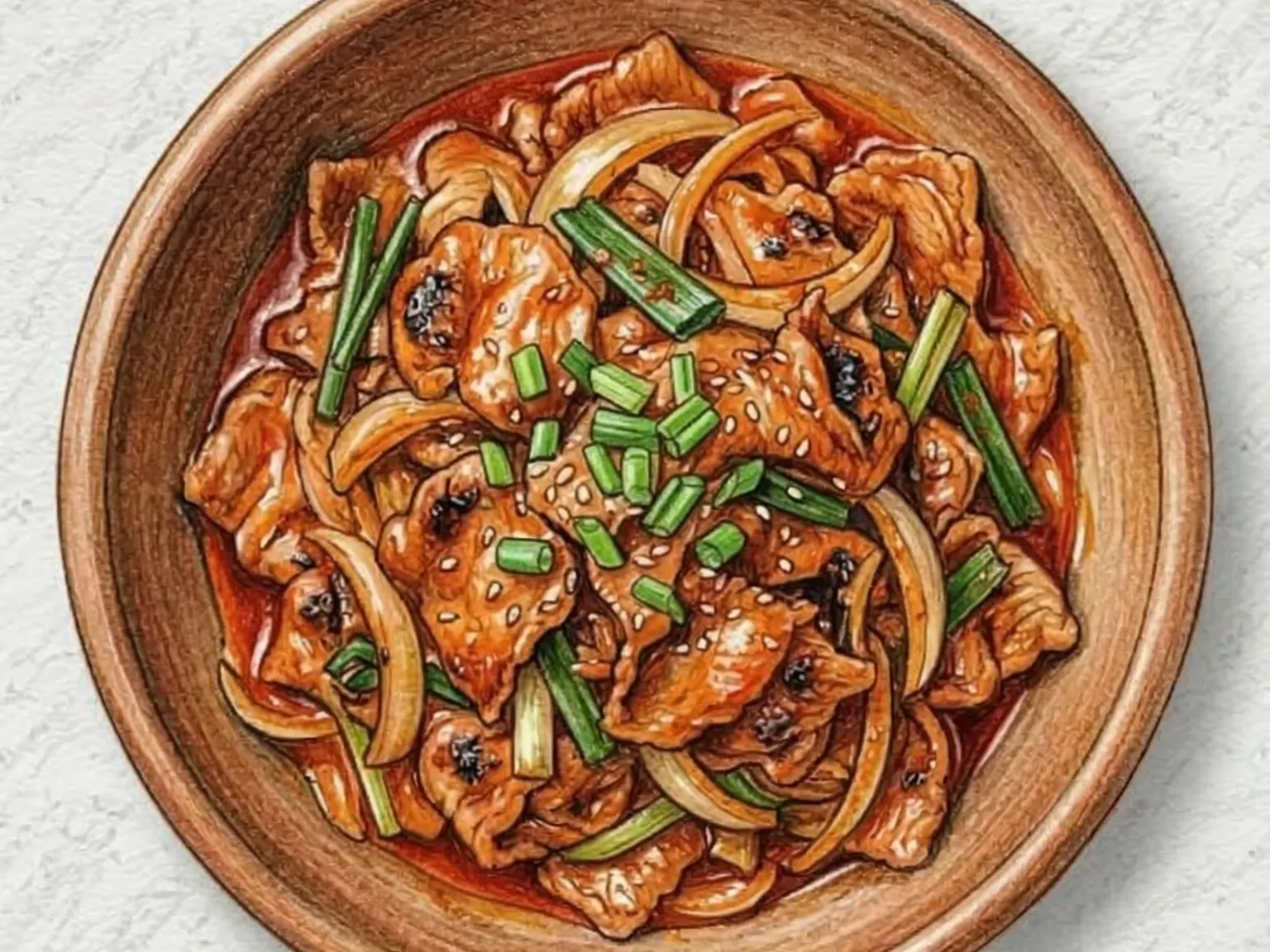
Duruchigi is a Korean spicy pork stir-fry made by flash-cooking sliced pork shoulder with onions and scallions in a gochujang-based sauce over high heat. The intense heat sears the meat, imparting a smoky wok flavor that elevates the dish beyond its simple ingredients. Gochujang provides fermented chili heat while sugar balances with sweetness, and scallions add a sharp, fresh finish. It is one of the most popular everyday pork dishes in Korean restaurants and home kitchens alike.
Adjust Servings
Instructions
- 1
Slice pork into bite-size pieces, then cut onion and scallion into thick pieces.
- 2
Mix gochujang, gochugaru, soy sauce, garlic, and sugar to make the sauce.
- 3
Coat the pork with the sauce and marinate for 10 minutes.
- 4
Stir-fry the pork first in a hot pan, then add onion and cook over high heat.
- 5
Add scallion and stir-fry for 1–2 more minutes until the sauce slightly reduces.
As an Amazon Associate, we may earn from qualifying purchases.
Tips
Nutrition (per serving)
More Recipes

Korean Kimchi Pork Stir-fry
Kimchi jeyuk bokkeum is a Korean stir-fry of pork shoulder seasoned with gochujang, gochugaru, and soy sauce, then cooked over high heat with well-fermented aged kimchi. The kimchi's deep acidity tempers the pork fat while amplifying the spicy kick of the chili paste. Searing the pork first builds caramelized edges, and adding kimchi and onion afterward lets the sauce reduce into a concentrated glaze. Scallion and sesame oil finish the dish, and wrapping portions in lettuce leaves softens the heat.

Korean Stir-fried Garlic Scapes
Maneul jong bokkeum is a Korean side dish of garlic scapes cut into 4 cm lengths and stir-fried with onion, then coated in a sauce of gochujang, soy sauce, and oligosaccharide syrup. The garlic scapes' sharp, pungent bite meets gochujang's spicy warmth and the syrup's glossy sweetness, producing a three-way balance of salty, sweet, and hot. Overcooking makes the scapes tough, so pulling them from the heat while they are still bright green is essential. Sesame seeds add a finishing nuttiness, and the dish keeps well refrigerated for several days of banchan rotation.

Korean Spicy Beef Stir-Fry
Sogogi gochujang-bokkeum marinates thin-sliced beef in a paste of gochujang, soy sauce, sugar, and minced garlic, then stir-fries it over high heat. The chili paste's spiciness and the sugar caramelize together on the meat's surface, building a dark, sticky glaze with layered heat. Onion cooked alongside the beef releases moisture that helps the seasoning distribute evenly across every slice. A finish of sesame oil adds a roasted nuttiness on top of the bold, spicy-sweet profile -- intensely flavored enough that a small portion carries a full bowl of rice.

Korean Spicy Pork Bean Sprout Stir-fry (Kongbul)
Kongbul is a fiery Korean stir-fry of pork shoulder tossed in a gochujang-gochugaru-soy sauce blend and cooked over high heat, with bean sprouts added at the very end to preserve their crunch. The gochujang's thick spiciness combines with rendered pork fat for an intense, mouth-coating savoriness, while the bean sprouts release just enough moisture to keep the sauce from scorching. The sprouts must be stir-fried only until barely wilted to maintain their snap. Chopped scallion goes in last, and mixing the whole thing into a bowl of rice stretches this into a full, hearty meal.

Korean Spicy Gochujang Dried Squid Stir-Fry
Jinmichae - shredded dried squid - is a Korean pantry staple prized for its chewy texture and umami that intensifies the longer you chew. This preparation coats the strands in a gochujang glaze, making it one of the most widely kept banchan in Korean refrigerators. Briefly soaking the dried squid in water before squeezing softens the tough fibers and opens them to absorb the sauce. The sauce - gochujang, gochugaru, rice syrup, soy sauce, and garlic - is stir-fried first over low heat to mellow the raw chili edge, then the squid is tossed through quickly. Sesame oil and seeds finish the dish off heat, producing a sweet-spicy coated snack that keeps well for days.

Korean Braised Lotus Root with Pork
Yeongeun dwaejigogi jorim is a Korean braise of lotus root and pork shoulder in a gochujang and soy sauce seasoning. The lotus root absorbs the spiced braising liquid while maintaining its signature crisp bite, and the pork shoulder softens as its fat renders into the sauce, building depth. Gochujang provides a steady warmth while soy sauce anchors the umami, and oligosaccharide syrup glazes everything in a glossy coat. The textures hold up well even after cooling, making this a practical banchan for lunchboxes and meal prep.