Korean Aralia Shoot Jeon (Spring Herb Shoot Pancake)
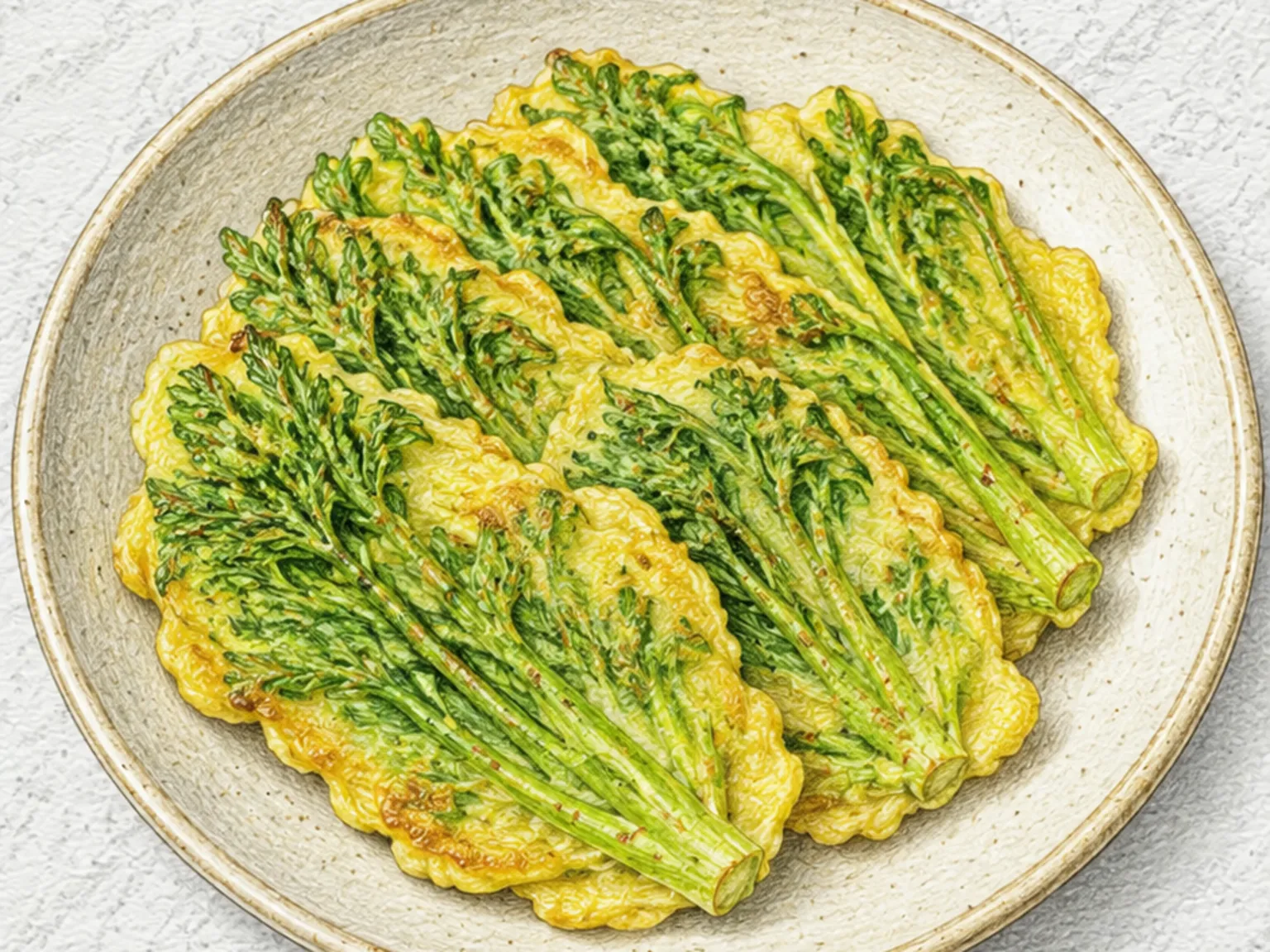
Durup-jeon is a seasonal Korean pancake made during the brief spring window when aralia shoots are available, coated in a thin layer of flour and egg wash to showcase the vegetable's distinctive bitter-herbal fragrance. The shoots are blanched for just thirty seconds in vinegared boiling water to remove harshness while keeping the stems crisp, then thoroughly dried and lightly floured so the egg coating adheres evenly. Cooking over medium-low heat ensures the egg browns gently without scorching, allowing the interior stems to soften properly-high heat leaves them tough. Dipping in cho-ganjang, soy sauce mixed with vinegar, sharpens the wild mountain herb character of the aralia.
Adjust Servings
Instructions
- 1
Trim aralia shoots and blanch 30 seconds with a little vinegar.
- 2
Cool in cold water and squeeze dry.
- 3
Lightly coat shoots with flour.
- 4
Beat eggs with salt and dip the shoots.
- 5
Pan-fry on medium-low heat until both sides set.
- 6
Remove once lightly golden.
As an Amazon Associate, we may earn from qualifying purchases.
Tips
Nutrition (per serving)
More Recipes

Korean Aralia Shoot Soy Pickle
Durup jangajji is a Korean soy pickle that preserves spring aralia shoots beyond their brief season by curing them in a brine of soy sauce, vinegar, and sugar. Pickling the shoots raw rather than blanching them maintains their crisp stem texture and sharp, bittersweet fragrance for longer. Soy sauce brings umami that complements the woody, wild-herb character of the aralia, while garlic and cheongyang chili add a lingering heat at the finish. Refrigerated, this jangajji keeps for over two weeks, making it a practical way to enjoy the distinctive aroma of spring mountain greens well into the warmer months.

Korean Crown Daisy Pancake
Fragrant crown daisy leaves are coated in a light pancake batter and pan-fried until the edges crisp and the herb's aroma intensifies. Heat amplifies the crown daisy's grassy, slightly bitter character, and the scent rises through the thin layer of batter as the jeon cooks. Egg in the batter provides structure, helping the exterior hold its crunch, while a small addition of potato starch keeps the texture light and prevents sogginess as the pancake cools. Sliced onion mixed into the batter introduces a gentle sweetness that offsets the herb's bitterness. Cooking over medium-low heat with ample oil ensures the interior sets evenly before the surface browns too deeply, and waiting until one side has fully firmed before flipping prevents the pancake from falling apart. The finished jeon is served with a dipping sauce of soy sauce and vinegar, whose acidity lifts the richness of the fried exterior and highlights the crown daisy's herbal notes.

Korean Water Parsley Pancake
Minari-jeon is a Korean spring pancake made by cutting water parsley into five-centimeter lengths and mixing them into a batter of Korean pancake mix, water, egg, and salt, then pan-frying in oil until golden on both sides. Water parsley's cool, herbaceous fragrance permeates the entire pancake, and its stems provide a fresh, snappy bite against the soft batter. Spreading the mixture thin and cooking over medium heat for three to four minutes per side ensures crisp, almost fried edges, while overcooking quickly diminishes the herb's distinctive aroma. Dipping slices in cho-ganjang-soy sauce mixed with vinegar-balances the subtle bitterness of the parsley with sharp acidity.

Korean Seasoned Wild Chive
A pungent, no-cook spring side dish - raw Korean wild chives with a sharp garlic kick that clears the palate in one bite. Dallae emerges from hillsides in March, thinner and far more intense than cultivated chives. Dressed in soy sauce, gochugaru, vinegar, sugar, and sesame oil, the tiny bulbs and slender leaves deliver a nose-clearing zing. Koreans pair this muchim with doenjang-jjigae, where the raw chive's sharpness contrasts the stew's depth.

Korean Napa Cabbage Pancake
Baechu jeon is a Korean pancake made by coating napa cabbage leaves in a thin flour batter and pan-frying until golden. Outer leaves of medium size work best; if the stem end is too thick, it is flattened with the back of a knife so the batter adheres evenly and the leaf does not buckle during cooking. The batter is mixed thin, roughly equal parts buchim flour and water, so it forms a light coating rather than a heavy shell that would mask the cabbage flavor. Generous oil in the pan and steady medium heat produce a crisp exterior while the cabbage inside softens and releases its gentle sweetness. Each side must brown fully before flipping to prevent the pancake from breaking apart. A dipping sauce of soy sauce with vinegar and sliced cheongyang chili adds acidity and heat that offset the mild character of the pancake.

Korean Wild Chive Pickle (Spring Chive Soy Brine)
Dallae jangajji is a seasonal Korean pickle made by submerging spring wild chives in a brine of soy sauce, vinegar, and sugar with sliced Cheongyang chili and sesame seeds. Cleaning the dirt from the bulb-like roots and cutting the chives to five-centimeter lengths is the first step, after which the brine must be cooled past boiling point before pouring to preserve the wild chive's volatile, peppery aroma. Sesame seeds scattered on top add a mild toasted note. Ready after one day of refrigeration, this pickle is at its best as a springtime accompaniment to grilled meat, where the sharp, garlicky bite of the chives cuts cleanly through richness.