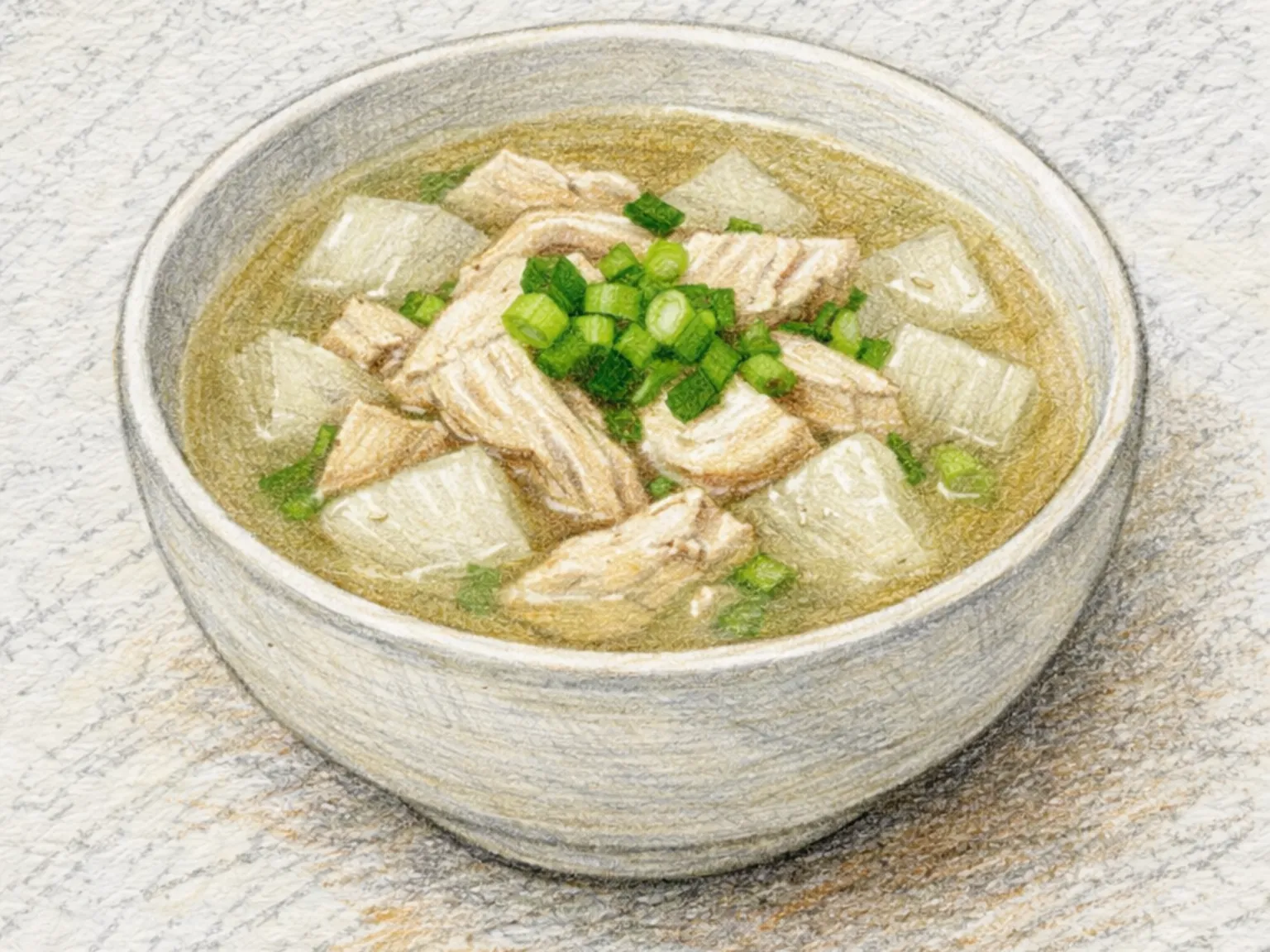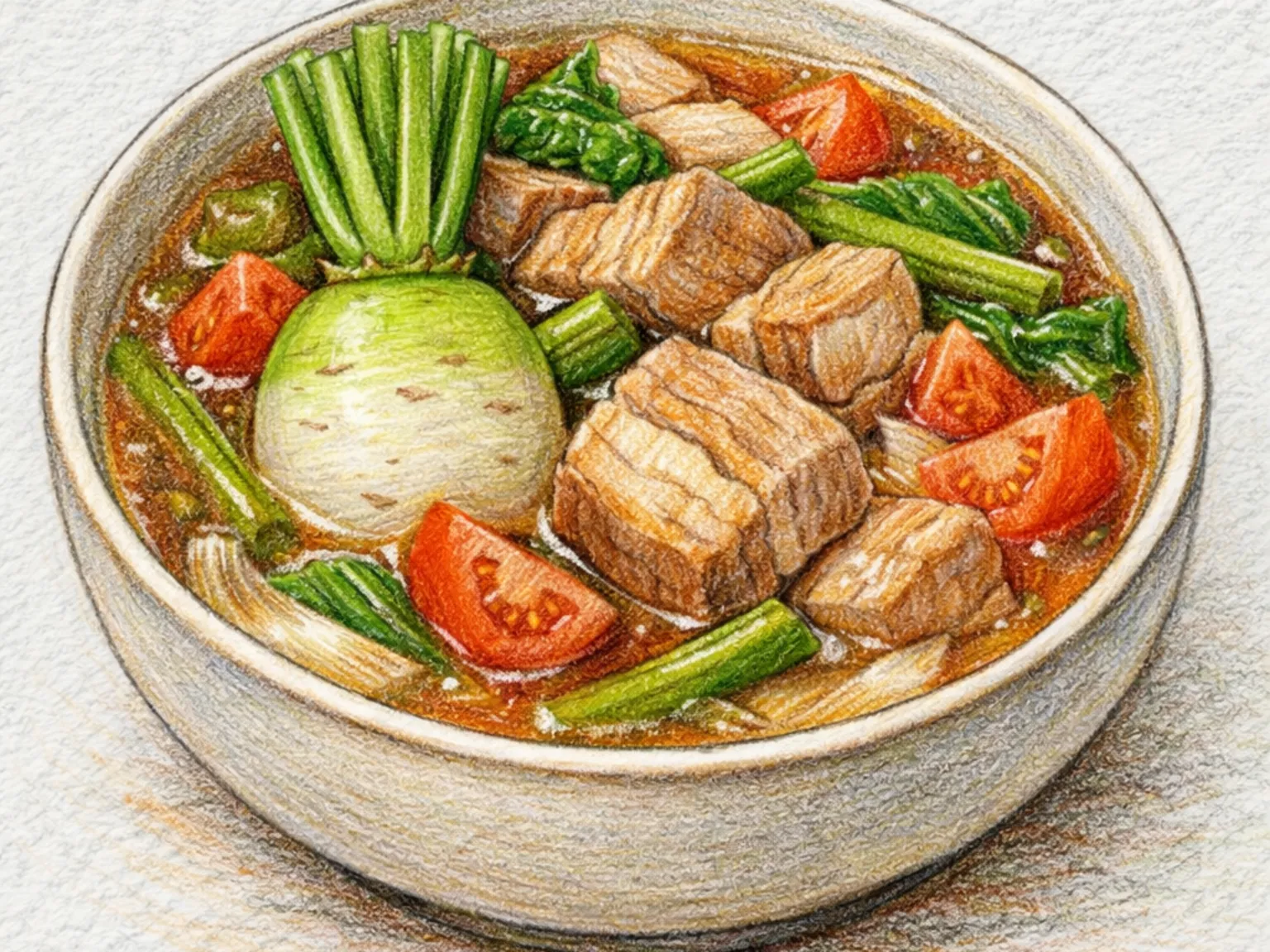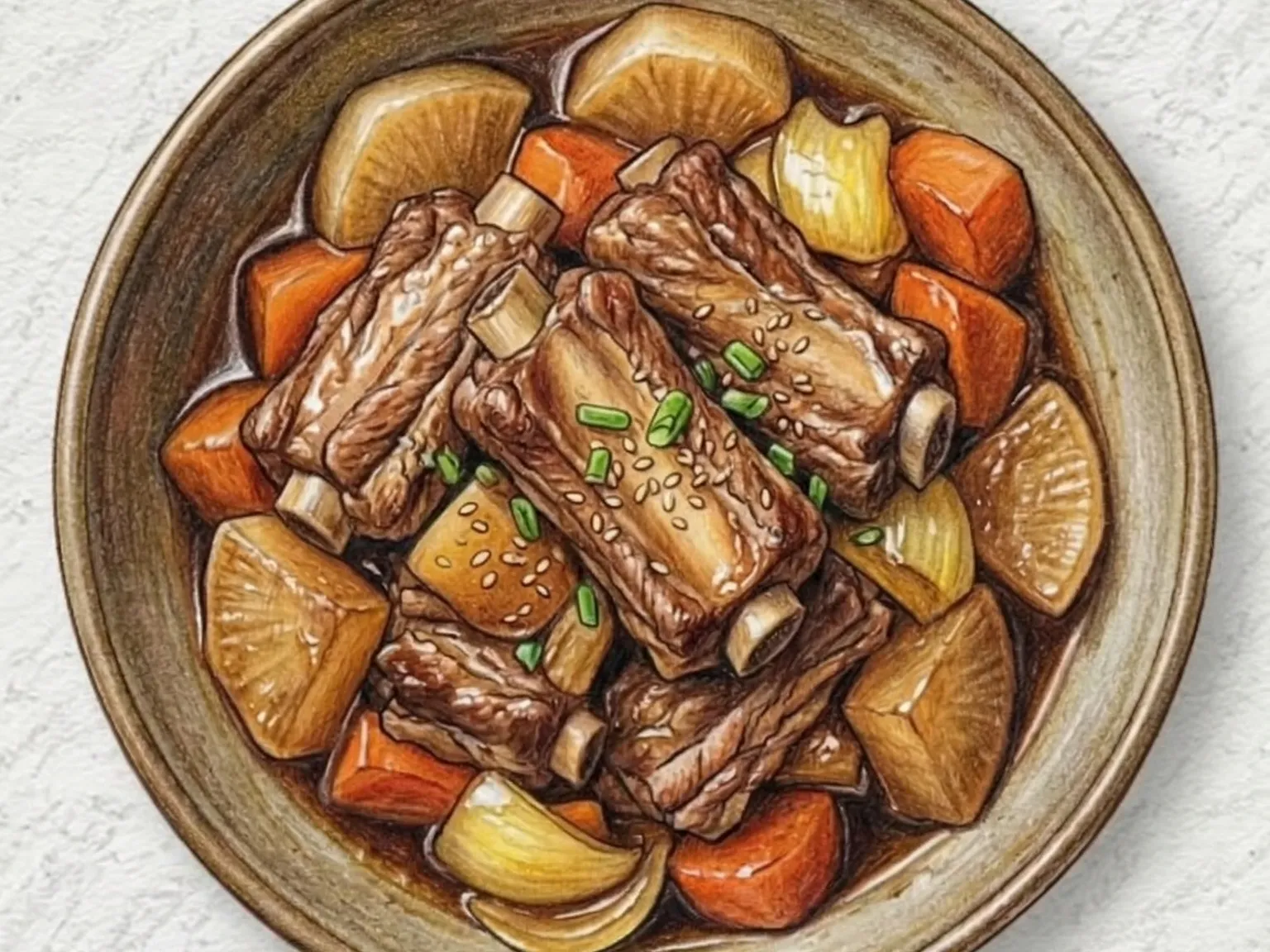
Korean Braised Pork Ribs
Dwaeji galbi-jjim is a Korean braised pork rib dish simmered in a soy sauce base with Korean radish, carrots, and onion. The ribs cook low and slow until the meat practically falls off the bone, absorbing the ginger- and garlic-infused braising liquid along the way. The radish chunks turn translucent and soak up the seasoning, becoming as flavorful as the meat itself. Served with steamed rice, this dish is a hearty main course suited to cooler weather.
Adjust Servings
Instructions
- 1
Soak ribs in cold water for 30 minutes to remove blood, then rinse.
- 2
Blanch ribs in boiling water for 3 minutes and drain.
- 3
Add ribs, water, soy sauce, sugar, garlic, and ginger to a pot and bring to a boil.
- 4
Reduce to medium-low and simmer 40 minutes, then add radish, carrot, and onion.
- 5
Simmer another 20 minutes until vegetables are tender and sauce reduces.
- 6
Finish with sesame oil and plate.
As an Amazon Associate, we may earn from qualifying purchases.
Tips
Nutrition (per serving)
More Recipes

Korean Braised Pork Ribs with Young Radish Greens
Yeolmu dwaeji galbi jjim is a Korean braised pork rib dish finished with young radish greens, cooked in a gochujang and soy sauce seasoning. The ribs simmer until the meat separates from the bone, building a concentrated, spicy braising liquid from the rendered pork stock and chili paste. Young radish greens are added only in the final minutes to preserve their crisp stems and fresh, slightly peppery aroma, which lightens the rich, heavy sauce. The combination of fall-off-the-bone pork and bright summer greens makes this a seasonal main course that bridges richness and freshness.

Korean Braised Short Ribs
Galbi-jjim is one of Korea's most celebrated braised dishes, built on thick-cut beef short ribs that simmer for over an hour in a glaze of soy sauce, Asian pear juice, sugar, garlic, and sesame oil. The long cooking breaks down the collagen in the ribs until the meat practically slides off the bone, while the sauce reduces into a dark, glossy coating that is simultaneously sweet, salty, and deeply savory. Radish and carrot chunks absorb the braising liquid and soften into something almost buttery, while chestnuts and jujubes, often added for holidays, contribute subtle sweetness and a festive look. The finished dish glistens on the plate, and a single spoonful of sauce over steamed rice is enough to make the grain disappear. Galbi-jjim appears on Chuseok and Lunar New Year tables but is equally welcome on an ordinary weekend when the house deserves to smell extraordinary.

Korean Pork Ribs (Sweet Pear-Marinated BBQ Ribs)
Dwaeji-galbi is one of the most recognized Korean barbecue dishes, made with LA-cut pork ribs marinated in a thick sauce of pureed pear, soy sauce, sugar, corn syrup, garlic, and onion. The pear puree serves a dual purpose: it sweetens the marinade naturally while its enzymes tenderize the pork fibers so the meat pulls off the bone with minimal resistance. Marinating for four to six hours lets the flavors soak deep into the thick cuts, but going beyond a full day causes the pear enzymes to break down the surface too much, making it mushy. Searing over high charcoal heat until the glaze chars and caramelizes is essential-the blackened edges where sugar meets open flame produce the signature sweet-smoky crust.

Korean Gochujang Grilled Pork Ribs
Gochujang dwaeji-galbi-gui is a Korean spicy grilled pork rib dish that begins with soaking the ribs in cold water for thirty minutes to draw out blood, then marinating them for at least an hour in a paste of gochujang, soy sauce, sugar, Asian pear juice, garlic, sesame oil, cooking wine, and black pepper. The pear juice serves a dual purpose: its enzymes break down tough muscle fibers to tenderize the meat, while its natural fructose adds a clean sweetness that balances the fermented heat of gochujang. Because the sugar-heavy marinade burns easily, each side is grilled four to five minutes over medium heat before lowering the flame to finish cooking the interior without charring the glaze. Resting the ribs for three minutes before slicing locks the juices inside, keeping every piece moist under its glossy, caramelized crust.

Korean Braised Pork Trotters
Jokbal is Korean soy-braised pork trotters slow-cooked for over two hours in a broth of soy sauce, garlic, ginger, onion, green onion, and whole peppercorn. The trotters are blanched first to remove impurities, then simmered gently until the collagen-rich skin turns glossy and the meat becomes fork-tender. The long braise allows the soy seasoning to penetrate deep into the layered skin and meat, creating a rich, savory flavor throughout. Traditionally sliced while still warm for the softest texture, jokbal is served with salted shrimp dipping sauce or ssamjang, wrapped in lettuce leaves - a classic Korean late-night food and drinking accompaniment.

Korean Soy-Glazed Pork Back Ribs
Dwaeji-deunggalbi ganjang-gui is a Korean soy-glazed pork back rib dish where thick cuts attached to the spine bone are coated in a glaze of dark soy sauce, honey, garlic, and ginger juice, then slow-roasted in an oven or grill. The thick meat requires at least two hours of refrigerated marination so the salty-sweet flavors penetrate near the bone, and during cooking the sugar in the glaze caramelizes into a glossy, dark-brown crust. A two-stage cooking process defines the texture: forty minutes covered at 180 degrees Celsius to cook the meat through, then ten minutes uncovered at higher heat to crisp the surface. Ginger juice is not optional-it neutralizes the pork's gamey notes, and omitting it throws off the flavor balance.