Korean Dwaeji Kkeopdegi Gui (Grilled Pork Skin)
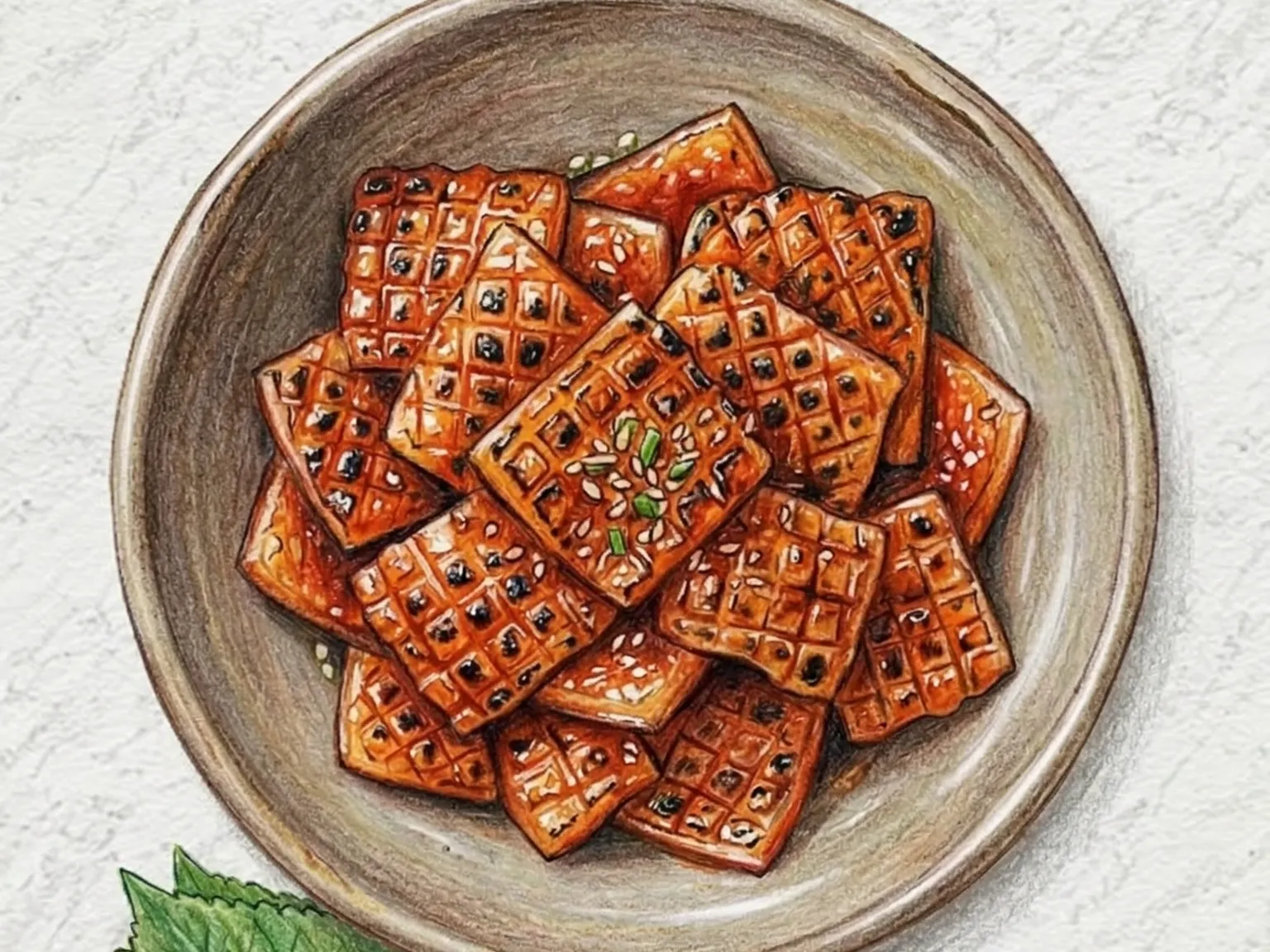
Dwaeji-kkeopdegi-gui is grilled pork skin that has been parboiled to remove excess fat and off-flavors, then brushed with a spicy marinade of gochujang, Korean chili flakes, soy sauce, garlic, and sugar before hitting a hot grill. The skin is almost pure collagen, so blanching time is a balancing act: too short and it stays rubbery, too long and it turns limp and loses its signature springy chew. As the skin contracts over high heat, its surface buckles into ridges and valleys that trap the glaze, concentrating the spicy-sweet flavor in each crevice. It is commonly eaten wrapped in a perilla leaf with ssamjang or served on its own as a classic pairing with soju.
Adjust Servings
Instructions
- 1
Blanch pork skin in boiling water for 5 minutes, rinse in cold water, and drain well.
- 2
Mix gochujang, chili flakes, soy sauce, garlic, sugar, and sesame oil into a marinade.
- 3
Coat the pork skin with marinade and let it rest for 10 minutes.
- 4
Preheat a grill or pan over medium-high heat and lay the pork skin flat.
- 5
Flip and grill for 12-15 minutes until edges crisp, then lower heat to finish.
- 6
Sprinkle sesame seeds and serve hot.
As an Amazon Associate, we may earn from qualifying purchases.
Tips
Nutrition (per serving)
More Recipes

Korean Grilled Sea Snail with Gochujang
Pre-boiled sea snail meat is sliced thin, trimmed of tough visceral parts, and marinated for fifteen minutes with sliced onion in a sauce built on gochujang, gochugaru, soy sauce, oligosaccharide syrup, and minced garlic. A screaming-hot pan sears the marinated snail in three to four minutes, concentrating the spicy-sweet sauce onto the surface while preserving the snail's signature firm chew. Green onion goes in for the final minute, followed by a drizzle of sesame oil. The briny depth of the sea snail meets the fermented heat of gochujang in every bite.

Korean Spicy Pork Bulgogi Grill
Pork shoulder is marinated for at least thirty minutes in a mixture of gochujang, soy sauce, sugar, and ginger juice, then grilled over high flame. The sugars in the marinade caramelize at high heat, forming a dark, flavorful crust on the surface. Wrapping the grilled meat in fresh lettuce leaves combines the charred smokiness with the crunch and freshness of raw greens.

Korean Gochujang Grilled Pork Ribs
Gochujang dwaeji-galbi-gui is a Korean spicy grilled pork rib dish that begins with soaking the ribs in cold water for thirty minutes to draw out blood, then marinating them for at least an hour in a paste of gochujang, soy sauce, sugar, Asian pear juice, garlic, sesame oil, cooking wine, and black pepper. The pear juice serves a dual purpose: its enzymes break down tough muscle fibers to tenderize the meat, while its natural fructose adds a clean sweetness that balances the fermented heat of gochujang. Because the sugar-heavy marinade burns easily, each side is grilled four to five minutes over medium heat before lowering the flame to finish cooking the interior without charring the glaze. Resting the ribs for three minutes before slicing locks the juices inside, keeping every piece moist under its glossy, caramelized crust.

Korean Grilled Webfoot Octopus
Cleaned webfoot octopus is tossed in a marinade of gochujang, chili flakes, soy sauce, and sugar for ten minutes, then seared on high heat for just three to four minutes. The brief cook time preserves the octopus's natural springy texture, while the intense flame adds a smoky char to the spicy glaze. Green onion tossed in at the very end introduces a fresh, sharp note that cuts through the heat.

Korean Grilled Dried Pollock
Nogari-gui is a classic Korean beer snack made by grilling semi-dried young pollock in a buttered pan until golden on both sides. The pollock is cut into manageable pieces with scissors, then cooked slowly over medium-low heat so the thin fish dries out evenly into a chewy-crisp texture without scorching. Butter melts into the fibrous dried flesh, adding a layer of richness that plain grilling cannot achieve. The accompanying dip blends gochujang with mayonnaise, a touch of sugar, and lemon juice, creating a sauce that is simultaneously spicy, creamy, and tart against the salty, umami-laden fish.

Korean Grilled Chicken Heart Skewers
Dak-yeomtong-kkochi starts by soaking trimmed chicken hearts in milk for fifteen minutes to neutralize any off-flavors, then threads them onto skewers for grilling. A glaze of soy sauce, gochujang, sugar, garlic, and cooking wine is brushed on during grilling, building a salty-sweet layer with mild heat. Unlike regular chicken meat, hearts have a firm, springy chew that releases a subtle nuttiness the more you bite. The milk soak, combined with garlic and cooking wine in the sauce, cleanly eliminates any organ taste, leaving only char and seasoning on the finished skewers.