Charim

2686 Korean & World Recipes

2686+ Korean recipes, clean and organized. Ingredients to instructions, all at a glance.

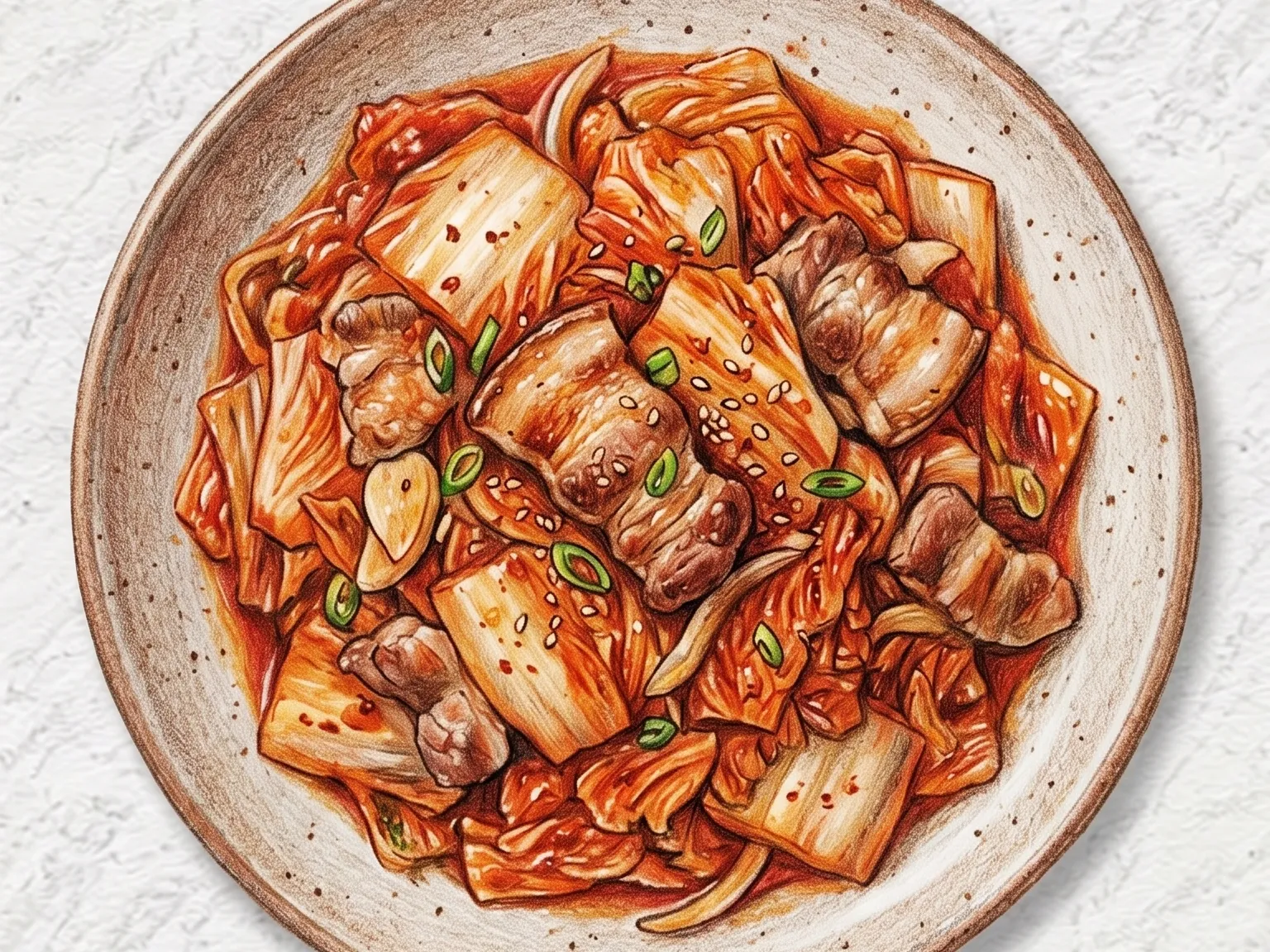
Korean Pork and Kimchi Stir-Fry

Korean Pork and Kimchi Stir-Fry

Dwaejigogi-kimchi-bokkeum is a Korean stir-fry of pork and well-aged napa cabbage kimchi, one of the country's most common home-cooked dishes. The deep acidity of fermented kimchi meets the richness of pork fat, intensifying in flavor the longer they cook together. A touch of Korean chili flakes is added to deepen the color and build an extra layer of heat. It requires no special technique and is a staple side dish found in nearly every Korean set-meal restaurant.

Prep 10min Cook 15min 2 servings

Adjust Servings

2servings
servings

Instructions

  1. 1

    Cut pork and kimchi into bite-sized pieces.

  2. 2

    Heat oil and stir-fry pork until cooked through.

  3. 3

    Add kimchi and stir-fry together.

  4. 4

    Season with soy sauce and chili flakes.

  5. 5

    Finish with sesame oil and green onion.

🛒Shop Ingredients on Amazon

As an Amazon Associate, we may earn from qualifying purchases.

Tips

Older, more sour kimchi gives a richer flavor when stir-fried.

Nutrition (per serving)

Calories
330
kcal
Protein
24
g
Carbs
10
g
Fat
22
g

More Recipes

Korean Mushroom and Vegetable Stir-Fry
Stir-fryEasy

Korean Mushroom and Vegetable Stir-Fry

Mushroom-yachae-bokkeum stir-fries king oyster and oyster mushrooms with broccoli and carrot in a light soy-oyster sauce seasoning. Harder vegetables go into the hot pan first to get a head start, then the mushrooms join and pick up the sauce. High heat is essential because mushrooms release water quickly - fast cooking evaporates that moisture and concentrates the umami rather than steaming the ingredients. A finish of sesame oil ties the flavors together in a low-calorie dish that draws its depth entirely from the mushrooms' natural savoriness.

🏠 Everyday🌙 Late Night
Prep 10minCook 10min2 servings
Korean Beef Brisket Kimchi Stir-Fry
Stir-fryEasy

Korean Beef Brisket Kimchi Stir-Fry

Paper-thin slices of beef brisket are laid in a dry pan and cooked until their marbled fat renders out completely, then squeezed aged kimchi is stir-fried in that rendered beef fat without a single drop of added oil. The beef tallow replaces cooking oil entirely, coating the kimchi in a rich, beefy fragrance that vegetable oil cannot replicate. Aged kimchi carries a pronounced sourness from deep fermentation, and half a teaspoon of sugar is enough to round off that acidity and bring the sweet-salty balance into focus. High heat and a short cook time keep the kimchi from going mushy; low and slow turns the entire pan into a soft, porridge-like mass where individual textures disappear. Half a tablespoon of sesame oil swirled in after the flame is off lifts the aroma, and finely sliced green onion scattered on top adds a clean, fresh counterpoint to the heavy richness underneath. Five ingredients and under fifteen minutes of cooking produce a dish that can carry an entire bowl of rice.

🏠 Everyday🌙 Late Night
Prep 5minCook 10min2 servings
Korean Pork & Crown Daisy Stir-fry
Stir-fryEasy

Korean Pork & Crown Daisy Stir-fry

Ssukgat-dwaeji-doenjang-bokkeum is a Korean stir-fry of pork shoulder marinated in doenjang (fermented soybean paste) and gochujang, cooked with onion and scallion before crown daisy is tossed in at the end. The doenjang penetrates the pork during marination, producing a deep, salty fermented savoriness once seared. Crown daisy is added briefly to keep its herbal fragrance and gentle bitterness intact, which cuts through the richness of the pork fat. The contrast between the heavy, umami-laden meat and the bright green aromatics keeps each bite balanced.

🏠 Everyday🍱 Lunchbox
Prep 15minCook 12min2 servings
Korean Kimchi Bulgogi (Kimchi Stir-Fried Marinated Beef)
Stir-fryMedium

Korean Kimchi Bulgogi (Kimchi Stir-Fried Marinated Beef)

Kimchi bulgogi combines soy-and-pear-marinated beef slices with aged napa kimchi, stir-fried together over high heat. The pear juice tenderizes the meat and adds a subtle sweetness that the kimchi's sharp acidity and salt cut through, creating a layered seasoning. As the two cook together, kimchi liquid seeps into the beef and builds a more complex umami than standard bulgogi alone. A finishing drizzle of sesame oil rounds out the dish, which pairs best with plain steamed rice to absorb the pan juices.

🏠 Everyday🌙 Late Night
Prep 30minCook 10min2 servings
Korean Kimchi Glass Noodle Stir-Fry
NoodlesEasy

Korean Kimchi Glass Noodle Stir-Fry

Kimchi japchae is a variation on the classic Korean glass noodle stir-fry, distinguished by the addition of well-fermented aged kimchi. Glass noodles are boiled, rinsed in cold water, and pre-seasoned with soy sauce. Julienned pork shoulder is stir-fried first, then the kimchi - squeezed dry to remove excess liquid - goes in with sliced onion and cooks until the flavors concentrate. The noodles are tossed in with a bit more soy sauce and sugar, and sesame oil is added off-heat to preserve its aroma. The result is a tangy, spicy twist on japchae where the kimchi's funky acidity permeates each slippery strand of sweet potato noodle, giving the dish a punch that the traditional vegetable-only version lacks.

🏠 Everyday🍱 Lunchbox
Prep 15minCook 15min2 servings
Korean Stir-Fried Kimchi (Caramelized Aged Kimchi Banchan)
Side dishesEasy

Korean Stir-Fried Kimchi (Caramelized Aged Kimchi Banchan)

Kimchi-bokkeum is the default way Korean households use up kimchi that has fermented past its fresh prime. Stir-frying tempers the sharp lactic acidity that over-ripe kimchi develops - the heat transforms the sourness into something mellower, sweeter, and more rounded. Onion goes in first and cooks until translucent, laying a sweet foundation before the kimchi and garlic join. Medium heat is essential: it drives off moisture gradually, yielding a thick, concentrated sauce rather than a watery stew. A small addition of gochugaru brightens the color, and a pinch of sugar balances the fermented tang. One tablespoon of kimchi brine amplifies the umami from the lactobacillus culture itself. The finished banchan is versatile enough to eat straight over rice, fold into fried rice, or pile on top of ramyeon.

🏠 Everyday🍱 Lunchbox
Prep 8minCook 10min4 servings
More Stir-fry →