Korean Soybean Paste Stew with Clams and Zucchini
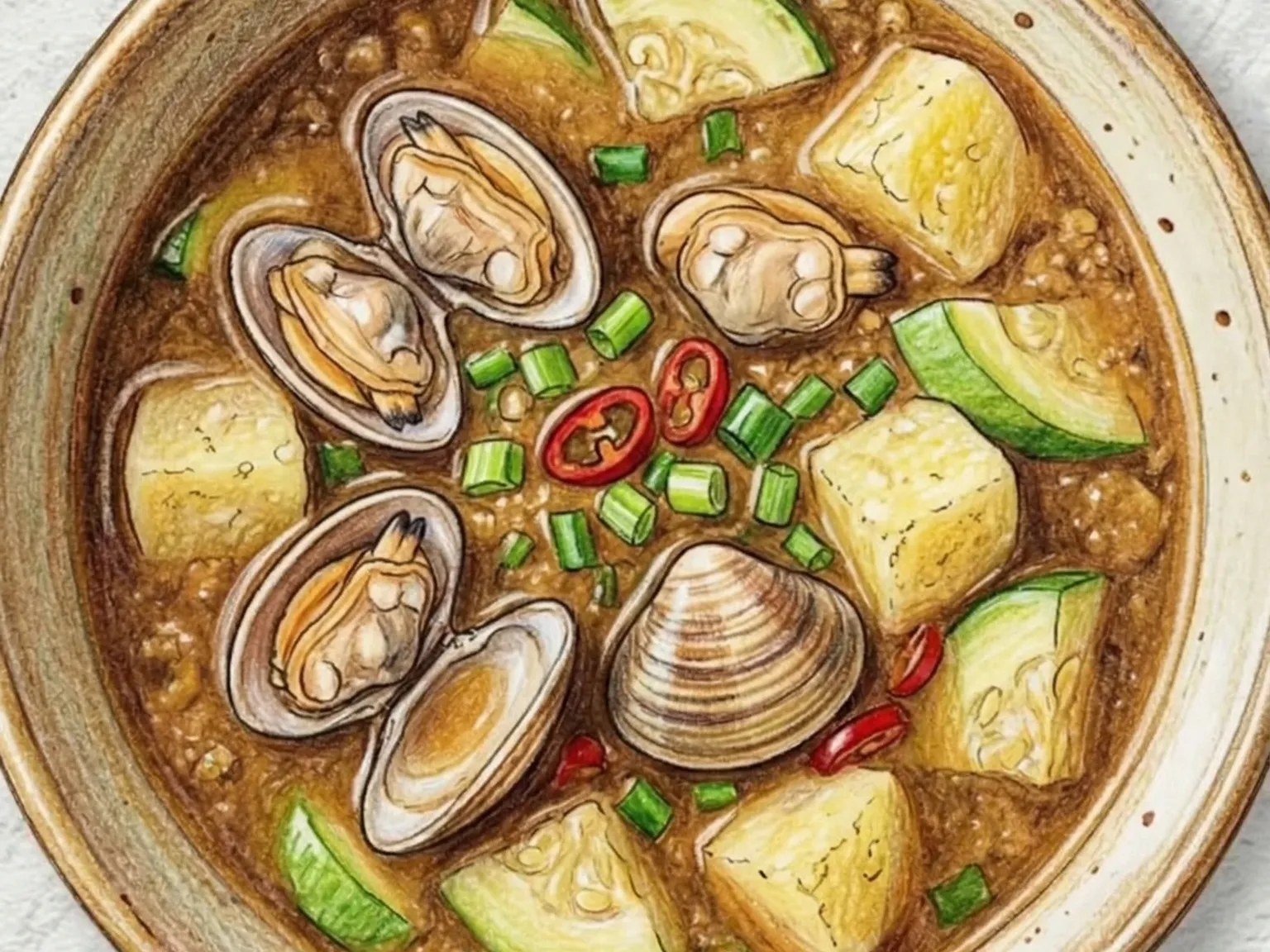
Clams and zucchini elevate this doenjang jjigae into a briny, deeply flavored stew. Littleneck clams open as they cook in rice-rinse water seasoned with soybean paste, releasing their salty liquor into the broth. Potato chunks break down slightly to thicken the stew, while tofu and zucchini add contrasting textures. A Cheongyang chili brings measured heat, and the overall flavor profile balances the ocean salinity of the clams with the fermented earthiness of doenjang.
Adjust Servings
Instructions
- 1
Purge clams in salted water, then rinse thoroughly.
- 2
Dice potato, zucchini, onion, and tofu; thinly slice the chili.
- 3
Add rice-rinse water to a pot, dissolve doenjang through a strainer, and bring to a simmer.
- 4
Add potato and onion first, simmer 6 minutes to develop sweetness and body.
- 5
Add zucchini, tofu, clams, and garlic; simmer until clams open.
- 6
Add chili, simmer 1 more minute, and serve immediately.
As an Amazon Associate, we may earn from qualifying purchases.
Tips
Nutrition (per serving)
More Recipes

Soybean Paste Stew with Clams
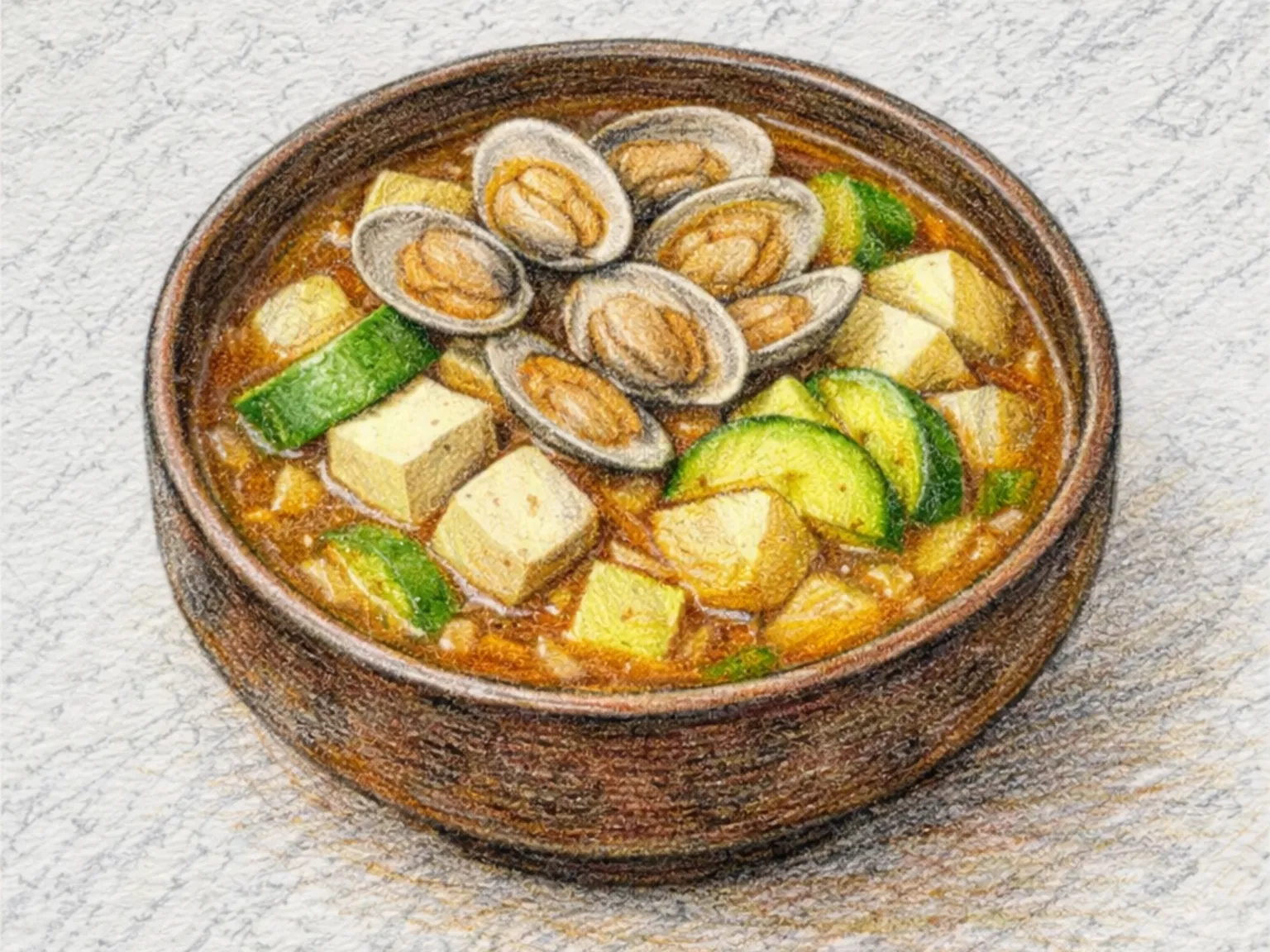
Korea's most comforting one-pot stew -- briny clams pop open in a bubbling doenjang broth, releasing their salty liquor into fermented soybean paste for a flavor no other stew can match. Manila clams are purged of sand, then added to a pot of doenjang-laced broth where they pop open and surrender their salty liquor into the soup, transforming the base from merely savory to sea-tinged and complex. Zucchini softens in the bubbling liquid and contributes a natural sweetness, while blocks of tofu act as sponges, soaking up the broth and bursting with hot, flavorful liquid when bitten. Sliced cheongyang chili peppers are stirred in to cut through the heaviness of the fermented paste and lift the overall flavor. The stew is served bubbling in an earthenware pot alongside rice - many Koreans spoon the broth directly over their bowl - and adapts to any season: light with summer vegetables from the refrigerator, or piping hot in a stone pot during winter.

Korean Soybean Paste Stew
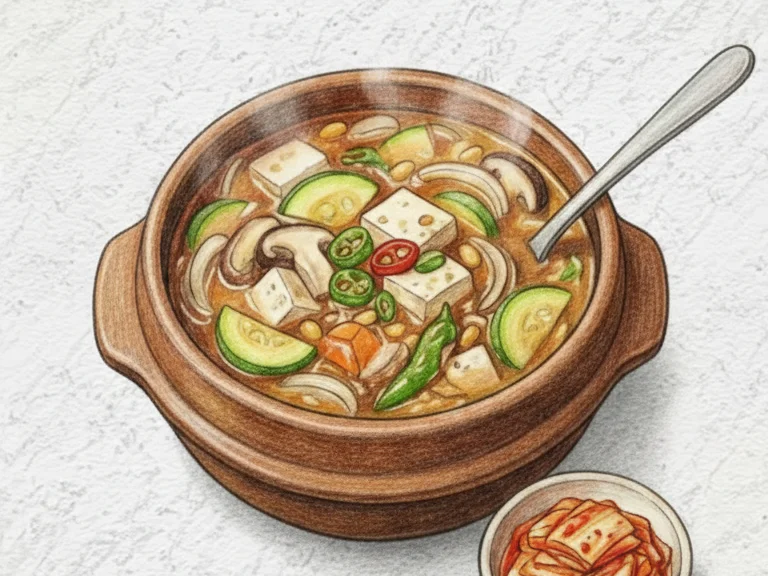
Doenjang jjigae is one of the most iconic stews in Korean home cooking. Fermented soybean paste is dissolved into a simple broth and simmered with tofu, potato, zucchini, and onion until everything melds together. Garlic and a Cheongyang chili add aromatic warmth and a mild kick that lifts the rich, earthy base. This is the kind of everyday stew that anchors a Korean meal, pairing effortlessly with rice and any combination of banchan.

Korean Young Napa Soybean Paste Stew
Young napa cabbage (eolgari) takes center stage in this doenjang jjigae, wilting into the broth and releasing a mild sweetness. The stock is built from dried anchovies and kelp, then seasoned with three tablespoons of fermented soybean paste for a full-bodied base. Firm tofu and onion add substance, while a green chili provides a sharp finish. The cabbage softens completely into the stew, making each spoonful a mix of greens, tofu, and rich, anchovy-laced broth.

Korean Yeolmu Doenjang Stew
Young radish greens, zucchini, and tofu are simmered in doenjang-based anchovy-kelp stock in this light summer stew. The tender radish greens bring a fresh, slightly bitter note that mellows in the fermented soybean broth. Onion contributes natural sweetness, while gochugaru provides gentle warmth and color. With its clean finish from the kelp-infused stock, this stew pairs especially well with barley rice during the hot summer months.

Korean Gangwon-Style Soybean Paste Stew
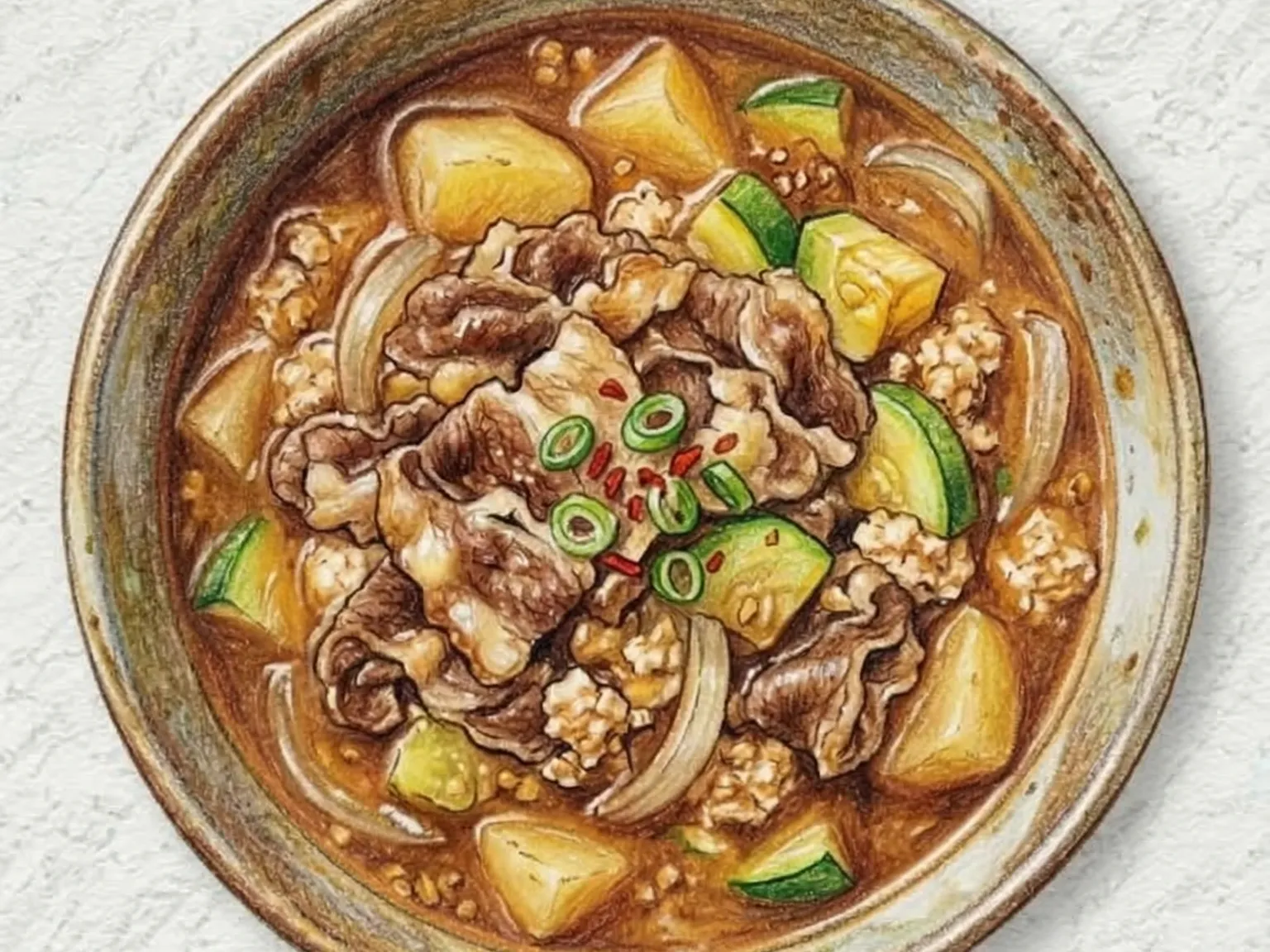
This Gangwon Province-style doenjang jjigae is defined by its generous use of potatoes - 300 grams - which break down during cooking and give the broth a thick, starchy body. Three tablespoons of doenjang dissolved in 1.1 liters of anchovy broth create a robust base. Oyster mushrooms contribute a chewy texture, while zucchini, onion, and tofu round out this substantial one-pot meal. It reflects the hearty mountain cooking traditions of Korea's Gangwon region.

Korean Turnip Soybean Paste Soup
Sunmu doenjang-guk is a homestyle soybean paste soup that uses turnip as its starring vegetable and rice-rinsing water as its liquid base. The starchy water softens the doenjang's salinity, giving the broth a rounded, almost creamy quality that straight water cannot achieve. Turnips cook faster than daikon and yield a more delicate sweetness, along with a faint peppery edge that adds quiet complexity. As the turnip pieces simmer, a subtle purple blush from the skin tints the broth, making it a shade more elegant than an ordinary doenjang-guk. Cubed tofu is a natural companion, its neutral creaminess absorbing the fermented broth, while sliced scallion adds a final aromatic layer. The soup is at its best between autumn and early winter when turnips are in season, their sugars concentrated by cooler soil temperatures. Because the ingredient list is short, the quality of the doenjang matters more here than in busier soups - a well-aged paste with deep fermentation will carry the bowl, while a mediocre one will leave it flat.