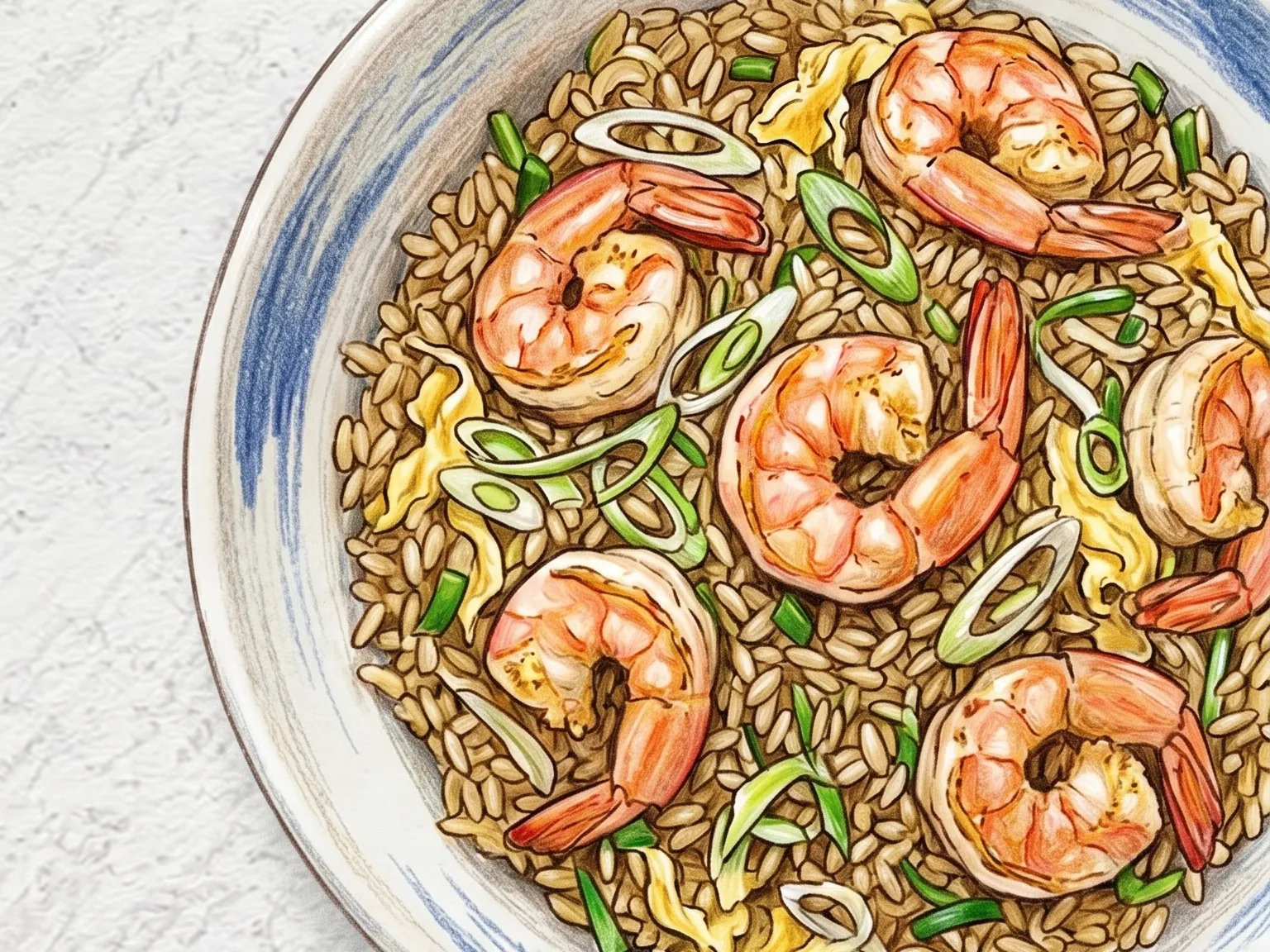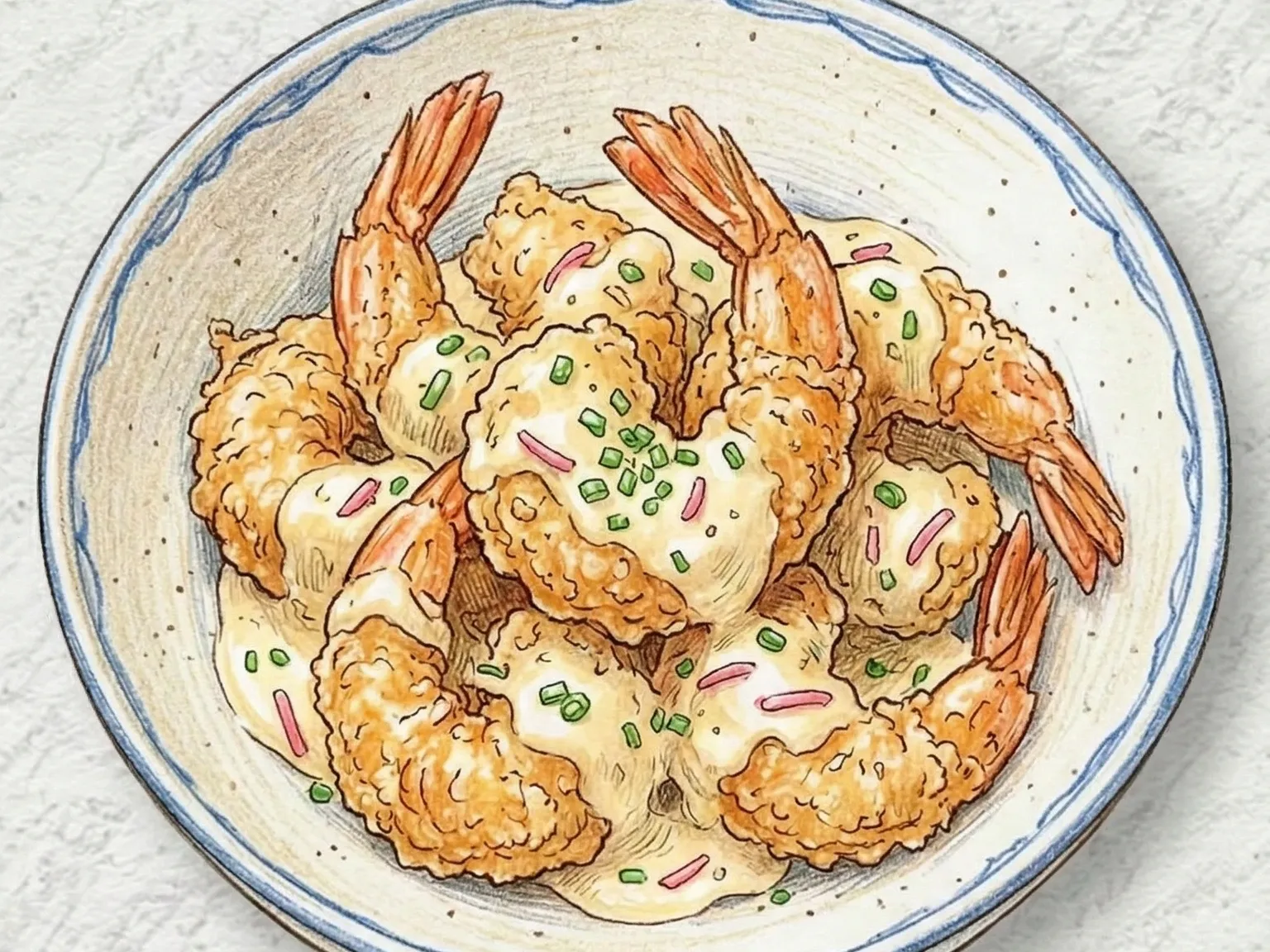
Japanese Shrimp with Mayo
Ebi mayo was invented by Hong Kong-born chef Chou Yuanji while working in Japan, fusing Cantonese prawn cookery with the rich creaminess of Japanese mayonnaise. Shrimp are coated in cornstarch and deep-fried until the shell crackles, then tossed in a sauce of mayonnaise, condensed milk, and lemon juice - the condensed milk tempers the mayo's tang and adds a gentle sweetness. Japanese Kewpie mayonnaise, made with egg yolks only rather than whole eggs, is denser and more umami-rich than Western varieties, and this difference is what gives ebi mayo sauce its distinctive body. The crispy starch coating absorbs the thick sauce on the surface while the shrimp beneath stays springy, creating a two-layered texture - creamy on first contact, then bouncy when the teeth reach the center. Ebi mayo is a staple of izakaya menus and Chinese restaurants in Japan, and has crossed into convenience-store bento boxes and onigiri fillings as one of the country's most ubiquitous fusion flavors.
Adjust Servings
Instructions
- 1
Devein shrimp and coat in egg and cornstarch batter.
- 2
Deep-fry at 170C until crispy.
- 3
Mix mayonnaise, condensed milk, lemon juice for sauce.
- 4
Toss fried shrimp in the sauce.
As an Amazon Associate, we may earn from qualifying purchases.
Tips
Nutrition (per serving)
More Recipes

Ebi Fry (Japanese Panko-Crusted Shrimp)
Ebi fry emerged during Japan's Meiji-era adoption of Western cuisine, evolving into a signature dish of yoshoku - the Japanese reinterpretation of European food. Preparation begins by snipping the tendons on the shrimp's belly side and pressing it flat so it holds a straight, elongated shape during frying rather than curling. The three-stage coating - flour, egg wash, then coarse panko breadcrumbs - is essential: panko's jagged, irregular flakes puff up in hot oil to create a golden, airy crunch distinctly lighter than fine Western breadcrumbs. Because the shrimp fries briefly at high temperature, the interior stays moist and springy, snapping cleanly when bitten. Tartar sauce, with its creamy acidity, counterbalances the richness of the fried coating, while tonkatsu sauce offers a sweeter, fruitier alternative dip. Ebi fry appears in bento boxes, perched atop curry rice as ebi fry curry, or tucked into soft bread as an ebi katsu sando - a versatility that makes it one of Japan's most enduring yoshoku dishes.

Japanese-Style Chili Shrimp (Ebi Chili)
Ebi chili was born in the 1970s when Chen Kenmin, a Sichuan-born chef working in Tokyo, adapted the fiery Sichuan prawn stir-fry with doubanjiang for Japanese palates by softening the heat with ketchup, egg, and chicken stock. The original Sichuan version hits hard with raw chili-bean paste, but Chen's version wraps that heat in a glossy, slightly sweet sauce that coats each shrimp without overwhelming. Shrimp are lightly dusted in cornstarch and flash-fried to form a thin shell that later absorbs the sauce while maintaining the shrimp's springy bite beneath. Minced garlic, ginger, and scallion are fried first to build an aromatic base, then doubanjiang is toasted in the oil to mellow its raw edge before ketchup and sugar go in, creating the dish's signature lustrous red-orange sauce. Ebi chili is a mainstay of Japanese teishoku restaurants - served as a set meal with rice, miso soup, and a small salad - and one of the most commonly cooked Chinese-inspired dishes in Japanese home kitchens.

Edo-Style Tendon (Japanese Tempura Rice Bowl with Sweet Soy Tare)
Edo-style tendon is a Japanese rice bowl that crowns steamed rice with freshly fried tempura-typically shrimp, sweet potato, and eggplant-glazed in a warm, sweet-salty tare sauce. The shrimp are scored along the belly to prevent curling, then dipped in a lightly mixed batter and fried at 170 degrees Celsius until the coating turns golden and crisp. The tare is a simple reduction of tsuyu, soy sauce, and sugar, simmered for just two minutes to concentrate its flavor into a glossy, mahogany liquid. The sauce is drizzled over the tempura the moment it lands on the rice, so the batter absorbs just enough to glisten without losing its crunch entirely. This tension between the crisp tempura coating and the sticky-sweet tare is the defining characteristic of the Edo style, which favors bold, direct flavors over subtlety. The rice beneath soaks up any sauce that runs off, becoming deeply seasoned and intensely satisfying in its own right.

Assorted Japanese Tempura
Tempura moriawase is an assorted platter of Japanese tempura featuring shrimp, sweet potato, eggplant, and shishito peppers, each coated in a light, shatteringly crisp batter. The batter is the heart of the technique: egg and ice-cold water are combined with cake flour and stirred only a few times with chopsticks, leaving visible lumps. This minimal mixing prevents gluten development, which is what keeps the coating featherlight rather than dense. Each piece is fried at 170 to 180 degrees Celsius for a short time-long enough to cook the interior while the batter puffs into an airy, lacy crust. Patting ingredients dry before dipping ensures the batter adheres properly. The tentsuyu dipping sauce, made from dashi, soy sauce, and mirin, is served with freshly grated daikon radish, whose mild sharpness cuts through the oil and refreshes the palate between bites. Tempura moriawase is meant to be eaten immediately after frying, when the contrast between the crackling exterior and the just-cooked filling is at its peak.

Grapefruit Shiso Shrimp Salad
Grapefruit shiso shrimp salad tosses ice-chilled blanched shrimp, membrane-free grapefruit segments, shredded shiso leaves, and thinly sliced cucumber and radish in a yuja marmalade dressing. Blanching shrimp for just two minutes and shocking them in ice water locks in a firm, springy texture by rapidly contracting the protein. Removing all white pith from the grapefruit eliminates bitterness, leaving only the clean, tart juice of the flesh. The dressing - yuja marmalade, rice vinegar, olive oil, and pepper - doubles down on citrus aroma, while the mint-like herbal note of shiso leaves neutralizes any hint of fishiness. Serving the salad well chilled keeps every texture and fragrance sharp and distinct.

Japanese Kani Salad
Kani salad shreds imitation crab sticks along the grain for a soft, fibrous texture, then pairs them with julienned cucumber and carrot for crunch. The dressing blends mayonnaise with rice vinegar and lemon juice, producing a coating that is creamy yet finishes clean. Toasted sesame seeds scattered throughout add a nutty warmth that rounds out the mild sweetness of the crab. Patting the vegetables dry before dressing is essential to keep the sauce from thinning. The entire bowl comes together in about ten minutes with no cooking required.