Chocolate Eclairs
Quick answer
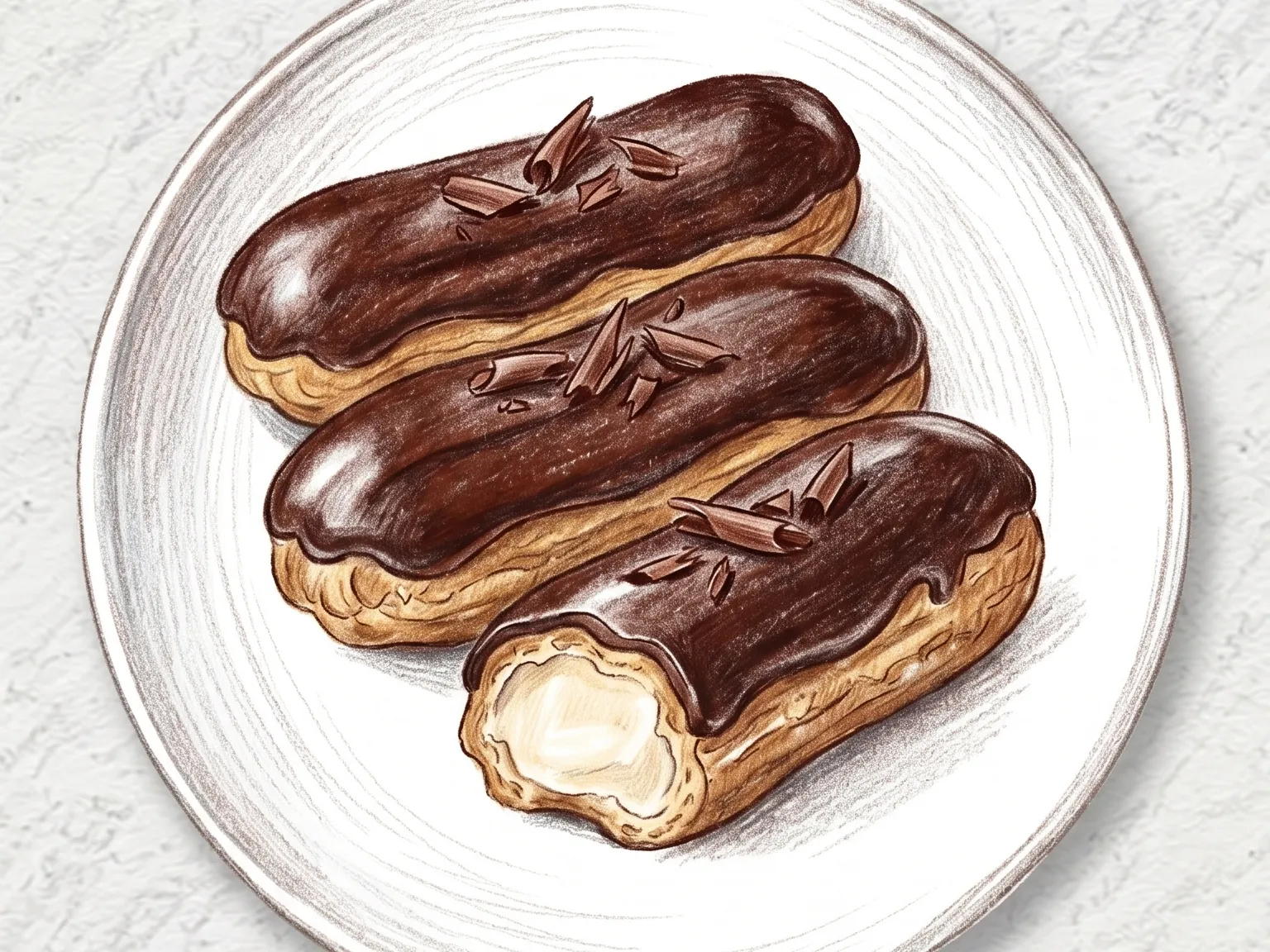
Eclairs are elongated French pastries built from choux dough, a cooked paste of water, butter, and flour into which eggs are incorporated one at a time until the mixture...
What makes this special
- Choux paste piped long, baked hollow, then filled with cool cream under a chocolate glaze.
- Choux paste steam-puffs in the oven to form a hollow elongated shell
- Opening the oven door before fully set collapses the shells instantly
Key ingredients
Core cooking flow
- 1 Preheat the oven to 200°C and prepare a piping bag.
- 2 Put 200 ml water and 80 g butter in a saucepan and bring them to a boil over medium heat.
- 3 Lower the heat and stir firmly with a spatula for about 2 minutes.
Eclairs are elongated French pastries built from choux dough, a cooked paste of water, butter, and flour into which eggs are incorporated one at a time until the mixture becomes smooth and glossy. When piped into finger-length strips and baked at high heat, the moisture locked in the dough converts to steam and expands, inflating each strip into a hollow shell with a crisp golden exterior. After cooling completely, vanilla custard cream is piped through a small hole in the base to fill the cavity. The top surface is dipped in a dark chocolate glaze that sets into a thin, shiny coating. Biting through delivers a layered experience: the slight bitterness of the chocolate, the crunch of the choux shell, and the cool smoothness of the custard in quick succession. Because the shell begins absorbing moisture from the cream as soon as it is filled, eclairs are best consumed within a few hours of assembly. Leaving them overnight compromises the texture significantly.
Instructions
Read the steps as a cooking flow: prep, heat, seasoning, doneness control, and finish.
- 1Heat
Preheat the oven to 200°C and prepare a piping bag.
Measure out the 120 g flour in advance so it can be added all at once when the water and butter are boiling.
- 2Control
Put 200 ml water and 80 g butter in a saucepan and bring them to a boil over medium heat.
When the butter is fully melted, add all the flour at once to prevent lumps.
- 3Heat
Lower the heat and stir firmly with a spatula for about 2 minutes.
Stop cooking when the paste gathers into one mass and a thin film forms on the bottom of the pan.
- 4Prep
Let the dough cool briefly so the strongest steam escapes.
Beat in the 4 eggs one at a time, mixing well after each addition until the dough is glossy and falls slowly from the spatula.
- 5Heat
Transfer the dough to the piping bag and pipe it into long strips.
Bake at 200°C for 25 minutes, and do not open the oven door during baking because the shells can collapse.
- 6Finish
When the choux shells are completely cool, make a small hole in the base and fill them with 200 ml whipped heavy cream.
Melt 100 g dark chocolate, coat the tops, let it set, and serve within a few hours.
After the steps
Pick a recipe that fits this dish.
Continue with shared ingredients, meal pairings, or a similar method.
Recipes That Go Well With This
More Baking →Based on shared ingredients and meal pairing
Choux Cream Puffs (French Hollow Pastry with Vanilla Custard)
Choux cream puffs are built around pate a choux, a paste cooked directly on the stovetop by combining water, butter, and flour over heat, then beating in eggs one at a time until the dough is smooth, glossy, and just thick enough to hold a piped shape. Once mounds are piped onto a baking sheet and slid into a hot oven, the water content in the dough converts rapidly to steam, inflating each piece into a hollow shell while the exterior sets into a crisp, deep-golden crust. The key to a reliably hollow interior is patience with the eggs: adding them too quickly or all at once produces uneven expansion, while a gradual approach allows the structure to develop properly. Once completely cooled - cooling fully is not optional, as residual heat will melt the filling - a small hole is pierced in the bottom of each shell and pastry cream is piped inside. The contrast upon biting is what makes the pastry compelling: the thin, shattering shell breaks to release cool, silky custard against the palate. The pastry cream itself is made by simmering milk with a split vanilla bean, then whisking the infused milk into egg yolks, sugar, and cornstarch, cooking until thick, and chilling until cold and set. Filled puffs should be consumed within two to three hours, as moisture from the cream migrates into the pastry over time, softening the crust and eliminating the textural contrast that defines the experience.
Opera Cake
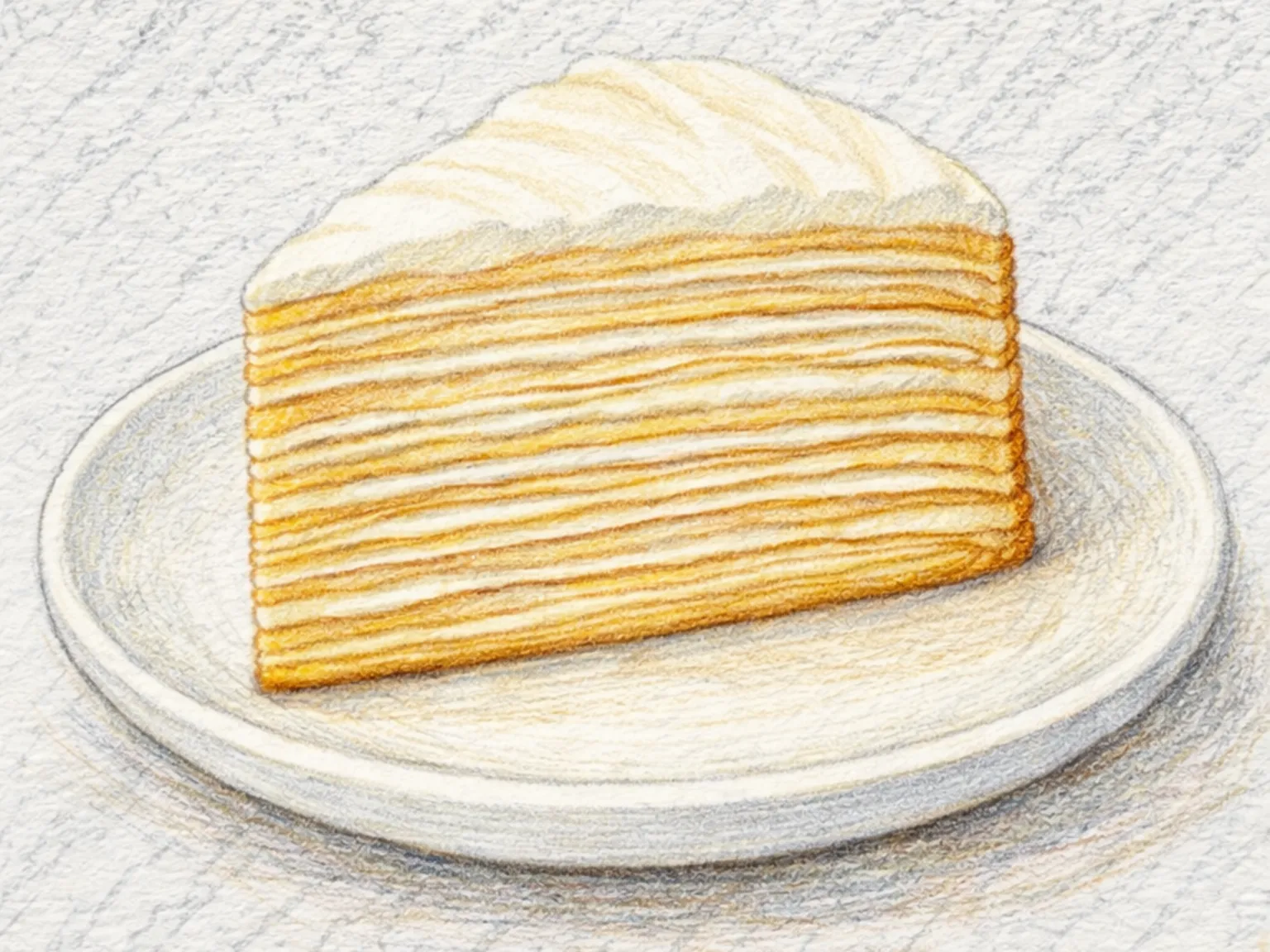
This French patisserie classic stacks paper-thin layers of almond joconde sponge with coffee-infused buttercream and dark chocolate ganache. Because each layer is kept deliberately slim, a single forkful captures all three elements at once: the sponge's moist almond grain, the buttercream's concentrated espresso bitterness, and the ganache's dense cocoa richness. When sliced, the cross-section reveals precise horizontal stripes that mark the craftsmanship behind the cake. A mirror-smooth chocolate glaze seals the top, adding one final texture. The cake benefits from at least four hours of refrigeration, which melds the layers and firms the ganache so that each slice holds its shape on the plate while still yielding easily to a fork.
Sole Meunière (Butter-Fried Sole with Brown Butter Sauce)
Sole meuniere is a French classic where delicate sole fillets are seasoned with salt and pepper, dredged lightly in flour, and pan-fried in butter for two to three minutes per side until a thin golden crust forms. The flour coating must be minimal - just enough to create a crisp barrier that protects the tender fish without masking its flavor. The fish is flipped only once because the fillets are fragile and break apart with repeated handling. After the fish is removed, the butter remaining in the pan is cooked further until it turns brown and smells of toasted hazelnuts, then finished with a squeeze of lemon juice and chopped parsley. This brown butter sauce is the heart of the dish, its nutty richness elevating the mild, sweet flesh of the sole while the lemon's acidity keeps every bite clean and bright.
Almond Croissant
The almond croissant was born in French bakeries as a practical solution to leftover stock - day-old croissants soaked in almond syrup, filled with frangipane, and baked again until golden. What started as waste reduction became the most requested item in the pastry case. The syrup soak - typically simple syrup infused with almond extract or a splash of amaretto - revives the dried, compressed layers and adds sweetness before the second bake even begins. Frangipane, made from butter, sugar, ground almonds, and egg, is piped or spread generously inside the halved croissant. During the second bake, the cream melts and sets into the hollow interior, creating a dense, marzipan-like filling that is richer than anything in the original pastry. Sliced almonds pressed onto the surface toast in the oven, providing a brittle, crunchy contrast to the soft interior. The base of the croissant, where syrup pools during baking, caramelizes into a sticky, deeply sweet layer. A dusting of powdered sugar over the finished pastry adds a cool sweetness against the warm butter. Many Parisian bakeries now bake almond croissants fresh from current stock rather than leftovers because demand far exceeds the supply of day-old pastries.
Serve with this
Flower Rice Pancakes (Glutinous Rice Cakes with Edible Flowers)
Hwajeon is a traditional Korean rice pancake made by kneading glutinous rice flour with salt and warm water, portioning the dough into 30-gram rounds, and pan-frying on low heat with edible flower petals pressed onto the surface. Low heat is not optional: high heat chars the outside while leaving the center gummy, whereas patient cooking at a gentle temperature produces a uniform chew all the way through. The petals must be dried completely before use to avoid oil splatter, and they are pressed in while the top of the pancake is still slightly underdone so they bond firmly rather than sitting loose on the surface. Different flowers shift the character of each batch: azalea delivers a faintly floral note, chrysanthemum a subtler, more herbal impression, and rose a soft sweetness. Served alongside honey and pine nuts, the honey draws out the mild sweetness of the rice dough, and the pine nuts add a resinous, oily richness that rounds out the last bite.
Korean Dalgona Milk (Caramel Puffed Sugar Candy Milk)
Dalgona milk starts with melting sugar in a small pan over low heat until it reaches a deep amber color, then adding baking soda, which causes the hot caramel to foam and aerate instantly into a honeycomb-like structure. Once cooled, the puffed candy is crushed and dissolved into cold milk. The baking soda reaction is what gives dalgona its distinctive lightness: instead of a dense, hard caramel, the aerated structure makes it brittle and easy to break while also helping it dissolve quickly in the milk. The caramelized sugar delivers a deep, toasty sweetness with a slight bitterness at the edges, similar to butterscotch, that spreads through the milk as the pieces melt. A small amount of vanilla extract sharpens the flavor and a pinch of salt rounds it out. Keeping some crushed dalgona pieces separate and dropping them on top of the finished drink as a garnish adds a crunchy contrast to the creamy liquid beneath.
Lotus Root Persimmon Salad
This salad combines blanched lotus root and sliced sweet persimmon to reflect seasonal autumn produce. The lotus root provides a clean and crisp texture that contrasts with the natural sweetness found in the fruit slices. A dressing composed of olive oil, honey, and fresh lemon juice is used to coat the ingredients without masking their individual flavors. Crumbled feta cheese provides a salty and tangy dairy element that balances the sugar content of the persimmon. Toasted walnuts, which are prepared by heating them briefly in a dry pan, contribute earthy fats and a crunchy texture that differs from the softer fruit. The salad is assembled on a base of baby greens to provide a layer of color. Dividing the dressing into two separate additions during the mixing process ensures that the seasoning is distributed evenly across all components. While the recipe typically uses firm persimmons, ripe soft persimmons known as hongsi can be used as an alternative. This variation produces a salad with a sweeter profile and a much softer, more yielding consistency.
Similar recipes
Kouign-Amann (Caramelized Butter Sugar Pastry)
This Breton pastry is constructed by folding generous amounts of butter and sugar into a simple yeasted bread dough, then baking until the sugar caramelizes into a glassy, deeply bronzed crust. The exterior shatters audibly at the first bite, giving way to an interior where dozens of buttery layers remain soft and slightly chewy. Three rounds of rolling and folding build the laminated structure, and keeping the butter cold throughout the process is what prevents the layers from merging into a dense mass. At 200 degrees Celsius, the sugar melts and pools at the bottom of each portion, so lining the pan with foil is a practical necessity to catch the drips. The aroma of caramelizing butter and sugar fills the kitchen long before the timer sounds. Despite containing only five ingredients, flour, butter, sugar, yeast, and salt, the technique demands precision: under-laminated dough bakes flat, and over-proofed dough loses its layered definition. The result, when executed well, is one of the richest pastries in the French repertoire.
Gougeres (Gruyère Cheese Choux Puffs)
Gougeres are savory cheese puffs from Burgundy, France, made by folding grated Gruyere cheese into choux pastry and baking until golden and hollow inside. Water, butter, and salt are brought to a boil, then flour is added all at once and stirred over low heat until the starches gelatinize and the dough pulls away from the pan in a smooth ball. Eggs are beaten in one at a time - the dough breaks apart and re-forms with each addition, building the elastic structure that allows the puffs to rise. Folding in the cheese and pepper, then piping rounds onto a tray and baking at 200 degrees Celsius turns the moisture in the dough to steam, which inflates each puff into a crisp shell with a hollow, airy center. Opening the oven door during baking releases the steam prematurely, which can cause the puffs to collapse.