Korean Egg Mayo Toast
Quick answer
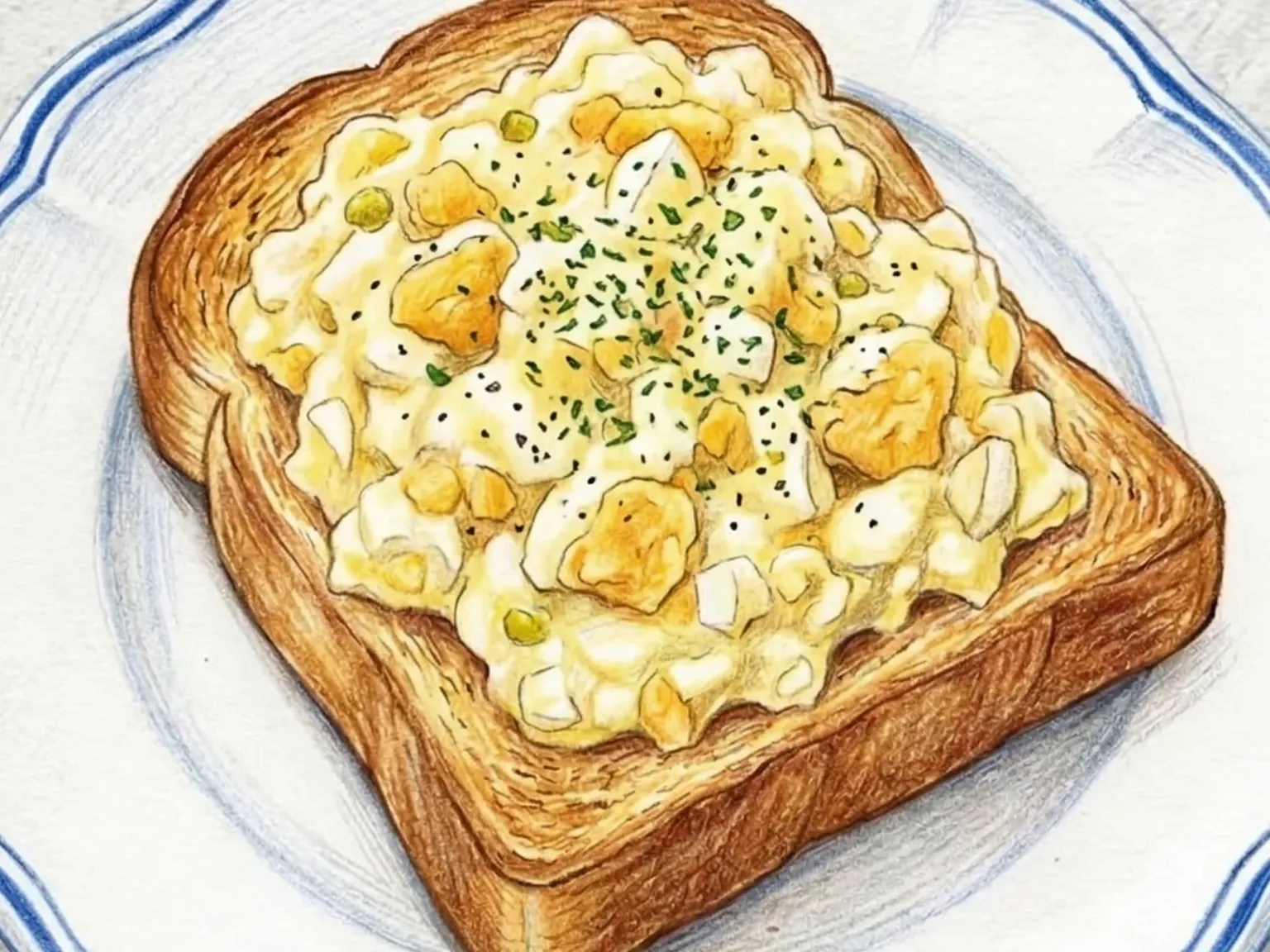
Egg mayo toast mashes three hard-boiled eggs with a fork, mixes them with mayonnaise, salt, and pepper, and piles the mixture onto freshly toasted bread.
What makes this special
- Unevenly mashed hard-boiled eggs create a mixture of creamy and chunky pockets on buttered toast.
- Unevenly mashed egg creates both creamy and chunky pockets
- Cold egg mayo on hot toast creates a deliberate temperature contrast
Key ingredients
Core cooking flow
- 1 Put 3 eggs in a pot and add enough cold water to cover them.
- 2 Move the cooked eggs straight into cold water and cool for at least 5 minutes.
- 3 Place the eggs in a bowl and mash with a fork, leaving both fine crumbs and small chunks.
Egg mayo toast mashes three hard-boiled eggs with a fork, mixes them with mayonnaise, salt, and pepper, and piles the mixture onto freshly toasted bread. Crushing the eggs to uneven sizes -- some finely mashed, some left in larger pieces -- creates a textural variation between smooth sections and chunks in each bite, which is more interesting than a uniformly smooth paste. The mayonnaise binds the crumbly eggs into a cohesive, creamy spread, and placing the cool egg salad onto hot toast produces a temperature contrast that carries through the entire piece. Adding a small amount of mustard or finely chopped pickles introduces acidity that cuts through the richness of the mayonnaise and prevents the filling from tasting heavy. The eggs should be fully cooled before mashing -- adding mayonnaise to warm eggs causes it to thin out and can make the texture loose and uneven. With these adjustments, a simple combination of three ingredients becomes considerably more satisfying.
Instructions
Read the steps as a cooking flow: prep, heat, seasoning, doneness control, and finish.
- 1Control
Put 3 eggs in a pot and add enough cold water to cover them.
Bring to a boil over medium-high heat, then reduce to medium and cook for 12 minutes so the yolks set fully.
- 2Heat
Move the cooked eggs straight into cold water and cool for at least 5 minutes.
Peel them only after they feel cool throughout, then dry the surface so extra water does not loosen the filling.
- 3Prep
Place the eggs in a bowl and mash with a fork, leaving both fine crumbs and small chunks.
Break up large pieces of white, but stop before the mixture turns into a smooth paste.
- 4Season
Add 2 tbsp mayonnaise, 0.25 tsp salt, 0.25 tsp black pepper, and 0.5 tsp sugar.
Fold from the bottom until the eggs are coated evenly, then taste and adjust only if needed.
- 5Control
Toast 2 bread slices in a dry pan over medium heat, pressing lightly for about 1 minute per side.
Remove them when the surface is golden and feels crisp, or use a toaster for even browning.
- 6Finish
Spread the cool egg mayo over the hot toast all the way to the edges.
Serve it open-faced, or cover with the second slice, press gently to secure the filling, and cut before serving.
After the steps
Pick a recipe that fits this dish.
Continue with shared ingredients, meal pairings, or a similar method.
Recipes That Go Well With This
More Street food →Based on shared ingredients and meal pairing
Korean Street Egg Toast (Cabbage Egg Omelet Sandwich with Sweet Ketchup)
Gilgeori egg toast is a Korean street food sandwich built around a rectangular omelet of shredded cabbage, carrot, and beaten egg, layered between slices of bread that have been toasted in butter until golden. The defining touch is a sprinkle of white sugar over ketchup applied directly to the bread before the omelet goes in. That sugar-ketchup combination produces a sweet-tangy sauce that balances the savory egg and the mild crunch of the vegetables in a way that no other condiment quite replicates. The egg and vegetable batter is folded over itself on the pan to create a thick, layered patty, so each bite delivers alternating textures of soft egg and crunchy toasted bread. Street vendors began selling this sandwich in front of Korean schools during the 1990s, and it has remained a constant fixture of Korean street food culture ever since, available at food stalls and snack trucks across the country as both a breakfast option and an afternoon snack.
Korean Bacon Egg Toast (Buttery Griddle Bacon Egg Street Sandwich)
Bacon egg toast sits at the center of Korean street-toast culture - the gilgeori-toseuteu tradition that grew out of Seoul's pojangmacha stalls during the 1980s and 1990s and has since spread to carts and small storefronts across the country. Two slices of white sandwich bread are spread generously with butter and pressed onto a flat iron griddle until the surface caramelizes into something close to a fried crust - crisp, golden, and faintly sweet from the butter. The filling is built on the griddle in order: a thin omelet-style egg beaten with shredded cabbage and carrot is cooked flat and folded to fit the bread, then topped with crispy bacon strips and finished with ketchup and a small measure of sugar. That ketchup-and-sugar combination is the defining seasoning of the Korean street toast tradition - sweet and tangy in a ratio that surprises non-Korean eaters but has remained unchanged at Seoul's toast carts for decades. The bacon delivers smoky, salty contrast that prevents the sweetness from taking over. The finished sandwich is wrapped in wax paper and handed over to be eaten one-handed while walking. In busy districts like Hongdae and Myeongdong, morning lines form at the most popular carts, and the formula has not changed since the 1980s.
Korean Spicy Chewy Noodles
Jjolmyeon is a Korean cold noodle dish built around unusually thick, springy wheat noodles that were accidentally invented at an Incheon noodle factory in the 1970s. The noodles are boiled, rinsed in ice water to firm up their chewy texture, then dressed in a sweet-sour-spicy sauce made from gochujang, vinegar, sugar, soy sauce, and sesame oil. Shredded cabbage and julienned cucumber are chilled separately and piled on top, giving each bite a crisp contrast to the bold sauce. A halved boiled egg adds a creamy counterpoint to the heat. The dish is served cold and eaten after thorough mixing, making it a go-to summer meal and late-night snack across Korea.
Korean Street Ham & Egg Toast
Gilgeori ham egg toast is the foundational version of Korean street toast, the style found at early-morning carts across Seoul and other cities where vendors cook to order on flat griddles. The core is a pan-fried patty of beaten egg mixed with finely shredded cabbage and carrot, cooked flat and golden on both sides. Ham slices are seared on each side for about thirty seconds so the edges caramelize slightly and the surface color deepens without drying out. The bread is pressed onto a buttered pan until the exterior crisps while the crumb stays soft. Ketchup and sugar together form the sauce, and this combination is what separates the Korean street toast from any generic egg sandwich. Sugar in the sauce creates a sweet-salty pull that plays against the savory ham and egg, and omitting it produces something noticeably different in character. Without cheese, this version is lighter and less rich than variations that add a slice, making it more approachable as an early meal. The contrast between the crunchy toasted bread and the soft, yielding egg layer is the defining textural quality.
Serve with this
Milk Shaved Ice with Red Beans
Uyu patbingsu is a traditional Korean cold dessert centered around milk that has been frozen solid and then shaved into a very fine, light texture resembling freshly fallen snow. This specific preparation method differs from versions using plain water ice because the fat and protein content in the milk create a texture that is notably smoother, creamier, and more opaque as it melts. To build the dish, the shaved milk is gathered into a tall mound and layered with several distinct components, primarily a portion of red beans that have been boiled with sugar until they achieve a soft, starchy consistency. Small, bite-sized rice cakes are distributed across the ice to provide a dense and chewy element that contrasts with the temperature of the milk. A fine dusting of multigrain powder and roasted soybean flour adds an earthy, toasty flavor profile to the base, which helps to balance the sweetness of the other toppings. For additional texture and flavor, sliced almonds are included to provide a consistent crunch, while pieces of fresh strawberry are added to introduce a sharp, acidic fruit brightness. The overall richness of the assembly is typically increased by drizzling condensed milk over the surface, allowing the thick liquid to seep down into the porous layers of ice. Historical documentation from the Joseon dynasty indicates that the practice of serving ice with red beans during the summer months was already established by the 19th century, with palace records showing that ice was retrieved from stone-lined underground icehouses for royal consumption. While the combination of milk and sweetened beans remains the traditional standard, contemporary versions of the dessert frequently incorporate a wide variety of other ingredients including mango, matcha, and injeolmi.
Korean Spicy Squid Salad (Gochujang Blanched Squid)
Ojingeo-muchim tosses blanched squid in a gochujang-vinegar dressing for a tangy, spicy seafood banchan that works equally well as a rice side dish or as anju with drinks. Squid, unlike vegetables, has an extremely narrow blanching window that determines the entire outcome: one minute to ninety seconds in boiling water is the limit. Beyond that, the proteins contract and the texture turns rubbery; under that, the interior stays translucent and fishy. Plunging into ice water immediately after blanching halts carryover cooking and locks in the ideal springy-bouncy texture. The dressing combines gochujang, gochugaru, vinegar, sugar, garlic, sesame oil, and sesame seeds, with vinegar playing the pivotal role - it introduces a sharp acidity over the squid's marine umami, forming a triangular balance with the chili heat. Julienned onion and cucumber mixed in add textural variety and stretch the portion. A popular variation stirs in one tablespoon of mayonnaise, whose emulsified fat wraps around the heat and produces a milder, creamier version.
Korean Corn Cheese (Buttery Skillet Corn Mozzarella)
Korean corn cheese starts with drained canned corn tossed in mayonnaise, sugar, and black pepper, then sauteed with diced onion in butter before being spread flat in the pan and topped with a generous layer of mozzarella. The lid goes on over low heat until the cheese melts into a stretchy, golden sheet that locks the corn mixture underneath. A teaspoon of sugar pushes the corn's natural sweetness forward, and the fat from the mayonnaise blends with the cheese to produce a rich, creamy texture that coats every kernel. For a finished crust, broiling at 220 degrees Celsius for five minutes chars the surface and adds a toasty, slightly smoky layer on top. Sliced green onion or chopped parsley scattered over the finished dish cuts through the richness and adds a fresh note.
Similar recipes
Korean Street Ham & Cheese Toast
Gilgeori ham cheese toast is a variation on the classic Korean street toast that adds a slice of processed cheese to the standard layered sandwich. The base formula is the same: butter-toasted bread, a pan-fried egg-cabbage-carrot omelet, and sliced ham, finished with ketchup and a pinch of sugar. The cheese sits between the ham and the top slice of bread, where the trapped heat from the just-toasted bread and the warm fillings slowly melts it from the edges inward. As it melts, the cheese does two things. It binds the fillings together, preventing the layers from sliding apart when the sandwich is picked up and bitten. And it introduces a creamy, milky fat layer between the saltiness of the ham below and the sweet-tangy ketchup above, softening the contrast between those two flavors rather than letting them clash. The cabbage and carrot in the omelet stay slightly crunchy even after cooking, contributing a fresh texture that contrasts with the softness of the melted cheese and the tenderness of the egg. The combination of bread, egg, cheese, and ham provides a meaningful amount of protein and carbohydrate in a single compact package, which is why this style of street toast remains a popular breakfast and quick meal option in Korea.
Korean Tomato Egg Fried Rice
Eggs are scrambled first and set aside, then tomatoes are stir-fried in the same pan until their juices burst and coat the wok. Day-old or freshly cooked rice goes in next, tossed at high heat so the grains absorb the tomato's sweet-tart moisture while staying individually distinct. The scrambled egg is folded back in at the end, distributing soft, fluffy curds throughout the fried rice. Rooted in the Chinese classic of tomato and egg, this version turns those familiar flavors into a satisfying one-bowl fried rice.
Korean Pollock Roe Egg Porridge
Rice is simmered in anchovy stock until the grains soften and the porridge thickens, then finished with pollock roe and beaten egg. The roe dissolves into the broth and spreads its briny, savory depth throughout the bowl, while the egg forms soft curds that add body to the texture. Because pollock roe already carries significant salt, soup soy sauce is added only in small amounts at the very end to fine-tune the seasoning rather than build the base flavor. Stirring the egg in gently over low heat produces delicate, smooth curds. Rushing the egg over high heat causes it to seize into rough clumps that interrupt the silky consistency of the porridge. A drizzle of sesame oil, a scattering of dried seaweed flakes, and sliced green onion finish the bowl with a nutty fragrance and a clean finish. This is a natural choice for days when appetite is low or the stomach feels unsettled, and the roe's depth of flavor means a small number of ingredients produces a genuinely satisfying result.