English Muffin
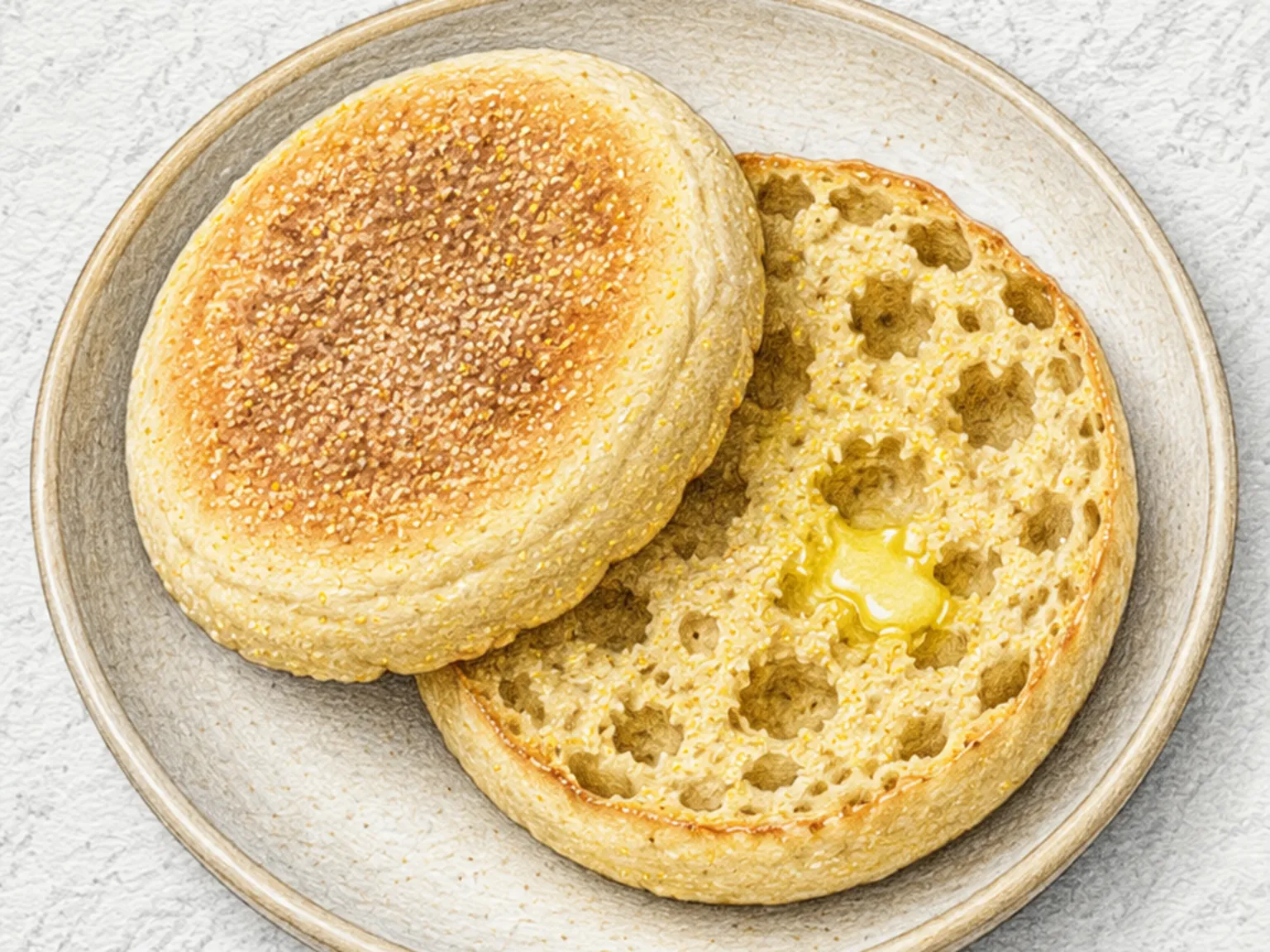
English muffins are round, flat breads made from a yeasted dough that is cooked on a griddle rather than in an oven. This stovetop method produces a firm, cornmeal-dusted exterior that browns in direct contact with the hot surface, while the interior develops the large, irregular air pockets that define the bread. These nooks and crannies are created by the relatively wet dough and preserved by splitting the muffin with a fork rather than cutting with a knife. Fork-splitting tears the crumb open along its natural fault lines, exposing a rough, cratered surface that toasts beautifully and traps melted butter, jam, or poached egg yolk in every crevice. English muffins serve as the foundation for Eggs Benedict and are equally at home as a simple breakfast toast.
Adjust Servings
Instructions
- 1
Mix flour, sugar, salt, and yeast; add warm milk and melted butter, knead together.
- 2
Knead 8 minutes until smooth, then proof 1 hour.
- 3
Roll dough to 1.5cm thickness and cut 8 rounds with a cutter.
- 4
Dust both sides with cornmeal and proof 30 minutes.
- 5
Cook on a low-heat griddle, covered, 8-10 minutes per side.
As an Amazon Associate, we may earn from qualifying purchases.
Tips
Nutrition (per serving)
More Recipes

Eggs Florentine
Eggs Florentine swaps the traditional bacon of Eggs Benedict for sautéed spinach, creating a lighter brunch dish that still delivers rich, layered flavor. Spinach is wilted in butter for just one to two minutes and squeezed of excess moisture so it does not soak the toasted English muffin underneath. Hollandaise is built the same way - egg yolks and lemon juice whisked over gentle heat, then emulsified with slowly drizzled melted butter. Poached eggs cook for about three minutes in barely simmering water until the whites set around a still-runny yolk. Cutting into the yolk sends a golden stream over the spinach and buttery sauce, tying the layers together with its richness.

Eggs Benedict
Eggs Benedict centers on hollandaise sauce, made by whisking egg yolks with lemon juice over a double boiler until thickened, then slowly streaming in melted butter while whisking continuously to form a stable emulsion. Seasoned with salt and a pinch of cayenne, the sauce is rich, velvety, and slightly tangy. Toasted English muffin halves are topped with crisp bacon or ham, then a poached egg cooked for three to four minutes in gently simmering water with a splash of vinegar. The hollandaise is spooned over the soft-set egg so that cutting into the yolk creates a golden stream that mingles with the buttery sauce. Pouring the butter too quickly causes the emulsion to break, so a thin, steady stream is essential.

Kedgeree (British Smoked Fish Spiced Rice Dish)
Kedgeree is a British brunch dish of smoked haddock flaked into spiced rice with boiled eggs, descended from the Indian colonial-era dish khichri. The smoked fish is poached or steamed and broken into large pieces - keeping the flakes sizable preserves their texture and allows the smoky flavor to distribute through the rice in distinct pockets. Onion is sauteed in butter, then curry powder is bloomed for thirty seconds, releasing the warm aromas of cumin and turmeric into the fat, which tints and seasons every grain of rice. A squeeze of lemon juice at the end cuts through the richness of the butter and the heaviness of the spices with a bright acidity. Halved boiled eggs and chopped parsley finish the dish with contrasting texture and color.

Bread Pudding
Bread pudding transforms stale bread into a warm, custardy dessert by soaking sliced bread in a mixture of eggs, milk, and heavy cream, then baking until set. The bread absorbs the custard liquid fully, turning its interior into something closer to a soft pudding, while the top layer exposed to the oven's heat crisps into a golden-brown crust. Cinnamon powder stirred into the custard base fills the entire dish with a warm, spiced fragrance that belies the simplicity of the ingredients. Served warm with vanilla ice cream or a drizzle of caramel sauce, the contrast between the hot, yielding pudding and the cold, sweet topping elevates it further.

English Trifle (Layered Cake, Custard & Cream Dessert)
English trifle is a layered dessert assembled in a glass bowl, where each stratum contributes a different texture and flavor. Slices of sponge cake are soaked in sherry or fruit juice until they soften into a pudding-like consistency, then covered with a thick vanilla custard that sets gently as it chills. Fresh strawberries and blueberries are scattered between layers, introducing bright acidity and color. Whipped cream crowns the top, providing a light, airy finish. The glass bowl displays the distinct bands of cake, custard, fruit, and cream from the side. Each serving should dig deep enough to capture all layers in a single spoonful, ensuring that the wine-soaked sponge, the smooth custard, and the cream's lightness arrive together.

Victoria Sponge Cake (British Jam and Cream Layered Cake)
Equal weights of butter and sugar are creamed together, then eggs and cake flour are added to produce two round sponge layers that are sandwiched with strawberry jam and whipped cream - the defining structure of this quintessential British cake. Named after Queen Victoria, the cake is deliberately simple in presentation: no elaborate frosting or tiered decoration, just a dusting of powdered sugar on top. Thorough creaming is essential to a light rise, and room-temperature eggs integrate into the batter without curdling. The jam provides a bright, tart contrast to the buttery sponge, while the whipped cream softens each bite with cool richness. Both layers must cool completely before assembly, as warm sponge melts the cream and causes the filling to slide. Refrigerated, the cake stays moist through the next day, and the jam and cream flavors deepen as they settle into the sponge overnight. It is the standard cake served at British afternoon teas and garden parties.