Ensaymada Cheese Bread (Filipino Sweet Cheese Brioche)
Quick answer
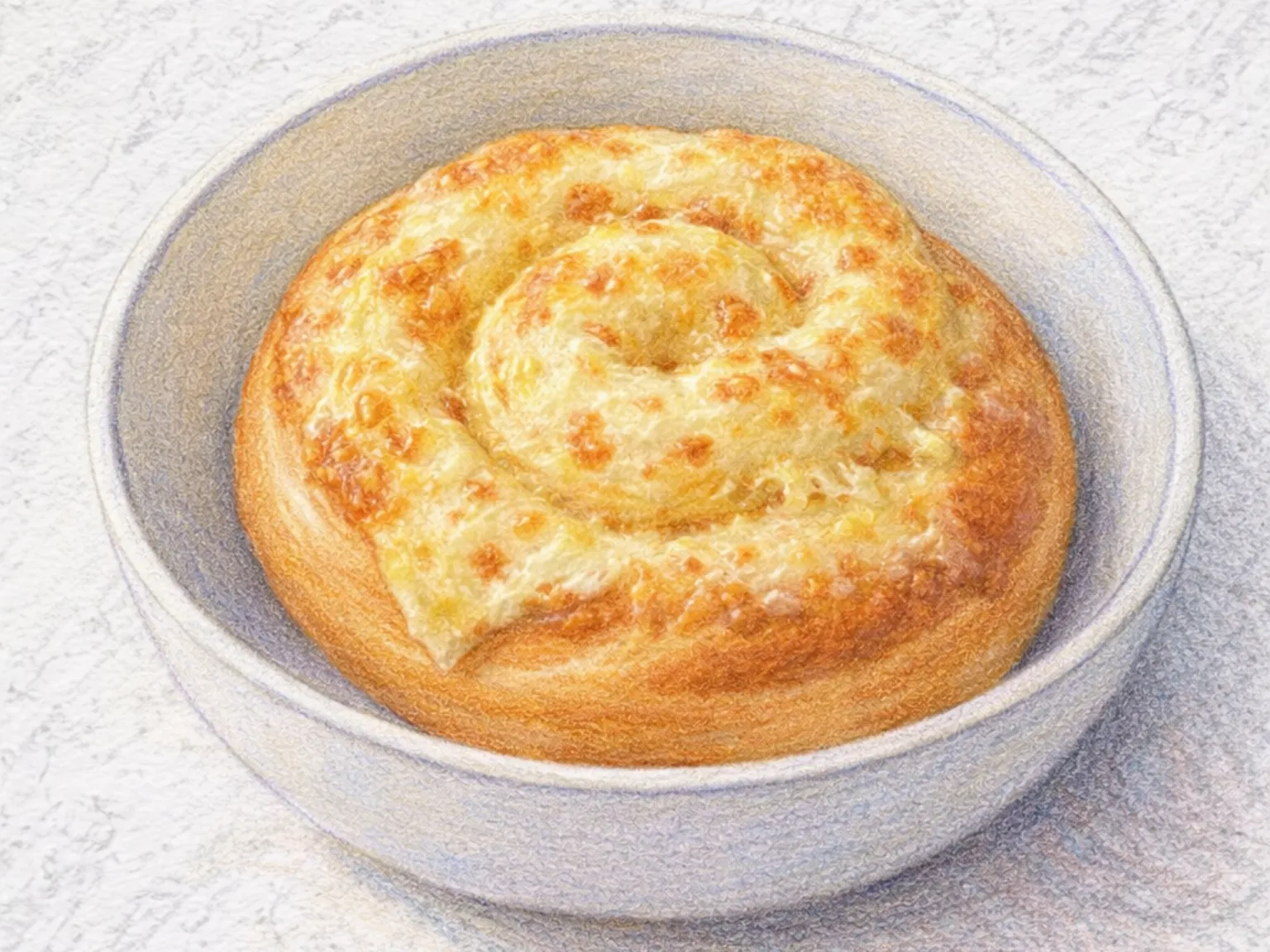
Ensaymada is a Filipino sweet brioche descended from the Spanish ensaimada of Mallorca, transformed over centuries into something entirely its own.
What makes this special
- Ensaymada tops a rich egg-and-butter brioche bun with softened butter and a cloud of grated cheese.
- Warm bun topped with butter, sugar, and generous grated cheese; sweet-salty contrast is the identity
- Spanish origin adapted over centuries in the Philippines into a distinctly local bread
Key ingredients
Core cooking flow
- 1 Stir 160 ml warm milk with 6 g instant dry yeast and 1 teaspoon of the sugar.
- 2 Combine 300 g bread flour, the remaining sugar, 4 g salt, and the egg, then pour in the yeast milk.
- 3 When the dough looks rough, knead in 70 g unsalted butter in 2 to 3 additions over about 10 minutes.
Ensaymada is a Filipino sweet brioche descended from the Spanish ensaimada of Mallorca, transformed over centuries into something entirely its own. The dough is enriched with a generous amount of eggs and butter, kneaded until it pulls away from the bowl in smooth, elastic sheets, then given a long rise that results in a pillowy interior with a cotton-like, pull-apart crumb. After baking, the buns are brushed with softened butter while still warm, rolled in granulated sugar, and blanketed in a thick layer of grated cheddar or Edam cheese. The contrast between the sweet, buttery bread and the salty aged cheese is not incidental but central to the character of ensaymada, reflecting a Filipino fondness for pairing sweet and savory within a single bite. Bakeries across the Philippines produce them in enormous quantities during the Christmas season, when they are given as gifts and served at holiday gatherings, though they appear on breakfast tables year-round alongside thick hot chocolate or coffee.
Instructions
Read the steps as a cooking flow: prep, heat, seasoning, doneness control, and finish.
- 1Control
Stir 160 ml warm milk with 6 g instant dry yeast and 1 teaspoon of the sugar.
Let it stand for 5 minutes, then use it once small bubbles cover the surface.
- 2Season
Combine 300 g bread flour, the remaining sugar, 4 g salt, and the egg, then pour in the yeast milk.
Mix with a spatula until no dry flour remains and the dough gathers into a rough mass.
- 3Season
When the dough looks rough, knead in 70 g unsalted butter in 2 to 3 additions over about 10 minutes.
It should become smooth and elastic; if too sticky, add flour only 1 tablespoon at a time.
- 4Control
Cover the dough and let it rise in a warm place for 70 minutes.
When it is nearly doubled and feels airy, press out the gas, divide into 6 pieces, and roll each piece into a long rope.
- 5Step
Coil each rope loosely into a spiral and place it in a muffin mold.
Proof for 30 minutes more, until the dough looks puffy and fills more of the mold without tearing at the edges.
- 6Finish
Bake at 180°C for 18-20 minutes, until the tops are lightly browned.
Cool completely so the topping stays dry, then spread with 35 g soft butter and finish with 25 g grated parmesan.
After the steps
Pick a recipe that fits this dish.
Continue with shared ingredients, meal pairings, or a similar method.
Recipes That Go Well With This
More Baking →Based on shared ingredients and meal pairing
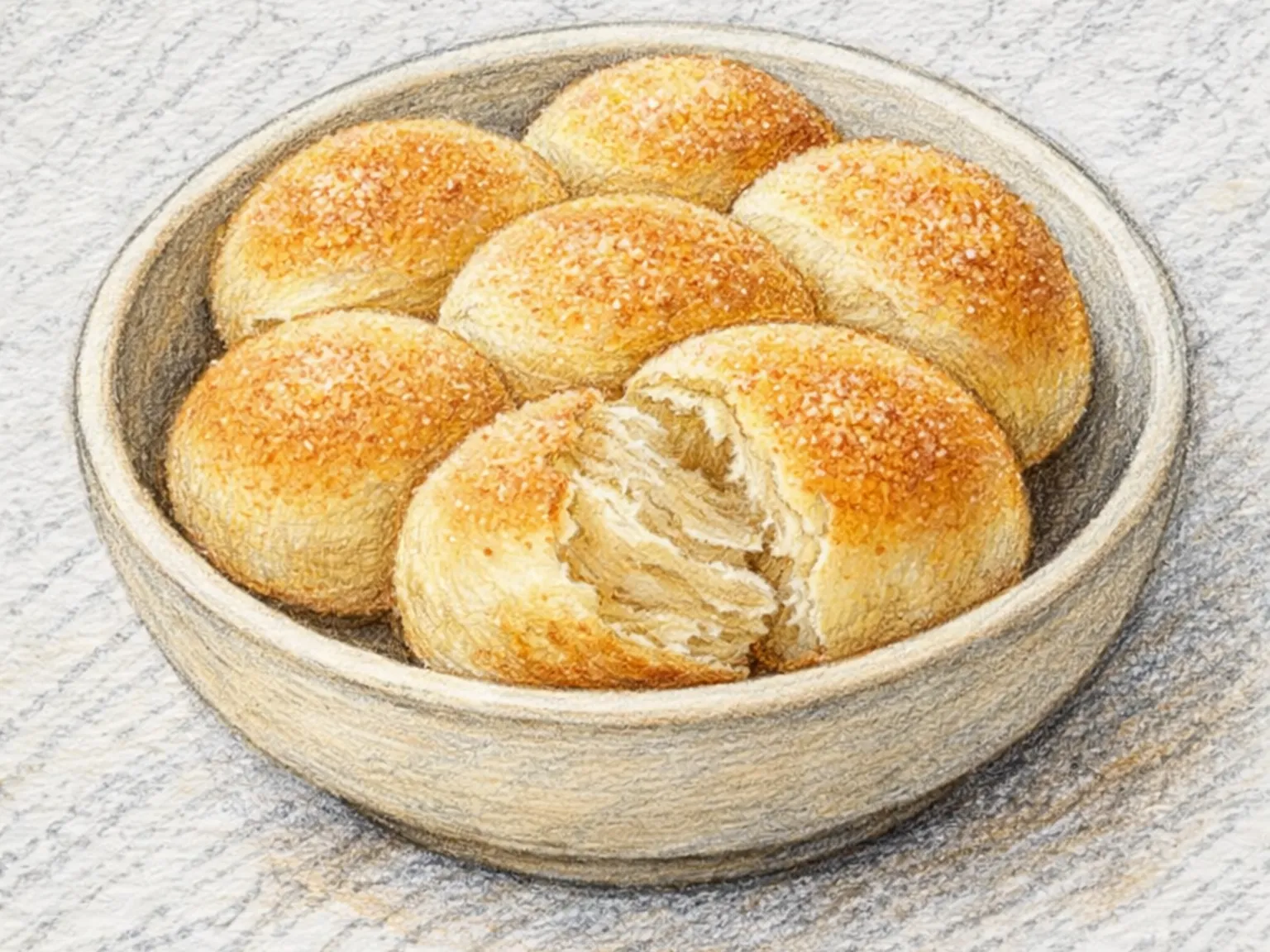
Pandesal Milk Rolls (Soft Filipino Bread with Crumb Coating)
These small Filipino bread rolls are leavened with yeast and enriched with milk, producing an interior so soft it tears apart in cotton-like wisps. A coating of fine breadcrumbs on the outside adds a faintly sandy texture and a pale, matte appearance that distinguishes pandesal from other dinner rolls. The sweetness is deliberately understated, making the rolls versatile enough for jam at breakfast or sliced meat at lunch. Butter kneaded into the dough contributes richness without heaviness, and the crumb stays moist through the next day when stored in a sealed bag. Covering the rolls with a clean towel five minutes after baking traps steam and keeps them especially tender.
Brioche Loaf
Brioche loaf is a French enriched bread defined by a high ratio of eggs and butter to flour. Softened butter is added in stages during kneading, small amounts at a time, until the fat is fully absorbed and the gluten has developed enough for the dough to stretch into a thin, nearly translucent sheet without tearing. The extended mixing time and the cold retard during overnight proofing give the final crumb its extraordinarily fine structure. Baked in a loaf pan, brioche comes out with a deep golden crust that is thin and slightly brittle, enclosing an interior that tears into long, cotton-soft strands. The butter flavor runs through every layer, so the bread is rich enough to eat on its own without any spread. Once sliced and lightly toasted, the contrast between the crisp outer face and the soft, moist center becomes more pronounced. Brioche absorbs custard quickly and holds its shape under heat, which makes it a preferred base for French toast and bread pudding.
Candied Tangerine Peel (Korean Citrus Honey Confection)
Gyul jeonggwa is a traditional Korean confection made by cutting tangerine peels into 0.8 cm strips with a moderate amount of white pith left on, blanching the strips twice in salted water to eliminate bitterness, then cooking them low and slow in a syrup of sugar, honey, and cinnamon for thirty-five to forty minutes. Keeping the pith is deliberate: it holds the essential citrus oils that define the candy's fragrance, so trimming too much away produces a noticeably flatter result. The longer the peels simmer, the more completely they turn translucent, pulling syrup into every layer of fiber until the texture becomes dense and springy, close to a firm fruit jelly. Lemon juice added toward the end of cooking performs two functions: it inhibits crystallization of the syrup as it cools, and its acidity trims back the sweetness for a cleaner finish. Draining the pieces and resting them on a rack for an hour produces a dry, non-tacky surface that holds its shape well.
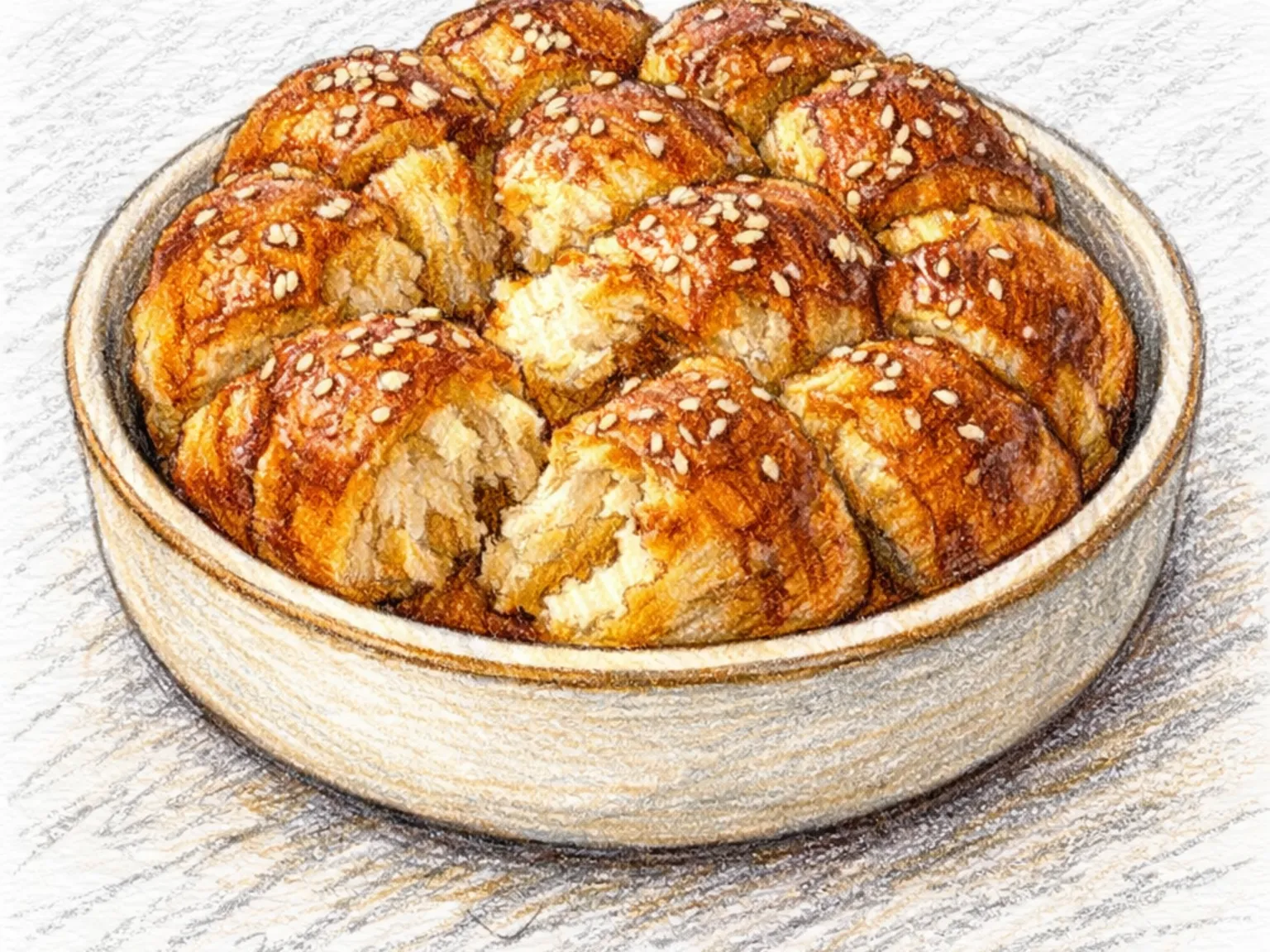
Malcha Chamkkae Brioche Knots (Matcha Sesame Brioche Knots)
Half the brioche dough is tinted green with matcha powder and left to develop alongside the plain half, then the two are twisted into knot shapes and coated in toasted sesame seeds before baking. The enriched dough delivers the hallmark brioche character, soft, buttery, and slightly sweet, while the matcha half contributes an earthy bitterness that tempers the richness. Sesame seeds, warmed during baking, release a pronounced nutty aroma and add a light crunch to the bread's otherwise pillowy surface. Keeping the dough temperature near 26 degrees Celsius prevents the butter from leaking out during kneading; dissolving the matcha in a small amount of water first ensures streak-free color. After a 60-minute bulk rise and a 30-minute proof, the knots bake at 180 degrees Celsius for 16 to 18 minutes until the tops are golden and the interiors are feathery. The two-toned swirl visible when the knot is torn open makes this bread visually striking, well suited for gift-giving or serving at a gathering.
Serve with this
Clafoutis (French Baked Cherry Custard Dessert)
Clafoutis is a traditional French dessert from the Limousin region made by arranging fresh cherries in a buttered baking dish, then pouring over a thin batter of eggs, sugar, milk, and flour and baking at 180 degrees Celsius for thirty to thirty-five minutes. The batter is considerably thinner than pancake batter, and the result when baked is a texture that sits between a creamy custard and a light sponge -- the edges puff and turn golden while the center around the cherries stays moist and yielding. Using unpitted cherries is the traditional method: the pits release a faint almond scent during baking that perfumes the surrounding batter in a way that pitted fruit cannot replicate. The cherries also hold their shape better with the pits in. Vanilla extract deepens the egg-and-milk base, and the cherries' own tart juice seeps into the batter during baking, creating concentrated pockets of fruit flavor that balance the overall sweetness. Clafoutis is served directly from the baking dish, typically dusted with powdered sugar and brought to the table while still warm, because the custard texture softens and loosens slightly as it cools, making the warm version noticeably more appealing. Made with blueberries, plums, or apricots instead of cherries, the dessert takes a different name -- flaugnarde -- though the technique remains identical.
Korean Sweet Corn Latte (Butter Sauteed Corn Milk Drink)
Sweet corn latte begins by sauteing cooked corn kernels in butter until fragrant, then simmering them in milk to draw out the corn's natural sugars before blending everything smooth. The butter amplifies the starchy, roasted aroma during the initial saute, coating each kernel so that the fat-soluble flavor compounds dissolve fully into the milk during the five-minute simmer. Blending the mixture until completely smooth and then straining it through a fine sieve removes any remaining hull pieces, producing a texture as silky as a custard sauce. This straining step makes a noticeable difference in the final quality. Condensed milk adds a rounded sweetness, and a small amount of white pepper introduces a faint spiced warmth that gives the drink depth beneath the sweetness. It works equally well served hot in a ceramic mug or chilled and poured over ice; the corn aroma remains vivid in both versions.
Pork Bossam Apple Mustard Salad
Bossam apple mustard salad uses thinly sliced cold boiled pork belly as its main component, arranged over shredded cabbage, cucumber, and crisp apple slices, then finished with a sharp mustard-soy vinaigrette. Chilling the boiled pork completely before slicing is not optional: warm pork crumbles under the knife, while cold pork yields clean, even cuts that hold their shape on the plate. Cabbage and cucumber provide a firm, crunchy base whose texture directly contrasts with the soft, fatty pork, and the apple slices introduce a cool sweetness along with a welcome burst of moisture. Korean hot mustard, dissolved generously into a soy-vinegar dressing, releases a nasal, sinus-clearing heat with each bite that cuts through the richness of the pork fat without the acidity becoming the dominant note. Perilla leaves placed underneath the pork act as both a flavoring layer and a suppressor of any residual pork odor, their herbal intensity complementing the mustard without competing with it. The salad works equally well as a standalone meal and as a second-day use for leftover bossam from the previous night, which is one reason it appears in Korean home kitchens as often as it does.
Similar recipes
Verona Butter Bread Cake (Star-Shaped Italian Yeast Cake)
This tall Italian bread cake relies on generous amounts of egg yolk and butter worked into a yeasted dough through long, patient kneading. Baked in a star-shaped mold, the risen loaf emerges with a distinctive silhouette and a crumb so airy it pulls apart in long, feathery strands. Vanilla perfumes the interior without competing with the buttery richness, and a thick dusting of powdered sugar before serving gives the cake its signature snow-capped appearance. Adding the softened butter in three stages prevents the dough from breaking and ensures even distribution of fat through every strand of gluten. Maintaining a proof temperature between twenty-six and twenty-eight degrees Celsius produces the best balance of flavor development and structural rise.
Chicken Adobo (Filipino Vinegar Soy Braised Chicken)
Chicken adobo is the unofficial national dish of the Philippines, rooted in a pre-colonial preservation technique of braising meat in vinegar to extend its shelf life in tropical heat long before refrigeration. Chicken simmers uncovered in soy sauce, cane vinegar, crushed whole garlic cloves, bay leaves, and whole black peppercorns until the sharp acidity of the vinegar mellows into a layered, salty-sour sauce with a caramelized depth that no amount of shortcutting can replicate. Once braised, the chicken pieces are removed from the sauce and pan-fried until the skin turns deep golden and audibly crisp, then returned to the reduced liquid for a final coat. The moment the crackling skin absorbs the thick, glossy sauce is the defining pleasure of a well-made adobo. Every Filipino household holds its own ratio of soy sauce to vinegar as a point of pride, and the unresolvable debate over whose mother makes the best version is practically a national institution. This tolerance for variation is part of why the dish has endured for centuries across a country of more than seven thousand islands. It is always served over steamed white rice with extra sauce ladled over generously, and adobo famously tastes better the next day, after the proteins have had time to reabsorb the deepened, overnight flavors from the refrigerator.
Chicken Inasal (Bacolod Citrus Lemongrass Grilled Chicken)
Chicken inasal is the defining grilled chicken of Bacolod City in the Western Visayas region of the Philippines, so inseparable from its origin that it is commonly called Bacolod chicken. An overnight marinade of calamansi juice, cane vinegar, lemongrass, and garlic allows the acid to work deep into the muscle fibers, tenderizing the meat while coating it in layered citrus and herb fragrance. During grilling over coconut-shell charcoal, the chicken is basted repeatedly with annatto oil, which stains the skin a vivid orange and keeps the exterior perpetually moist so it never dries over the coals. The charcoal smoke combines with the calamansi and lemongrass aromatics to build a smoky-citrus flavor profile that distinguishes inasal from other grilled chicken preparations. The chicken is served alongside garlic rice with a small dish of chicken oil mixed with calamansi juice for dipping. In Bacolod, an entire street called Manokan Country is lined with dozens of inasal stalls that operate simultaneously every evening, filling the neighborhood with charcoal haze.