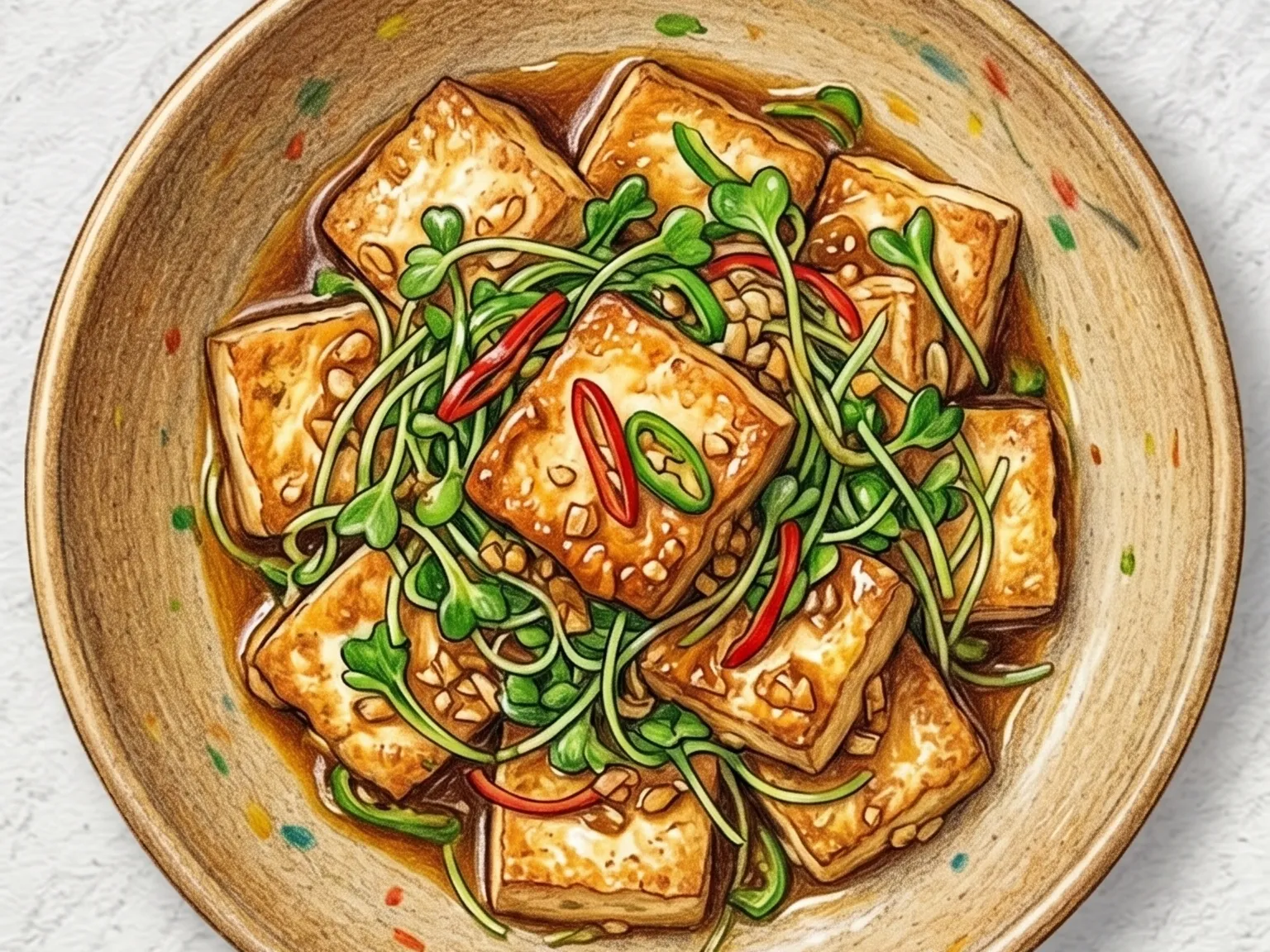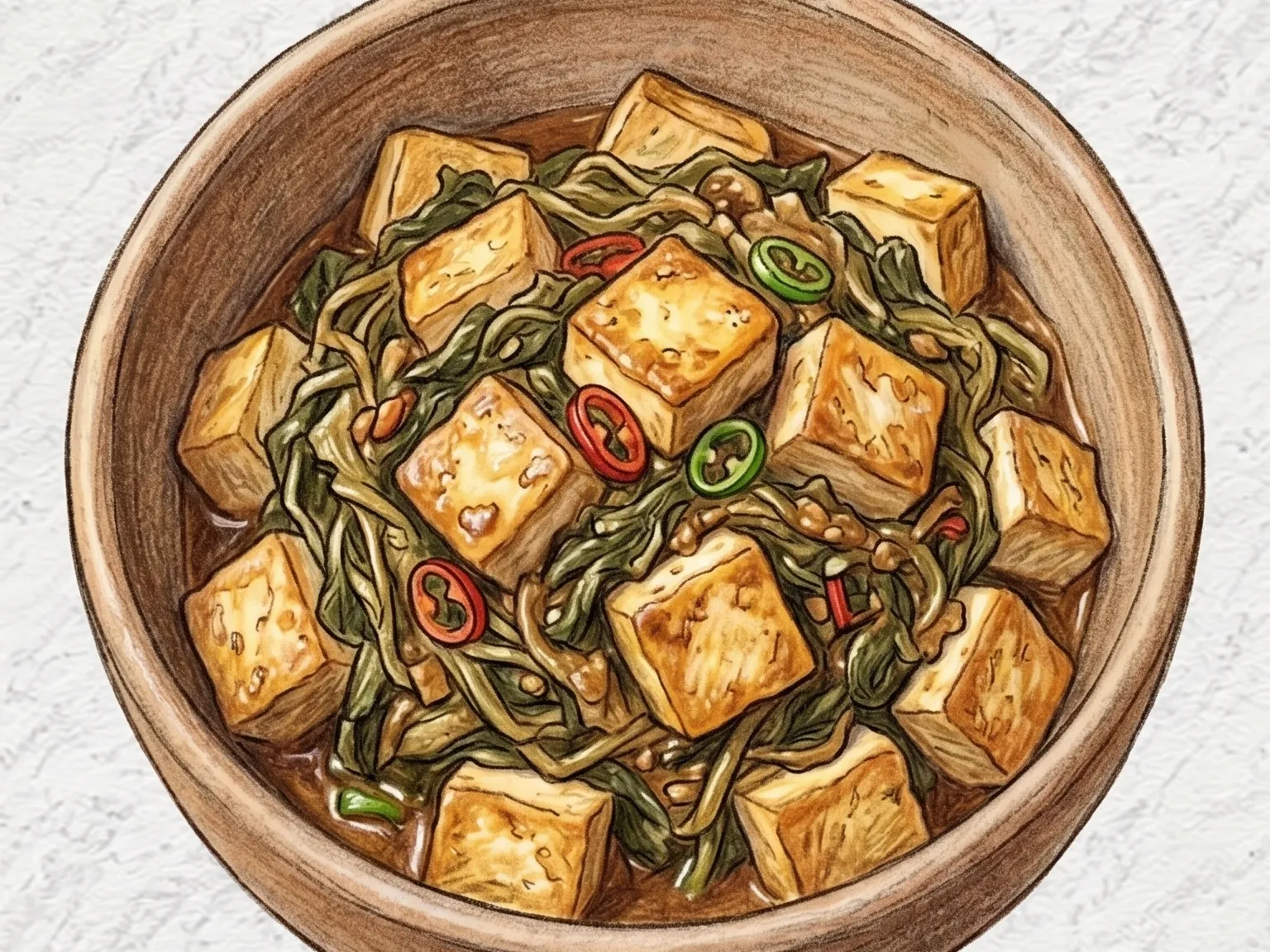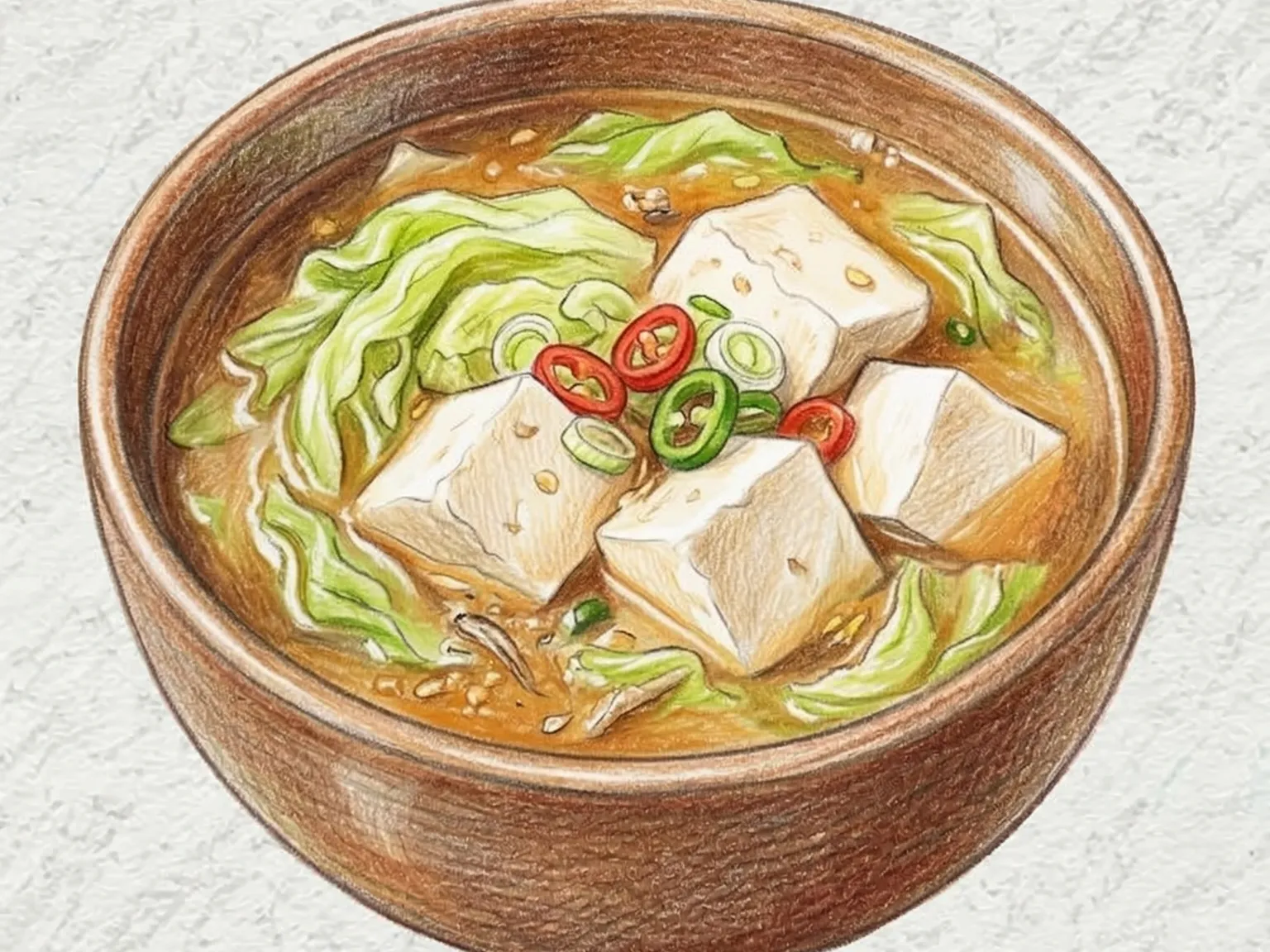
Korean Young Napa Soybean Paste Stew
Stews Easy

Korean Young Napa Soybean Paste Stew

Quick answer

Young napa cabbage (eolgari) takes center stage in this doenjang jjigae, wilting into the broth and releasing a mild sweetness.

What makes this special

  • Tender young napa cabbage wilts into a mild, sweet eolgari doenjang jjigae.
  • Young napa cabbage's tender fiber and high sweetness blend with doenjang without any bitterness
  • Boiling anchovy and kelp directly in the pot amplifies the doenjang's fermented savoriness
Total time
40 min
Level
Easy
Servings
4 servings
Ingredients
9
Calories
185 kcal
Protein
12 g

Key ingredients

young napa cabbagedoenjang (soybean paste)dried anchovieskelpfirm tofu

Core cooking flow

  1. 1 Rinse 300g of young napa cabbage and cut it into 4cm pieces, keeping the thicker stems slightly separate.
  2. 2 Put 900ml of water, 12g of dried anchovies, and one piece of kelp in a pot over high heat.
  3. 3 Press 2 tablespoons of doenjang through a fine strainer into the broth and b...

Young napa cabbage (eolgari) takes center stage in this doenjang jjigae, wilting into the broth and releasing a mild sweetness. The stock is built from dried anchovies and kelp, then seasoned with fermented soybean paste for a full-bodied base. Firm tofu and onion add substance, while a green chili provides a sharp finish. Eolgari is a tender spring-harvested young cabbage with soft fibers and a pronounced natural sweetness, so when combined with the savory doenjang broth it contributes a mellow, round flavor without any bitterness. Adding a generous amount of tofu helps the cubes absorb the saltiness of the paste and brings the entire soup into a well-balanced, smooth finish that pairs naturally with steamed rice.

Prep 15min Cook 25min 4 servings

Instructions

Read the steps as a cooking flow: prep, heat, seasoning, doneness control, and finish.

6 steps
  1. 1
    Prep

    Rinse 300g of young napa cabbage and cut it into 4cm pieces, keeping the thicker stems slightly separate.

    Dice 120g of onion into 1.5cm pieces, then cut 250g of firm tofu and the green chili into bite-sized pieces.

  2. 2
    Control

    Put 900ml of water, 12g of dried anchovies, and one piece of kelp in a pot over high heat.

    Once it boils, lower to medium heat and simmer for 10 minutes, then remove everything before bitterness develops.

  3. 3
    Control

    Press 2 tablespoons of doenjang through a fine strainer into the broth and boil over medium heat for 3 minutes.

    Break up any lumps with a ladle so the paste does not sink and stick to the bottom.

  4. 4
    Control

    Add the onion first and simmer for 2 minutes to release its sweetness.

    Add the cabbage stems, then place the leaves on top and cook for about 5 minutes, just until the greens wilt and soften.

  5. 5
    Control

    Add the tofu, 1 tablespoon of minced garlic, and the green chili, then simmer over medium-low heat for 4 more minutes.

    Stir gently around the edges so the tofu warms through without breaking apart.

  6. 6
    Finish

    Taste the broth and adjust the saltiness with the remaining 1 tablespoon of doenjang.

    Turn off the heat when the cabbage is tender and the tofu has absorbed the broth, then serve the stew hot.

After the steps

Pick a recipe that fits this dish.

Continue with shared ingredients, meal pairings, or a similar method.

Recipes That Go Well With This

More Stews →

Based on shared ingredients and meal pairing

Korean Soybean Paste Stew
Shared ingredient: firm tofu Stews

Korean Soybean Paste Stew

Doenjang-jjigae is a standard Korean stew made by dissolving fermented soybean paste in water and simmering it with vegetables and tofu. To ensure a smooth broth without grits, the paste is strained through a fine sieve into the water. Harder vegetables like potatoes and onions are added first to soften and release their natural sweetness into the broth. Zucchini and minced garlic follow, balancing the soup's richness. In the final stage, tofu and chopped green chili are added, providing a clean kick that cuts through the deep, earthy taste of the fermented soybean paste. Simmering green onions at the very end adds a fresh aroma. The savory stew pairs naturally with steamed rice and various side dishes.

Korean Soybean Paste Stew with Clams and Zucchini
Shared ingredient: firm tofu Stews

Korean Soybean Paste Stew with Clams and Zucchini

Bajirak aehobak doenjang jjigae is a Korean soybean paste stew that draws its distinctive clean depth from littleneck clams cooked alongside zucchini, potato, and tofu in rice-rinse water. As the clams open during cooking, they release their briny, slightly sweet liquor directly into the doenjang broth, deepening the fermented base with a layer of ocean salinity that soybean paste alone cannot produce. Potato breaks down gradually as the stew simmers, adding a subtle body to the broth without turning it starchy. Tofu and zucchini provide contrasting textures, the tofu soft and custardy while the zucchini retains a gentle resistance. Onion and minced garlic supply the sweet, aromatic foundation of the broth, and a Cheongyang chili introduces a clean, sharp heat that prevents the flavors from becoming too heavy. The pairing of the clams' saline, briny character with the earthy fermented depth of doenjang is what gives this particular version of the stew its reputation as one of the most satisfying everyday versions, served with a bowl of plain steamed rice.

Korean Geomeun Kong Juk (Black Bean Porridge)
Serve together Rice

Korean Geomeun Kong Juk (Black Bean Porridge)

Black beans are soaked for at least four hours, then boiled until the skins wrinkle and the flesh softens through to the center. They are blended with their cooking liquid into a thick, smooth slurry that forms the base of the porridge. This bean puree is combined with separately soaked rice and the mixture is simmered over low heat, stirred regularly to prevent the starch from catching on the bottom of the pot. As the rice breaks down and the starch gelatinizes, the porridge thickens gradually into a smooth, velvety consistency. The anthocyanins in the black bean skins stain the porridge a deep purple-gray, and the flavor is earthy and distinctly nutty, unlike the lighter taste of plain rice porridge. Passing the finished porridge through a sieve removes the bean skins for a cleaner texture. Seasoned with salt alone, it reads as a savory meal; a tablespoon of sugar shifts it toward something gently sweet. Pine nuts and sesame scattered on top layer in additional nuttiness, and the porridge is frequently made as restorative food given the beans nutritional density.

Korean Yeolmu Doenjang Stew
Similar recipe Stews

Korean Yeolmu Doenjang Stew

Seasonal young radish greens and fermented soybean paste come together in this refreshing summer stew designed to cool the body. The preparation begins with a clean anchovy and kelp stock, where doenjang is carefully dissolved to ensure a smooth consistency without clumps. Young radish greens, or yeolmu, contribute a signature crunch and a faint bitterness that softens as it simmers alongside sweet onions and zucchini. This natural sweetness from the onion balances the earthy profile of the fermented paste while gochugaru adds a hint of heat and a warm red hue to the broth. To preserve the crisp texture of the greens, add them after the doenjang and limit the simmering time to about five to seven minutes. Tofu should be introduced at the very end to prevent it from breaking apart while absorbing the savory liquid. The clean mineral finish provided by the kelp makes this dish an excellent companion for barley rice during humid months. For additional layers of flavor, sliced Cheongyang chilies increase the spiciness and a spoonful of perilla powder introduces a toasted quality to the base. If using low-sodium paste, a small amount of soup soy sauce helps achieve a balanced profile. Since young radish greens possess a distinct herbal fragrance at their peak, this stew delivers its best quality when served immediately on the day it is prepared.

Serve with this

Korean Seasoned Sea Grapes Salad
Side dishes Easy

Korean Seasoned Sea Grapes Salad

Kkosiraegi-muchim is a tangy, low-calorie banchan made from kkosiraegi, a red algae seaweed whose thin, noodle-like strands snap with a distinctive crunch that no other seaweed can replicate. Blanching must not exceed twenty seconds, as anything longer collapses the characteristic texture, so a timer is essential. The seaweed goes straight from the boiling water into cold water to stop the heat and lock in elasticity. The dressing brings together gochugaru, soup soy sauce, vinegar, maesil-cheong, garlic, and sesame oil; the green plum extract layering in a fruity acidity that lifts the dish beyond simple sour-spicy flavoring. Julienned cucumber threaded through the seaweed strands provides a crisp, garden counterpoint to the oceanic depth. At roughly 72 kilocalories per serving with high dietary fiber content, this banchan appears frequently in Korean diet meal plans because it satisfies without adding much to the calorie count. Eating it promptly after seasoning prevents the cucumber from releasing water and diluting the dressing. Served cold in summer, it doubles as a refreshing side that pairs well with grilled meat or plain rice.

🥗 Light & Healthy 🏠 Everyday
Prep 10min Cook 2min 4 servings
Korean Red Cabbage Kimchi
Kimchi Easy

Korean Red Cabbage Kimchi

Jeokchae kimchi is made by salting red cabbage leaves, then tossing them in a seasoning of gochugaru, sand lance fish sauce, minced garlic, and Korean pear juice before a short fermentation. Red cabbage has thicker, denser leaves than napa cabbage, so it holds its crunch well after brining rather than going soft. The anthocyanin pigment in the red cabbage reacts with the chili seasoning to produce a vivid purple color rather than the typical red associated with kimchi, making it visually striking on the table. Pear juice provides a gentle fruit sweetness underneath the heat and spice, while sand lance fish sauce builds enough savory depth that even a brief fermentation yields full flavor. Scallions add a fresh, aromatic finish that ties the seasoning together. The result is a kimchi that is crunchy, spicy, and umami-rich simultaneously, with a distinctive character that sets it apart from traditional napa kimchi.

🍱 Lunchbox 🏠 Everyday
Prep 30min 2 servings
Korean Beoseot Deulkkae Jeon (Mushroom Perilla Pancake)
Pancakes Easy

Korean Beoseot Deulkkae Jeon (Mushroom Perilla Pancake)

Mushroom and perilla seed jeon brings together oyster mushrooms and shiitake, sliced thin and folded into a batter built on perilla seed powder and a splash of soy sauce. Perilla seeds carry a heavier, slightly bitter nuttiness compared to sesame, and that quality anchors the earthy depth of the mushrooms rather than competing with it. Seasoning the batter directly with soy sauce means the pancake holds its own without a dipping sauce, though one on the side does not go amiss. Frying with enough oil gives the exterior a thin, crisp shell while the mushroom filling stays moist inside. Oyster mushrooms torn along their grain develop a pleasantly chewy bite as they cook; shiitake sliced fine distribute evenly so the whole pancake cooks at the same rate. It works as a makgeolli pairing or a straightforward side, and holds up well at room temperature - the perilla aroma actually deepens as it cools.

🍺 Bar Snacks 🏠 Everyday
Prep 18min Cook 14min 2 servings

Similar recipes

Korean Young Napa Soft Tofu Stew
Stews Easy

Korean Young Napa Soft Tofu Stew

Eolgari-sundubu-doenjang-jjigae is a gentle Korean stew that pairs soft tofu with young napa cabbage (eolgari baechu) in a kelp stock base seasoned with doenjang and a small measure of gochujang. The doenjang brings fermented soybean depth to the broth, while the gochujang adds a measured spiciness that stays mild rather than sharp -- the two pastes work together to produce a broth that is simultaneously savory, slightly sweet, and lightly spiced. Potato and onion are added early to contribute their natural sugars, and the potato softens gradually into the liquid, lending slight body to the stock. Soft tofu should be spooned in gently rather than stirred, as it breaks apart easily -- rocking the pot from side to side distributes it without tearing the curds into pieces. Once in the stew, the soft tofu slowly releases some of its moisture and takes on the broth around it, spreading a silky, almost cream-like texture throughout the liquid. Young napa cabbage provides a light crunch that contrasts with the velvet texture of the tofu and the smoothness of the broth. A finishing addition of minced garlic and a drop of perilla oil deepens the savory fragrance just before serving. The stew is mild enough to work as a morning meal and substantial enough to stand as a light dinner.

🏠 Everyday ⚡ Quick
Prep 12min Cook 16min 2 servings
Soybean Paste Stew with Clams
Asian Easy

Soybean Paste Stew with Clams

Doenjang jjigae with clams is one of the most frequently made stews in Korean households, built on the combination of fermented soybean paste's deep, earthy flavor and the clean briny umami of manila clams. The clams are purged of sand before being added to a pot of doenjang-laced broth, where they open and release their salty, seawater-flavored liquor directly into the soup. The result transforms the base from something merely savory into something distinctly oceanic and complex. Zucchini softens in the bubbling broth and contributes a natural sweetness as it breaks down, while blocks of soft tofu act as sponges, soaking up the seasoned liquid and releasing it in a burst of hot, flavorful broth when bitten into. Sliced cheongyang chili peppers are added to interrupt the heaviness of the fermented paste and sharpen the overall flavor. The stew is typically served in an earthenware pot while still bubbling, alongside rice. Many Koreans ladle the broth directly over their bowl of rice. The recipe adapts to any season: assembled with leftover summer vegetables from the refrigerator for a lighter version, or cooked piping hot in a stone pot through winter.

🏠 Everyday
Prep 12min Cook 25min 2 servings
Korean Young Napa Soybean Paste Soup
Soups Easy

Korean Young Napa Soybean Paste Soup

Eolgari-doenjang-guk is a traditional Korean soup made with young napa cabbage and fermented soybean paste. The recipe uses rice-rinse water as the soup base instead of plain water, which helps reduce the sharpness of the soybean paste and adds a mild, rounded starchiness. Straining the doenjang through a sieve before boiling is recommended to ensure a smooth, lump-free broth. Once the soup comes to a boil, anchovy powder and minced garlic are stirred in to establish a rich umami depth. The young napa cabbage is added next and cooked briefly so the leaves retain their fresh flavor and crisp bite. In the final stage, sliced green onions and cheongyang chilies are added, simmering for just two minutes to infuse the broth with a clean, spicy finish. This comforting soup pairs naturally with a hot bowl of steamed rice.

🏠 Everyday 🥗 Light & Healthy
Prep 15min Cook 25min 4 servings

Tips

Add doenjang in two rounds to control saltiness more precisely.
Add the greens in the last 10 minutes to keep them tender.

Nutrition (per serving)

Calories
185
kcal
Protein
12
g
Carbs
11
g
Fat
10
g