Eomuk-guk (Fish Cake Radish Clear Soup)
Soups Easy

Eomuk-guk (Fish Cake Radish Clear Soup)

Quick answer

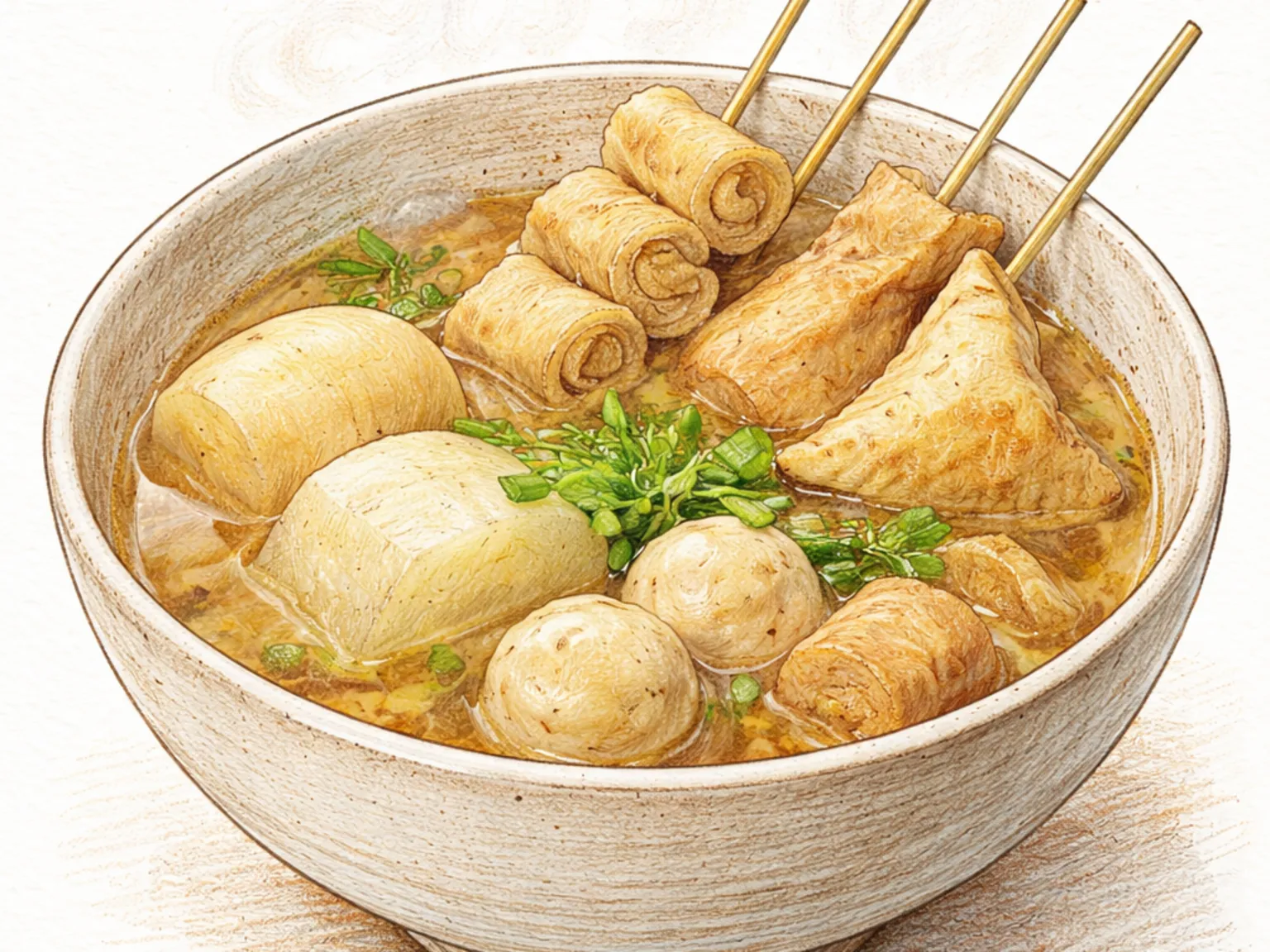
Eomuk-guk is a straightforward Korean soup centered around fish cakes and a base liquid prepared by simmering sliced radish.

What makes this special

  • Eomuk-guk combines fish cakes with a clear broth made from long-simmered sliced radish.
  • Radish simmered 10 minutes first makes a pale sweet base for the fish cake umami
  • Rinsing fish cake in hot water removes surface oil and clarifies the broth
Total time
30 min
Level
Easy
Servings
2 servings
Ingredients
7
Calories
250 kcal
Protein
17 g

Key ingredients

fish cakeskorean radishwatersoup soy sauceminced garlic

Core cooking flow

  1. 1 Cut 300 g fish cakes into 3 cm bite-size pieces, then rinse them briefly wit...
  2. 2 Put 1.3 L water and the sliced radish in a pot and bring it to a boil over medium-high heat.
  3. 3 When the broth looks clear and the radish has released its mild sweetness, skim off any foam.

Eomuk-guk is a straightforward Korean soup centered around fish cakes and a base liquid prepared by simmering sliced radish. The initial step involves boiling the radish in water for a sufficient duration so that it releases a mild, natural sweetness into the broth while the liquid itself takes on a slightly translucent appearance. Depending on individual preference, the radish can be taken out of the pot or left in as part of the final dish. Once the base is ready, pieces of fish cake are added to the boiling liquid along with soup soy sauce and minced garlic. The mixture then simmers for approximately six minutes, a period during which the fish cakes soften and absorb the saltiness of the soy sauce while simultaneously contributing their own flavor back into the soup base. To finish the preparation, thinly sliced green onions and a sprinkle of black pepper are stirred in. These final additions provide a sharp fragrance and a gentle heat that helps recreate the specific taste found at traditional Korean snack bars and street food carts. The entire cooking procedure is completed in about twenty minutes. Because the required ingredients are minimal and often staples, this recipe serves as a practical option for times when there are few groceries available in the kitchen. This makes the dish accessible even when the refrigerator is nearly empty and only basic pantry items remain.

Prep 10min Cook 20min 2 servings

Instructions

Read the steps as a cooking flow: prep, heat, seasoning, doneness control, and finish.

6 steps
  1. 1
    Prep

    Cut 300 g fish cakes into 3 cm bite-size pieces, then rinse them briefly with hot water if you want a cleaner broth.

    Slice the 120 g radish about 0.5 cm thick and thinly slice the green onion.

  2. 2
    Control

    Put 1.3 L water and the sliced radish in a pot and bring it to a boil over medium-high heat.

    Once boiling, reduce to medium and cook about 10 minutes, until the radish turns slightly translucent.

  3. 3
    Season

    When the broth looks clear and the radish has released its mild sweetness, skim off any foam.

    Remove the radish if preferred, or leave it in, then stir in 1 tbsp soup soy sauce and 1 tsp minced garlic.

  4. 4
    Control

    Add the fish cakes and simmer over medium heat for about 6 minutes.

    Keep the boil gentle so the broth does not turn cloudy, and cook until the pieces soften, swell slightly, and absorb the seasoning.

  5. 5
    Control

    Add the sliced green onion and 0.3 tsp black pepper, then simmer for just 1 more minute.

    Turn off the heat as soon as the green onion begins to soften, so its fresh aroma stays in the soup.

  6. 6
    Finish

    Ladle the fish cakes and broth evenly into bowls and serve while very hot.

    If serving it with rice or udon noodles, taste the broth first and keep it balanced, since the soup soy sauce can become more noticeable.

After the steps

Pick a recipe that fits this dish.

Continue with shared ingredients, meal pairings, or a similar method.

Recipes That Go Well With This

More Soups →

Based on shared ingredients and meal pairing

Korean Fish Soup (White Fish and Radish Clear Broth)
Shared ingredient: korean radish Soups

Korean Fish Soup (White Fish and Radish Clear Broth)

Saengseon-guk is a traditional Korean fish soup made with white-fleshed fish and radish in a clear broth. The radish simmers first, building a base of natural sweetness, before garlic and soup soy sauce are added for depth. The fish goes in once the radish is halfway cooked, and timing matters - it should cook only until the flesh turns opaque and begins to flake, as prolonged boiling would break it apart and cloud the broth. Tofu and sliced Korean chili peppers join near the end, adding soft texture and a mild kick. Green onion finishes the bowl with a fresh note. The result is a light, transparent soup where the fish's own clean, marine flavor does most of the work. It is the kind of straightforward home cooking that appears on Korean dinner tables throughout the year, requiring little more than fresh fish and basic pantry staples.

Korean Skewered Fish Cake Soup
Shared ingredient: korean radish Street food

Korean Skewered Fish Cake Soup

Eomuk-kkochi starts with flat fish cake sheets folded into zigzag shapes on skewers, which then simmer in a clear broth made from Korean radish, kelp, and green onion. The broth draws umami from the radish and kelp and transfers that depth into the fish cakes as they cook. The fish cakes soften from their original firm bounce as they absorb the broth, while the liquid itself thickens slightly from the starch the eomuk releases. Serving a dipping sauce of soy or gochujang alongside each skewer adds another dimension of flavor at the table. This is one of Korea's most iconic winter street foods, served at pojangmacha stalls where the hot broth gets ladled into paper cups for sipping between bites.

Korean Seaweed Roe Pot Rice
Serve together Rice

Korean Seaweed Roe Pot Rice

The preparation starts by layering finely diced radish at the bottom of a heavy pot before adding soaked rice. A specific technique defines this dish: warming the salted pollock roe and butter using only the residual heat of the vessel after the flame is extinguished. Avoiding direct heat prevents the roe's proteins from tightening into a dry or crumbly texture. Instead, the indirect warmth maintains a soft consistency where individual eggs pop and release their salty essence into the grains. As the butter melts, it coats each piece of rice, acting as a bridge between the sharp saltiness of the fish roe and the mild nature of the rice. Throughout the cooking process, the radish pieces release moisture upward, ensuring the rice remains hydrated while contributing a subtle sweetness and a clean finish. Before the meal begins, crumbling gamtae over the surface introduces a distinct oceanic scent that sits above the savory layers of butter and roe. Sliced scallions provide a sharp, crisp contrast to the overall richness. Pouring hot water into the pot at the end creates a toasted rice water that clears the palate. It is important to place the roe and butter within four minutes of turning off the heat to ensure the remaining warmth is sufficient to soften the ingredients.

Korean Fish Cake Soup (Clear Anchovy Radish Broth)
Similar recipe Drinks

Korean Fish Cake Soup (Clear Anchovy Radish Broth)

Eomuk-tang is a Korean fish cake soup in which skewered fish cakes and thick radish slices simmer in a clear broth built from dried anchovies and kelp. The kelp must be removed the moment the water begins to boil, otherwise it releases a slimy texture that clouds the broth. Cutting the radish thick allows it to slowly release natural sweetness over the long simmer. Rinsing the fish cakes in hot water before adding them washes away surface oil and keeps the broth clear and clean. Soup soy sauce adjusts the seasoning, and green onion and black pepper finish the pot. Adding the radish before the fish cakes ensures it has enough time to fully soften and sweeten the broth, since it takes longer than the eomuk to cook through.

Serve with this

Korean Seasoned Cockle Salad
Side dishes Medium

Korean Seasoned Cockle Salad

Kkomak-muchim is a seasoned cockle banchan that has become inseparable from the town of Beolgyo in South Jeolla Province. Beolgyo sits at the meeting point of wide tidal flats with strong current flow, producing an environment rich in organic matter where true cockles (cham-kkomak) grow plump, sweet, and full. The season runs from November through March, the months when the meat is at its densest and most flavorful. Cooking precision determines the outcome: stirring only in one direction once the water reaches a boil ensures all the shells open evenly rather than at staggered intervals, and the cockles must be removed at the four-minute mark before the flesh contracts and turns rubbery. The shells are pried apart immediately after lifting, the meat collected and drained well so the dressing does not turn watery. The seasoning is built from gochugaru, soy sauce, vinegar, sugar, and minced garlic, all mixed into a tangy, spicy paste that coats each cockle in a bright, assertive layer. Sliced green onion adds freshness, sesame oil adds a roasted fragrance, and a ten-minute rest after mixing allows the dense cockle meat to absorb the dressing from the surface inward. This is among the most sought-after seasonal banchan in Korean cuisine and a central part of what makes Beolgyo food culture distinctive.

🏠 Everyday 🍱 Lunchbox
Prep 20min Cook 10min 2 servings
Korean Amaranth Greens Pickles
Kimchi Medium

Korean Amaranth Greens Pickles

Bireumnamul jangajji is a soy-vinegar pickle of amaranth greens made by submerging the tender leaves in a boiled brine of soy sauce, vinegar, and sugar with cheongyang chili and garlic. The soft leaves absorb the pickling liquid within a day, taking on a balanced sweet-salty flavor that makes them ready to eat as banchan. Vinegar neutralizes the grassy raw taste of the greens, and the chili and garlic deliver a sharp, spicy finish that builds at the back of the palate. The flavor deepens noticeably from the second day onward, so chilling the jar longer intensifies the pickle. Refrigerated, this keeps well for two to three weeks, making it a practical way to preserve in-season amaranth greens through the summer.

🏠 Everyday 🍱 Lunchbox
Prep 30min Cook 15min 4 servings
Korean Stuffed Perilla Leaf Pancakes
Pancakes Medium

Korean Stuffed Perilla Leaf Pancakes

Kkae-ip-jeon are pan-fried perilla leaf parcels stuffed with a filling of ground pork and firm tofu, coated in flour and egg. The tofu must be squeezed dry in a cloth before mixing; excess moisture causes the filling to spread and stick to the pan. Garlic chives and onion add crunch and fragrance to the mix, and the filling seasoned with soy sauce and black pepper pairs cleanly with the perilla's strong herbal character. Dusting with flour first, then dipping in egg, produces an even coating, and frying covered over medium-low heat for two minutes per side ensures the filling is cooked through to the center. The bite-sized pieces work well as a packed lunch side or as bar food.

🍺 Bar Snacks 🎉 Special Occasion
Prep 22min Cook 12min 2 servings

Similar recipes

Korean Fish Cake Hot Pot (Skewered Fish Cakes in Clear Broth)
Stews Easy

Korean Fish Cake Hot Pot (Skewered Fish Cakes in Clear Broth)

Eomuk jeongol is a Korean fish cake hot pot simmered in a clear broth built on dried kelp and anchovy stock. Large pieces of Korean radish cook alongside the fish cakes, releasing their natural sweetness into the liquid and keeping the broth light and refreshing as it reduces. Shiitake mushrooms add earthy umami depth, and using soup soy sauce alone for seasoning keeps the understated savory character of the fish cakes front and center. Cheongyang chili brings a sharp heat, and sliced green onion layers in a gentle sweetness as it softens in the bubbling pot. Fish cakes that spend more time in the broth turn silky and absorb the surrounding flavors, growing more flavorful with each passing minute. Using several shapes and thicknesses of fish cake side by side gives the pot different textures that makes eating it more interesting. The hot pot captures the warmth of street-stall eomuk-tang and brings it to the dinner table as a shared dish on cold days.

🏠 Everyday 🎉 Special Occasion
Prep 20min Cook 25min 4 servings
Korean Stir-Fried Fish Cake Strips
Street food Easy

Korean Stir-Fried Fish Cake Strips

Flat fish cake is sliced into strips and quickly stir-fried with red pepper flakes, soy sauce, sugar, and minced garlic in a hot pan. Blanching the fish cake beforehand removes surface oil so the seasoning adheres more cleanly, and a final toss with sesame oil and sesame seeds brings a nutty fragrance. Despite the short ingredient list and fast cook time, the balance between sweet and spicy is well defined.

🌙 Late Night ⚡ Quick
Prep 10min Cook 10min 2 servings
Korean Grilled Fish Cake Skewers
Grilled Easy

Korean Grilled Fish Cake Skewers

Eomuk kkochi gui are Korean grilled fish cake skewers, a staple of street food stalls that pair naturally with tteokbokki. Square fish cake sheets are folded in zigzag layers onto wooden skewers, grilled until the surface takes on color, then brushed with a glossy sauce of soy sauce, gochujang, sugar, and minced garlic. Folding the sheets before skewering multiplies the surface area that the sauce can grip and creates layered thickness that turns each bite into a dense, bouncy chew. Dry-grilling without oil first is important: it drives off moisture from the surface so that when the sauce is applied it clings and does not slide off. A second brief pass over heat after glazing caramelizes the sugars into a lacquered sheen and intensifies the savory aroma. Tucking pieces of green onion between the folds adds another layer of flavor -- the onion's moisture steams away as it grills, releasing a sweet, mellow fragrance that gradually infuses the fish cake.

🍺 Bar Snacks 🧒 Kid-Friendly
Prep 15min Cook 12min 4 servings

Tips

Rinsing fish cakes in hot water helps keep the broth cleaner.

Nutrition (per serving)

Calories
250
kcal
Protein
17
g
Carbs
16
g
Fat
13
g