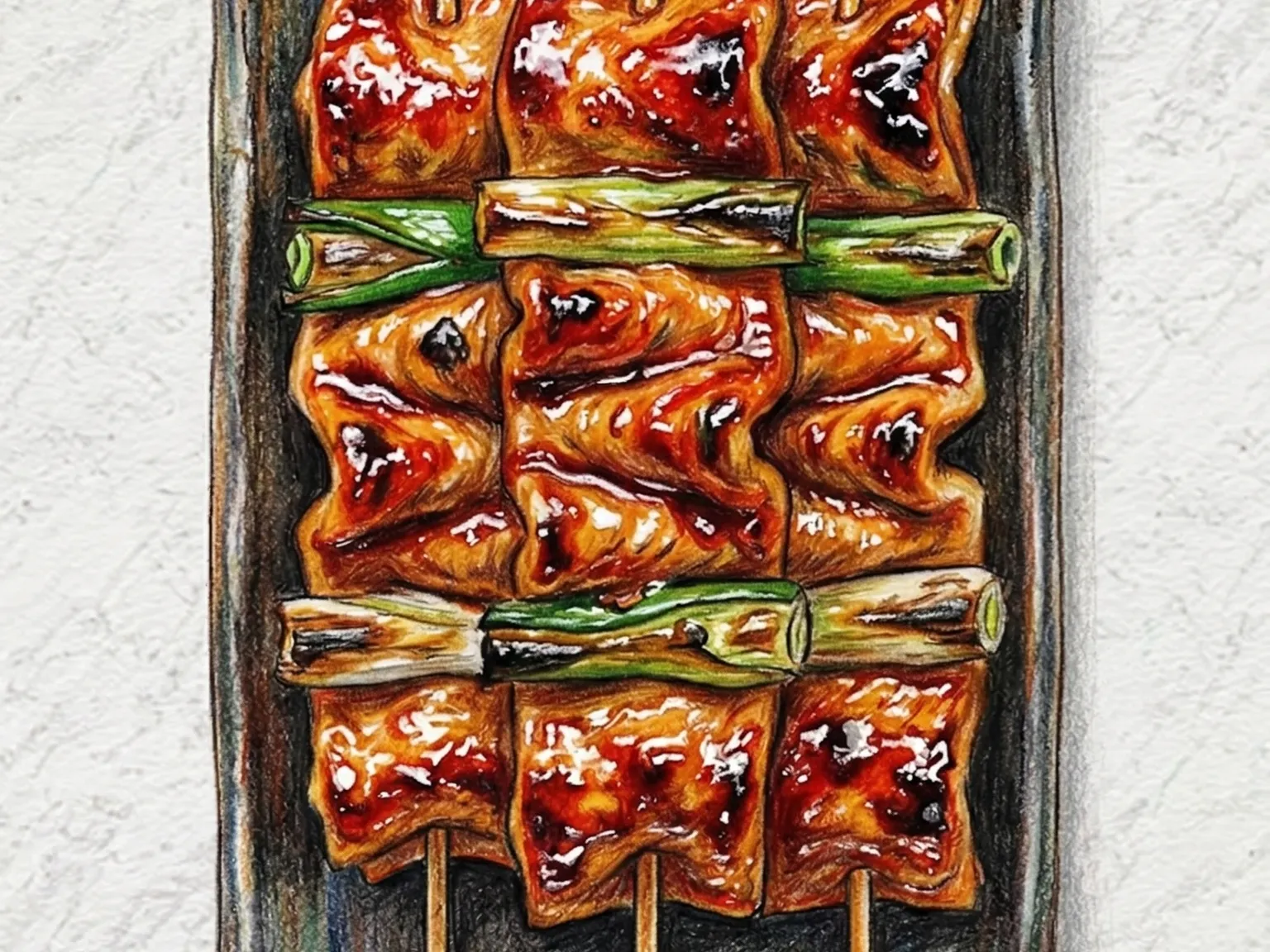
Korean Grilled Fish Cake Skewers

Korean Grilled Fish Cake Skewers

Quick answer

Eomuk kkochi gui are Korean grilled fish cake skewers, a staple of street food stalls that pair naturally with tteokbokki.

What makes this special

  • Eomuk Kkochi Gui are zigzag-threaded Korean fish cake skewers with a charred, smoky finish.
  • Zigzag-threaded fish cake maximizes sauce contact area
  • Dry pan pre-sear removes surface moisture before glazing
Total time
27 min
Level
Easy
Servings
4 servings
Ingredients
9
Calories
210 kcal
Protein
9 g

Key ingredients

flat fish cake sheetsgreen onionsoy saucegochujangsugar

Core cooking flow

  1. 1 Soak the wooden skewers in water for 10 minutes to reduce scorching.
  2. 2 Slice 1 stalk of green onion and divide it in half.
  3. 3 Heat a dry pan over medium heat and place the skewers in a single layer.

Eomuk kkochi gui are Korean grilled fish cake skewers, a staple of street food stalls that pair naturally with tteokbokki. Square fish cake sheets are folded in zigzag layers onto wooden skewers, grilled until the surface takes on color, then brushed with a glossy sauce of soy sauce, gochujang, sugar, and minced garlic. Folding the sheets before skewering multiplies the surface area that the sauce can grip and creates layered thickness that turns each bite into a dense, bouncy chew. Dry-grilling without oil first is important: it drives off moisture from the surface so that when the sauce is applied it clings and does not slide off. A second brief pass over heat after glazing caramelizes the sugars into a lacquered sheen and intensifies the savory aroma. Tucking pieces of green onion between the folds adds another layer of flavor -- the onion's moisture steams away as it grills, releasing a sweet, mellow fragrance that gradually infuses the fish cake.

Prep 15min Cook 12min 4 servings

Instructions

Read the steps as a cooking flow: prep, heat, seasoning, doneness control, and finish.

6 steps
  1. 1
    Control

    Soak the wooden skewers in water for 10 minutes to reduce scorching.

    Fold the 8 flat fish cake sheets lengthwise in a zigzag pattern, then thread them firmly so the layers hold their shape on the skewer.

  2. 2
    Season

    Slice 1 stalk of green onion and divide it in half.

    Mix 2 tbsp soy sauce, 1 tbsp gochujang, 1 tbsp sugar, 2 tbsp water, and 1 tsp minced garlic until the sugar starts dissolving smoothly.

  3. 3
    Control

    Heat a dry pan over medium heat and place the skewers in a single layer.

    Cook for about 2 minutes per side until surface moisture evaporates and the fish cake shows light golden patches instead of looking wet.

  4. 4
    Season

    Spread 1 tbsp neutral oil thinly in the pan so the glazed surface does not stick.

    Brush the sauce over both sides, lower the heat to medium-low, and cook for 2 minutes so the sauce thickens without burning.

  5. 5
    Season

    Brush on another thin coat of the remaining sauce.

    Cook for about 1 more minute, stopping when the sugar turns glossy and clings to the folds and the garlic smells savory, not sharp.

  6. 6
    Finish

    Transfer the skewers to a plate and scatter the remaining green onion and 1 tsp sesame seeds over the top.

    Serve immediately while the folded layers are bouncy and the sauce is set instead of dripping.

After the steps

Pick a recipe that fits this dish.

Continue with shared ingredients, meal pairings, or a similar method.

Recipes That Go Well With This

More Grilled →

Based on shared ingredients and meal pairing

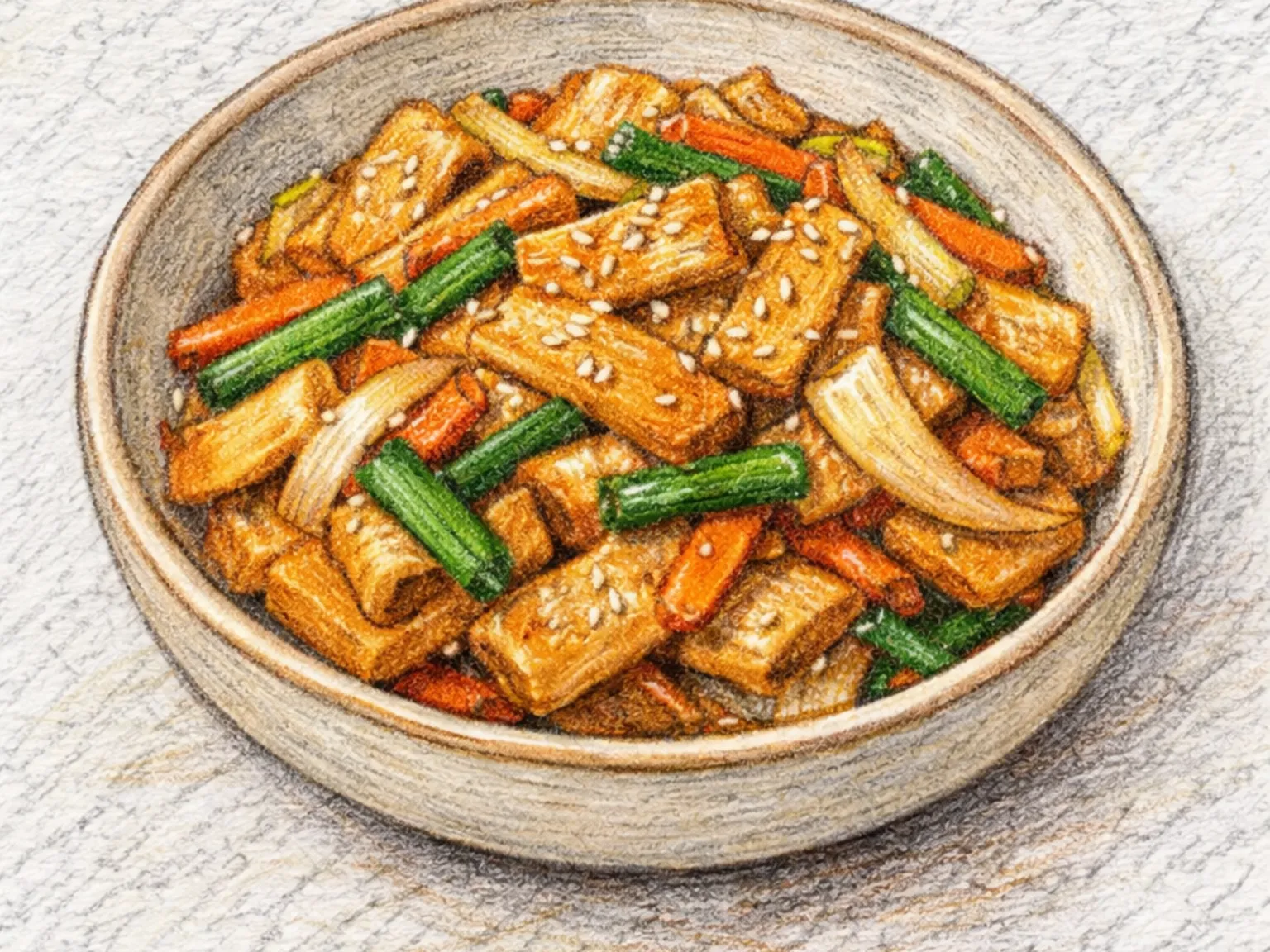
Korean Stir-Fried Fish Cake Strips
Shared ingredient: fish cake sheets Street food

Korean Stir-Fried Fish Cake Strips

Flat fish cake is sliced into strips and quickly stir-fried with red pepper flakes, soy sauce, sugar, and minced garlic in a hot pan. Blanching the fish cake beforehand removes surface oil so the seasoning adheres more cleanly, and a final toss with sesame oil and sesame seeds brings a nutty fragrance. Despite the short ingredient list and fast cook time, the balance between sweet and spicy is well defined.

Korean Sotteok-Sotteok Skewers
Shared ingredient: toasted sesame seeds Grilled

Korean Sotteok-Sotteok Skewers

Cylinder-shaped rice cakes and mini sausages are skewered in alternating order, then pan-grilled for six to seven minutes until the surfaces turn golden. A glaze made from gochujang, ketchup, soy sauce, oligosaccharide syrup, and minced garlic is brushed on and cooked for two to three more minutes until glossy and sticky. Each skewer delivers a contrast between the dense chew of rice cake and the snappy bite of sausage, unified by the sweet-spicy coating. Originally a Korean street-food staple, sotteok-sotteok is also popular for camping trips and can be made quickly in an air fryer.

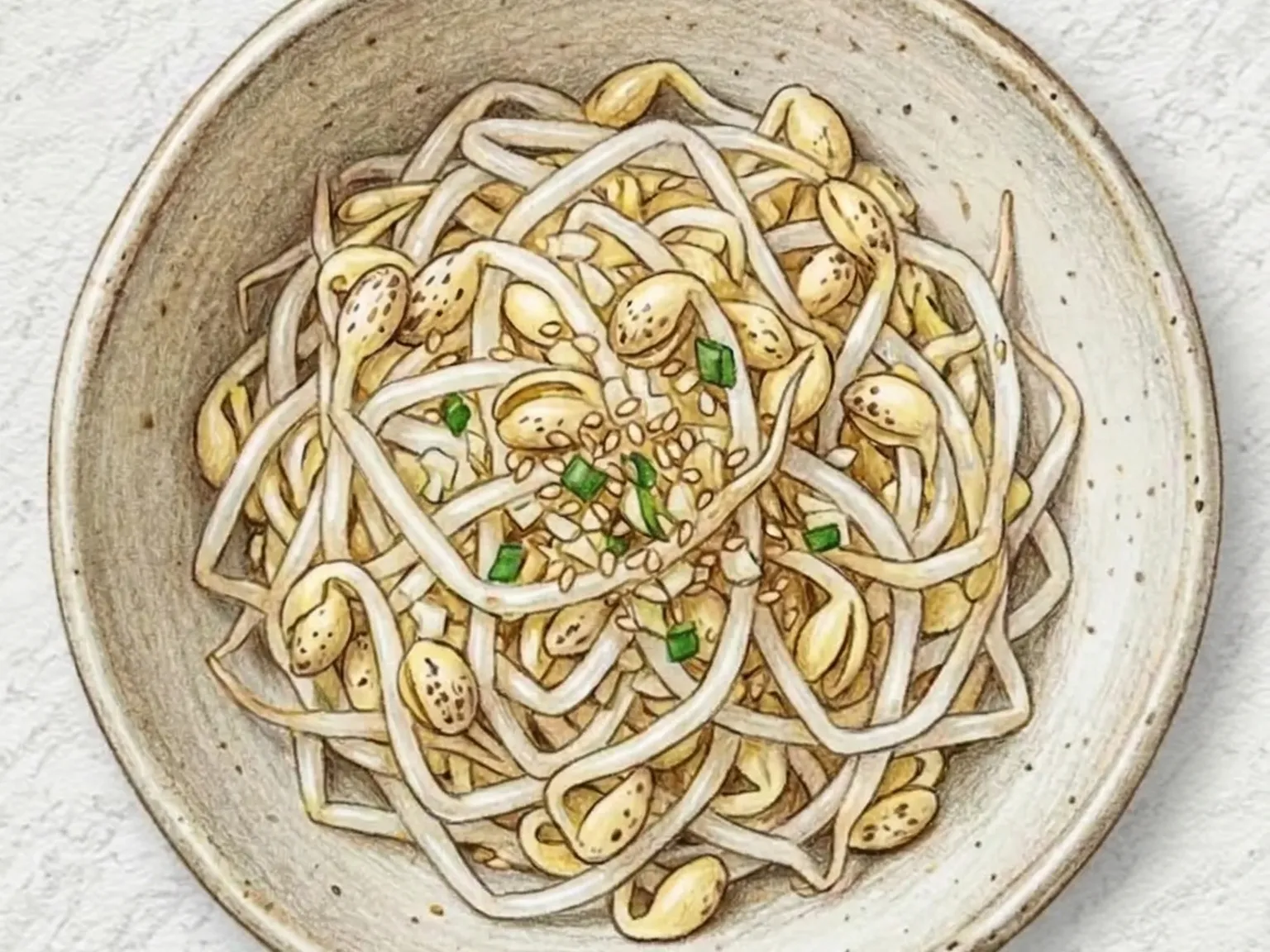
Korean Sweet Spicy Pollock Floss Stir-fry
Serve together Side dishes

Korean Sweet Spicy Pollock Floss Stir-fry

Myeongyeopchae-bokkeum stir-fries finely shredded dried pollock floss in gochujang and oligosaccharide syrup until each fiber strand is evenly coated and moist. Myeongyeopchae is thinner and softer-fibered than hwangtaechae, the wider dried pollock strips, arriving in a dense cotton-like bundle that must be loosened strand by strand before cooking. Running your fingers along the grain separates the fibers cleanly, allowing the seasoning to penetrate evenly and preventing the finished banchan from clumping together in the mouth. A dry toast of thirty seconds in an oil-free pan drives off residual moisture and coaxes out a toasted fish aroma before gochujang, gochugaru, oligosaccharide syrup, soy sauce, and minced garlic go in over the lowest heat for a rapid coating. The fine fibers absorb the sauce almost immediately and turn pliant and glistening, but heat held too long draws the moisture back out, leaving them tough and stiff, so the entire stir-fry must be completed within two minutes. A finishing drizzle of sesame oil and a scatter of sesame seeds deepen the nutty aroma. The resulting banchan occupies a middle ground between the chewier, more aggressively seasoned hwangtaechae-muchim and the bolder jinmichae-bokkeum, its mild sweet-spicy profile approachable enough for children. The relatively dry finish means the seasoning does not bleed into adjacent items in a lunchbox, and stored in an airtight container in the refrigerator the flavor holds well for up to five days.

Korean Fish Cake Soup (Clear Anchovy Radish Broth)
Similar recipe Drinks

Korean Fish Cake Soup (Clear Anchovy Radish Broth)

Eomuk-tang is a Korean fish cake soup in which skewered fish cakes and thick radish slices simmer in a clear broth built from dried anchovies and kelp. The kelp must be removed the moment the water begins to boil, otherwise it releases a slimy texture that clouds the broth. Cutting the radish thick allows it to slowly release natural sweetness over the long simmer. Rinsing the fish cakes in hot water before adding them washes away surface oil and keeps the broth clear and clean. Soup soy sauce adjusts the seasoning, and green onion and black pepper finish the pot. Adding the radish before the fish cakes ensures it has enough time to fully soften and sweeten the broth, since it takes longer than the eomuk to cook through.

Serve with this

Korean Egg Fried Rice (Quick Wok-Tossed Grain Bowl)
Rice Easy

Korean Egg Fried Rice (Quick Wok-Tossed Grain Bowl)

Gyeran-bokkeumbap is the most fundamental Korean fried rice, built from two beaten eggs and one bowl of cooked rice and finished in under ten minutes. The eggs go into a smoking-hot oiled pan, and the rice is added the moment they are half-set, then tossed rapidly so every grain picks up an individual egg coating that makes the rice fluffy and lightly glossy rather than clumped. Cold leftover rice performs best because its lower moisture lets the grains separate cleanly during stir-frying, but freshly cooked rice spread out and briefly cooled reduces sticking enough to be workable. A thin line of soy sauce poured along the rim of the pan caramelizes on contact and carries a trace of smokiness through the rice. A finishing drizzle of sesame oil and a scattering of sliced green onion add a toasty fragrance that completes this simple but satisfying base. The ratio of egg to rice is sturdy enough that a handful of kimchi, diced ham, or refrigerator scraps can be stirred in without changing the essential character of the dish.

⚡ Quick 🏠 Everyday
Prep 3min Cook 7min 1 servings
Chicken Mu (Korean Fried Chicken Radish Pickle)
Kimchi Easy

Chicken Mu (Korean Fried Chicken Radish Pickle)

The crunchy, sweet-sour radish pickle served with every order of Korean fried chicken - now easy to make at home in under 15 minutes. Cubed radish is submerged in a cooled brine of vinegar, sugar, salt, and whole black peppercorns. Using fully cooled brine rather than hot is critical for maintaining the radish's firm, snapping crunch. Ready to eat after one day of refrigeration, its bright acidity cleanses the palate between bites of crispy chicken. Stored in a glass jar, this pickle keeps for over a week.

⚡ Quick 🏠 Everyday
Prep 10min Cook 5min 4 servings
Ojingeo-muguk (Korean Squid Radish Soup)
Soups Easy

Ojingeo-muguk (Korean Squid Radish Soup)

Ojingeo-muguk is a clear Korean soup that pairs squid and radish in a gently sweet, clean-tasting broth built without any chili or strong seasoning. Radish is added to cold water from the start and simmered for at least eight minutes, during which the vegetable slowly releases a natural sweetness that forms the flavor foundation of the soup. Squid is cleaned, sliced into rings, and added only after the radish has softened, and the timing here is critical: five minutes in the hot broth is enough for the flesh to turn fully opaque and pleasantly firm, but even a minute or two beyond that causes the proteins to tighten and the rings to turn rubbery and tough. Soup soy sauce seasons the broth without darkening it, and minced garlic provides depth without heat. Sliced green onion stirred in at the end neutralizes any residual seafood aroma and leaves the broth tasting bright and clean. The simplicity of the combination is the point: the radish's sweetness and the squid's umami reinforce each other in a broth that is light in body but surprisingly satisfying.

🏠 Everyday 🍺 Bar Snacks
Prep 15min Cook 20min 4 servings

Similar recipes

Korean Grilled Chicken Skewers
Grilled Easy

Korean Grilled Chicken Skewers

Dak-kkochi-gui is a Korean grilled chicken skewer built on the flavors of street-stall cooking, made by threading bite-sized chicken breast or thigh onto bamboo sticks and painting them with a sauce of gochujang, soy sauce, honey, and minced garlic. Thigh meat is the better choice because its higher fat content keeps each piece juicy over direct heat, while breast will dry out quickly. Applying the glaze in two or three separate coats rather than all at once builds a thick, sticky, caramelized surface. Cutting the chicken into uniform cubes ensures even cooking, and alternating pieces with slices of green onion or bell pepper adds moisture and prevents the meat from tightening up. Turning the skewers frequently over medium heat keeps the sugars in the sauce from scorching while the surface develops an even, deep char. The same result comes out well in an air fryer at 200 degrees Celsius for twelve to fourteen minutes. Gochujang's fermented heat against the sweetness of honey and the smell of searing meat is the unmistakable signature of Korean pojangmacha.

🍺 Bar Snacks 🏠 Everyday
Prep 20min Cook 15min 2 servings
Korean Eomuk Hot Bar (Fried Fish Cake Skewer)
Street food Easy

Korean Eomuk Hot Bar (Fried Fish Cake Skewer)

Eomuk hotbar is a Korean street food snack made by threading fish cake onto a skewer, coating it in a flour and egg batter, and deep-frying until golden. Wrapping the fish cake in a spiral around the skewer before frying maximizes the surface area that the batter can cling to, and the result after frying is a double-layered texture: a crisp outer shell from the batter and a chewy, springy fish cake center underneath. Adding a small amount of baking powder to the frying mix causes the batter to puff slightly, producing a lighter crunch that does not feel heavy despite the frying. Ketchup or mustard is the standard condiment, applied straight from the bottle at roadside stalls. The mild fish flavor from the eomuk comes through subtly from beneath the fried coating rather than dominating.

🧒 Kid-Friendly ⚡ Quick
Prep 15min Cook 15min 2 servings
Korean Spicy Octopus Skewers
Street food Easy

Korean Spicy Octopus Skewers

Blanched octopus is cut into bite-sized pieces, threaded onto skewers, and grilled on a pan or open flame while being basted repeatedly with a spicy sauce of gochujang, soy sauce, sugar, minced garlic, and sesame oil. Octopus toughens dramatically with prolonged heat, so high-temperature, quick grilling is essential. Adding a slice of ginger to the blanching water removes any fishiness before the octopus hits the grill. The layered sauce builds up with each basting: gochujang contributes heat, sugar balances it with sweetness, soy sauce deepens the umami, and sesame oil finishes with a nutty fragrance. Keeping the heat at medium-high and turning the skewers frequently prevents the sugar in the glaze from burning while still achieving light char marks. The result has a caramelized, sticky crust over a chewy, springy center. Equally at home as street food or as bar snacks alongside cold beer or soju, these skewers are a reliable crowd-pleaser.

🍺 Bar Snacks ⚡ Quick
Prep 15min Cook 10min 2 servings

Tips

Soak skewers for 10 minutes to reduce scorching.
For kids, reduce gochujang by half.

Nutrition (per serving)

Calories
210
kcal
Protein
9
g
Carbs
18
g
Fat
11
g