Korean Fish Cake Soup (Clear Anchovy Radish Broth)

Korean Fish Cake Soup (Clear Anchovy Radish Broth)

Quick answer

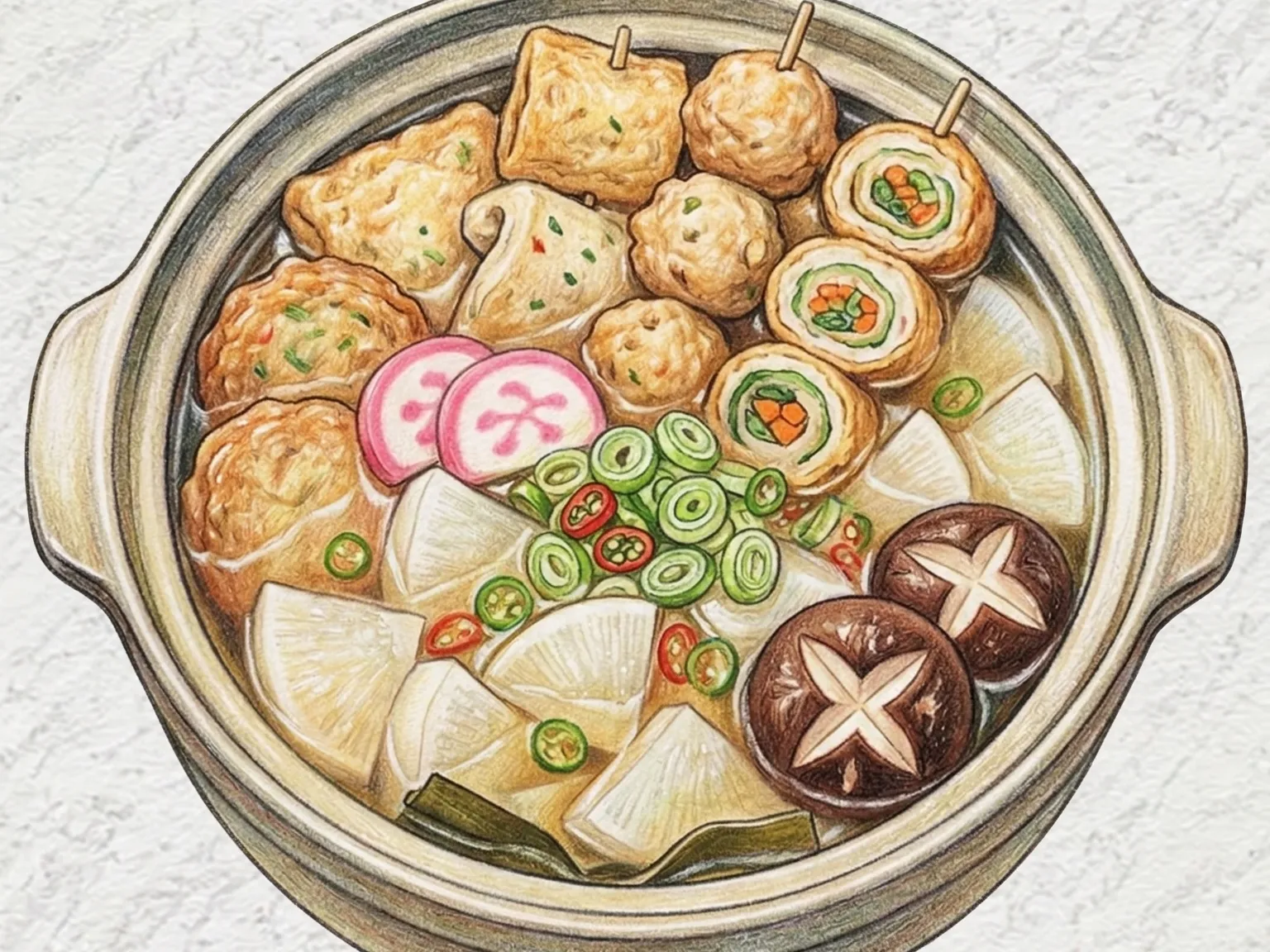
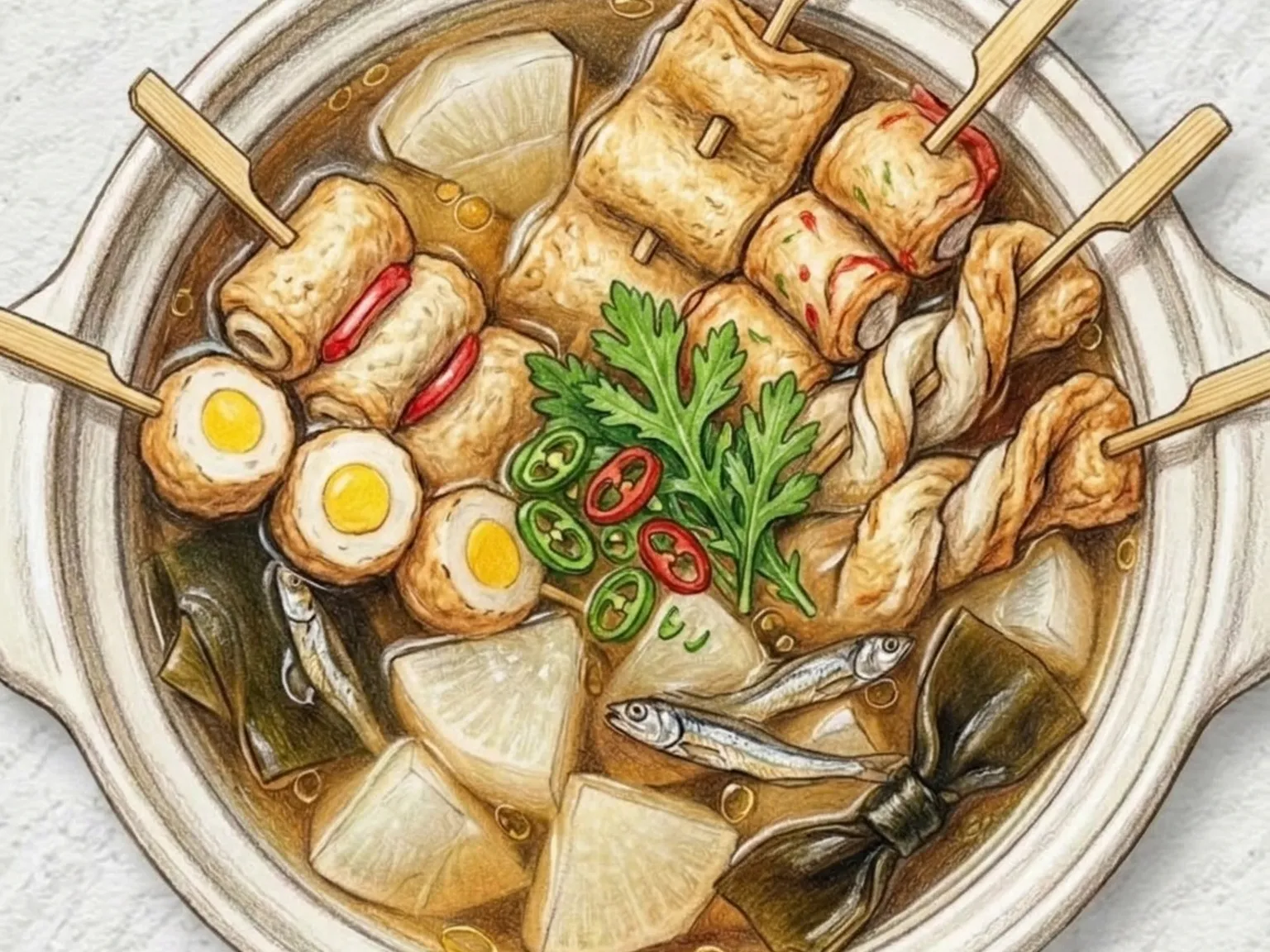
Eomuk-tang is a Korean fish cake soup in which skewered fish cakes and thick radish slices simmer in a clear broth built from dried anchovies and kelp.

What makes this special

  • Removing kelp at the boil keeps the anchovy and radish broth clear for Korean Fish Cake Soup.
  • Removing kelp immediately at boil keeps the broth clear and slime-free
  • Rinsing fish cakes in hot water removes surface oil before adding to broth
Total time
40 min
Level
Easy
Servings
4 servings
Ingredients
8
Calories
210 kcal
Protein
14 g

Key ingredients

fish cakeKorean radishdried anchovydried kelpwater

Core cooking flow

  1. 1 Slice 250g Korean radish into thick 0.5cm pieces, then thinly chop 1 scallion.
  2. 2 Pour hot water over the fish cake to rinse away surface oil, then drain it right away.
  3. 3 Put 1800ml water, 20g dried anchovies, and 10g dried kelp in a pot and set it over high heat.

Eomuk-tang is a Korean fish cake soup in which skewered fish cakes and thick radish slices simmer in a clear broth built from dried anchovies and kelp. The kelp must be removed the moment the water begins to boil, otherwise it releases a slimy texture that clouds the broth. Cutting the radish thick allows it to slowly release natural sweetness over the long simmer. Rinsing the fish cakes in hot water before adding them washes away surface oil and keeps the broth clear and clean. Soup soy sauce adjusts the seasoning, and green onion and black pepper finish the pot. Adding the radish before the fish cakes ensures it has enough time to fully soften and sweeten the broth, since it takes longer than the eomuk to cook through.

Prep 15min Cook 25min 4 servings

Instructions

Read the steps as a cooking flow: prep, heat, seasoning, doneness control, and finish.

6 steps
  1. 1
    Prep

    Slice 250g Korean radish into thick 0.5cm pieces, then thinly chop 1 scallion.

    Thread 400g fish cake onto skewers or cut it into bite-size pieces, keeping the pieces large enough to hold their shape in the broth.

  2. 2
    Step

    Pour hot water over the fish cake to rinse away surface oil, then drain it right away.

    Do not soak it for long, because the fish cake can lose flavor and become too soft before it goes into the soup.

  3. 3
    Control

    Put 1800ml water, 20g dried anchovies, and 10g dried kelp in a pot and set it over high heat.

    As soon as the water begins to boil, remove only the kelp to keep the broth clear.

  4. 4
    Control

    Lower the heat to medium and simmer the anchovy broth for 10 minutes, skimming foam from the surface.

    Add the radish and cook about 8 minutes, until the edges look translucent but the pieces still hold together.

  5. 5
    Control

    Remove the anchovies, then add the fish cake and 1 tablespoon soup soy sauce.

    Keep the pot at a steady medium simmer for about 7 minutes, until the fish cake plumps gently and absorbs the broth.

  6. 6
    Finish

    Taste the broth and simmer a little longer if it tastes too thin, rather than boiling hard.

    Add the scallion and 0.25 teaspoon black pepper, bring it back to a brief simmer, and serve hot.

After the steps

Pick a recipe that fits this dish.

Continue with shared ingredients, meal pairings, or a similar method.

Recipes That Go Well With This

More Drinks →

Based on shared ingredients and meal pairing

Korean Skewered Fish Cake Soup
Shared ingredient: korean radish Street food

Korean Skewered Fish Cake Soup

Eomuk-kkochi starts with flat fish cake sheets folded into zigzag shapes on skewers, which then simmer in a clear broth made from Korean radish, kelp, and green onion. The broth draws umami from the radish and kelp and transfers that depth into the fish cakes as they cook. The fish cakes soften from their original firm bounce as they absorb the broth, while the liquid itself thickens slightly from the starch the eomuk releases. Serving a dipping sauce of soy or gochujang alongside each skewer adds another dimension of flavor at the table. This is one of Korea's most iconic winter street foods, served at pojangmacha stalls where the hot broth gets ladled into paper cups for sipping between bites.

Eomuk-guk (Fish Cake Radish Clear Soup)
Shared ingredient: korean radish Soups

Eomuk-guk (Fish Cake Radish Clear Soup)

Eomuk-guk is a straightforward Korean soup centered around fish cakes and a base liquid prepared by simmering sliced radish. The initial step involves boiling the radish in water for a sufficient duration so that it releases a mild, natural sweetness into the broth while the liquid itself takes on a slightly translucent appearance. Depending on individual preference, the radish can be taken out of the pot or left in as part of the final dish. Once the base is ready, pieces of fish cake are added to the boiling liquid along with soup soy sauce and minced garlic. The mixture then simmers for approximately six minutes, a period during which the fish cakes soften and absorb the saltiness of the soy sauce while simultaneously contributing their own flavor back into the soup base. To finish the preparation, thinly sliced green onions and a sprinkle of black pepper are stirred in. These final additions provide a sharp fragrance and a gentle heat that helps recreate the specific taste found at traditional Korean snack bars and street food carts. The entire cooking procedure is completed in about twenty minutes. Because the required ingredients are minimal and often staples, this recipe serves as a practical option for times when there are few groceries available in the kitchen. This makes the dish accessible even when the refrigerator is nearly empty and only basic pantry items remain.

Gotgam Cream Cheese Roll (Dried Persimmon Rolls)
Serve together Desserts

Gotgam Cream Cheese Roll (Dried Persimmon Rolls)

Gotgam cream cheese roll is a no-cook Korean dessert that requires nothing more than a knife, a bowl, and a refrigerator. Dried persimmons are slit open and flattened into thin sheets, each one acting as the outer wrapper. The filling is cream cheese mixed with honey and fresh lemon juice to balance its natural richness with acidity, and finely chopped walnuts are folded in throughout to add a crunchy, nutty element to every bite. The filling is spread across the opened persimmon, which is then rolled tightly and wrapped in plastic wrap. Twenty minutes in the refrigerator firms the roll enough to slice cleanly. Dipping the knife in warm water and wiping it dry before each cut produces the smoothest cross-sections. The finished slices reveal clearly defined layers: the chewy, caramel-sweet dried persimmon on the outside, the tangy cream cheese in the middle, and flecks of walnut distributed throughout. The combination makes it a natural pairing with wine or a polished addition to a traditional holiday table.

Korean Eomuk Hot Bar (Fried Fish Cake Skewer)
Similar recipe Street food

Korean Eomuk Hot Bar (Fried Fish Cake Skewer)

Eomuk hotbar is a Korean street food snack made by threading fish cake onto a skewer, coating it in a flour and egg batter, and deep-frying until golden. Wrapping the fish cake in a spiral around the skewer before frying maximizes the surface area that the batter can cling to, and the result after frying is a double-layered texture: a crisp outer shell from the batter and a chewy, springy fish cake center underneath. Adding a small amount of baking powder to the frying mix causes the batter to puff slightly, producing a lighter crunch that does not feel heavy despite the frying. Ketchup or mustard is the standard condiment, applied straight from the bottle at roadside stalls. The mild fish flavor from the eomuk comes through subtly from beneath the fried coating rather than dominating.

Serve with this

Crispy Seaweed Chips
Side dishes Hard

Crispy Seaweed Chips

Crispy and healthy traditional seaweed bugak made at home.

🔥 Trending Now 🍺 Bar Snacks
Prep 40min Cook 10min 4 servings
Salted Doenjang Caramel Cookies
Baking Hard

Salted Doenjang Caramel Cookies

These cookies channel the umami depth of Korean fermented soybean paste into a brown sugar caramel dough. A small amount of doenjang, roughly one to two percent of the total batter weight, adds a savory undercurrent that most people cannot identify but find irresistibly complex. The brown sugar caramelizes at the edges during baking, producing crisp, toffee-like rims around a chewy center. Sea salt flakes pressed into the top before baking amplify both the sweetness and the fermented savoriness. The result tastes neither obviously Korean nor conventionally Western, occupying a unique middle ground that provokes curiosity. They pair exceptionally well with espresso, where the bitterness of coffee draws out the doenjang's deeper notes.

🎉 Special Occasion 🧒 Kid-Friendly
Prep 25min Cook 14min 4 servings
Korean Fried Squid
Street food Medium

Korean Fried Squid

Cleaned squid is cut into 1 cm rings, dipped in a light batter of frying mix, cold water, and egg, then deep-fried at 170 degrees Celsius for three to four minutes until golden and crisp. Cold water is essential for the batter -- warm water activates the gluten in the flour and produces a thick, doughy coating instead of the thin, shatter-crisp shell this dish depends on. The batter should be mixed just enough to combine, leaving a few lumps intact, because those uneven patches fry up with irregular texture that adds to the crunch. Scoring the squid rings lightly with a knife or pounding them briefly helps them stay flat and allows the batter to adhere without sliding off. Frying in small batches matters, since crowding the pan drops the oil temperature and causes the rings to absorb fat rather than fry. The defining quality of this dish is the contrast between the springy, chewy squid and the airy, crisp coating that surrounds it, a contrast that only exists in the first few minutes after frying. Served with a pinch of salt or a soy-vinegar dipping sauce, these rings are a fixture at street food stalls and snack shops across Korea.

🧒 Kid-Friendly 🏠 Everyday
Prep 15min Cook 10min 2 servings

Similar recipes

Korean Silkworm Pupae Broth
Drinks Medium

Korean Silkworm Pupae Broth

Beondegi-tang simmers canned silkworm pupae in a broth seasoned with soup soy sauce, gochugaru, and minced garlic, a staple street food soup served at Korean pojangmacha stalls. Sliced green onion and hot green chili cook alongside for eight minutes, letting the chili heat infuse the liquid while the pupae release a deep, earthy umami into every spoonful. Adding a splash of the canning liquid intensifies the savory depth, and the soup must be served piping hot to keep the aromatics lively. It is a classic pairing with soju or makgeolli, and while the chili level can be adjusted to taste, the soy sauce quantity should stay fixed to temper the pupae's distinctive aroma.

🍺 Bar Snacks 🥗 Light & Healthy
Prep 8min Cook 15min 2 servings
Korean Grilled Fish Cake Skewers
Grilled Easy

Korean Grilled Fish Cake Skewers

Eomuk kkochi gui are Korean grilled fish cake skewers, a staple of street food stalls that pair naturally with tteokbokki. Square fish cake sheets are folded in zigzag layers onto wooden skewers, grilled until the surface takes on color, then brushed with a glossy sauce of soy sauce, gochujang, sugar, and minced garlic. Folding the sheets before skewering multiplies the surface area that the sauce can grip and creates layered thickness that turns each bite into a dense, bouncy chew. Dry-grilling without oil first is important: it drives off moisture from the surface so that when the sauce is applied it clings and does not slide off. A second brief pass over heat after glazing caramelizes the sugars into a lacquered sheen and intensifies the savory aroma. Tucking pieces of green onion between the folds adds another layer of flavor -- the onion's moisture steams away as it grills, releasing a sweet, mellow fragrance that gradually infuses the fish cake.

🍺 Bar Snacks 🧒 Kid-Friendly
Prep 15min Cook 12min 4 servings
Korean Stir-Fried Fish Cake Strips
Street food Easy

Korean Stir-Fried Fish Cake Strips

Flat fish cake is sliced into strips and quickly stir-fried with red pepper flakes, soy sauce, sugar, and minced garlic in a hot pan. Blanching the fish cake beforehand removes surface oil so the seasoning adheres more cleanly, and a final toss with sesame oil and sesame seeds brings a nutty fragrance. Despite the short ingredient list and fast cook time, the balance between sweet and spicy is well defined.

🌙 Late Night ⚡ Quick
Prep 10min Cook 10min 2 servings

Tips

Blanch fish cakes briefly to remove excess oil.
Longer radish simmering makes the broth naturally sweeter.

Nutrition (per serving)

Calories
210
kcal
Protein
14
g
Carbs
16
g
Fat
10
g