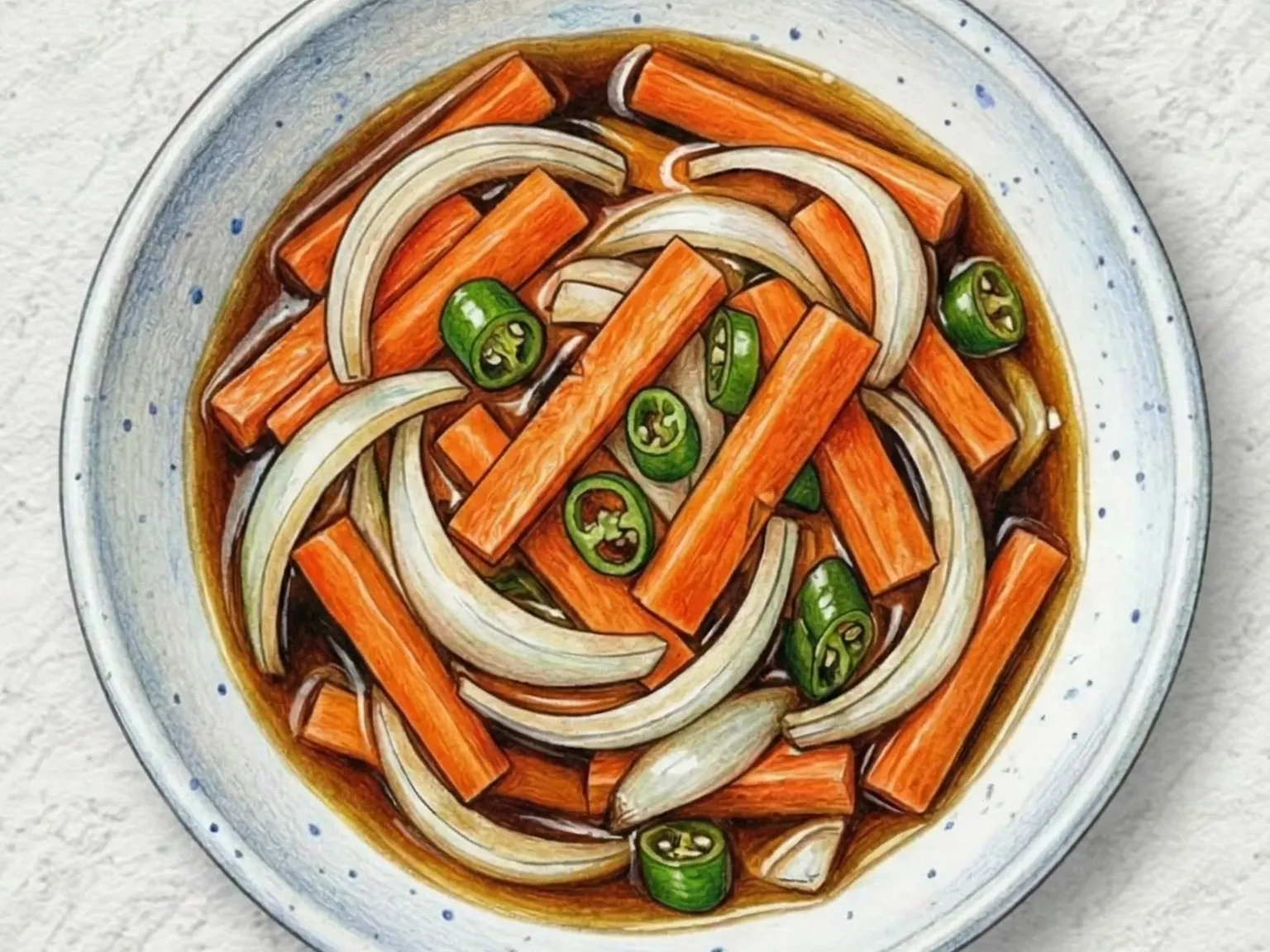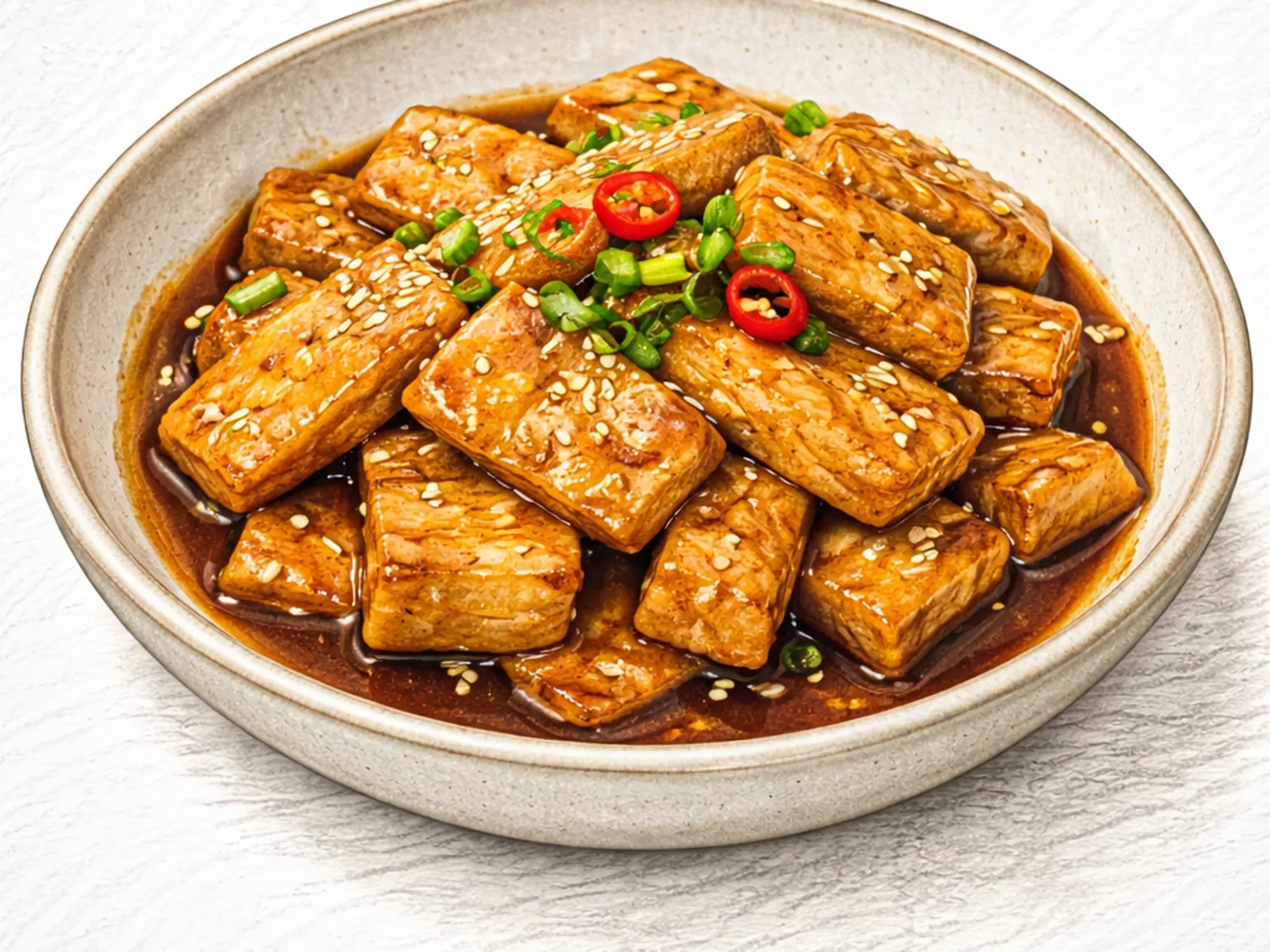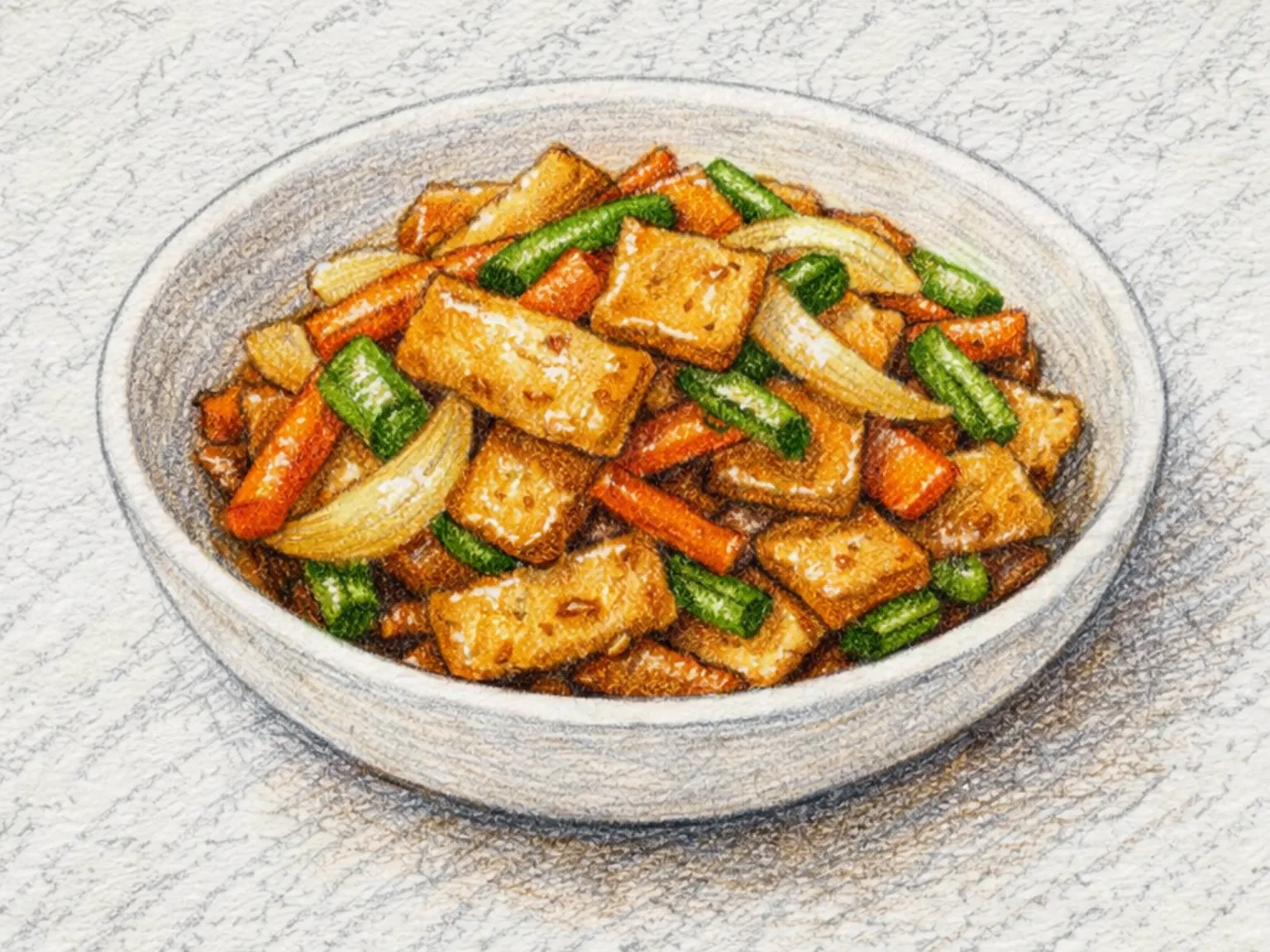
Korean Stir-fried Fish Cake with Vegetables
Eomuk-yachae-bokkeum is a Korean stir-fry of fish cake sheets with onions, carrots, and bell peppers in a soy-based glaze. The chewy fish cake contrasts with the crisp vegetables, delivering varied textures in every bite. Soy sauce and oligosaccharide syrup create a lightly sweet and salty coating that clings to each piece. The entire dish cooks in under ten minutes, making it a go-to option for packed lunches or quick weeknight sides.
Adjust Servings
Instructions
- 1
Slice fish cakes and blanch for 20 seconds to remove excess oil.
- 2
Thinly slice onion, carrot, and chili.
- 3
Heat oil in a pan and sauté minced garlic for 20 seconds.
- 4
Stir-fry onion and carrot for 1 minute, then add fish cake.
- 5
Add soy sauce and syrup, then stir-fry on high heat for 2 minutes.
- 6
Add chili and sesame oil, then finish with a 30-second stir.
As an Amazon Associate, we may earn from qualifying purchases.
Tips
Nutrition (per serving)
More Recipes

Korean Busan-Style Stir-fried Fish Cake
Square fish cake sheets are blanched for twenty seconds to strip away residual processing oil, then stir-fried with julienned onion and carrot in a soy sauce and oligosaccharide glaze that defines the Busan approach to this classic side dish. Skipping the blanching step leaves a greasy, industrial aftertaste that no amount of seasoning can mask. The onion and carrot go into the pan first and cook for two minutes, long enough to release their natural sugars, which merge with the oligosaccharide syrup when it hits the heat and caramelizes into a thin, glossy coating on every strip of fish cake. High heat and a cook time under three minutes are essential; fish cake left on the stove too long loses moisture and turns rubbery. Minced garlic fried briefly in oil at the start provides an aromatic backbone, while diagonally sliced green onion added at the end brings a fresh bite. A final sprinkle of sesame seeds rounds out the flavor. The dish holds up well at room temperature, making it a reliable addition to lunchboxes.

Korean Garlic Scape Bacon Stir-fry
Maneuljjong bacon bokkeum is a side dish built on rendered bacon fat, in which garlic scapes and onion are stir-fried and finished with soy sauce and oligosaccharide syrup for a glossy coat. The bacon's smoky saltiness provides a deep flavor base that requires no additional complex seasoning, and the garlic scapes counter it with a sharp, crisp bite. The syrup creates a thin lacquer on the surface that balances the salt with gentle sweetness. Sesame seeds top the finished dish, and reducing the soy sauce compensates if the bacon runs particularly salty.

Korean Stir-fried Potato Strips
Gamja-bokkeum is a staple Korean side dish made by stir-frying julienned potatoes until they reach a satisfying tender-crisp texture. Soaking the potatoes beforehand removes excess starch, preventing them from clumping in the pan. A light seasoning of garlic and salt draws out the potato's natural mild flavor, while a finishing touch of sesame oil and seeds adds a warm nuttiness. It is a humble yet addictive banchan that pairs effortlessly with steamed rice.

Korean Stir-fried Cabbage with Doenjang
Yangbaechu-doenjang-bokkeum stir-fries bite-size cabbage pieces with doenjang, gochugaru, and garlic over high heat. The doenjang is dissolved in a small amount of water to create an even sauce that coats the cabbage, and the heat is turned off before the cabbage fully wilts to preserve some crunch. The cabbage's natural sweetness intensifies with cooking and contrasts against the salty, fermented depth of the doenjang, while gochugaru adds a faint background heat. The entire dish comes together in under fifteen minutes, relying on doenjang alone to deliver concentrated flavor.

Korean Spicy Stir-Fried Fish Cake
Square fish cake sheets are cut into bite-size pieces and stir-fried in a gochujang-based glaze that balances heat with sweetness. Blanching the fish cake briefly before cooking removes excess oil and opens the surface so the sauce adheres more evenly. Over high heat, the edges of each piece caramelize lightly, adding a subtle smoky note that deepens the overall flavor. The sauce combines gochujang, soy sauce, and oligodang, a Korean corn syrup that gives the glaze its glossy finish and tempers the chili paste's sharpness. Onion slices soften quickly in the pan, releasing moisture that deglazes the base and contributes their own natural sweetness to the sauce. Green onion added at the very end keeps its fresh bite, providing an aromatic counterpoint to the rich coating. Sesame seeds scattered on top round out the dish with a nutty finish. Because the glaze intensifies rather than deteriorates when cooled, this banchan holds up well in packed lunches.

Korean Stir-Fried Bamboo Shoots
Juksun-bokkeum is a soy-seasoned stir-fry of bamboo shoots - a banchan closely tied to spring, when fresh juksun appears briefly in Korean markets from April through May, primarily from Damyang in Jeollanam-do. Fresh shoots must be boiled in rice-rinsing water for at least thirty minutes to neutralize their oxalic acid bitterness; canned shoots need a thorough rinse to remove the tinny taste. Julienned shoots are stir-fried with carrot and onion over high heat for a short burst - prolonged cooking draws out moisture and turns them rubbery. The seasoning is restrained: soy sauce, a pinch of sugar, garlic, and a finish of sesame oil, producing a subtly sweet, nutty dish. Bamboo shoots are rich in dietary fiber and low in calories, which gives this banchan high satiety per bite.