Korean Stuffed Fish Steam
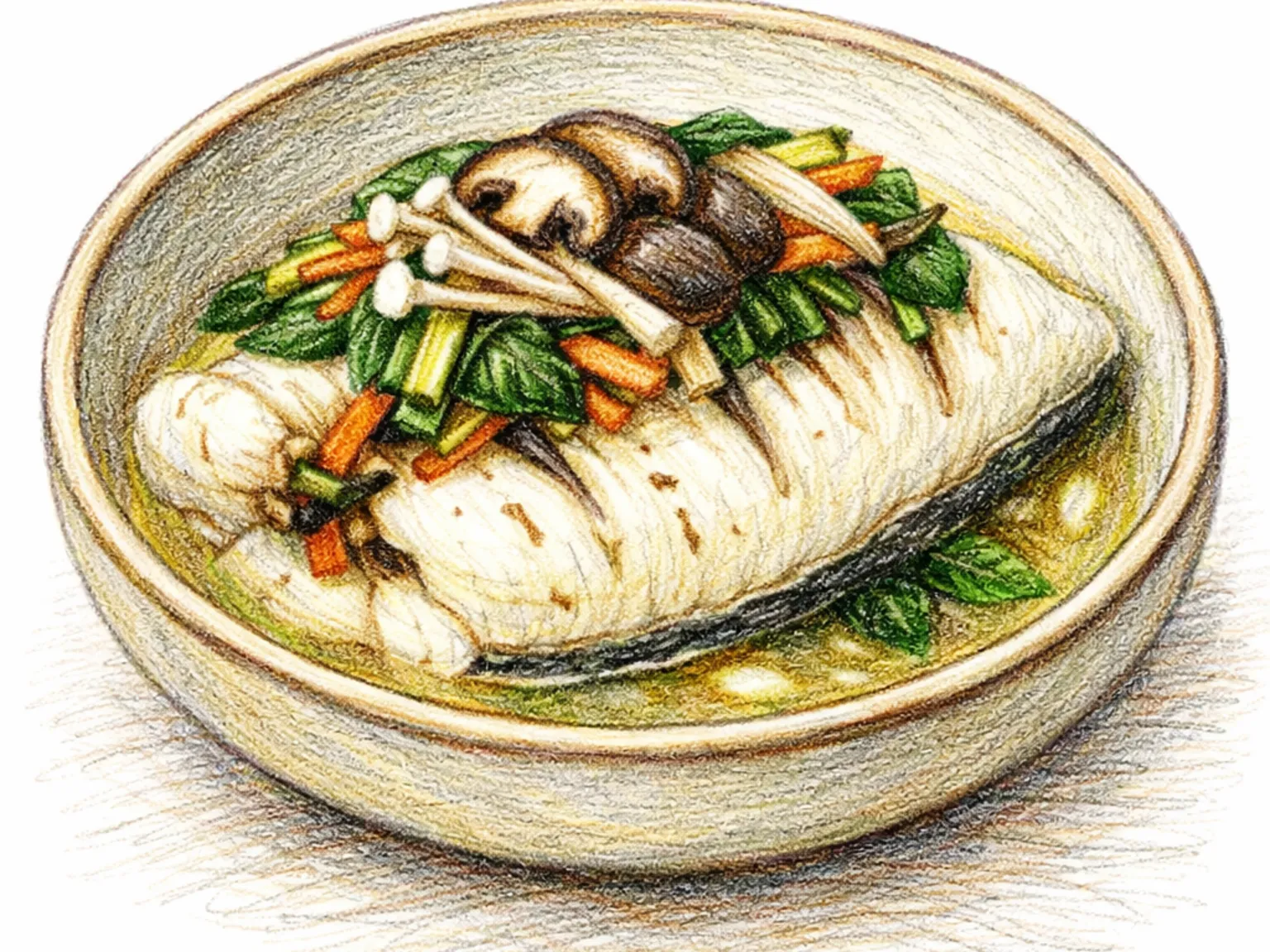
Eoseon-jjim is a traditional Korean court-style steamed fish dish featuring sea bream fillet topped with julienned oyster mushrooms, cucumber, and carrot, then wrapped in thin egg crepe before steaming. The gentle cooking method keeps the fish flesh moist while the vegetables retain a slight bite. A light dressing of soy sauce and vinegar provides subtle acidity that complements the mild sea bream. Finished with a touch of sesame oil, this dish is both visually striking and refined in flavor.
Adjust Servings
Instructions
- 1
Spread the fish fillet flat, season with salt, and rest for 10 minutes.
- 2
Julienne cucumber and carrot; blanch oyster mushrooms briefly.
- 3
Place vegetables on fish, roll tightly, and secure with toothpicks.
- 4
Steam over medium-low heat for about 12 minutes.
- 5
Make a thin egg sheet, then slice into fine strips for garnish.
- 6
Mix soy sauce, vinegar, and sesame oil; garnish fish with egg strips and serve with sauce.
As an Amazon Associate, we may earn from qualifying purchases.
Tips
Nutrition (per serving)
More Recipes

Korean Stuffed Steamed Zucchini
Hobakseon is a Korean royal court dish of zucchini hollowed out and stuffed with a filling of ground beef, mashed tofu, and chopped shiitake mushroom seasoned with soy sauce and sesame oil. Steaming allows the beef juices to permeate the filling while the zucchini shell stays intact and turns tender. The mild, slightly sweet flavor of the zucchini contrasts with the savory, meaty stuffing inside. Its refined appearance and gentle flavors make it a fitting choice for holiday tables and formal occasions.

Korean Steamed Pomfret (Whole Fish with Soy Ginger Sauce)
Whole pomfret is gently steamed with soy sauce, rice wine, ginger, and green onion. Pomfret has thin, delicate flesh that separates easily from the bone after steaming, with a mild, clean flavor. Ginger and green onion work together to neutralize any fishiness, while soy sauce provides subtle seasoning. A light touch of sesame oil finishes the dish, making this a gentle, non-spicy preparation suitable for all ages.

Korean Steamed Octopus (Whole Salted Radish Broth)
Muneo-jjim is a Korean steamed whole octopus prepared by rubbing the octopus with coarse salt, then cooking it in water flavored with radish and green onion. Dipping the head end in and out of the boiling water two or three times curls the tentacles into an attractive shape before the full cook. Simmering for about fifteen minutes followed by a brief rest off the heat yields a texture that is springy and chewy without being tough. Sliced and served with a simple sesame oil and salt dipping sauce, the dish highlights the octopus's clean ocean flavor and works well as both a banchan and a drinking accompaniment.

Korean Steamed Flounder (Whole Flatfish with Soy Garlic Sauce)
Gajami-jjim is a Korean steamed flounder dish prepared with a light soy sauce seasoning, onion, and green onion. Rice wine is added during cooking to neutralize any fishiness while keeping the flesh moist. The seasoning is restrained-soy sauce and garlic provide just enough flavor without masking the flounder's naturally mild, clean taste. With its soft texture and few bones, this dish works well as an everyday banchan alongside rice and soup.

Korean Salted Yellow Croaker Jeotgal
Jogi jeotgal is a Korean salted and fermented yellow croaker, prepared by gutting the fish, layering it in coarse sea salt for an initial multi-day cure in the refrigerator, then adding gochugaru, garlic, ginger, and rice wine for a second round of aging. The extended fermentation breaks down the fish protein into a concentrated savory depth that bears no resemblance to the raw ingredient, while the salt draws out moisture and firms the flesh. Gochugaru and ginger suppress any fishiness and contribute a mild heat and aromatic warmth, and rice wine smooths out the rough edges of early fermentation. This is a pantry staple used sparingly - a small piece atop rice or stirred into kimchi jjigae to amplify umami.

Korean Stuffed Eggplant Seon
Gaji-seon is a Joseon-era royal court dish - one of the 'seon' preparations where vegetables are stuffed with seasoned fillings and steamed. The eggplant is scored deeply at intervals but not cut through, creating accordion-like pockets. A filling of minced pork or beef mixed with tofu, scallion, and sesame oil is pressed into each slit. The stuffed eggplant steams for fifteen minutes, during which the filling's juices meld with the collapsing eggplant flesh. A light soy-based sauce is drizzled over at serving. The dish requires more patience than most banchan - each eggplant is individually stuffed - and this labor-intensive nature is why it has historically been reserved for guests and celebrations. The combination of the nearly-dissolving eggplant shell and the savory, compact filling creates a textural refinement that sets seon apart from ordinary stir-fried or steamed banchan.