Korean Spicy Freshwater Fish Soup
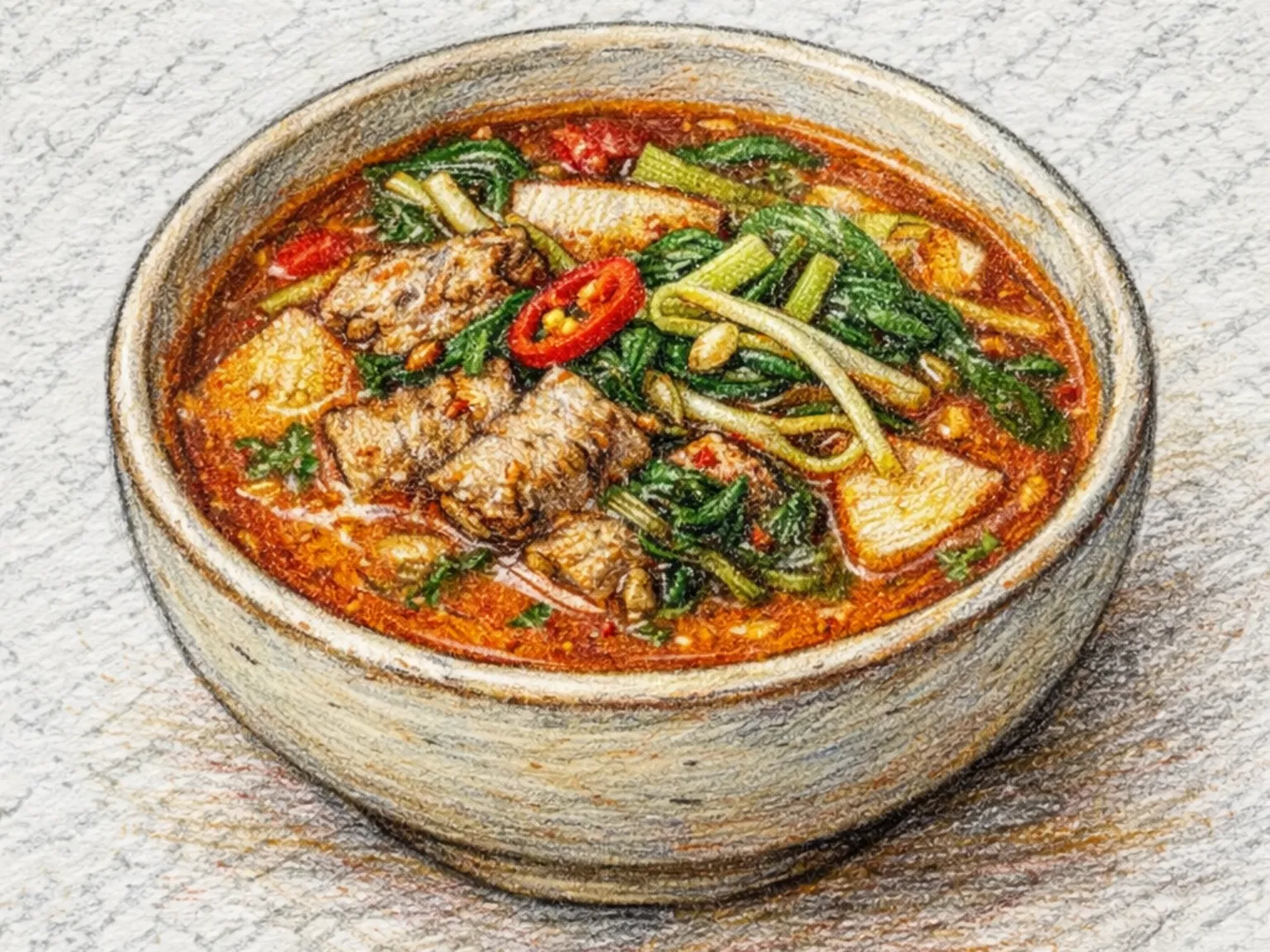
Eotang is a traditional Korean soup made by boiling whole freshwater fish for over forty minutes to extract every bit of flavor from the bones and flesh. The stock is strained twice through a fine sieve to remove all small bones, then returned to the pot with radish, doenjang, and garlic for another twenty minutes of simmering. Red chili flakes and green onion go in last, adding a sharp spiciness that balances the deep, earthy richness of the fish broth. The process is time-intensive, but the resulting soup has a thick body and concentrated flavor that lighter preparations cannot match.
Adjust Servings
Instructions
- 1
Clean freshwater fish thoroughly and drain.
- 2
Boil fish in water for 40 minutes to build broth.
- 3
Strain the broth to remove bones and return it to the pot.
- 4
Add radish, soybean paste, and garlic; simmer 20 minutes.
- 5
Add chili flakes and green onion, then cook 10 more minutes.
As an Amazon Associate, we may earn from qualifying purchases.
Tips
Nutrition (per serving)
More Recipes

Jangeo-tang (Spicy Freshwater Eel Soup)
Jangeo-tang is a nourishing Korean eel soup in which freshwater eel is first boiled, deboned, and then simmered in a bold seasoning of doenjang and gochugaru. Dried radish greens (sirae-gi) are added to the pot, contributing an earthy, slightly bitter depth that grounds the richness of the eel. Garlic and green onion temper any fishiness, leaving behind only the eel's clean, fatty savoriness. The broth develops a dark, spicy intensity while the eel meat remains soft and oil-rich, dissolving into each spoonful. High in protein and healthy fats, jangeo-tang has long been considered a stamina-building dish in Korea, traditionally eaten during the hottest days of summer or whenever energy reserves run low. The combination of fermented soybean paste and chili gives the soup a complexity that distinguishes it from milder restorative broths.

Korean Monkfish Soup (Spicy Southern Coastal Fish Broth)
Agwi-tang is the soup version of Korea's monkfish preparations, originating from the fishing villages along the southern coast where monkfish - called agwi or agu depending on dialect - is landed fresh. Unlike braised or stir-fried monkfish dishes, the tang form prioritizes a clear, brothy base built on anchovy stock. Radish simmers first for eight minutes, sweetening the liquid before the monkfish enters. The fish cooks gently at medium heat, its collagen dissolving into the broth and giving it body. Bean sprouts go in last, contributing a clean crunch that contrasts the soft fish flesh. A final addition of sliced green onion and a punch of gochugaru turns the broth a hazy red. This is hangover food in Korea's coastal towns - hot, spicy, and restorative, traditionally served steaming at dawn markets.

Korean Blood Curd Soup (Spicy Ox Blood and Beansprout Stew)
Seonji-guk is a Korean blood curd soup built from coagulated ox blood, seasoned napa cabbage outer leaves, and bean sprouts in a spicy, doenjang-accented broth. The napa greens are pre-dressed with soybean paste, garlic, and chili flakes before going into the pot, where they simmer and release an earthy, fermented depth into the liquid. Bean sprouts are added for their crisp texture and clean, refreshing bite. The blood curd - cut into large cubes - goes in partway through cooking and simmers just eight minutes to heat through without breaking apart. Its texture is soft and faintly springy, unlike anything else in the Korean soup canon, and it absorbs the surrounding spicy broth. Gochugaru gives the soup a ruddy color and a slow-building warmth. In Korea, seonji-guk is closely associated with the morning-after meal, served in dedicated haejang-guk restaurants as a restorative after heavy drinking.

Korean Spicy Freshwater Fish Noodle Soup
Eotang guksu is a regional Korean noodle soup from the Chungcheong provinces, built on a broth made by slowly simmering freshwater fish until the bones and flesh release a concentrated savory extract. The broth is strained multiple times to remove all bone fragments, then seasoned with doenjang and gochugaru. The soybean paste neutralizes any fishiness while the chili flakes add a steady warmth to the lean, oil-free liquid. Beaten egg stirred in at the end forms soft ribbons that float on the surface. Somyeon noodles go in last. This is an inland cuisine that evolved from the practical use of river fish, and its flavor is distinctly different from coastal seafood soups.

Korean Ginger Chicken Gomtang
This ginger chicken gomtang is a clear, restorative soup made by simmering a whole chicken with fresh ginger, onion, garlic, and green onion until the broth turns golden and deeply flavorful. The ginger cuts through the richness of the chicken fat, lending a sharp, warming note that distinguishes this from heavier beef-bone soups. After straining, the broth is remarkably clean-tasting despite its depth, and the chicken is pulled into tender shreds and returned to the bowl. Seasoning is kept to soup soy sauce, salt, and a generous amount of black pepper, which amplifies the ginger's heat. This is the kind of soup that Korean households turn to when someone is feeling under the weather or recovering - light enough to sip without strain, yet nourishing enough to rebuild strength. It also works as an elegant first course when served in small portions before a larger meal.

Korean Spicy Fish Roe Stew
Altang is a Korean stew built around pollock roe - the egg sacs prized in Korean coastal cooking for their briny, concentrated marine flavor. The dish has long been associated with Korea's east coast fishing towns, where fresh roe is available during winter spawning season and needs to be used quickly. Anchovy-kelp stock simmers first with radish to establish a clean, sweet base before the roe and tofu go in. The roe sacs release their eggs into the broth as they cook, turning the liquid cloudy and giving it a rich, oceanic body. Gochugaru and doenjang season the stew with a spicy-fermented edge that cuts through the fishiness. Crown daisy greens - ssukgat - are dropped in at the last moment, contributing a sharp, herbaceous perfume. A popular hangover remedy in Korean drinking culture, altang is often ordered steaming hot at the end of a long evening.