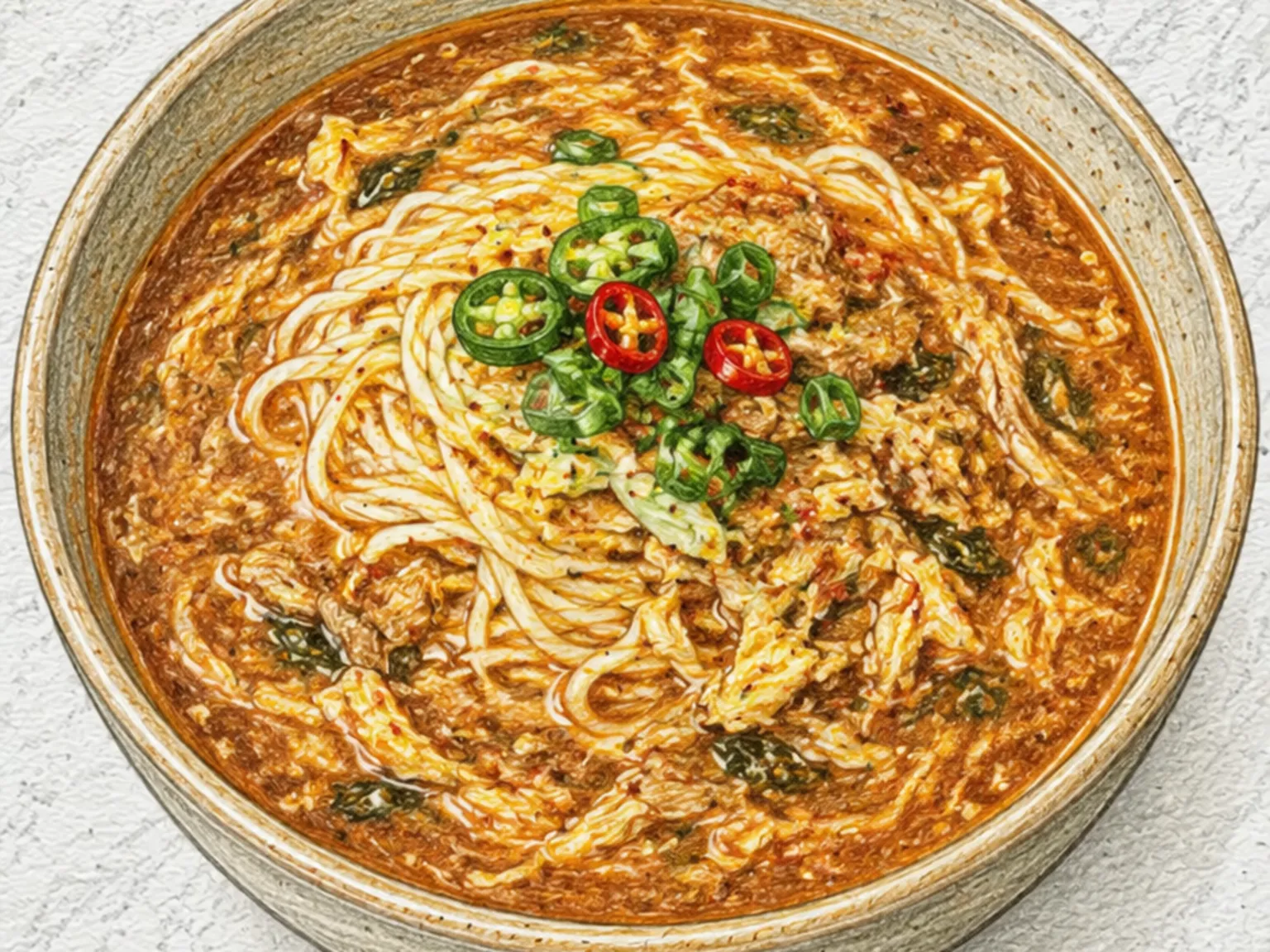
Korean Spicy Freshwater Fish Noodle Soup
Eotang guksu is a regional Korean noodle soup from the Chungcheong provinces, built on a broth made by slowly simmering freshwater fish until the bones and flesh release a concentrated savory extract. The broth is strained multiple times to remove all bone fragments, then seasoned with doenjang and gochugaru. The soybean paste neutralizes any fishiness while the chili flakes add a steady warmth to the lean, oil-free liquid. Beaten egg stirred in at the end forms soft ribbons that float on the surface. Somyeon noodles go in last. This is an inland cuisine that evolved from the practical use of river fish, and its flavor is distinctly different from coastal seafood soups.
Adjust Servings
Instructions
- 1
Remove bones from the freshwater fish, cut into chunks, rinse briefly, and drain well.
- 2
Simmer fish and water over medium heat for 15 minutes, then strain to make a clear broth.
- 3
Add soybean paste, chili flakes, minced garlic, and soup soy sauce, then simmer 10 more minutes.
- 4
Boil somyeon for 3 minutes, rinse in cold water to remove starch, and drain.
- 5
Place noodles in bowls, pour over hot fish broth, and finish with perilla, green onion, and chili.
As an Amazon Associate, we may earn from qualifying purchases.
Tips
Nutrition (per serving)
More Recipes

Korean Spicy Gangwon Knife-Cut Noodles
Jang kalguksu is a Gangwon Province-style knife-cut noodle soup where gochujang and doenjang are dissolved into an anchovy-kelp stock, creating a broth that is both fiery and deeply savory. The combination of fermented chili paste heat and soybean paste earthiness produces a complexity well beyond a standard kalguksu, amplified by an extra hit of gochugaru. Potato and zucchini break down as they simmer, naturally thickening the broth and adding sweetness, while onion and green onion round out the aromatics. The fresh, slightly rough-textured noodles cling to the thick, rust-colored broth, making each bite substantial.

Korean Spicy Beef Soup Noodles
Yukgaejang guksu starts with a deep broth made by simmering beef brisket until the liquid turns rich and full-bodied. The meat is shredded along the grain and returned to the pot alongside fernbrake, bean sprouts, and green onion that have been seasoned with gochugaru, sesame oil, and garlic before a brief stir-fry. This pre-seasoning step lets the chili heat dissolve into the oil, producing a rounded spiciness rather than raw powder burn. Korean soup soy sauce adjusts the salt level without clouding the broth's color. Thin wheat somyeon noodles are boiled separately and added at the end so they absorb the broth without turning mushy. Swapping in glass noodles changes the texture to a chewier, more slippery bite that holds onto the soup longer.

Korean Spicy Freshwater Fish Soup
Eotang is a traditional Korean soup made by boiling whole freshwater fish for over forty minutes to extract every bit of flavor from the bones and flesh. The stock is strained twice through a fine sieve to remove all small bones, then returned to the pot with radish, doenjang, and garlic for another twenty minutes of simmering. Red chili flakes and green onion go in last, adding a sharp spiciness that balances the deep, earthy richness of the fish broth. The process is time-intensive, but the resulting soup has a thick body and concentrated flavor that lighter preparations cannot match.

Korean Spicy Chicken Soup Noodles
This spicy Korean noodle soup is built on dakgaejang, a chicken version of the classic beef yukgaejang. Poached chicken is shredded by hand, then simmered again in a broth seasoned with gochugaru, garlic, sesame oil, and sliced scallion. The resulting liquid is vivid red and assertively spicy, yet the underlying chicken stock keeps the heat clean rather than harsh. Bean sprouts tossed into the pot just before serving retain their crunch and provide a cool, crisp contrast to the fiery broth. Either thin somyeon or medium-thickness noodles pair well, soaking up the spicy liquid without losing their texture too quickly. Swirling in a beaten egg softens the broth and adds body. The soup is widely regarded as an effective remedy for hangovers or chills, thanks to its combination of heat, protein, and warming spice.

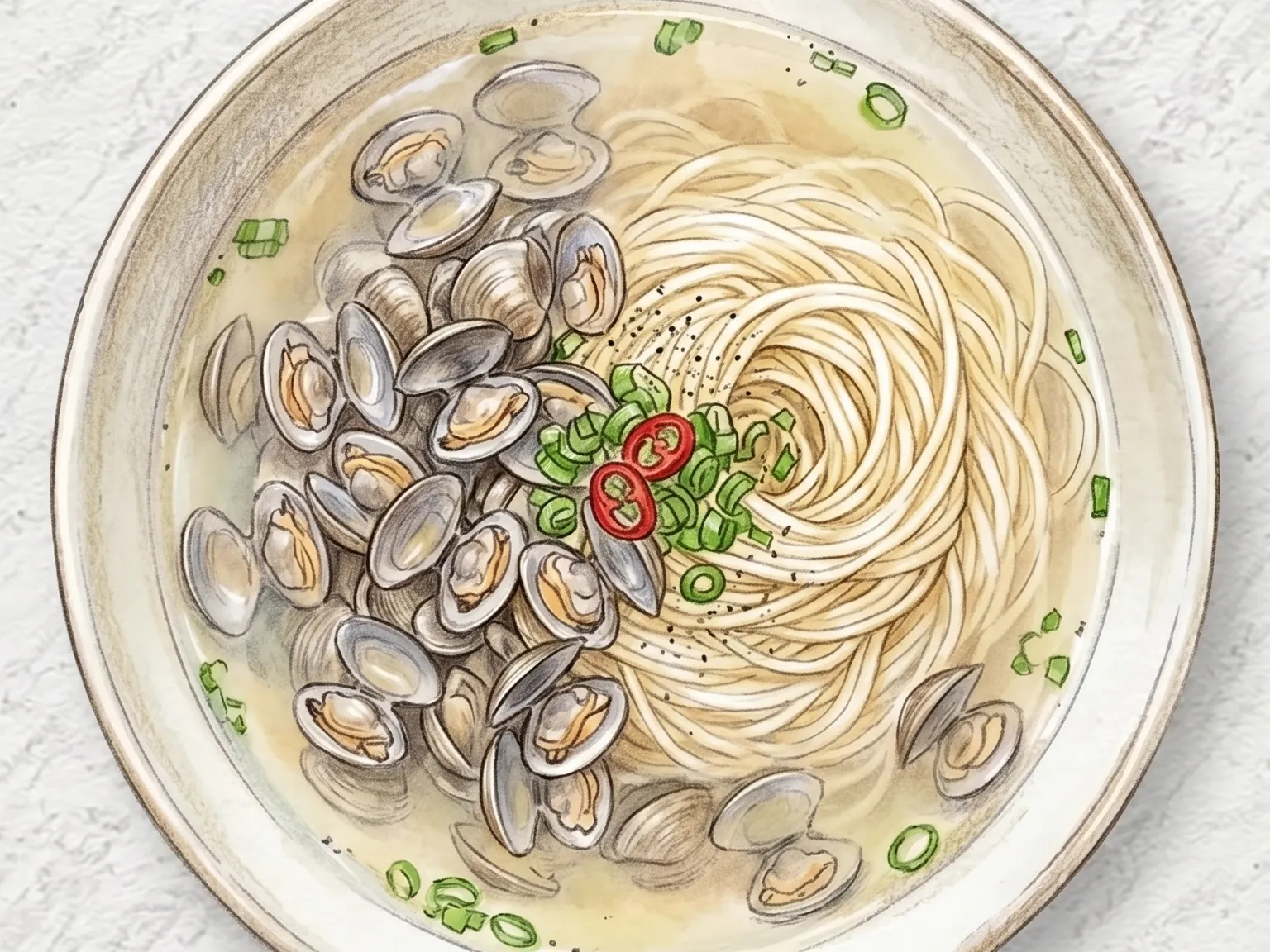
Korean Clam Kalguksu (Hand-Cut Noodles in Clam Broth)
Baekhap kalguksu is a Korean knife-cut noodle soup where the broth comes entirely from hard clams. Purged clams are simmered in water until they open, then removed while the broth is strained through cloth to catch any remaining grit. Thinly sliced daikon radish and Korean zucchini cook in the strained broth for five minutes, adding vegetal sweetness. The hand-cut noodles go in next and boil for six to seven minutes until they turn translucent; starch released from the noodles thickens the broth naturally into a lightly viscous consistency. Once the noodles are cooked, the reserved clam meat returns to the pot and the soup is seasoned with minced garlic and guk-ganjang. Adding onion deepens the broth's sweetness further. Because the base is clam liquor rather than the more common anchovy stock, the soup carries a distinctly marine character that infuses every strand of noodle, setting it apart from other kalguksu variations.

Korean Street Stall Udon (Dashi Broth Fish Cake Noodle Soup)
Kombu is simmered for eight minutes, then bonito flakes are steeped for two minutes to produce a clear dashi broth, seasoned with soup soy sauce, regular soy sauce, and a touch of sugar. Fish cake slices are simmered in the broth for added depth, while frozen udon noodles are blanched separately and briefly rinsed to remove excess starch before being placed in bowls and ladled with the hot broth. Topped with sliced scallion and shredded seaweed, the dish centers on a clean, soy-based umami.