Charim

2686 Korean & World Recipes

2686+ Korean recipes, clean and organized. Ingredients to instructions, all at a glance.

Feijoada (Black Bean and Pork Stew)
Western Medium

Feijoada (Black Bean and Pork Stew)

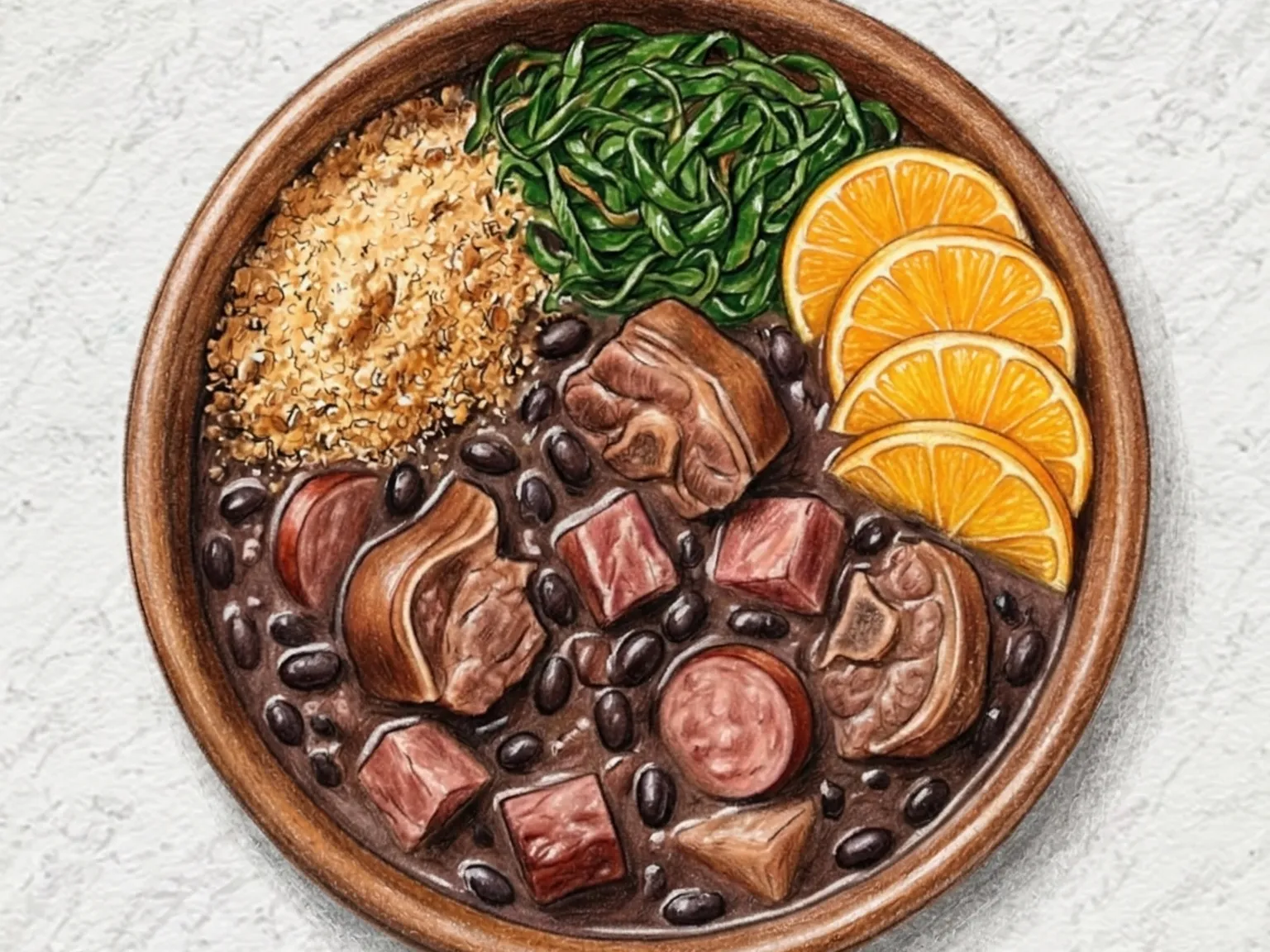
Feijoada is Brazil's national dish, a deeply layered stew of black beans and multiple pork cuts that demands hours of unhurried simmering. Collagen-heavy pieces such as ears, tails, and trotters dissolve slowly into the pot, turning the broth thick and glossy with body. Smoked sausages and dried meats send waves of smokiness through the liquid that the beans absorb over the long cook. By the end, the beans have become creamy inside while their skins hold their shape, and the broth around them is nearly as rich as a sauce. Garlic and bay leaves anchor the aromatics throughout. Feijoada is served alongside white rice, farofa, which is cassava flour toasted in butter and absorbs the broth while adding a dry, crumbly crunch, sauteed collard greens, and orange slices whose acidity slices cleanly through the fat. In Brazil, the dish carries cultural weight beyond its ingredients: it is a Saturday ritual, a slow communal meal that marks the end of the work week.

Prep 20min Cook 120min 4 servings
Recipes by ingredient → onion garlic olive oil

Adjust Servings

2servings
servings

Instructions

  1. 1

    Rinse black beans and soak for at least 4 hours.

  2. 2

    Cut pork and sausage into bite-sized pieces.

  3. 3

    Saute onion, garlic, and meats in oil until lightly browned.

  4. 4

    Add beans, water, and bay leaves; simmer on low for 90 minutes.

  5. 5

    Season with salt and simmer 20 more minutes to thicken.

🛒Shop Ingredients on Amazon

As an Amazon Associate, we may earn from qualifying purchases.

Tips

Flavor improves the next day as beans and meat meld.
Serve with orange wedges to cut richness.

Nutrition (per serving)

Calories
690
kcal
Protein
41
g
Carbs
39
g
Fat
40
g

Goes Well With

Acai Bowl
SaladsEasy

Acai Bowl

The acai bowl traces its origins to the river communities of Brazil's Amazon basin, where the dark purple berry of the acai palm has been a dietary staple for indigenous peoples for centuries - providing fat and calories in a region where animal protein could be scarce. When frozen acai pulp is blended with banana and blueberries, it becomes a thick, sorbet-like base with a deep berry flavor carrying earthy, almost chocolatey undertones that distinguish acai from sweeter tropical fruits. The bowl format - topped with granola, sliced fruit, and honey - was popularized by surfers in Rio de Janeiro during the 1980s and has since spread worldwide as a breakfast and post-workout meal. The key technical requirement is keeping the blender liquid-free: adding milk or juice thins the base until toppings sink and the textural contrast disappears. Eaten quickly before the granola loses its crunch, the bowl delivers a concentrated rush of antioxidants and natural sugars in a form that feels substantial despite being largely fruit. The deep purple color comes from the same anthocyanin pigments found in blueberries and red cabbage.

🥗 Light & Healthy Quick
Prep 10min2 servings
Dongdongju (Korean Unfiltered Fermented Rice Wine)
DrinksHard

Dongdongju (Korean Unfiltered Fermented Rice Wine)

Dongdongju is a traditional Korean unfiltered rice wine made by steaming short-grain and sweet rice together, then fermenting the cooked grain with nuruk starter and a small amount of dry yeast for seven days. Unlike makgeolli, it passes through a coarse sieve only once, leaving rice grains floating on the surface -- a trait that gives the drink its name and provides a distinctly chewy grain texture with each sip. Stirring the mash twice daily ensures the nuruk breaks down the starches evenly throughout fermentation, and keeping the temperature low after day three prevents the batch from over-fermenting. A pinch of salt added at the finish tempers residual sweetness without flattening the fermented grain character. Home-brewed dongdongju tends to carry a more pronounced rice fragrance and a heavier body than commercial makgeolli, and its flavor shifts noticeably day by day as fermentation continues.

🍺 Bar Snacks🎉 Special Occasion
Prep 30minCook 40min8 servings
Sweet Rice Punch (Traditional Korean Malted Barley Grain Drink)
DessertsMedium

Sweet Rice Punch (Traditional Korean Malted Barley Grain Drink)

Sikhye is a traditional Korean sweet rice punch made by steeping malted barley powder in lukewarm water, straining the liquid, adding cooked rice, and holding the mixture at around 60 degrees Celsius for one hour until the rice grains float to the surface. The amylase enzymes in the malt break down the rice starch, producing a distinctly malty, clear sweetness with grain depth that no sugar alone can replicate. Only the clear top liquid is used after settling -- discarding the sediment keeps the punch from turning cloudy. Simmering with sugar and sliced ginger for 20 minutes rounds the sweetness and adds a gentle, spiced warmth to the finish. Served well chilled with the reserved floating rice grains and pine nuts on top, the cold temperature sharpens the malty aroma and makes each sip crisp. Temperature control during the steeping stage is critical: if the mixture exceeds 70 degrees Celsius, the amylase denatures and the grains will not float, so keeping a steady 60-degree hold determines whether the preparation succeeds.

🎉 Special Occasion🧒 Kid-Friendly
Prep 20minCook 180min4 servings
Gamtae Butter Scallop Spaghetti
PastaMedium

Gamtae Butter Scallop Spaghetti

Preparing gamtae butter scallop spaghetti requires high heat to develop a properly caramelized exterior on the scallops. This process involves searing the scallops for ninety seconds on each side to create a deep brown crust. Before the scallops ever touch the pan, it is essential to ensure they are completely dry by patting them down thoroughly with paper towels. Removing all surface moisture prevents the scallops from steaming in the pan. If the scallops remain damp, they will turn out soft and pale instead of achieving the intended texture and color. After the scallops have been removed from the heat, the remaining browned bits, known as the fond, serve as the primary flavor foundation for the sauce. Garlic and butter are added to the same pan, followed by white wine which is used to deglaze the surface. As the liquid simmers, the alcohol evaporates, leaving behind a clean acidity that balances the richness of the other ingredients. The sauce is finished by swirling in cold butter at the final stage, which creates a smooth and stable emulsion that coats each spaghetti strand evenly. The final component is gamtae seaweed, which has a flavor profile that is notably more delicate and milder than standard nori. By crumbling this seaweed over the pasta immediately before it is served, you introduce a subtle oceanic quality that bridges the gap between the richness of the butter and the natural sweetness of the scallop meat. To complete the preparation, a measured amount of fresh lemon juice is squeezed over the dish. This acidity sharpens the various flavor components and reduces the perceived heaviness of the fats, ensuring that the pasta remains balanced throughout the meal.

🍺 Bar Snacks🎉 Special Occasion
Prep 15minCook 18min2 servings

More Recipes

Cassoulet (French White Bean and Pork Stew)
WesternHard

Cassoulet (French White Bean and Pork Stew)

Cassoulet is a slow-cooked stew from the Languedoc region of southwestern France, combining white beans, pork shoulder, and sausage in chicken stock over a minimum of two hours. As the beans absorb broth during the long simmer, they gradually release their starch into the liquid. This natural thickening is what produces the stew's characteristic dense, coating texture without any added roux or flour. Collagen from the pork shoulder breaks down completely over the extended cooking time and dissolves into the broth, adding body, while the fat from the sausages emulsifies into the stew rather than pooling on the surface. Thyme manages the richness of the meats, and tomato paste provides acidity and structural depth. Preparing cassoulet a day in advance and allowing it to rest overnight lets the beans and meat exchange flavors fully, producing a noticeably deeper result than the freshly made version. This is a dish that requires time as an ingredient. Served in cold weather with a thick slice of crusty bread, a single bowl constitutes a complete meal.

🎉 Special Occasion
Prep 25minCook 150min4 servings
French Beef Stew
WesternMedium

French Beef Stew

French beef stew transforms inexpensive, collagen-rich cuts like chuck or brisket into something deeply tender through unhurried heat. The process begins by cutting the beef into large chunks, dusting them with flour, and searing in a hot pan until every surface is properly browned. That browning step is not optional: the Maillard crust formed at high heat becomes the flavor foundation of the entire pot. Red wine and beef stock are then added, and the pot cooks at a low, gentle temperature for at least two hours. During that time the tough connective tissue in the shank breaks down completely, and the meat becomes soft enough to fall apart with a fork. Root vegetables including carrots, potatoes, celery, and onion braise alongside the beef, gradually releasing natural sugars and body into the liquid. The red wine reduces throughout the cook, its sharp acidity mellowing away while the fruit depth and tannic structure remain, giving the sauce a rounded, full-bodied backbone. Thyme and bay leaf infuse the broth with herbal warmth from the first moment and continue building throughout the long cook. The stew improves overnight, when the flavors continue to develop in the refrigerator and the seasoning penetrates every part of the meat.

🎉 Special Occasion
Prep 25minCook 120min4 servings
Pulled Pork Sandwich
WesternHard

Pulled Pork Sandwich

Pulled pork sandwich starts with pork shoulder rubbed in salt and paprika, then slow-cooked for two and a half to three hours with onion and garlic until the connective tissue converts to gelatin and the meat shreds effortlessly with two forks. The low-and-slow method delivers a tenderness that faster cooking cannot replicate. Tossing the shredded meat in barbecue sauce layers smoky sweetness and tang over the deep pork flavor, while lightly toasted buns provide a crisp contrast to the moist filling. Making the pork a day ahead and refrigerating it lets the sauce penetrate deeper into the fibers, intensifying the overall taste.

🎉 Special Occasion
Prep 15minCook 180min4 servings
Pot Roast
WesternMedium

Pot Roast

Pot Roast is a cornerstone of American home cooking, where a tough cut of beef is braised low and slow with vegetables and stock until it can be pulled apart with a fork. Chuck roast is the ideal choice - its abundant connective tissue and intramuscular fat break down over hours of gentle heat, converting collagen into gelatin that makes the meat moist and rich. Searing the beef on all sides builds a brown crust that contributes deep flavor, and adding tomato paste to the pan before deglazing creates an umami-rich foundation. Beef stock is poured to about two-thirds up the side of the meat, and the covered pot goes into a 160-degree oven for at least three hours, during which the liquid reduces and concentrates into a natural gravy. Carrots and potatoes are added in the final hour so they hold their shape while absorbing the braising liquid's flavor.

🎉 Special Occasion
Prep 20minCook 120min4 servings
Nikujaga (Japanese Beef Potato Onion Soy-Sweet Stew)
AsianEasy

Nikujaga (Japanese Beef Potato Onion Soy-Sweet Stew)

Nikujaga is a Japanese home-cooked stew often described as the dish that defines a mother's cooking in Japan. Thinly sliced beef, potatoes, onion, carrot, and shirataki noodles are simmered in a broth of dashi, soy sauce, mirin, and sugar. The dish traces its origins to the Meiji era, when a Japanese naval officer attempted to recreate British beef stew using local ingredients -- resulting in a clear, soy-based braise rather than a thick, flour-bound stew. The potatoes absorb the seasoned liquid until soft at the edges but still holding shape, while shirataki noodles soak up flavor and add a springy contrast.

🏠 Everyday
Prep 15minCook 30min4 servings
Korean Soy Pulp Stew (Okara with Aged Kimchi and Pork)
StewsEasy

Korean Soy Pulp Stew (Okara with Aged Kimchi and Pork)

Biji jjigae is a Korean stew built around soy pulp - the dense, grainy byproduct of tofu making - cooked together with well-fermented aged kimchi and pork. The soy pulp dissolves gradually into the cooking liquid, giving the broth a thick, porridge-like body and a mild nuttiness. Salted fermented shrimp adds a concentrated umami punch, and perilla oil contributes a roasted, savory fragrance. The deep tang of old kimchi and the rendered fat from the pork slowly permeate the soy pulp as the pot simmers, producing a heavy, richly flavored stew. Soy pulp is high in protein and dietary fiber, making the finished dish both filling and nutritious. Starting over high heat and reducing to a low simmer for at least twenty minutes allows the pork to cook through fully and the stew to thicken and deepen.

🏠 Everyday
Prep 12minCook 20min2 servings
More Western →