Charim

2686 Korean & World Recipes

2686+ Korean recipes, clean and organized. Ingredients to instructions, all at a glance.

Bibingka (Filipino Coconut Rice Cake)
AsianEasy

Bibingka (Filipino Coconut Rice Cake)

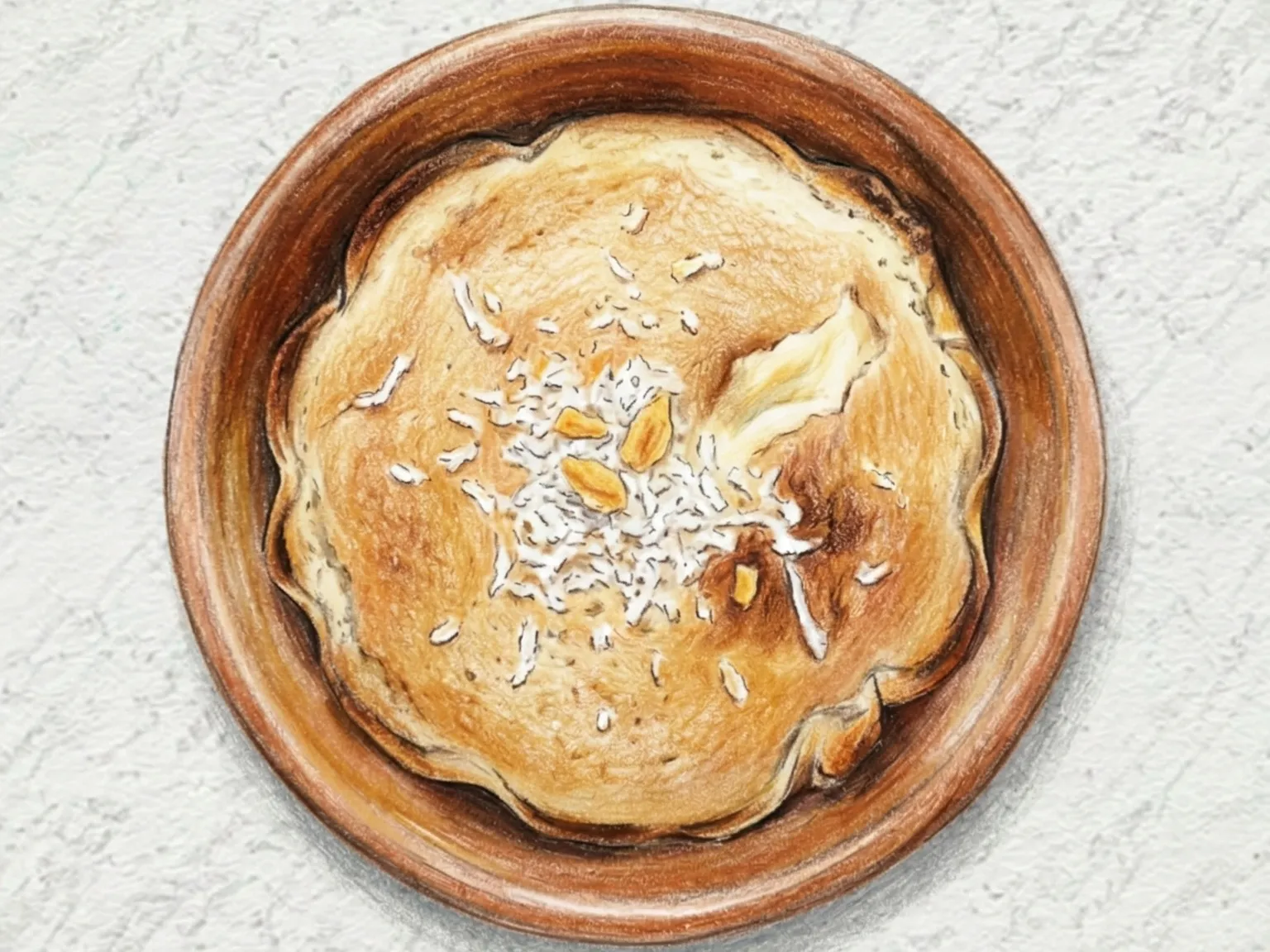
Bibingka is a Filipino baked rice cake inseparable from the Christmas season, eaten warm outside churches after Simbang Gabi - the series of dawn masses held in the nine days before Christmas. A batter of rice flour, coconut milk, eggs, and sugar is poured into a clay pot lined with banana leaves and baked between two layers of charcoal heat; the banana leaves release a green, vegetal fragrance into the batter as it cooks. Slices of salted duck egg and fresh coconut are pressed into the surface, then the top is brushed with butter and returned to the heat for a final browning that caramelizes the edges and sends up a triple aroma of banana leaf, coconut, and butter. The texture sits between a rice cake and a sponge - slightly sticky and chewy yet airy and moist. At four in the morning in December, the sight of bibingka vendors tending charcoal braziers outside Philippine churches, smoke curling into the pre-dawn air, is one of the country's most iconic holiday scenes.

Prep 15minCook 30min4 servings

Adjust Servings

2servings
servings

Instructions

  1. 1

    Preheat oven to 180C and grease a baking pan with butter.

  2. 2

    Mix rice flour, sugar, baking powder, and salt in a bowl.

  3. 3

    Whisk eggs, coconut milk, and milk, then add to the dry mix.

  4. 4

    Pour batter into the pan and drizzle melted butter over the top.

  5. 5

    Bake for 25-30 minutes until the top turns golden.

  6. 6

    Cool slightly, slice, and serve warm.

🛒Shop Ingredients on Amazon

As an Amazon Associate, we may earn from qualifying purchases.

Tips

Avoid overbaking to keep the cake moist.
A higher coconut milk ratio gives stronger aroma.

Nutrition (per serving)

Calories
420
kcal
Protein
7
g
Carbs
56
g
Fat
18
g

More Recipes

Chicken Adobo (Filipino Vinegar Soy Braised Chicken)
AsianEasy

Chicken Adobo (Filipino Vinegar Soy Braised Chicken)

Chicken adobo is the unofficial national dish of the Philippines, rooted in a pre-colonial preservation technique of braising meat in vinegar to extend its shelf life in tropical heat. Chicken simmers uncovered in soy sauce, cane vinegar, crushed garlic cloves, bay leaves, and whole black peppercorns until the sharp acidity of the vinegar mellows into a salty-sour sauce with caramelized depth. Once braised, the chicken is pan-fried until the skin turns golden and crisp, then reunited with the reduced sauce - the moment the crackling skin meets the thick, glossy liquid is the dish's defining pleasure. Every Filipino household has its own ratio of soy to vinegar, and the debate over whose mother makes the best adobo is a national pastime that never resolves. It is always served over steamed white rice, with extra sauce spooned over generously. Adobo famously tastes better on the second day, after the flavors have deepened overnight in the refrigerator.

🍱 Lunchbox
Prep 15minCook 35min4 servings
Sisig (Filipino Crispy Chopped Pork with Chili and Calamansi)
AsianMedium

Sisig (Filipino Crispy Chopped Pork with Chili and Calamansi)

Sisig is a quintessential Filipino bar food built around chopped pork that is boiled first for tenderness, then pan-fried in butter until the edges turn deeply crisp. Diced onion and fresh chilies are tossed in briefly, adding crunch and a sharp bite that cuts through the richness. Calamansi juice-a small citrus native to the Philippines-brings a tart brightness that lifts the entire dish, while a finishing fold of mayonnaise binds everything together in a creamy coating without dulling the flavor. The mixture is traditionally served on a sizzling cast-iron plate so it arrives at the table still popping and hissing. Each forkful delivers a layered experience: the crunch of the fried pork, the cool tang of citrus, and the lingering heat of the chili. Sisig is inseparable from Filipino drinking culture and remains one of the country's most iconic street-to-table dishes.

🍺 Bar Snacks
Prep 20minCook 25min2 servings
Bicol Express (Filipino Pork Belly in Spicy Coconut Cream Stew)
AsianMedium

Bicol Express (Filipino Pork Belly in Spicy Coconut Cream Stew)

Bicol Express is named after the railway line that once connected Manila to the Bicol region in southeastern Luzon - an area famous for its love of coconut and chili peppers. Thinly sliced pork belly simmers in a mixture of coconut milk and coconut cream with shrimp paste (bagoong), garlic, onion, and a generous amount of finger-length chilies and bird's eye chilies. The coconut milk reduces slowly over medium heat, splitting into oil as the liquid evaporates, at which point the pork begins to fry in the rendered coconut fat. The finished dish is nearly dry - the sauce has thickened into a creamy, oily coating that clings to the pork and chilies. The shrimp paste adds a deep, funky salinity beneath the coconut sweetness, and the chili heat builds over successive spoonfuls rather than hitting immediately. Despite its name suggesting a modern invention, the combination of coconut, chili, and fermented shrimp is an ancient Bicolano flavor profile. It pairs inseparably with steamed white rice, which absorbs the rich, spicy sauce.

🎉 Special Occasion
Prep 15minCook 35min4 servings
Laing (Filipino Bicol Dried Taro Leaf Coconut Milk Stew)
AsianMedium

Laing (Filipino Bicol Dried Taro Leaf Coconut Milk Stew)

Laing is a traditional dish from the Bicol region of the Philippines, made by slowly simmering dried taro leaves in coconut milk with chili, garlic, ginger, and shrimp paste. The leaves must be fully dried rather than fresh - fresh taro leaves contain calcium oxalate crystals that cause an intense itching sensation in the mouth and throat. Once the aromatics are sauteed in coconut milk, the dried leaves are layered in and the pot is left uncovered to reduce. A critical rule in traditional preparation is to never stir the pot; stirring releases the irritants from the leaves into the liquid. As the coconut milk reduces over low heat, it concentrates into a thick, oily sauce that clings to the softened leaves. Shrimp paste contributes a deep, funky salinity, while fresh or dried chilies bring the heat that Bicolano cuisine is known for. The result is rich, spicy, and intensely savory - meant to be eaten in modest spoonfuls alongside a generous mound of steamed rice.

🎉 Special Occasion
Prep 15minCook 35min4 servings
Butter Mochi Cake (Hawaiian Glutinous Rice Coconut Cake)
BakingEasy

Butter Mochi Cake (Hawaiian Glutinous Rice Coconut Cake)

Butter mochi cake is a Hawaiian baked dessert that occupies the space between a rice cake and a western-style cake, thanks to its base of sweet glutinous rice flour. The batter is thin and pourable - sweet rice flour mixed with sugar, eggs, melted butter, milk, and coconut milk - and it bakes slowly until the bottom sets into a dense, chewy mochi layer while the top forms a golden-brown crust with a light crunch. Coconut milk contributes a subtle tropical aroma throughout, and the butter dissolves into the starch, replacing what might otherwise be a bland chewiness with a rich, dairy-forward warmth. The cake works both at room temperature and gently rewarmed, each serving temperature emphasizing a different side of its dual texture.

🧒 Kid-Friendly
Prep 15minCook 50min4 servings
Cinnamon Rice Cake (Layered Korean Steamed Rice Cake)
DessertsMedium

Cinnamon Rice Cake (Layered Korean Steamed Rice Cake)

Gyepi-tteok is a layered Korean steamed rice cake made by mixing non-glutinous and glutinous rice flours, then moistening the blend by hand until it reaches a fine, damp-sand consistency. Half the mixture is tinted with cinnamon powder, and the plain and cinnamon portions are layered alternately in a steamer tray before being steamed on high heat for twenty minutes. Julienned jujubes and whole pine nuts placed on top add color contrast, a mild date-like sweetness, and a fatty, resinous aroma. Sieving the flour twice before steaming ensures even moisture distribution, which prevents a coarse grain and produces a cake that is soft yet has a gentle chew from the glutinous rice component.

🧒 Kid-Friendly
Prep 30minCook 20min4 servings
More Asian