Amritsari Fish Fry (Spiced Chickpea-Batter Fish)
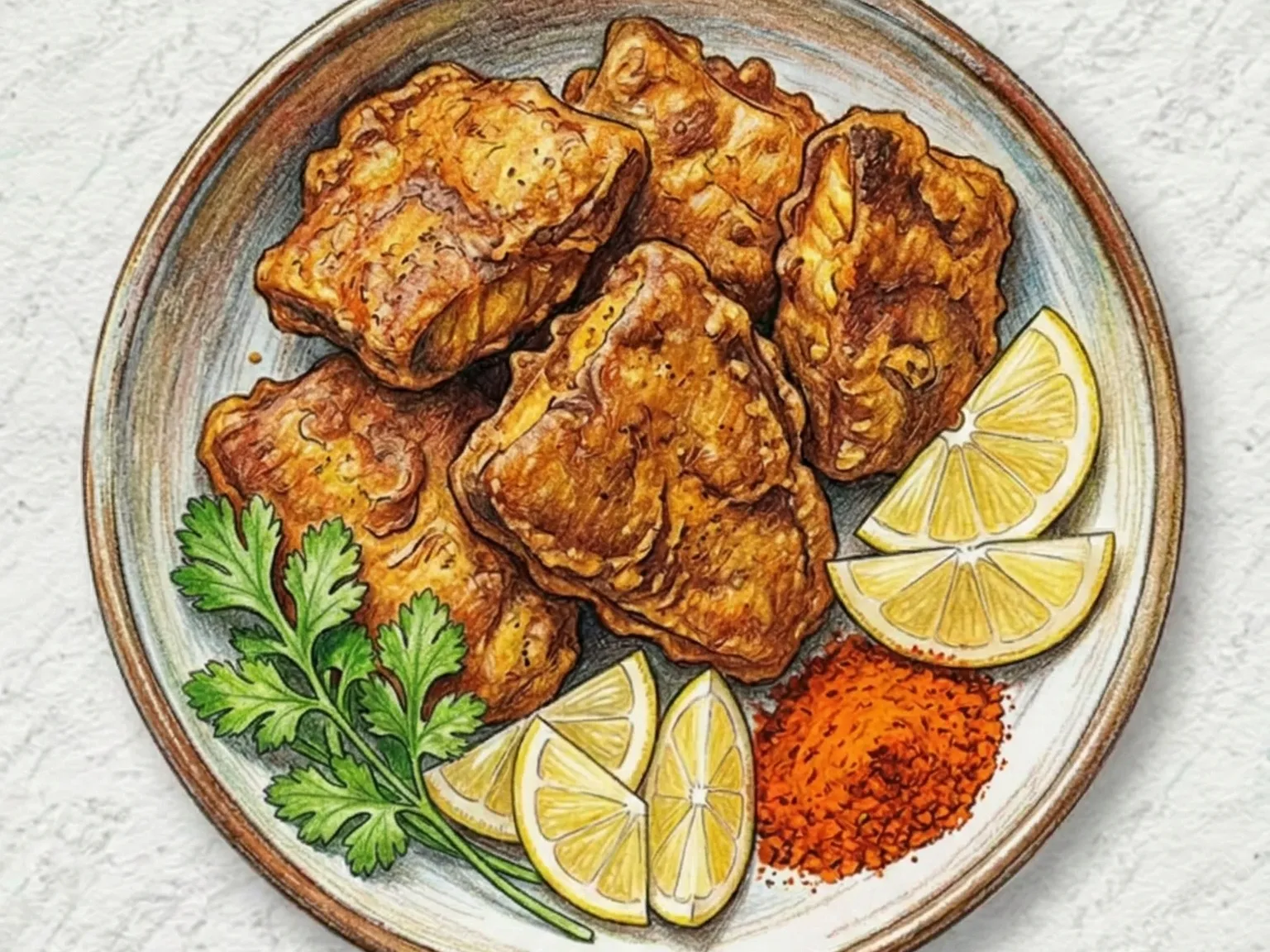
Amritsari fish fry originated in Amritsar - the Punjabi city of the Golden Temple - as a street snack that became one of North India's most popular pub foods. Fresh fish, typically freshwater varieties like singara or sole, is marinated in ajwain (carom seeds), chili powder, amchur (dried mango powder), and ginger-garlic paste before being dipped in a besan (gram flour) batter and lowered into hot oil. Ajwain neutralizes any fishiness while depositing a thyme-like herbal note, and the amchur adds a tartness that lifts the heaviness of the fried coating. Besan batter adheres in a thinner layer than wheat flour yet stays crisper for longer, creating a shell that crackles with each bite while the fish inside steams in its own moisture. A squeeze of fresh lemon and a dip into mint-coriander chutney bring together heat, sourness, and herb freshness in one mouthful. The narrow lanes surrounding Amritsar's Golden Temple are packed with fish fry stalls, their frying kadhai sending plumes of spice-scented oil into the air.
Adjust Servings
Instructions
- 1
Cut fish into chunks and marinate with lemon juice and ginger-garlic paste for 10 minutes.
- 2
Combine gram flour, rice flour, chili powder, and ajwain.
- 3
Add a little water to make a thick batter.
- 4
Coat fish pieces evenly in batter.
- 5
Deep-fry at 170C for 4-5 minutes until golden.
- 6
Drain and serve hot with lemon wedges.
As an Amazon Associate, we may earn from qualifying purchases.
Tips
Nutrition (per serving)
More Recipes

Kadhi Pakora (Yogurt Curry with Fritters)
Kadhi pakora is a yogurt-based curry from North India, especially popular in Punjabi home cooking, where gram flour fritters are simmered in a tangy, spiced yogurt gravy. The pakoras are made by mixing a portion of gram flour with sliced onion, salt, and water into a thick batter, then deep-frying spoonfuls until golden. The remaining gram flour is whisked with yogurt, water, turmeric, and red chili powder to form the kadhi base, which must be stirred constantly in the early stages to prevent the yogurt from splitting. Cumin seeds are bloomed in oil to release their aroma before the kadhi mixture is poured in and simmered gently for twenty minutes, allowing the raw flour taste to cook out completely. Adding the fried pakoras near serving time preserves some of their texture, while longer simmering lets them absorb the gravy and turn soft throughout.

Chicken Biryani (Mughal Spiced Saffron Layered Rice with Chicken)
Biryani was born from the meeting of Persian pilaf and Indian spice culture during the Mughal Empire, and it remains a ceremonial dish across the Indian subcontinent - served at weddings, festivals, and Friday prayer gatherings. Chicken marinates in yogurt, saffron, garam masala, and ginger-garlic paste, then is layered in a heavy-bottomed pot with par-cooked basmati rice, saffron milk, fried onions, and fresh mint between each layer. The pot is sealed with dough - a technique called dum - trapping steam so the rice and meat cook in each other's aromatic vapors. When the seal is broken at the table, the rush of saffron, cardamom, and rosewater fragrance is the dish's dramatic opening act. Each grain of rice in a well-made biryani should be separate yet infused with spice, and the bottom layer should develop a crisp, golden crust similar to Persian tahdig. The Hyderabadi and Lucknowi styles represent two poles - the former raw-cooking everything together, the latter par-cooking each element before assembly.

Rogan Josh (Kashmiri Slow-Braised Lamb Curry with Yogurt)
Rogan josh is a Kashmiri lamb curry whose name translates from Persian as 'heat in oil,' describing the way the fat separates and rises to the surface of the finished sauce. Bone-in lamb pieces are slow-braised with yogurt, fennel seeds, dry ginger powder, and Kashmiri red chilies - a variety that delivers vivid crimson color with moderate heat rather than scorching fire. Some traditional recipes use ratanjot, a tree bark that deepens the red hue without altering the flavor. The yogurt tenderizes the meat over the long cooking and lends a subtle tang to the gravy. When done properly, a layer of aromatic oil floats on top of the thick, rust-red sauce. The spice profile leans warm and fragrant rather than sharp, making rogan josh one of the more approachable Kashmiri dishes.

Masala Dosa (South Indian Crispy Rice Crepe with Spiced Potato Filling)
Masala dosa is a cornerstone of South Indian cuisine, eaten from breakfast through dinner across the subcontinent. The crepe is made from a batter of rice and black lentils (urad dal) that ferments overnight, developing a mild tanginess and ensuring the finished dosa crisps into a thin, lacy shell on a hot griddle. Inside sits a filling of mashed potatoes tempered with mustard seeds, curry leaves, turmeric, and green chilies. It arrives at the table golden and oversized, folded or rolled around its filling, with coconut chutney and sambar - a lentil-vegetable stew - served alongside for dipping. The contrast between the shatteringly crisp crepe and the soft, warmly spiced potato is what keeps people coming back.

Aloo Samosa (Indian Crispy Potato-Filled Fried Pastry)
Samosas have been documented in Central Asian cookbooks since the 10th century, traveling along trade routes from Persia into the Indian subcontinent where they became inseparable from street-food culture. The pastry shell - rolled thin from a stiff dough of flour, water, and oil - is folded into a cone, filled with a mixture of boiled potato, cumin, green chili, and cilantro, then sealed and deep-fried until the layers blister and turn golden brown. The crust shatters audibly at first bite, giving way to a soft, warmly spiced interior where the potato has absorbed the cumin's earthy fragrance. Fried at the right temperature, the pastry stays greaseless and light despite the deep-frying. Chai stalls across India sell them by the hundreds each morning, served with green mint chutney and sweet tamarind sauce that together provide the sour-sweet counterpoint the filling needs.

Masala Chai
Masala chai is an Indian spiced milk tea brewed by simmering crushed ginger, cinnamon, and cardamom in water before adding black tea leaves and whole milk. The spices release their oils slowly into the liquid, wrapping around the tea's tannins and transforming them into a warm, aromatic depth. Sugar stirred in during the final simmer softens the spice's bite and lets the milk's creaminess come forward. Using whole spices rather than ground powders keeps the brew clean and free of gritty residue.