Flammkuchen (Alsatian Crème Fraîche Flatbread)
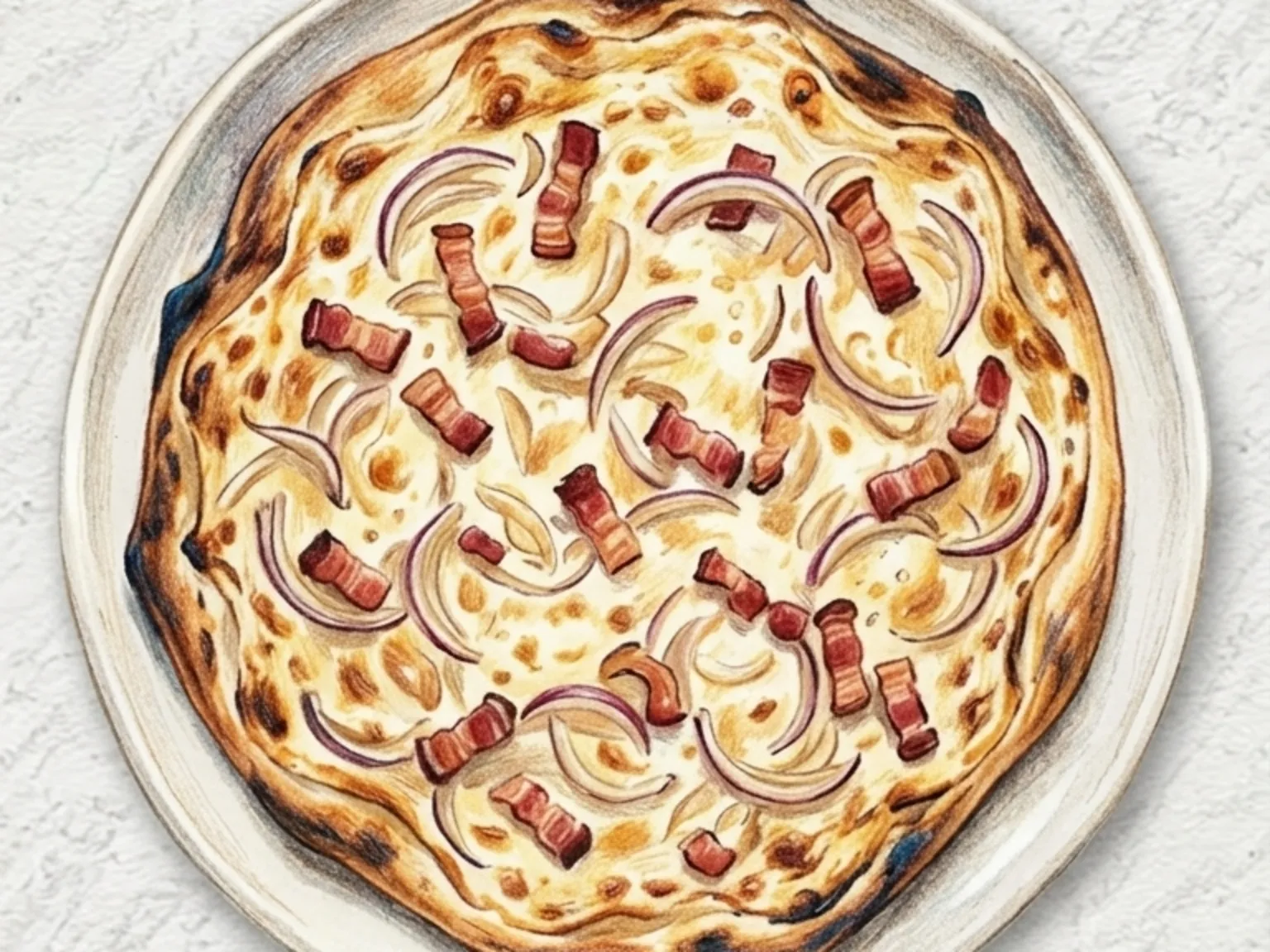
Flammkuchen is a traditional flatbread from Alsace, the border region between France and Germany. The dough is rolled paper-thin and spread with a layer of creme fraiche, then topped with thinly sliced onions and lardons before going into a blazing hot oven. The extreme heat crisps the dough edges to a char while the center stays just pliable enough to fold. Creme fraiche reduces under the heat into a concentrated, tangy cream that replaces the cheese found on pizza - indeed, traditional Flammkuchen uses no cheese at all. The onions soften and caramelize in the oven, releasing sweetness that balances the salt and smoke of the bacon. In Alsace, it is traditionally eaten during the autumn grape harvest with glasses of new wine, torn apart by hand at communal tables rather than sliced with a knife.
Adjust Servings
Instructions
- 1
Mix flour, water, oil, and salt into dough; rest for 10 minutes.
- 2
Thinly slice onion and cut bacon into small pieces.
- 3
Roll dough very thin and place on a tray.
- 4
Spread creme fraiche, then top evenly with onion and bacon.
- 5
Bake at 250C for 10-12 minutes and finish with pepper.
As an Amazon Associate, we may earn from qualifying purchases.
Tips
Nutrition (per serving)
Goes Well With

Apple Fennel Walnut Salad
This salad pairs three ingredients whose textures and flavors run in different directions - crisp apple, anise-scented fennel, and bitter walnuts - and unifies them with a honey-lemon dressing. Thinly sliced fennel bulb contributes a licorice-like fragrance that is more aromatic than sweet, while its celery-crisp texture holds a firm contrast against the apple's softer flesh. Toasted walnuts add a crunchy, tannic bitterness that anchors the lighter elements and keeps the salad from reading as merely sweet. The dressing is deliberately minimal - fresh lemon juice, honey, a small amount of olive oil, and a pinch of salt - so the ingredients carry the flavor rather than the sauce. Assembling just before serving prevents the apple from browning. Salads of this type appear on autumn and winter tables in France and Italy when local apples and fennel come into season together, and can be served as a standalone starter or alongside roasted poultry, where the anise note in the fennel cuts through the meat's richness. Fennel has a long association with digestive support in Mediterranean cooking, which is partly why it has traditionally been served alongside fatty meats, and this salad draws on the same pairing logic.

Korean Butter-Grilled Scallops
Garibi butter-gui sears fresh scallops in garlic butter until each side develops a deep golden-brown crust, then finishes with lemon juice and parsley to balance the richness. Removing every trace of surface moisture with paper towels before seasoning is the single most important step -- water on the surface of the scallop causes it to steam rather than sear, and no caramelized crust will form until that moisture has evaporated. Each side cooks for only one to two minutes at the highest heat the pan can sustain, leaving the center just barely opaque and the texture tender rather than rubbery. After flipping, butter and minced garlic are added directly to the hot pan and spooned continuously over the scallops so the aroma infuses the surface. A squeeze of lemon and a scatter of chopped parsley added just before removing from heat layers acidity and freshness over the butter richness. Simple to prepare and fast to cook, this dish appears regularly at home gatherings in Korea as a crowd-pleasing appetizer.

Gotgam Cream Cheese Roll (Dried Persimmon Rolls)
Gotgam cream cheese roll is a no-cook Korean dessert that requires nothing more than a knife, a bowl, and a refrigerator. Dried persimmons are slit open and flattened into thin sheets, each one acting as the outer wrapper. The filling is cream cheese mixed with honey and fresh lemon juice to balance its natural richness with acidity, and finely chopped walnuts are folded in throughout to add a crunchy, nutty element to every bite. The filling is spread across the opened persimmon, which is then rolled tightly and wrapped in plastic wrap. Twenty minutes in the refrigerator firms the roll enough to slice cleanly. Dipping the knife in warm water and wiping it dry before each cut produces the smoothest cross-sections. The finished slices reveal clearly defined layers: the chewy, caramel-sweet dried persimmon on the outside, the tangy cream cheese in the middle, and flecks of walnut distributed throughout. The combination makes it a natural pairing with wine or a polished addition to a traditional holiday table.

Blue Crab Lemon Garlic Pasta
Blue crab lemon garlic spaghetti starts by slowly warming thinly sliced garlic in olive oil over low heat until fragrant - pale gold, not browned. Crab meat and a splash of rice wine go in next to cook off any raw marine smell before butter is added and stirred until it melts into the oil. Starchy pasta water emulsifies the fat into a thin, glossy sauce that coats each strand of spaghetti evenly without heaviness, carrying a clean, oceanic flavor throughout. Lemon zest and juice are added only after the heat is turned off - adding them while the pan is still hot drives off the volatile citrus aroma before it reaches the plate. Keeping the garlic just short of golden, pale and softened rather than browned, is what separates a clean, nutty depth from an acrid bitterness that would overpower the crab. Fresh crab meat, picked directly from a live blue crab, delivers a noticeably sweeter flavor than thawed frozen product and is worth the extra effort when in season.
More Recipes

French Onion Tart
The preparation of a French onion tart begins with slicing onions and cooking them in butter using a low heat setting for more than twenty minutes. During this extended cooking duration, the onions collapse into a dark amber mixture, ensuring that their natural sweetness is fully concentrated while the sharp bite associated with raw onions is completely eliminated. Once the onions have reached this state, they are spread in an even layer over a tart shell that has already undergone blind baking to maintain its texture. A custard liquid made from a combination of eggs, heavy cream, and thyme is poured over the onions. Grated Gruyere cheese is then scattered across the top surface before the tart is transferred to an oven preheated to 190 degrees Celsius. The baking process continues until the internal filling has set into a firm consistency and the cheese layer has transformed into a browned, salty crust. The flavor of the caramelized onions is the most prominent characteristic of the dish, providing a sweetness that builds on the palate with each bite. Thyme is used to contribute a distinct herbal note, which functions to offset the richness of the dairy components and prevent the tart from becoming cloying. The addition of Gruyere cheese brings a nutty and salty element that balances the sweet and savory aspects of the tart. This specific dish is known for holding its quality well when served at room temperature, which makes it a versatile choice for inclusion in brunch menus, sequences of wine pairings, or meals eaten outdoors.

Pissaladiere (Provencal Caramelized Onion Anchovy Tart)
Pissaladiere is a traditional tart from Provence in southern France, built on a thin bread dough blanketed with slowly cooked onions and adorned with anchovy fillets and black olives arranged in a lattice pattern. The onions must cook in olive oil over low heat for at least forty minutes until their moisture evaporates completely and their natural sugars caramelize into a dark, jam-like sweetness. This thick layer of onion jam makes the tart resemble a pizza visually, but the absence of tomato sauce and the primacy of onion sweetness make it an entirely different dish. The anchovies contribute sea-salt brininess and umami, while the olives add a bitter, savory counterpoint that balances the onion's sweetness. Fresh thyme leaves scattered on top before baking introduce an herbal brightness that lifts the dense, concentrated flavors.

French Onion Soup
French onion soup is built entirely on patience and heat. Thinly sliced onions are cooked in butter over low heat for forty minutes or more, slowly shedding moisture as their natural sugars transform into a deep, golden-brown mass with an intensity of sweetness and umami that raw onions cannot approach. Rushing this step causes the onions to scorch and turn bitter, so controlled, unhurried heat is the most critical variable in the recipe. Dry white wine and beef stock are then added to the caramelized onions and simmered together until the broth absorbs every layer of the onion's concentrated flavor, building complexity through a long, slow reduction. The finished soup is ladled into oven-safe crocks, topped with thick slices of toasted baguette, and blanketed with a generous layer of grated Gruyere. Under the broiler, the cheese melts, bubbles, and browns into a golden crust with long, elastic strings that stretch when broken with a spoon. Beneath that crust lies the reward: a dark, concentrated broth steeped in caramelized onion depth, with bread softened into the soup and cheese draped across every spoonful. A bowl where simple ingredients, time, and heat produce something far greater than the sum of their parts.

Lobster Thermidor
Lobster thermidor is a French dish in which boiled lobster meat is cut into bite-size pieces, folded into a cream sauce made from shallots sauteed in butter, white wine reduced by half, Dijon mustard, and heavy cream, then packed back into the cleaned shell and topped with grated Parmesan for a brief gratin under high heat. Reducing the wine concentrates its acidity, and the mustard adds a sharp undercurrent that prevents the cream sauce from tasting flat. Baking at 220 degrees Celsius for only six to eight minutes gives the cheese a golden crust while keeping the lobster meat tender. Lemon juice stirred into the filling at the last moment lifts the richness. The dramatic presentation in the shell makes it a natural choice for entertaining.

Kougelhopf (Alsatian Raisin Almond Bundt Cake)
This yeasted cake from the Alsace region of France is baked in a distinctive fluted ring mold that gives it a crown-like silhouette. The dough is enriched with butter and eggs and kneaded until it develops a soft, brioche-like crumb that stays moist for days. Raisins are folded into the batter, releasing pockets of gentle sweetness with each bite, while whole almonds placed at the bottom of the mold become a decorative and crunchy topping once the cake is inverted. Two separate rises, the first to develop flavor and the second inside the mold to set the shape, require patience but reward the baker with an airy, delicate interior. Generously buttering every groove of the mold is essential for a clean release; any missed spot means the cake tears when turned out. A dusting of powdered sugar after cooling completes the presentation with an elegant, snow-capped look that makes the kougelhopf as appealing on the table as it is on the palate.

Tarte Bourdaloue (French Pear Almond Frangipane Tart)
A crisp tart shell is lined with frangipane - a mixture of almond flour, butter, egg, and sugar - then topped with halved or sliced pears and baked until the almond cream rises around the fruit and turns golden. The frangipane puffs gently in the oven, enveloping the pear in a dense, moist almond layer, while juice from the fruit seeps into the cream and lightens its richness. Poached pears produce the most tender result and cook evenly, but raw pears work if sliced thin enough to soften during baking. Overmixing the frangipane compacts the crumb and eliminates the delicate rise, so the batter should be combined only until the ingredients are incorporated. Scattered sliced almonds on top before baking add visual appeal and an extra layer of nutty crunch. This tart originated on Rue Bourdaloue in Paris and remains one of the essential recipes in French patisserie.