Flan Parisien (Parisian Vanilla Custard Tart)
Baking Medium

Flan Parisien (Parisian Vanilla Custard Tart)

Quick answer

Flan Parisien is a Parisian bakery staple found in nearly every boulangerie in the city.

What makes this special

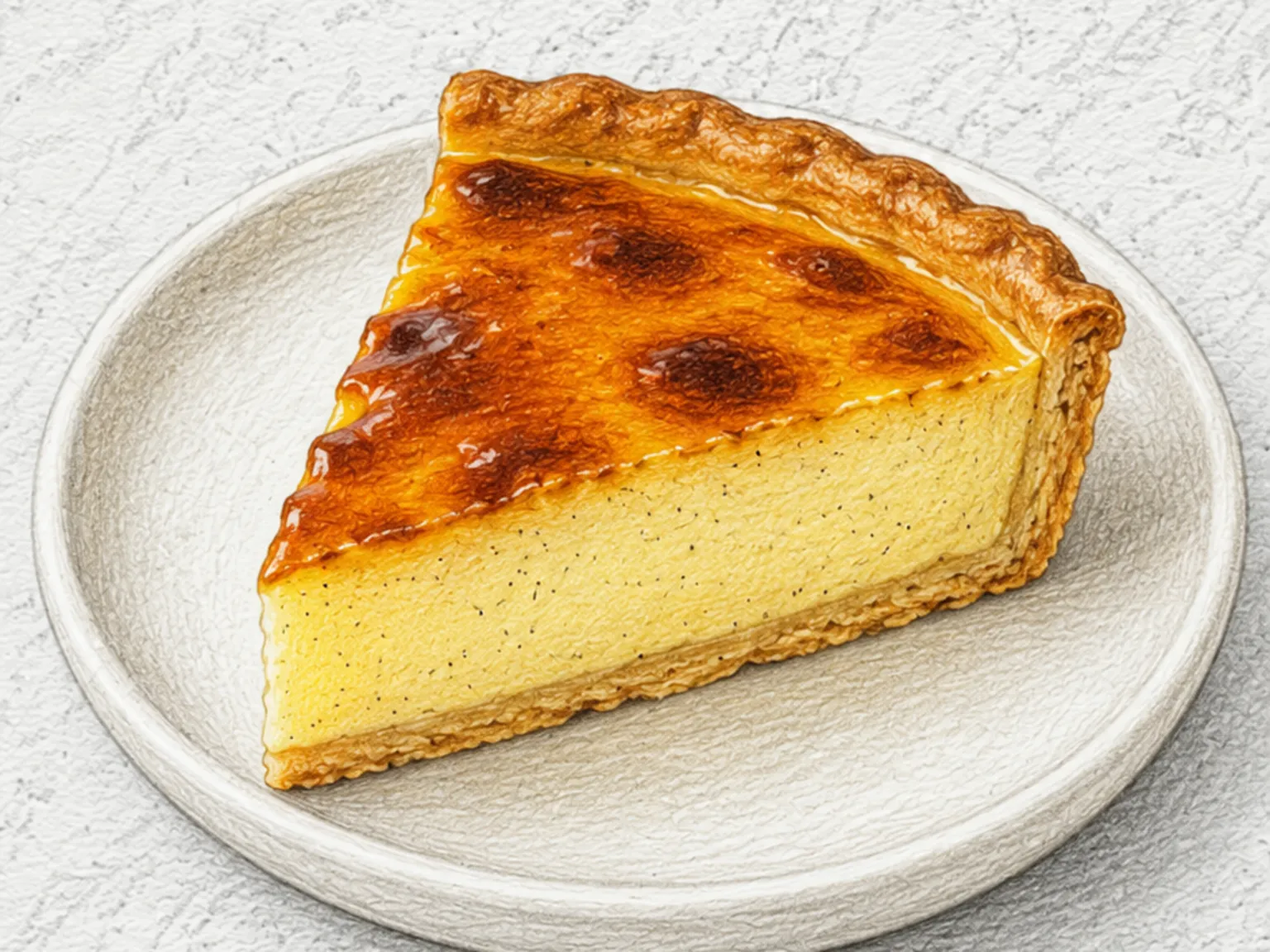
  • Parisian vanilla custard tart baked in a pastry shell until the top develops dark spots.
  • 45g cornstarch sets the custard firm enough to slice cleanly
  • Blind-baking the shell prevents the custard moisture from soaking through
Total time
75 min
Level
Medium
Servings
4 servings
Ingredients
7
Calories
500 kcal
Protein
11 g

Key ingredients

pastry tart shellmilkheavy creamsugareggs

Core cooking flow

  1. 1 Preheat the oven to 190C and press the pastry shell firmly into the pan, especially along the corners.
  2. 2 Put 500 ml milk, 150 ml heavy cream, and 1 teaspoon vanilla extract in a saucepan.
  3. 3 In a bowl, whisk 3 eggs, 130 g sugar, and 45 g cornstarch until no dry lumps remain.

Flan Parisien is a Parisian bakery staple found in nearly every boulangerie in the city. A buttery shortcrust pastry shell holds a thick, firm vanilla custard that bakes slowly until the top develops caramelized brown spots. The custard is made from milk, eggs, sugar, and cornstarch, which gives it a denser, sliceable consistency that distinguishes it from softer baked custards like creme brulee. When properly cooled, the filling holds its shape when cut yet melts smoothly on the tongue with a clean vanilla flavor. Vanilla bean seeds speckled throughout the custard signal that the real ingredient was used rather than extract. The pastry shell must be blind-baked first to prevent sogginess, then filled and baked again until set. It is served cold, and the contrast between the crisp, buttery shell and the cool, trembling custard makes each bite satisfying. Allowing the flan to cool fully at room temperature before refrigerating prevents the custard from cracking or collapsing when sliced, which is the most common mistake when cutting too soon after baking.

Prep 30min Cook 45min 4 servings
Recipes by ingredient → milk heavy cream egg

Instructions

Read the steps as a cooking flow: prep, heat, seasoning, doneness control, and finish.

6 steps
  1. 1
    Heat

    Preheat the oven to 190C and press the pastry shell firmly into the pan, especially along the corners.

    Blind-bake it first until the base looks dry and lightly set, so the custard moisture does not make the bottom soggy.

  2. 2
    Control

    Put 500 ml milk, 150 ml heavy cream, and 1 teaspoon vanilla extract in a saucepan.

    Warm over medium-low heat just until steaming, not boiling, so the dairy takes on the vanilla aroma without scorching.

  3. 3
    Season

    In a bowl, whisk 3 eggs, 130 g sugar, and 45 g cornstarch until no dry lumps remain.

    Slowly add the hot milk mixture in several additions while whisking, so the eggs warm gently instead of scrambling.

  4. 4
    Control

    Pour the mixture back into the saucepan and cook over medium-low heat, stirring constantly across the bottom and corners.

    Stop as soon as it thickens enough for a spatula trail to stay briefly, before it becomes lumpy.

  5. 5
    Heat

    Pour the thick custard into the blind-baked shell and smooth the surface evenly.

    Bake at 190C for 40 to 45 minutes, until the top has caramel-colored spots and the center looks set but still slightly trembling.

  6. 6
    Prep

    Do not slice the flan right after baking.

    Let it cool fully at room temperature, then chill for at least 4 hours so the custard firms up and cuts cleanly without collapsing.

After the steps

Pick a recipe that fits this dish.

Continue with shared ingredients, meal pairings, or a similar method.

Recipes That Go Well With This

More Baking →

Based on shared ingredients and meal pairing

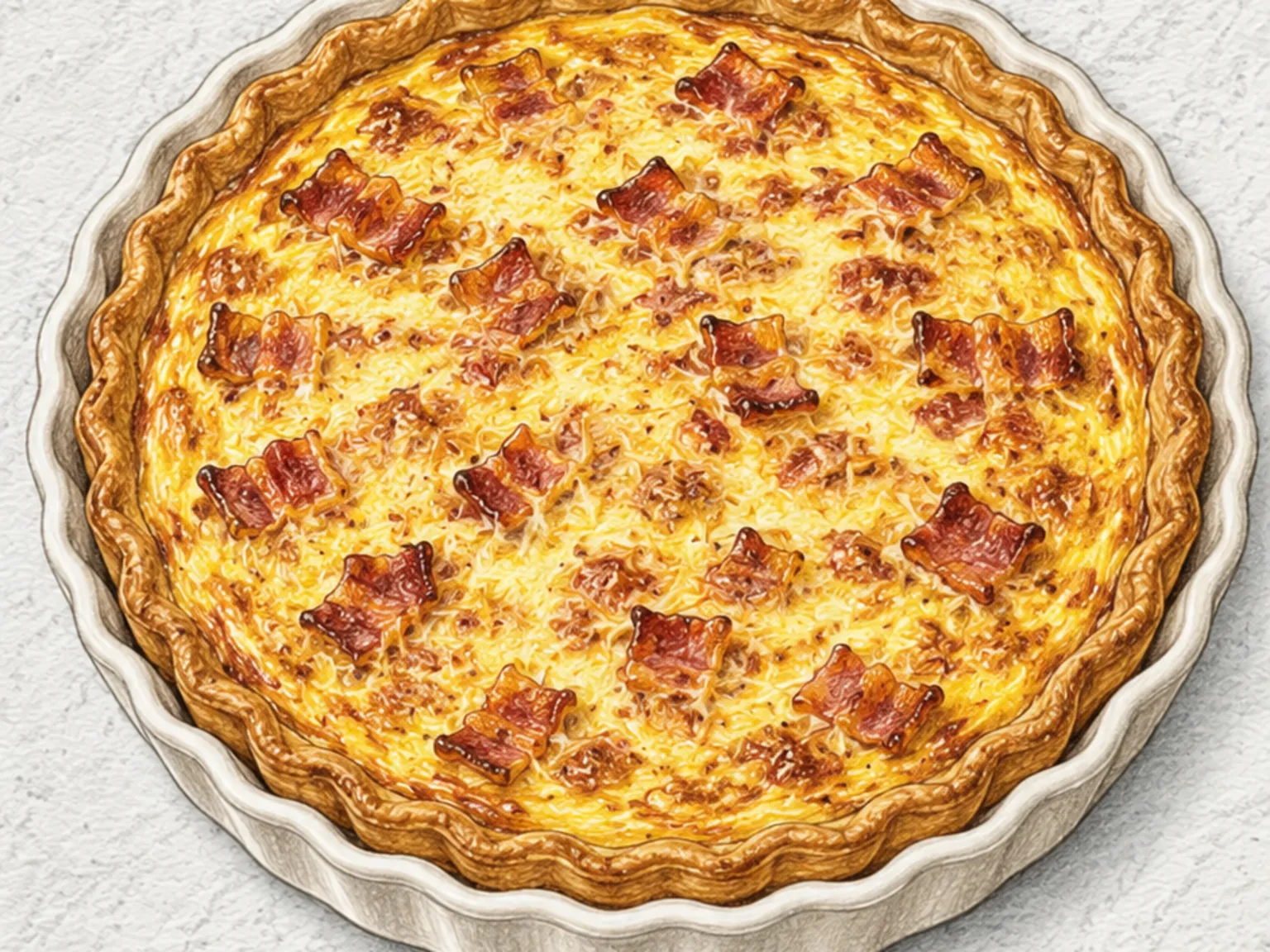
Quiche Lorraine
Shared ingredient: tart shell Western

Quiche Lorraine

Quiche Lorraine is a French savory tart that fills a buttery pastry shell with crisp-cooked bacon, grated Gruyere cheese, and a smooth custard made from eggs, heavy cream, and milk. Blind-baking the crust for ten minutes before adding the filling is essential to prevent a soggy base. The bacon must be drained well so excess fat does not make the custard greasy. Whisking the egg mixture gently avoids incorporating too many air bubbles, which would create an uneven surface after baking. The quiche is done when the center still has a slight jiggle - removing it at this point and resting for ten minutes allows residual heat to set the custard fully, producing a clean slice with a creamy interior.

Vanilla Honey Madeleines (French Shell Cakes with Honey)
Shared ingredient: milk Baking

Vanilla Honey Madeleines (French Shell Cakes with Honey)

Eggs, sugar, and honey are whisked together, then combined with melted butter, cake flour, and vanilla to form a batter that bakes into small, shell-shaped French cakes with a characteristic bump on the back. The honey works alongside sugar to sweeten the madeleine while contributing a floral undertone that plain sugar cannot provide. Melted butter saturates the batter with richness, and vanilla bridges the honey and butter flavors into a cohesive aroma. Chilling the batter for at least thirty minutes is the key to the signature hump - the cold batter hitting the hot oven creates a rapid rise in the center while the edges have already begun to set. Each mold cavity should be well-buttered and filled to eighty percent to ensure clean edges and consistent shape. Baking time is brief, ten to twelve minutes, and the madeleines must be removed as soon as the rims turn golden to preserve the moist, spongy interior. They are best eaten within hours of baking, when the crust is still faintly crisp and the center yields softly.

Clafoutis (French Baked Cherry Custard Dessert)
Serve together Western

Clafoutis (French Baked Cherry Custard Dessert)

Clafoutis is a traditional French dessert from the Limousin region made by arranging fresh cherries in a buttered baking dish, then pouring over a thin batter of eggs, sugar, milk, and flour and baking at 180 degrees Celsius for thirty to thirty-five minutes. The batter is considerably thinner than pancake batter, and the result when baked is a texture that sits between a creamy custard and a light sponge -- the edges puff and turn golden while the center around the cherries stays moist and yielding. Using unpitted cherries is the traditional method: the pits release a faint almond scent during baking that perfumes the surrounding batter in a way that pitted fruit cannot replicate. The cherries also hold their shape better with the pits in. Vanilla extract deepens the egg-and-milk base, and the cherries' own tart juice seeps into the batter during baking, creating concentrated pockets of fruit flavor that balance the overall sweetness. Clafoutis is served directly from the baking dish, typically dusted with powdered sugar and brought to the table while still warm, because the custard texture softens and loosens slightly as it cools, making the warm version noticeably more appealing. Made with blueberries, plums, or apricots instead of cherries, the dessert takes a different name -- flaugnarde -- though the technique remains identical.

Fruit Clafoutis (Baked Custard with Fresh Fruit)
Similar recipe Baking

Fruit Clafoutis (Baked Custard with Fresh Fruit)

Clafoutis is a rustic French baked dessert that suspends fresh seasonal fruit in a thin custard batter and bakes it until the edges puff golden and the center sets to a silky cream. The batter, close to crepe batter in consistency, is made from eggs, milk, flour, and sugar whisked until smooth. Traditionally, unpitted cherries are used because the pits release a faint almond-like fragrance during baking that deepens the overall flavor. Strawberries, blueberries, and plums work equally well, their juices concentrating in the oven heat and creating pockets of intense sweetness against the mild custard. Because the method is little more than mixing and pouring, it requires no special technique. Served warm with a dusting of powdered sugar, the contrast between the crisp rim and the soft interior is what makes this dessert memorable.

Serve with this

Beet and Goat Cheese Salad
Salads Medium

Beet and Goat Cheese Salad

Beet and goat cheese salad begins with whole beets wrapped in foil and roasted at 200°C for forty-five to sixty minutes, long enough for their raw, earthy undertone to convert almost entirely into a concentrated, caramel-adjacent sweetness. Peeling the skins while the beets are still warm requires only the pressure of a paper towel - they slip off cleanly - and slicing them before they cool preserves the vivid crimson-purple cross-section that makes the dish visually striking. Crumbled goat cheese placed on the warm slices softens slightly, and its tangy acidity cuts through the dense sweetness of the roasted root rather than competing with it. Walnuts toasted briefly in a dry pan lose much of their raw bitterness, developing a nuttiness that bridges the mineral quality of the beet and the dairy sharpness of the cheese. Balsamic reduction does more than dress the plate: its concentrated sweet-tart intensity ties the separate components into a coherent whole. Arugula underneath the beet slices provides a peppery bitterness that sharpens the contrast against the sweetness, giving the salad a complexity well beyond what its short ingredient list suggests. A simple dressing of extra-virgin olive oil and lemon juice over the greens keeps the balance light and clear.

🥗 Light & Healthy 🎉 Special Occasion
Prep 15min Cook 35min 2 servings
Honey Ginger Ribbon Cookies
Desserts Medium

Honey Ginger Ribbon Cookies

Maejakgwa are traditional Korean ribbon cookies made from a firm dough of wheat flour, sesame oil, and ginger juice, rolled to 2 mm thickness, slit lengthwise through the center, and twisted through the opening into a knot shape before frying. Slow-frying at 160 degrees Celsius turns them light golden and crisp all the way through without darkening the surface unevenly. A warm coating of honey blended with rice syrup is applied while the cookies are still hot, adding a glossy, sweet shell that sets as it cools. The ginger lends a subtle warm bite that sits behind the nuttiness of sesame oil rather than announcing itself upfront, and a final dusting of pine nut powder contributes a soft, buttery fragrance that completes the layering of flavor. Each piece shatters lightly when bitten, yet the syrup-soaked sections at the twisted edges carry a slight chewiness that gives the cookie a layered texture unusual for a fried dough confection. Maejakgwa appear regularly on ritual food tables at memorial ceremonies and are commonly prepared for Lunar New Year and Chuseok.

🎉 Special Occasion 🧒 Kid-Friendly
Prep 30min Cook 25min 4 servings
Korean Cinnamon Persimmon Punch
Drinks Easy

Korean Cinnamon Persimmon Punch

Sujeonggwa is a Korean cinnamon-ginger punch made by simmering cinnamon sticks and sliced ginger in water for 25 minutes, then straining and sweetening the clear liquid with dark brown sugar. The warm, slightly sweet spice of cinnamon and the sharp rising heat of ginger meet the molasses-toned depth of the sugar, building a flavor that is spicy, sweet, and aromatic in equal measure. Quartered dried persimmon slices are added to the chilled punch, where they slowly absorb the liquid and soften into a jam-like texture over time, while floating pine nuts contribute a gentle nuttiness to each sip. Overnight refrigeration in a sealed container melds the individual flavors into something more unified, making the punch cleaner and more rounded when served cold. Sujeonggwa has long been served at Korean holiday tables during Lunar New Year and ancestral rite ceremonies, and its spiced warmth is also considered a natural digestive aid after heavy meals.

🍺 Bar Snacks 🎉 Special Occasion
Prep 10min Cook 35min 4 servings

Similar recipes

Creme Brulee
Baking Medium

Creme Brulee

Creme brulee is a French custard dessert made from just four components: egg yolks, heavy cream, sugar, and vanilla bean. Hot cream infused with vanilla seeds is tempered into beaten yolks and sugar, then poured into ramekins and baked in a water bath at low heat. The water bath moderates the temperature, preventing the custard from curdling or developing bubbles, yielding a surface as smooth as silk. After thorough chilling, a thin layer of sugar is sprinkled on top and caramelized with a torch until it forms a glassy, amber-colored crust. The ritual of cracking through that crust with a spoon is as integral to the experience as the flavor. Beneath lies cold, trembling custard that melts on the tongue, while the hot caramel introduces a bittersweet crunch.

🎉 Special Occasion 🧒 Kid-Friendly
Prep 15min Cook 40min 4 servings
Ile Flottante (Poached Meringue on Vanilla Custard)
Baking Hard

Ile Flottante (Poached Meringue on Vanilla Custard)

Ile flottante presents a cloud of poached meringue floating on a pool of chilled vanilla custard sauce. Stiffly beaten egg whites are shaped into rounds and gently poached in hot milk, cooking just enough to set the exterior while the center remains airy and marshmallow-soft. The custard beneath is a creme anglaise made from egg yolks, sugar, milk, and vanilla bean, cooked slowly until it coats the back of a spoon with a silky consistency. The contrast between the weightless meringue and the rich, creamy sauce defines the eating experience: each spoonful combines something ethereal with something indulgent. Thin threads of caramel drizzled over the meringue just before serving add a brittle sweetness and a golden visual accent. Despite having only a handful of components, the dessert demands precision at every stage.

🎉 Special Occasion 🧒 Kid-Friendly
Prep 20min Cook 25min 4 servings

Tips

Chill at least 4 hours for clean slices.
Add 1 teaspoon cornstarch if custard seems too loose.

Nutrition (per serving)

Calories
500
kcal
Protein
11
g
Carbs
49
g
Fat
29
g