French Macarons
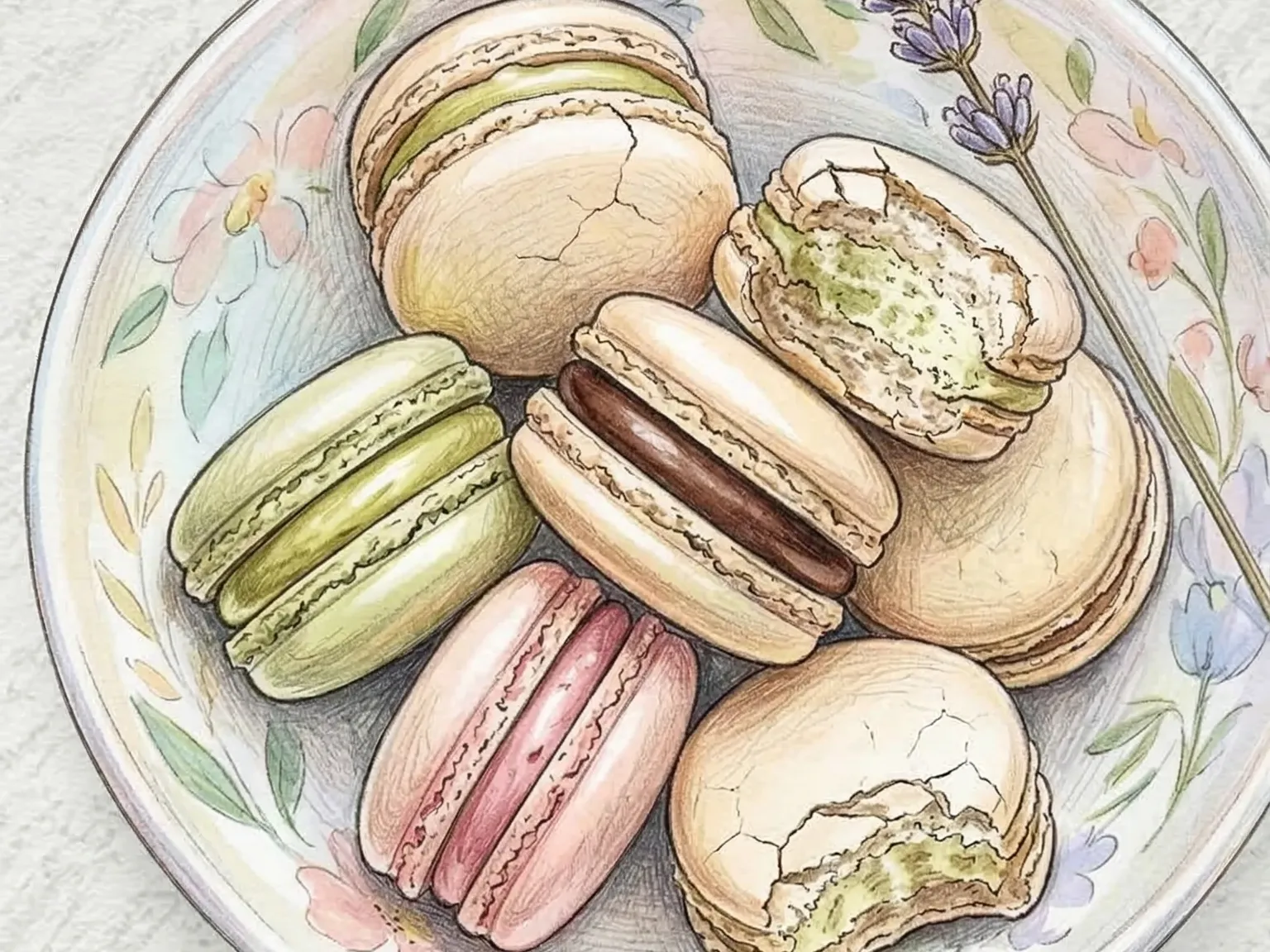
French macarons are small, round almond meringue sandwich cookies that demand precision at every step. The shells are made from finely ground almond flour, powdered sugar, and a meringue base, mixed with a technique called macaronage - folding the batter until it flows like lava and forms a smooth, glossy surface when piped. A properly baked macaron has a smooth, domed top, a ruffled ring called the foot at its base, and a thin crisp shell that yields to a chewy, slightly moist interior. The filling between the shells - buttercream, ganache, or fruit curd - carries the primary flavor. Varieties range from classic vanilla and pistachio to raspberry, salted caramel, and yuzu. After assembly, macarons must rest in the refrigerator for at least twelve hours, during which moisture from the filling softens the shells into a unified, melt-in-the-mouth texture.
Adjust Servings
Instructions
- 1
Sift almond flour and powdered sugar.
- 2
Whip egg whites with sugar to stiff peaks.
- 3
Fold in dry mix until batter flows like ribbon.
- 4
Pipe rounds, rest until skin forms, then bake at 150C.
- 5
Fill cooled shells with chocolate buttercream and sandwich.
As an Amazon Associate, we may earn from qualifying purchases.
Tips
Nutrition (per serving)
More Recipes

Meringue Cookies
Built from nothing more than egg whites and sugar, meringue cookies are baked low and slow until nearly all moisture evaporates, leaving behind a shell that shatters at the slightest pressure and dissolves on the tongue in seconds. The interior is a lattice of tiny air cells - so fragile that each piece weighs almost nothing despite its volume. A small measure of vanilla extract tames any residual egginess and adds a gentle perfume. Humidity is the one enemy: stored outside an airtight container, the cookies turn tacky and lose their snap within hours. Folding in a spoonful of cocoa powder or matcha before piping shifts both the color and flavor profile without altering the texture. They pair well with black coffee or tea, where their sweetness serves as a counterpoint to bitterness.

Cream Horn Pastry (Spiral Puff Pastry Cone with Cream Filling)
Cream horns are made by wrapping thin strips of puff pastry around conical metal molds and baking until the layers separate into a crisp, spiraling shell. The hundreds of laminated layers in the pastry open up in the oven's heat, producing a horn that is simultaneously delicate and structurally sound. Once cooled, the metal cone is removed, leaving a hollow pastry ready for filling. A mixture of cream cheese and whipped cream is piped inside, delivering a smooth, tangy sweetness that contrasts with the shattering pastry exterior. The critical rule is timing - filling the horns just before serving preserves the crispness of the pastry, which softens rapidly once the cream introduces moisture.

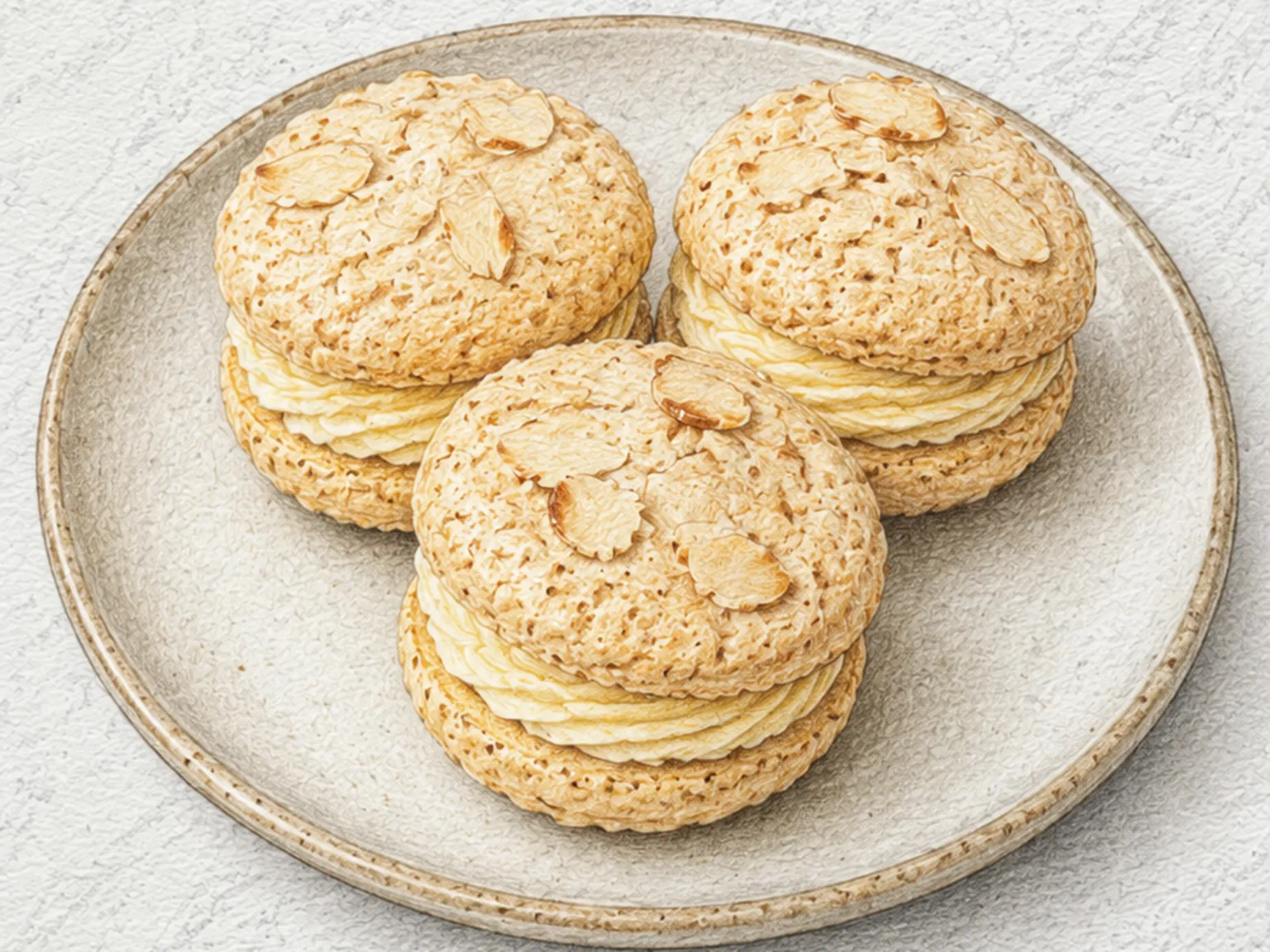
Dacquoise (Almond Meringue Disc with Butter Cream Filling)
Dacquoise is a French confection made by folding almond flour into a stiff egg white meringue, piping the mixture into flat discs, and baking until the surface forms a thin, crisp shell. Inside, the almond oils keep the texture chewy and slightly sticky, creating a contrast between the crackly exterior and the dense interior. Two of these discs sandwich a layer of buttercream, which adds richness and binds the halves together. In Korean cafes, dacquoise has been miniaturized into bite-sized individual pieces, often wrapped for takeaway, and they have become one of the most popular accompaniments to afternoon coffee. The combination of textures - the snap of the shell, the chew of the almond meringue, the smoothness of the cream - makes each small piece surprisingly satisfying.

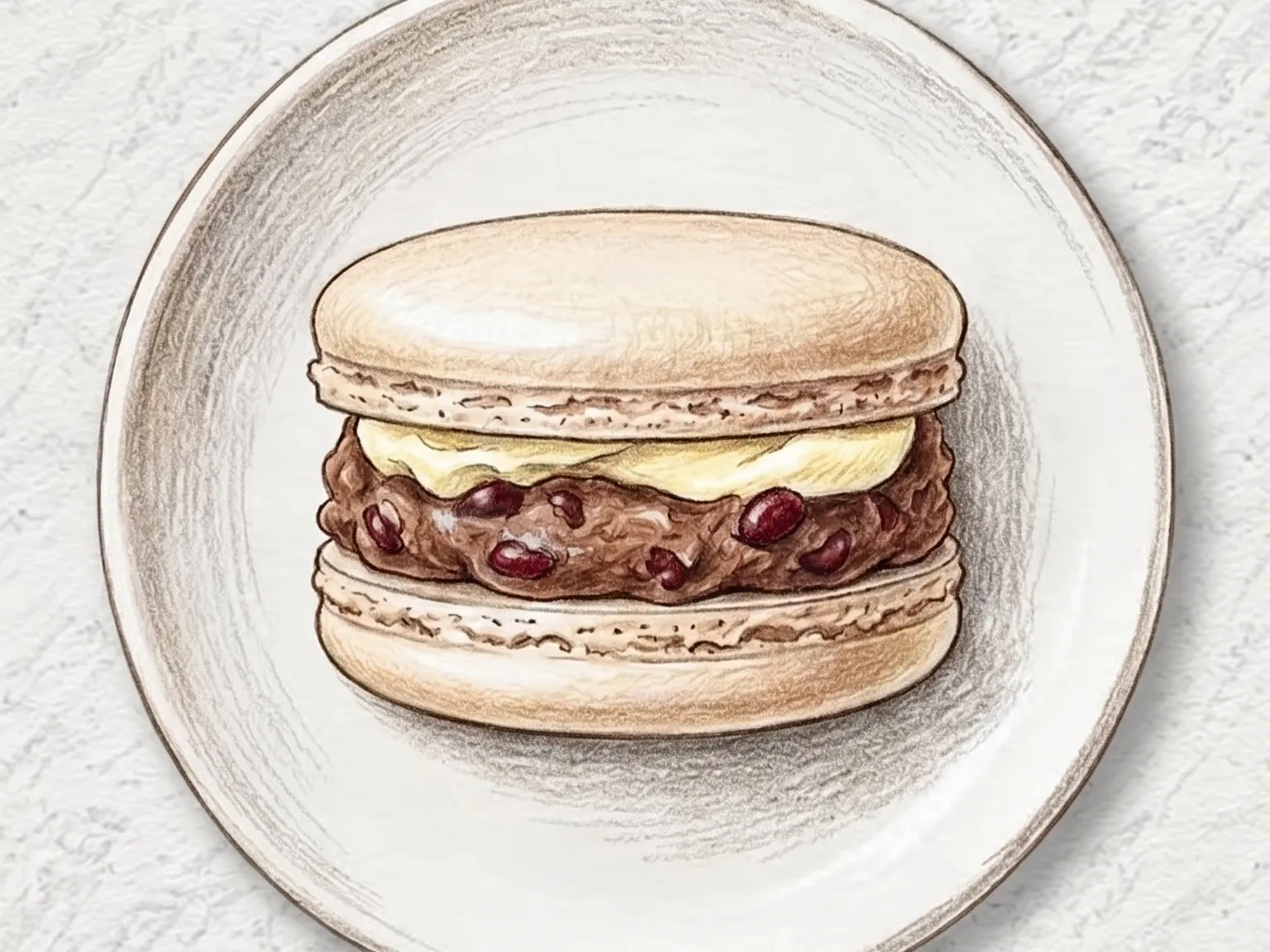
Red Bean Butter Macarons (Almond Shells with Red Bean Cream)
Almond meringue shells sandwich a filling of sweetened red bean paste blended with softened butter, creating a macaron that is distinctly Korean in flavor. The shells should have a smooth, glossy top and a ruffled foot, while the red bean butter cream inside is dense, sweet, and subtly earthy. The natural purple-brown hue of the red bean filling contrasts with pastel-colored shells for an appealing visual. After assembly, a full day of refrigerated rest allows the shells to absorb moisture from the filling, softening them to the ideal chewy-smooth texture known as macaron maturation. These have become a staple in Korean cafes and bakeries, valued both as a treat and as a gift-worthy confection.

Chocolate Lava Cake
Chocolate lava cake bakes a batter of melted dark chocolate, butter, eggs, sugar, and a small amount of flour in ramekins at high heat for a brief window, producing a set exterior with a molten chocolate core. At 220 degrees Celsius for ten to twelve minutes, the edges firm into a soft cake while the center stays liquid - breaking the surface releases a stream of warm, concentrated chocolate. The bittersweet depth of dark chocolate combines with the butterfat to create a dense, velvety richness, while vanilla extract rounds out the flavor. Timing is critical: overbaking by even two minutes solidifies the center and eliminates the signature lava effect.

Clafoutis (French Baked Cherry Custard Dessert)
Clafoutis is a traditional French dessert from the Limousin region, made by pouring a thin batter of eggs, sugar, milk, and flour over fresh cherries arranged in a buttered baking dish. Baking at 180 degrees Celsius for thirty to thirty-five minutes puffs the batter into a texture between a pancake and a baked custard - golden and lightly set at the edges, moist and tender around the fruit. The cherries release their tart juice into the surrounding batter during baking, creating pockets of concentrated fruit flavor. Vanilla extract rounds out the egg-and-milk base. Serving the clafoutis slightly warm rather than fully cooled preserves its soft, custardy consistency.