French Toast
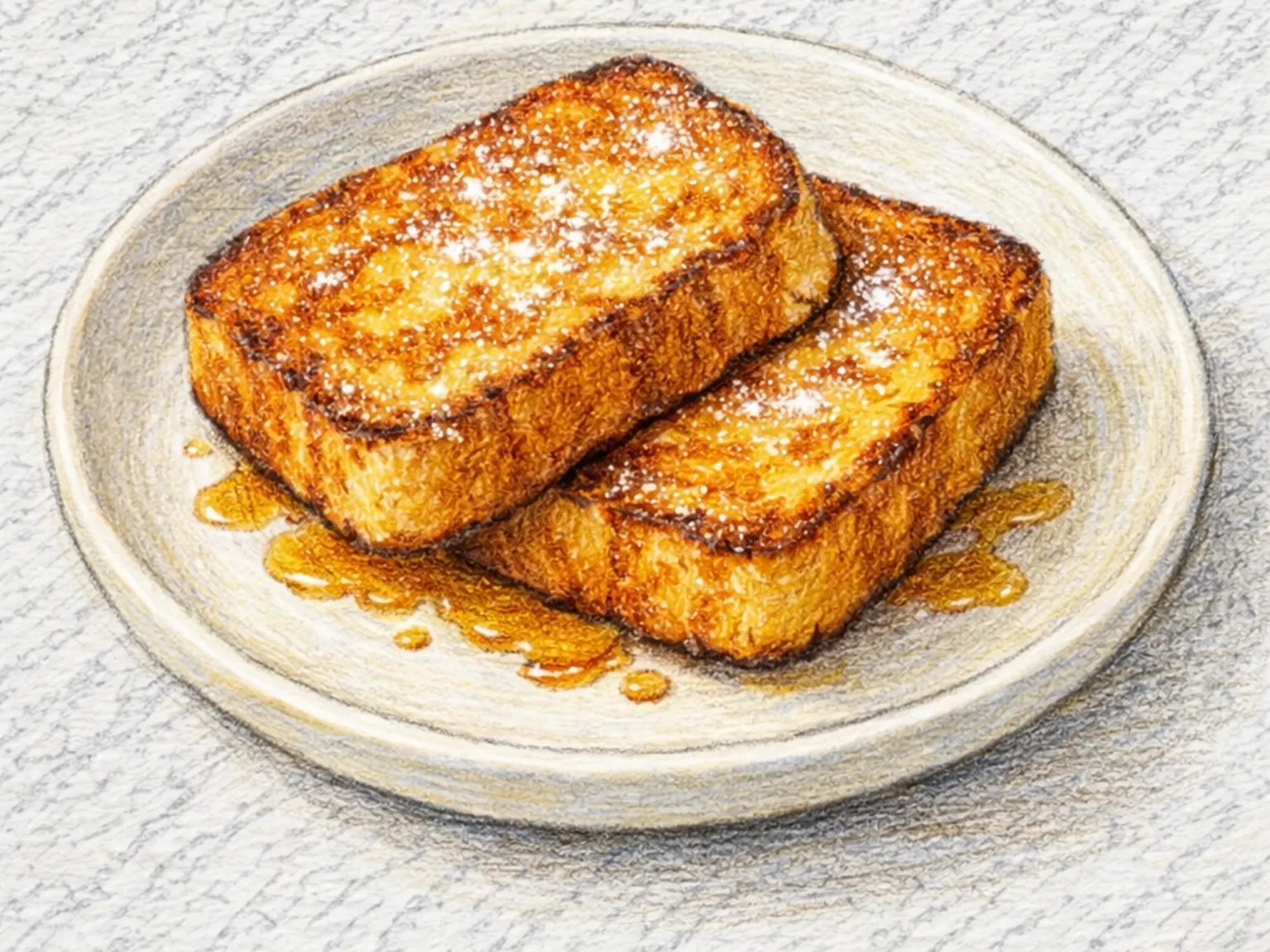
French toast soaks thick bread slices in a mixture of beaten eggs, milk, sugar, vanilla extract, and cinnamon until both sides absorb the custard evenly. The soaked bread is then cooked in melted butter over medium-low heat until each side turns golden brown and lightly caramelized on the surface while staying soft and moist inside. Slightly stale bread works better than fresh because its drier crumb absorbs more of the egg mixture without falling apart. Warm cinnamon and vanilla fragrance fills the kitchen during cooking. A drizzle of maple syrup and a dusting of powdered sugar finish the dish, and adding whipped cream or fresh fruit elevates it further.
Adjust Servings
Instructions
- 1
Whisk together eggs, milk, sugar, vanilla extract, and cinnamon.
- 2
Soak bread slices in the egg mixture on both sides.
- 3
Melt butter in a pan on medium-low heat.
- 4
Cook soaked bread until golden brown on both sides.
- 5
Plate and drizzle with maple syrup and powdered sugar.
As an Amazon Associate, we may earn from qualifying purchases.
Tips
Nutrition (per serving)
More Recipes

Eggs Benedict
Eggs Benedict centers on hollandaise sauce, made by whisking egg yolks with lemon juice over a double boiler until thickened, then slowly streaming in melted butter while whisking continuously to form a stable emulsion. Seasoned with salt and a pinch of cayenne, the sauce is rich, velvety, and slightly tangy. Toasted English muffin halves are topped with crisp bacon or ham, then a poached egg cooked for three to four minutes in gently simmering water with a splash of vinegar. The hollandaise is spooned over the soft-set egg so that cutting into the yolk creates a golden stream that mingles with the buttery sauce. Pouring the butter too quickly causes the emulsion to break, so a thin, steady stream is essential.

French Omelette
A French omelette is a test of technique rather than ingredients. Eggs are beaten gently - just enough to combine yolks and whites without introducing air - and poured into a buttered pan over moderate heat. The cook stirs constantly with a fork or chopsticks while shaking the pan, curdling the eggs into the smallest possible curds that bind into a seamless, pale yellow sheet. The exterior must show no browning at all, and the interior should remain slightly underset, with a custard-like center the French call baveuse. The omelette is then rolled or folded into a neat oval shape in under ninety seconds total. Fillings are kept minimal - fine herbs, a pinch of grated Gruyere, or nothing at all - so the egg itself remains the focus. In professional kitchens, the French omelette is often cited as the definitive test of a cook's heat control and pan skills.

Cream of Mushroom Soup
Cream of mushroom soup sautees sliced button mushrooms in butter and olive oil for eight to ten minutes until the moisture evaporates and the mushrooms develop a deep brown color, then builds the soup with a flour roux, chicken stock, and heavy cream. Onion and garlic sauteed beforehand establish an aromatic foundation, and dried thyme adds an earthy herb note that complements the mushrooms. Cooking the flour for one minute before gradually whisking in stock prevents lumps and creates a smooth base. Adding cream at the end and simmering briefly rounds out the flavor with richness. Blending only half the soup produces a texture that is both velvety and chunky.

Moules Marinières (French White Wine Steamed Mussels)
Moules marinieres is a French seafood dish that steams scrubbed mussels over a base of shallots and garlic softened in butter, with white wine added and the pot covered for four to five minutes on high heat. Boiling the wine for a minute before adding the mussels burns off the alcohol and leaves behind only the bright acidity that pairs naturally with the briny shellfish. Once the shells open, a splash of heavy cream, chopped parsley, and black pepper turn the cooking liquid into a light, aromatic broth. The short cooking time keeps the mussel meat firm and springy rather than rubbery. Any mussels that stay closed after steaming should be discarded. Crusty bread served alongside is essential for soaking up the butter-wine broth to the last drop.

French Celeriac Remoulade
Celeriac remoulade shreds thickly peeled celeriac into fine matchsticks and dresses them in a mixture of Dijon mustard, mayonnaise, lemon juice, and white wine vinegar. Tossing the shreds with half the lemon juice immediately after cutting prevents enzymatic browning, while the remaining juice goes into the dressing for acidity. The Dijon's sharp heat balances the mayonnaise's richness, and a short 15-minute chill in the refrigerator lets the flavors meld evenly into the celeriac. Cutting the matchsticks as thin as possible increases surface area for faster dressing absorption, and overnight refrigeration deepens the flavor further.

Chocolate Mousse
Chocolate mousse is a French dessert that achieves a paradox: it tastes intensely of chocolate yet feels weightless on the tongue. Dark chocolate is melted gently and cooled to a temperature warm enough to remain fluid but cool enough not to deflate the cream. Whipped cream is folded in three additions - the first loosens the chocolate, the second begins to lighten it, and the third introduces the airy volume that defines mousse. Some recipes add egg yolks for richness or beaten egg whites for extra lift, but the core is always the marriage of chocolate and cream. After chilling for at least two hours, the mousse sets to a consistency that holds its shape on a spoon yet dissolves immediately on the palate. The cacao percentage of the chocolate determines the bitterness and intensity - seventy percent or higher produces a mousse with pronounced dark chocolate character. A drop of vanilla extract rounds the edges without intruding.