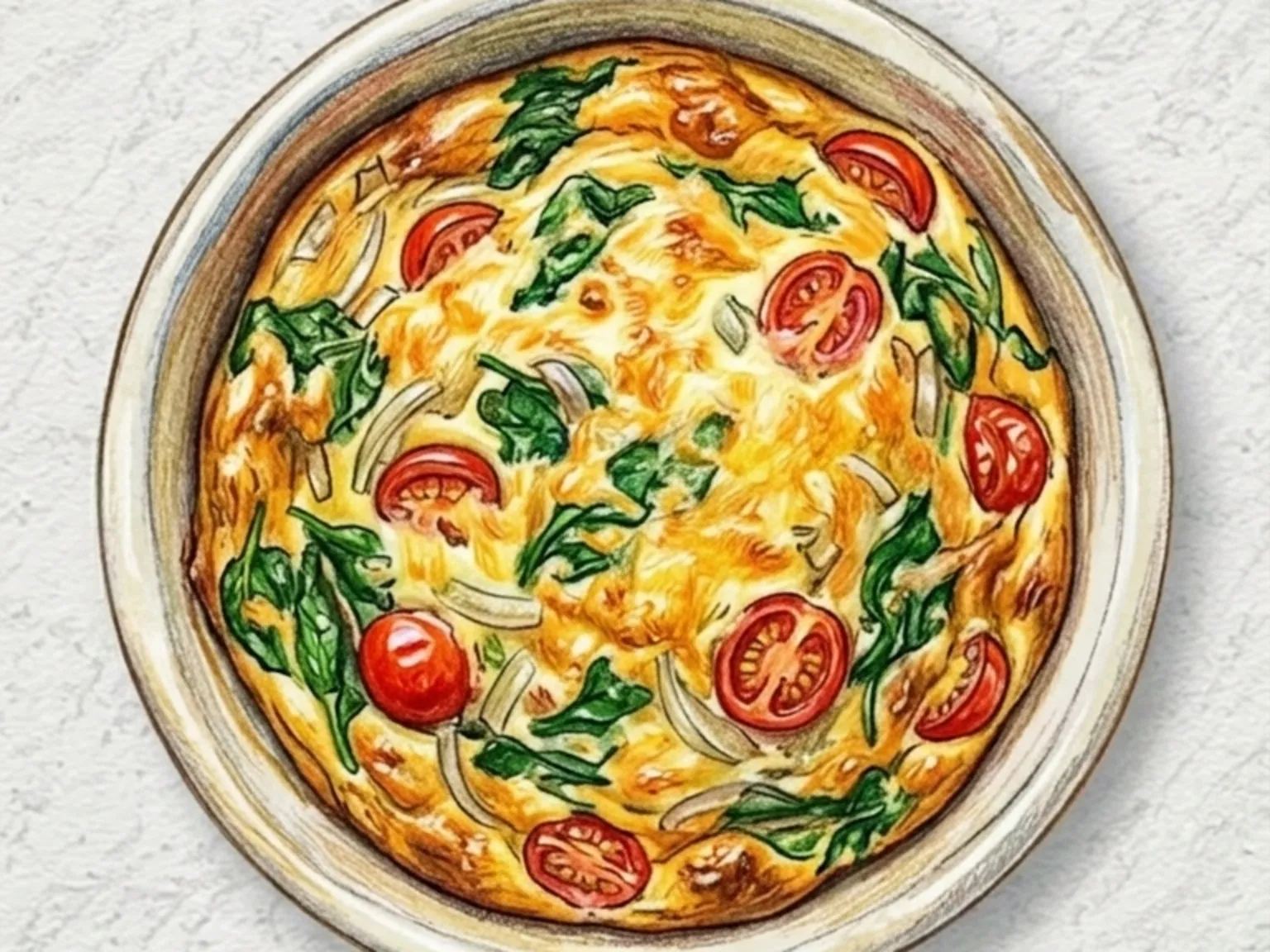
Frittata
Frittata whisks eight eggs with milk and salt, then builds layers of flavor on the stovetop before finishing in the oven. Onion is sautéed in olive oil in an oven-safe pan, followed by spinach and halved cherry tomatoes cooked just enough to soften. The egg mixture is poured over the vegetables and left undisturbed until the edges begin to set. Grated cheddar cheese goes on top before the pan moves to a 190-degree oven for ten minutes, where the frittata puffs and cooks through evenly. It is done when the center springs back gently to the touch. Over-whisking the eggs introduces too many air bubbles and can make the texture coarse rather than tender. Leftovers taste great cold in sandwiches the next day.
Adjust Servings
Instructions
- 1
Preheat oven to 190C.
- 2
Whisk eggs, milk, and salt until combined.
- 3
Heat olive oil in an oven-safe pan and saute onion.
- 4
Add spinach and cherry tomatoes, cook briefly, then pour in egg mixture.
- 5
When edges set, add cheese and bake for 10 minutes.
- 6
Remove when center is just set, rest briefly, then slice.
As an Amazon Associate, we may earn from qualifying purchases.
Tips
Nutrition (per serving)
More Recipes

Antipasto Salad
Antipasto - literally 'before the meal' in Italian - is a course of cured meats, cheeses, olives, and preserved vegetables served at the start of an Italian dinner, and this salad reformats that tradition into a single composed bowl. Crisp romaine or iceberg lettuce forms the base, topped with sliced salami, capicola, provolone, marinated artichoke hearts, roasted red peppers, and briny Kalamata olives. A red wine vinegar dressing with dried oregano and garlic ties the components together with a sharp, herbal acidity. The salad works because every ingredient brings a different intensity - salty cured meat, tangy cheese, sweet peppers, and bitter greens - so no two bites taste the same. Italian-American delis in New York and New Jersey popularized this format in the mid-20th century, and it has since become a fixture of catered lunches and family gatherings.

Salmon Piccata
Salmon piccata is an Italian fish dish where salmon fillets are seasoned, dusted in a thin layer of flour, and pan-seared in olive oil until golden on both sides. The flour coating promotes a Maillard crust on the surface while sealing moisture inside the flesh. Melting butter in the same pan and deglazing with lemon juice and chicken stock dissolves the caramelized fond into a bright sauce. Capers add bursts of briny saltiness that meet the lemon's acidity to create the piccata sauce's signature sharp, savory character, cutting cleanly through the salmon's rich fat. Because salmon dries out quickly when overcooked, the final step of returning it to the sauce should last no more than two minutes.

Mushroom Risotto
Mushroom risotto cooks unwashed arborio rice in olive oil and butter to activate the surface starch, then adds warm chicken stock one ladle at a time over 18 to 20 minutes of continuous stirring. Not rinsing the rice is essential - the starch released during cooking is what creates the signature creamy consistency without any cream. The mushrooms are sauteed on high heat until their moisture evaporates and they develop a deep brown color, which concentrates the earthy aroma. White wine is added to the toasted rice and stirred until absorbed, leaving behind a subtle acidity once the alcohol cooks off. Finishing off the heat with cold butter and grated Parmesan - a step called mantecatura - gives the risotto its glossy, velvety texture.

Pasta Primavera
Pasta primavera is a vegetable-forward Italian pasta that stir-fries broccoli, zucchini, bell pepper, and green peas in olive oil with garlic. Each vegetable is cut to a similar size and cooked in sequence to maintain distinct textures. Pasta water emulsifies the dish into a light, glossy coating without the need for heavy cream or butter. Parmesan is folded in off-heat to prevent clumping, keeping the finish clean and fresh.

Minestrone
Minestrone is an Italian home-style soup that sautees onion, carrot, celery, and zucchini in olive oil, then simmers them with crushed tomatoes and vegetable stock before adding kidney beans and short pasta. Its greatest strength is flexibility - virtually any leftover vegetable works, and there is no single correct combination. The beans add protein and body, while the tomato's acidity forms the backbone of the broth. Cooking the pasta directly in the soup releases starch that naturally thickens the liquid. Finishing with fresh basil and a drizzle of olive oil preserves the herb's fragrance. Minestrone improves overnight as the vegetable flavors continue to meld into the broth, making it an ideal make-ahead meal.

Chicken Saltimbocca (Prosciutto and Sage Italian Chicken Sauté)
Chicken saltimbocca lays sage leaves and prosciutto over pounded chicken breast, sears the assembly in a pan, then finishes with a sauce made from white wine, chicken stock, and butter. The name means 'jumps in the mouth' in Italian, referring to how the salty depth of prosciutto and the aromatic intensity of sage leap out against the mild chicken. Dusting only the non-prosciutto side with flour gives the pan-contact surface a light crust while the prosciutto side crisps directly and the sage fries in the rendered fat. Deglazing with wine lifts the fond from the pan, and reducing it with stock by half concentrates the sauce into a glossy coating. Whisking in cold butter at the end emulsifies the liquid into a smooth, shiny finish.