Gado-Gado (Indonesian Peanut Salad)
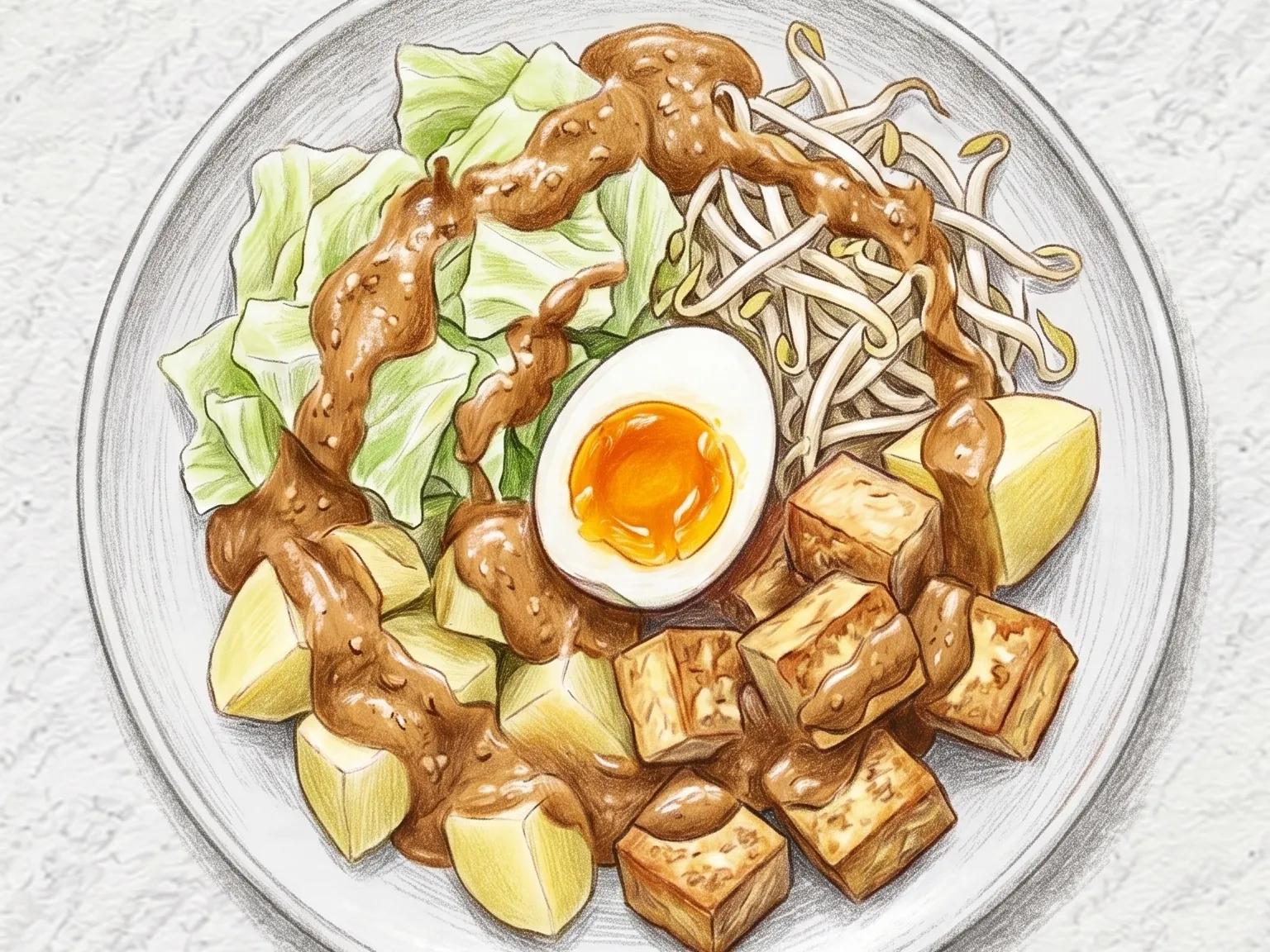
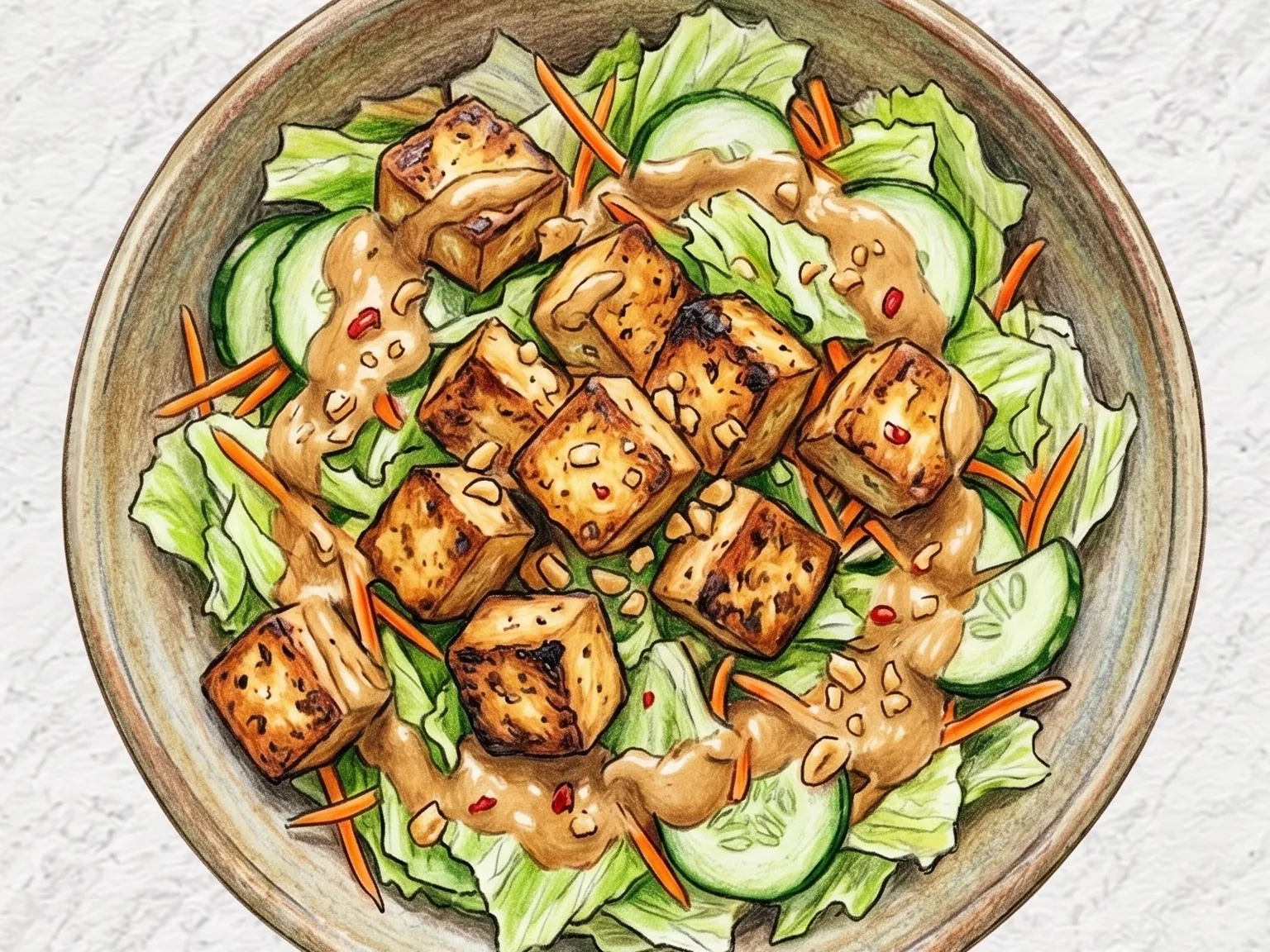
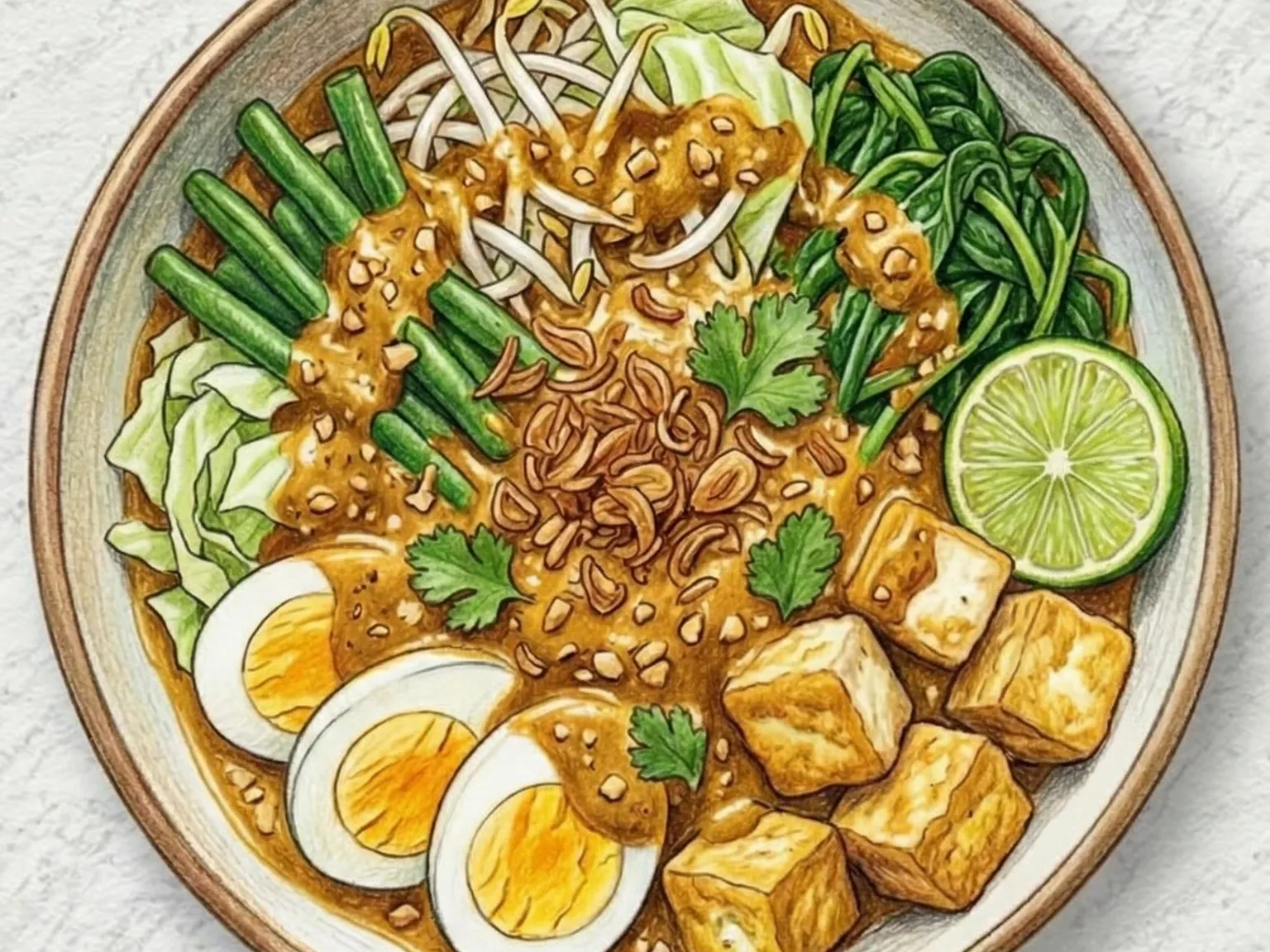
Gado-gado means 'mix-mix' in Javanese, and true to its name, it is a composed salad of mixed blanched vegetables, protein, and a thick peanut dressing eaten at any time of day across Indonesia. Blanched spinach, bean sprouts, cabbage, and boiled potato share a plate with hard-boiled egg, fried tofu, and fried tempeh, all dressed generously with a peanut sauce made by grinding roasted peanuts with chili, garlic, tamarind, palm sugar, and kecap manis. The sauce delivers a complete flavor system in itself - nutty, spicy, sour, and sweet - so no additional seasoning is needed. Crushed kerupuk (shrimp crackers) scattered on top add a shattering crunch that softens as the sauce soaks in, and that transition is part of the dish's evolving texture. Street vendors pound the peanuts fresh in a mortar for each order, filling the air around their cart with the smell of toasting nuts. Gado-gado flexes easily - all vegetables for a vegan version, or loaded with protein as a full meal.
Adjust Servings
Instructions
- 1
Dice and boil the potato, then blanch cabbage and bean sprouts for about 1 minute each and cool.
- 2
Pat dry the tofu, pan-sear until golden, and cut into bite-size pieces.
- 3
Mix peanut butter, soy sauce, palm sugar, lime juice, and a little water to make a thick sauce.
- 4
Arrange vegetables, potatoes, tofu, and boiled eggs on a serving plate.
- 5
Pour the peanut sauce generously just before serving and toss lightly.
As an Amazon Associate, we may earn from qualifying purchases.
Tips
Nutrition (per serving)
More Recipes

Gado-Gado Salad (Indonesian Peanut Sauce Veggie Plate)
Gado-gado salad is an Indonesian dish that gathers blanched cabbage, bean sprouts, boiled potato chunks, pan-seared firm tofu, and halved boiled eggs on one plate, then drenches them in a thick peanut sauce. The sauce blends peanut butter with lime juice and soy sauce, layering nuttiness over a tart, salty base that draws out the mild flavors of the vegetables and tofu. Each vegetable is blanched separately to control texture - cabbage stays crisp while bean sprouts keep their bite - and the tofu must be patted completely dry before searing so it holds together when tossed with sauce. If the sauce thickens too much on standing, a tablespoon or two of warm water loosens it back to a pourable consistency.

Nasi Uduk (Jakartan Coconut Lemongrass Pandan Steamed Rice)
Nasi uduk is a Jakartan coconut rice that serves as a staple breakfast across Indonesia. Rice is simmered in coconut milk with lemongrass, pandan leaves, and a pinch of salt, producing grains coated in a gentle coconut richness with herbal undertones. Though it shares the coconut-rice concept with Malaysian nasi lemak, nasi uduk has a milder coconut presence and comes with distinctly Indonesian accompaniments. Fried shallots scattered on top provide an aromatic crunch that defines the dish. Common sides include fried tempeh, seasoned chicken, omelette strips, and prawn crackers, each adding a different texture and flavor layer. Street vendors wrap portions in paper or banana leaf for a convenient morning meal.

Ayam Bakar (Indonesian Grilled Chicken in Sweet Soy Marinade)
Ayam bakar - literally 'roasted chicken' in Malay-Indonesian - is a staple at warungs and open-air grills across Java, Sumatra, and Bali, where the smoke of coconut-shell charcoal becomes part of the seasoning. The chicken is first simmered in a marinade of sweet soy sauce (kecap manis), garlic, coriander, turmeric, and lime juice until partially cooked and deeply stained. Then it moves to a hot grill where the sugar-heavy glaze caramelizes into dark, lacquered patches with a faint char. The result is sticky-sweet on the surface with a persistent spice warmth underneath, and the meat stays moist because of the pre-cooking step. Often served alongside steamed rice, raw cucumber, and a sambal that brings sharp chili heat to cut through the sweetness.

Ayam Penyet (Javanese Smashed Fried Chicken with Sambal)
Ayam penyet - meaning 'smashed chicken' in Javanese - is an East Javanese street dish where the chicken is deliberately flattened with a pestle after frying. First braised in turmeric-galangal water until cooked through, then deep-fried until the skin blisters and turns mahogany. The final smash on a stone mortar cracks the crust open, exposing the moist interior and creating irregular surfaces that catch the sambal. That sambal - pounded fresh from bird's eye chili, shallot, tomato, and shrimp paste - is the true centerpiece, fiercely hot and funky. Served on a banana leaf with steamed rice, fried tofu, and raw vegetables, it is a full meal assembled in street-stall speed.

Beef Rendang (Indonesian Dry Coconut Braised Beef Curry)
Rendang originated among the Minangkabau people of West Sumatra, where it was developed as a preservation method - cooking meat in coconut milk and spices until all moisture evaporates, allowing it to last for days in tropical heat without refrigeration. The process begins with a rempah paste of shallots, garlic, ginger, galangal, turmeric, and lemongrass pounded by mortar, then fried in coconut oil until the raw edge disappears. Beef chunks braise in coconut milk for two to three hours, during which the liquid reduces progressively - first a wet curry, then a thick sauce, and finally a dry coating where the coconut oil separates and fries the meat in its own spice crust. The finished pieces are dark brown, almost black at the edges, with a concentrated flavor that layers heat from chili, warmth from galangal, and a deep sweetness from the caramelized coconut. UNESCO recognized rendang as part of Minangkabau intangible heritage, and it consistently ranks among the world's most celebrated dishes.

Cold Sesame Noodles
Chilled noodles coated in a rich sesame-peanut sauce are a staple of Chinese-American cuisine. The dressing blends tahini or Chinese sesame paste with peanut butter, soy sauce, rice vinegar, and sesame oil into a thick, nutty emulsion that is simultaneously sweet, salty, tangy, and savory. After boiling, the noodles are rinsed in cold water to firm their texture and tossed with a drizzle of sesame oil to prevent clumping and add sheen. Julienned cucumber and sliced scallion provide freshness and crunch against the dense sauce. A pinch of chili flakes or a spoonful of chili oil can introduce heat for those who want it. The sauce keeps well in the refrigerator, so the dish can be assembled in minutes on a hot day. Leftover dressing doubles as a salad topping.