Korean Steamed Flounder (Whole Flatfish with Soy Garlic Sauce)

Korean Steamed Flounder (Whole Flatfish with Soy Garlic Sauce)

Quick answer

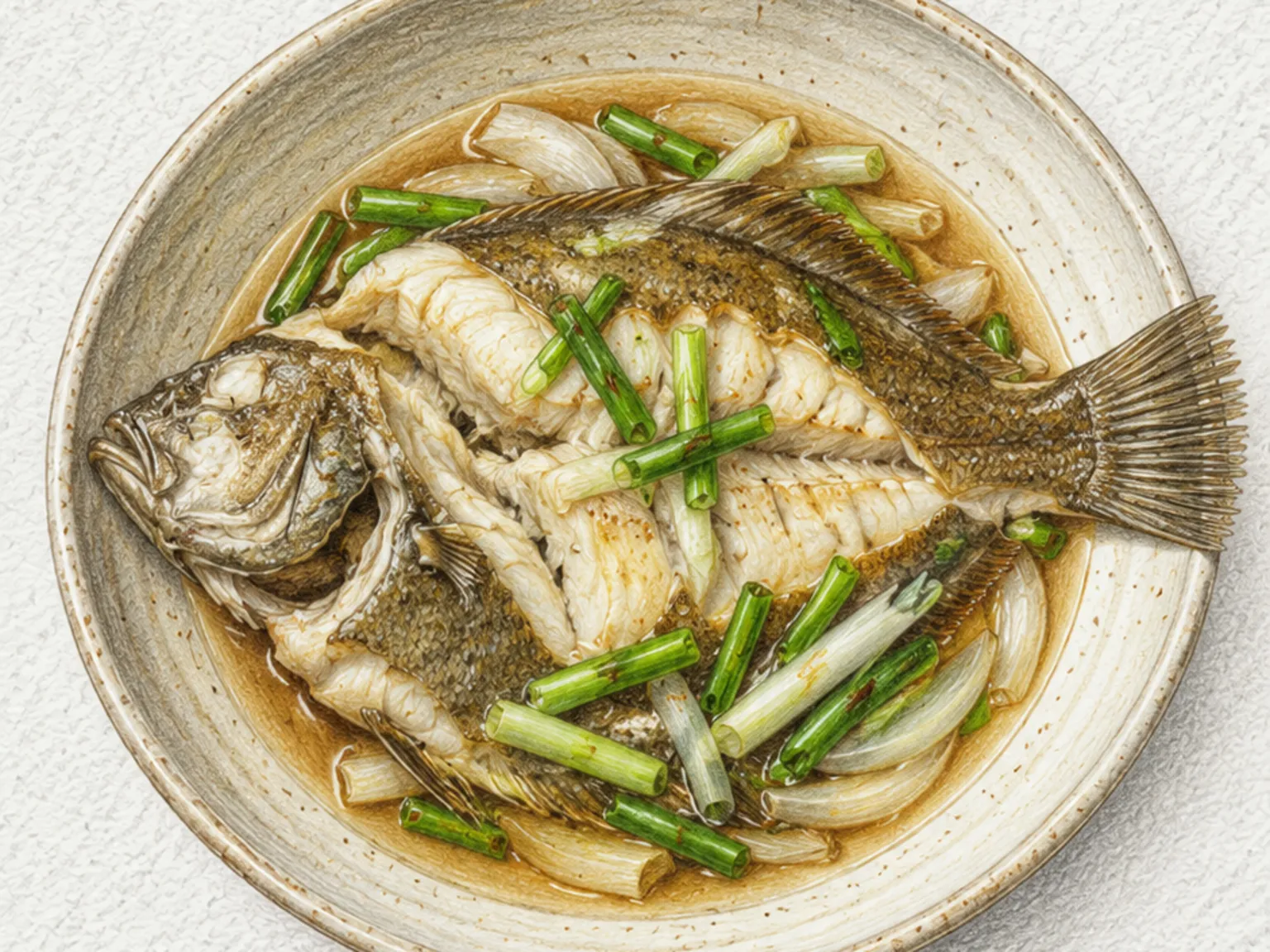
Gajami-jjim is a Korean steamed flounder dish prepared with a light soy sauce seasoning, onion, and green onion.

What makes this special

  • Gajami-jjim adds cheongju rice wine to control fishy notes in steamed whole nutty flounder.
  • Cheongju controls fishy notes while keeping flounder's natural nuttiness
  • Onion and scallion bed prevents sticking and infuses gentle aroma
Total time
35 min
Level
Easy
Servings
2 servings
Ingredients
7
Calories
260 kcal
Protein
33 g

Key ingredients

flounderoniongreen onionsoy sauceminced garlic

Core cooking flow

  1. 1 Remove the scales and guts from 600 g flounder, then rinse under running water until no blood remains.
  2. 2 Slice 80 g onion into pieces about 0.5 cm thick and spread them evenly over the steamer base.
  3. 3 Mix 1.5 tbsp soy sauce, 1 tsp minced garlic, and 1 tbsp rice wine in a small bowl.

Gajami-jjim is a Korean steamed flounder dish prepared with a light soy sauce seasoning, onion, and green onion. Rice wine is added during cooking to neutralize any fishiness while keeping the flesh moist. The seasoning is restrained-soy sauce and garlic provide just enough flavor without masking the flounder's naturally mild, clean taste. With its soft texture and few bones, this dish works well as an everyday banchan alongside rice and soup.

Prep 15min Cook 20min 2 servings

Instructions

Read the steps as a cooking flow: prep, heat, seasoning, doneness control, and finish.

6 steps
  1. 1
    Control

    Remove the scales and guts from 600 g flounder, then rinse under running water until no blood remains.

    Pat the outside and belly cavity very dry with paper towels to reduce fishiness before steaming.

  2. 2
    Prep

    Slice 80 g onion into pieces about 0.5 cm thick and spread them evenly over the steamer base.

    This onion layer keeps the fish from touching the bottom directly and helps prevent the delicate flesh from breaking.

  3. 3
    Season

    Mix 1.5 tbsp soy sauce, 1 tsp minced garlic, and 1 tbsp rice wine in a small bowl.

    Place the prepared flounder on the onion layer without overlapping, then spoon the seasoning evenly over the fish.

  4. 4
    Control

    Pour 250 ml water into the pot and bring it to a strong boil over high heat.

    Once steady steam rises, set the steamer in place, cover tightly, and steam over medium-high heat for 12 minutes.

  5. 5
    Prep

    Check the fish after 12 minutes.

    The flounder is done when the flesh turns white and opaque; gently open the thickest part with chopsticks to make sure no translucent flesh remains.

  6. 6
    Finish

    Slice 50 g green onion diagonally, scatter it over the fish, and steam for 2 more minutes.

    Do not leave the flounder in the covered steamer too long; transfer it promptly and serve with the remaining sauce.

After the steps

Pick a recipe that fits this dish.

Continue with shared ingredients, meal pairings, or a similar method.

Recipes That Go Well With This

More Steamed →

Based on shared ingredients and meal pairing

Korean Steamed Pomfret (Whole Fish with Soy Ginger Sauce)
Shared ingredient: green onion Steamed

Korean Steamed Pomfret (Whole Fish with Soy Ginger Sauce)

Whole pomfret is gently steamed with soy sauce, rice wine, ginger, and green onion into a clean, mild preparation. Pomfret has thin, delicate flesh that separates from the bone with little effort after steaming, making it easy to eat. Ginger and green onion together neutralize any fishiness while the soy sauce provides subtle salt and a light color. A thin drizzle of sesame oil at the end adds a toasted, nutty aroma without masking the fish. The result is a non-spicy, low-fat dish that works well for a wide range of diners.

Samchi Jjim (Korean Steamed Spanish Mackerel)
Shared ingredient: green onion Steamed

Samchi Jjim (Korean Steamed Spanish Mackerel)

Samchi jjim is a Korean steamed-braised Spanish mackerel dish cooked over radish slices with soy sauce, garlic, and cooking wine. The radish cushions the fish from direct heat while releasing a clean sweetness into the braising liquid, and soy sauce seasons the delicate flesh evenly. Because the mackerel is soft and flaky, it is never flipped; instead the sauce is spooned over it repeatedly. Green onion and fresh chili are added at the end for a pop of color and gentle heat. Paired with rice and a ladle of the reduced sauce, it highlights the clean flavor of the fish alongside soy-based umami.

Korean Yangbaechu Kkae Bokkeum (Sesame Cabbage Stir-fry)
Serve together Side dishes

Korean Yangbaechu Kkae Bokkeum (Sesame Cabbage Stir-fry)

Shredded cabbage, onion, and carrot are stir-fried over high heat with soup soy sauce and finished with sesame oil and a generous handful of toasted sesame seeds. Cabbage benefits from fast, hot cooking: the edges char lightly and caramelize while the interior retains its crisp bite, and the heat unlocks a gentle natural sweetness hidden in the raw leaves. Soup soy sauce seasons the vegetables with depth while keeping the finished dish pale and clean-looking, and minced garlic stirred in early fills the pan with fragrance. Carrot goes into the pan first to draw out its sugar, and as the onion softens, its moisture deglazes the surface and adds another layer of mellow sweetness. Sesame oil drizzled off-heat coats the vegetables in a nutty sheen, and the sesame seeds scattered on top provide a crunchy, aromatic punctuation with every bite. The dish is lean and uncomplicated, relying on the quality of fresh vegetables and precise timing rather than heavy seasoning, making it a banchan suited to daily meals.

Korean Steamed Yellow Croaker
Similar recipe Steamed

Korean Steamed Yellow Croaker

Jogi-jjim is a steamed Korean yellow croaker banchan built around a two-stage cooking method that drives soy sauce, cooking wine, garlic, and ginger deep into the flesh. Scoring the fish on both sides before cooking is essential: the cuts open channels so the marinade reaches the interior rather than sitting on the surface. Half the sauce goes in first, and the fish steams until nearly done; then the remaining sauce and sliced green onion are added for a second round. Cooking wine and ginger together strip away fishiness, leaving the croaker clean and mild on the palate. The flesh is fine-grained and firm enough to pull apart in neat flakes with chopsticks without falling apart. Any sauce that collects in the pan spooned over rice makes the dish a complete meal without needing a separate soup.

Serve with this

Korean Spicy Dakgalbi Rice Bowl
Rice Easy

Korean Spicy Dakgalbi Rice Bowl

Dakgalbi deopbap serves the core flavors of Chuncheon's famous spicy chicken in a single rice bowl. Boneless chicken thigh is stir-fried alongside cabbage, onion, and green onion in a gochujang-based marinade balanced with sugar and a splash of soy sauce. The chicken is cooked over high heat throughout -- this creates a caramelized crust on the meat's surface and keeps the vegetables at a slight crunch rather than softening them completely. Sesame oil is added off the heat as a final step, contributing a toasty fragrance that rounds out the bold seasoning without overpowering it. At traditional dakgalbi restaurants in Chuncheon, the meal ends with fried rice made by mixing cooked rice directly into the residual sauce left on the hot iron plate -- this bowl captures that same moment in a format that can be made at home without a cast-iron griddle. The dish requires no banchan; the seasoned protein and vegetables together with the rice form a self-contained meal.

🏠 Everyday 🍱 Lunchbox
Prep 15min Cook 14min 2 servings
Korean Bangwool Yangbaechu Kimchi (Brussels Sprout Kimchi)
Kimchi Medium

Korean Bangwool Yangbaechu Kimchi (Brussels Sprout Kimchi)

Bangwool yangbaechu kimchi is a creative Korean kimchi made from halved Brussels sprouts, brined in salt and dressed with gochugaru, fish sauce, garlic, and apple. Brussels sprouts are denser than napa cabbage and hold their structure after salting, giving each bite a firm crunch that releases a natural sweetness as you chew. The combination of fish sauce and gochugaru builds a spicy-salty depth, while grated apple introduces a fruit sweetness that softens the chili heat without masking it. Scallions contribute a fresh note throughout. Because the sprouts are compact and less watery than cabbage, the kimchi ferments more slowly and stays crisp longer. It can be eaten right away as a fresh kimchi, or left to ferment for several days as the flavors deepen. In season from autumn through early spring, this kimchi suits both traditional Korean meals and modern brunch spreads.

🍱 Lunchbox 🏠 Everyday
Prep 30min 4 servings
Korean Spicy Pollock Stew
Soups Medium

Korean Spicy Pollock Stew

Dongtae-tang is a Korean spicy fish stew made with frozen pollock (dongtae), radish, tofu, and green onion in a broth seasoned heavily with gochugaru. The first step is simmering radish on its own long enough to release its clean, slightly sweet character into the base -- this foundation determines the clarity and depth of the finished broth. Once the radish has cooked through, gochugaru, soup soy sauce, and minced garlic are added to transform the pale stock into a vivid red, peppery liquid. The pollock is cleaned of scales and fins after thawing, then cut into large pieces so the flesh stays intact through the cooking process. After the fish is added, the stew should not be cooked for more than ten minutes: beyond that point, compounds from the bones leach into the broth, producing a bitter, fishy aftertaste that is difficult to correct. Cheongyang chili peppers add a sharper, more piercing heat than gochugaru alone -- a thin-sliced variety provides brief, concentrated bursts of spice. Tofu goes in during the last five minutes, giving it enough time to absorb the spiced broth without breaking apart. The seasoning the tofu draws in softens and rounds out the intensity of the soup, providing a mild counterpoint to the fish and the heat. The stew carries a bracing, satisfying quality and is especially popular during winter months.

🏠 Everyday
Prep 20min Cook 30min 4 servings

Similar recipes

Korean Steamed Octopus (Whole Salted Radish Broth)
Steamed Medium

Korean Steamed Octopus (Whole Salted Radish Broth)

Muneo-jjim is a Korean steamed whole octopus dish prepared by scrubbing the octopus vigorously with coarse salt to remove slime and any off-odor, then cooking it in a pot layered with radish and green onion. Submerging the head end first and lifting it in and out of the boiling water two or three times causes the tentacles to curl inward naturally, resulting in an attractive presentation before the full cook begins. Simmering for about fifteen minutes and then resting off the heat with the lid on produces a texture that is springy and chewy without turning tough. The radish adds mild sweetness to the water while green onion draws out any fishiness, so the resulting broth carries a clean, subtle depth of its own. Once cooked, the octopus is sliced on the diagonal into manageable pieces and served with a simple dipping sauce of sesame oil mixed with salt. That combination lets the octopus's natural ocean flavor and nuttiness come through without interference. The dish works equally well as a drinking accompaniment or an everyday banchan, and the technique scales from a small arm to a full-sized octopus without adjustment.

🍺 Bar Snacks 🎉 Special Occasion
Prep 20min Cook 25min 4 servings
Korean Braised Butterfish
Stir-fry Medium

Korean Braised Butterfish

Byeongeo jorim is a Korean braised fish dish in which scored butterfish is set on a bed of sliced radish and slowly cooked in a soy-gochugaru braising liquid with garlic and ginger. Scoring the fish allows the seasoning to penetrate to the center of each fillet. The radish layer on the pot bottom serves two purposes: it cushions the delicate fish to prevent it from sticking and breaking apart, and it absorbs the braising liquid as it cooks, becoming a deeply savory, slightly sweet side dish on its own. Butterfish flesh is exceptionally fragile, so the fillets are never flipped during cooking. Instead, the braising liquid is spooned continuously over the surface to ensure even heat and even seasoning on top. Ginger added at the start neutralizes any fishiness, and gochugaru provides a mild, building heat that adds complexity to the clean flavor of the fish without masking it. Scallion pieces dropped in during the final two minutes release fragrance into the steam, rounding out the aromatic profile of the finished dish. At 330 calories and 31 grams of protein per serving, byeongeo jorim is a lean, nutritionally complete main course that pairs naturally with steamed rice.

🏠 Everyday 🍱 Lunchbox
Prep 15min Cook 20min 2 servings
Korean Gwangeo Yuja Ganjang Gui (Yuja Soy Grilled Flounder)
Grilled Medium

Korean Gwangeo Yuja Ganjang Gui (Yuja Soy Grilled Flounder)

Gwangeo yuja-ganjang-gui is a Korean grilled flounder dish where fillets are brushed with a glaze of soy sauce, yuzu marmalade, minced garlic, and ginger juice, left to marinate for ten minutes, then cooked in olive oil over medium heat for three minutes per side. The yuzu marmalade introduces a bright citrus acidity that sits cleanly on top of the soy sauce depth, building a layered flavor profile over the neutral, clean-tasting flesh of the flounder. The two elements do not compete: the soy provides the savory foundation and the yuzu supplies the brightness that keeps the dish from feeling heavy or monotonous. Brushing the remaining glaze over the fish during a final two to three minutes on low heat is what creates the glossy, lacquered sheen on the surface, caramelizing slightly as the sugars in the yuzu marmalade concentrate and reduce against the hot pan. Lemon zest and thinly sliced green onion scattered over the finished fish add a final layer of fragrance that lifts the dish just before serving. Flounder is a delicate fish with thin fillets that break easily if handled carelessly, so flipping the fish only once with a wide spatula in a single, confident motion is the technique that keeps the flesh intact and the presentation clean. The combination of fermented soy and citrus suits the mild white fish without masking its natural flavor.

🍺 Bar Snacks 🏠 Everyday
Prep 18min Cook 14min 2 servings

Tips

Flounder overcooks quickly, so watch the time closely.
The leftover sauce is great mixed with rice.

Nutrition (per serving)

Calories
260
kcal
Protein
33
g
Carbs
5
g
Fat
11
g