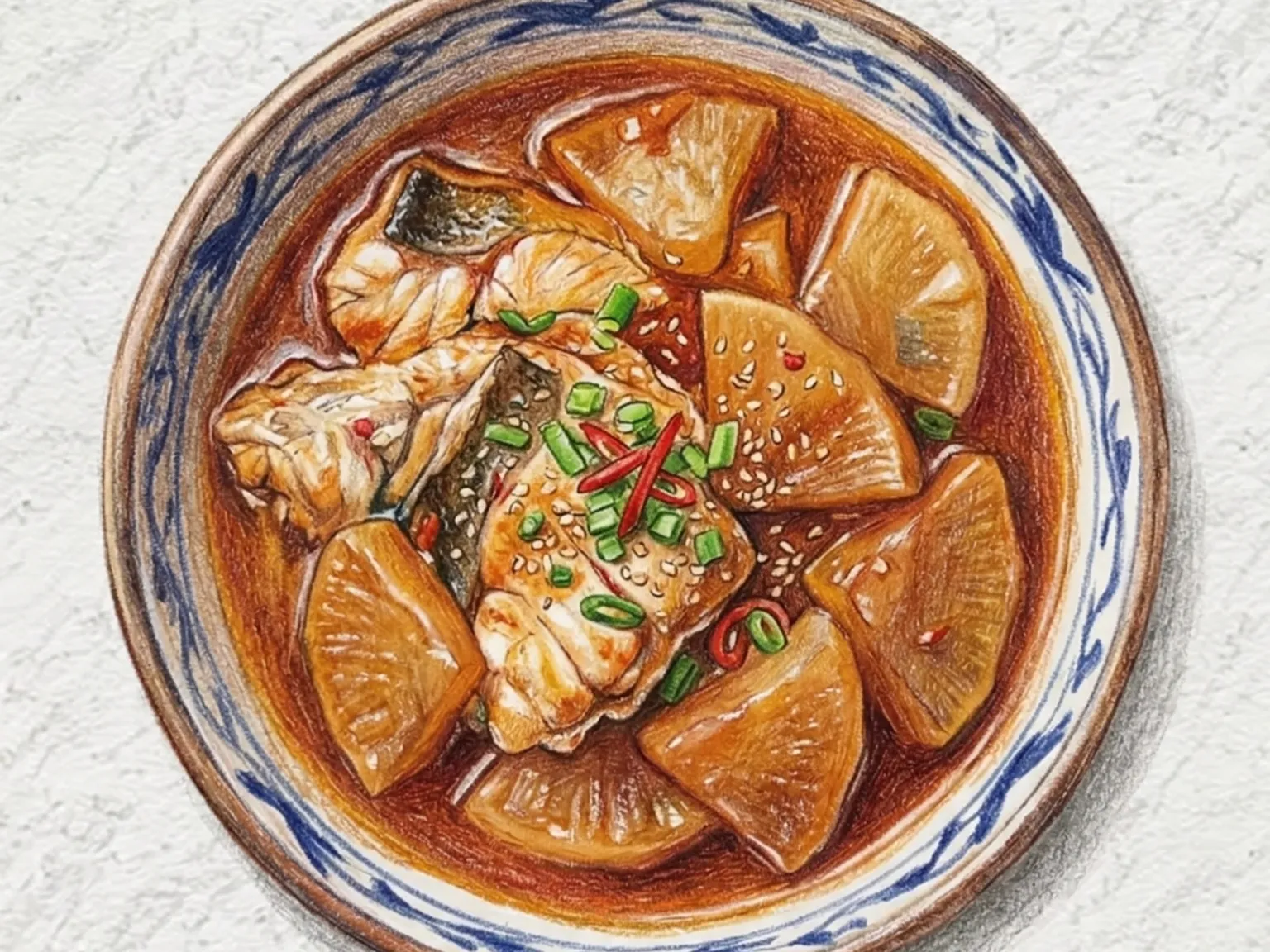
Korean Braised Flounder with Radish
Gajami-jorim is a Korean braised flounder dish where the fish is gently simmered with Korean radish in a soy sauce and chili flake broth. The delicate flounder flesh absorbs the seasoning while careful low heat keeps it from breaking apart. The radish serves a dual purpose, neutralizing any fishiness while contributing a clean, refreshing sweetness to the braising liquid. Spooning the reduced sauce over rice makes it a complete, standalone meal.
Adjust Servings
Instructions
- 1
Clean flounder and pat dry.
- 2
Place radish in a pot, add water and seasonings, and bring to a boil.
- 3
Add flounder once radish starts turning translucent.
- 4
Braise over medium heat for 10 minutes, spooning sauce over fish.
- 5
Add chili and green onion, then cook 3 more minutes.
- 6
Turn off heat when sauce is reduced and serve.
As an Amazon Associate, we may earn from qualifying purchases.
Tips
Nutrition (per serving)
More Recipes

Korean Braised Yellow Croaker
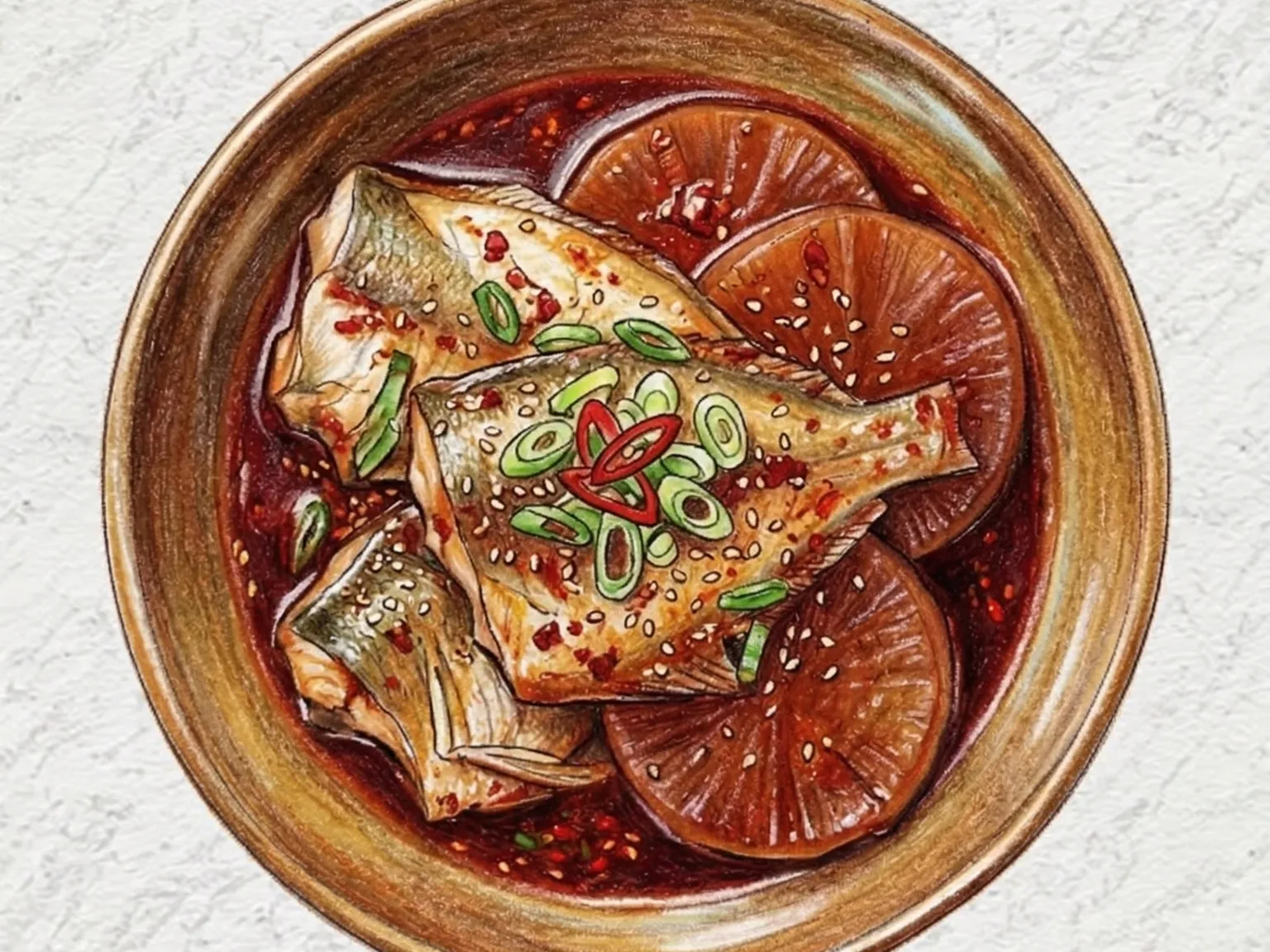
Jogi-jorim is a Korean braised yellow croaker simmered with radish and onion in a soy sauce and gochugaru seasoning. Yellow croaker has delicate flesh and mild flavor, making it well-suited for braising as the sauce penetrates the fish thoroughly. The radish absorbs the braising liquid and turns sweet-savory, while cheongyang chili adds a low, steady heat. It is a quintessential Korean rice-side dish - the sauce is so flavorful that diners inevitably mix it into their rice.

Korean Braised Flounder with Radish
Gajami mu jorim is a Korean braised flounder dish cooked with thick slices of Korean radish in a soy sauce and gochugaru broth. The radish absorbs the spicy, savory braising liquid as it softens, becoming just as prized as the fish itself. Hot green chili adds an extra kick of heat that balances the natural sweetness of the radish. The remaining sauce is rich enough to spoon over steamed rice, making it a satisfying one-bowl meal when paired with a few simple side dishes.

Korean Soy-Braised Rockfish
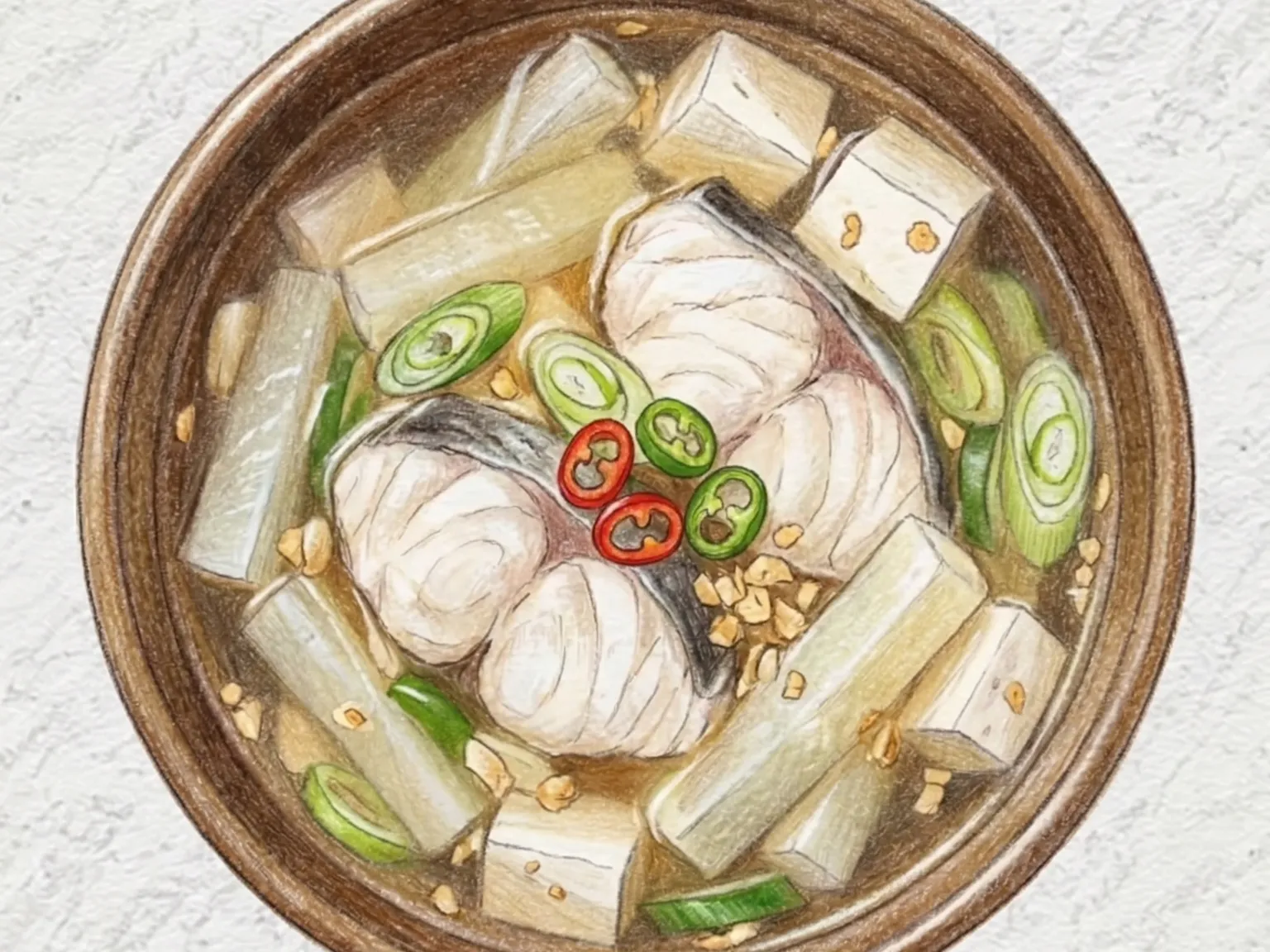
Ureok-jorim is a Korean soy-braised rockfish simmered with Korean radish, gochugaru, garlic, and rice wine. The radish goes in first and softens in the braising liquid before the cleaned whole fish is placed on top and basted with sauce over medium heat for ten minutes. Rice wine neutralizes any fishiness, while the radish absorbs the salty braising liquid and releases its own sweetness to balance the seasoning naturally. The rockfish flesh stays mild and flakes in soft layers, with gochugaru lending a gentle warmth to the overall dish.

Korean Braised Mackerel with Radish
This Korean braised mackerel dish layers radish at the bottom of the pot, pre-cooks it to absorb seasonings deeply, then places mackerel on top to simmer in a spicy soy-gochugaru sauce. Basting the fish with the braising liquid several times throughout cooking ensures the flavors penetrate evenly while the ginger in the sauce tames any fishiness. The radish turns soft and translucent, soaking up the spicy-savory broth and serving as a flavorful bed beneath the flaky fish. Green onion and onion, added toward the end, contribute a fresh lift. The slightly reduced sauce at the finish is rich enough to drizzle over rice.

Korean Braised Chicken with Radish
This braise combines bone-in chicken pieces with Korean radish and potato in a soy-and-gochugaru sauce. The radish absorbs both the chicken stock and the spiced seasoning, turning amber on the outside while going translucent within. Potato edges break down during the long simmer, thickening the sauce into a sticky glaze. Gochugaru and black pepper build a layered heat that soy sauce and sugar round off, so the dish is assertively spicy without being harsh. Reducing the liquid until it barely coats the bottom concentrates all the flavors onto the surface of each piece.

Korean Braised Monkfish in Spicy Soy Sauce
Agwi-jorim - braised monkfish - is a gentler preparation than the fiery agu-jjim, focusing on a soy-based braising sauce rather than a chili-paste coating. Thick slices of Korean radish line the bottom of the pot, cooking first to release their natural sweetness into the liquid. The monkfish goes on top and simmers covered in a mixture of soy sauce, gochugaru, garlic, and water that reduces slowly into a concentrated glaze. The radish acts as both a buffer preventing the delicate fish from sticking and a flavor sponge that becomes the best part of the dish. As the liquid reduces, the sauce thickens and stains both fish and radish a deep amber. The finished dish has a more balanced, less aggressive flavor profile than agu-jjim, with soy saltiness and radish sweetness in equal proportion to the chili heat.