Korean Flounder Seaweed Soup
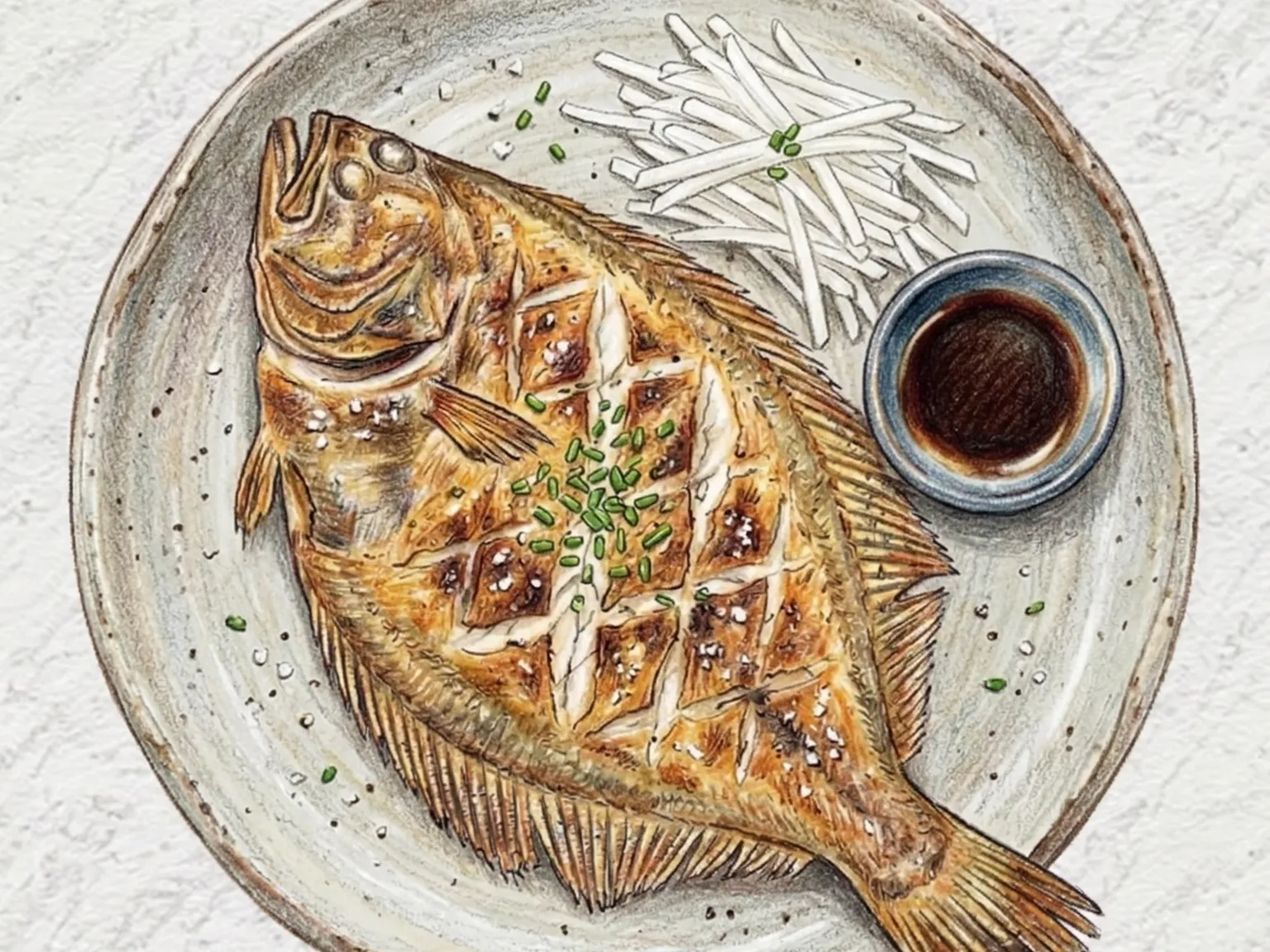
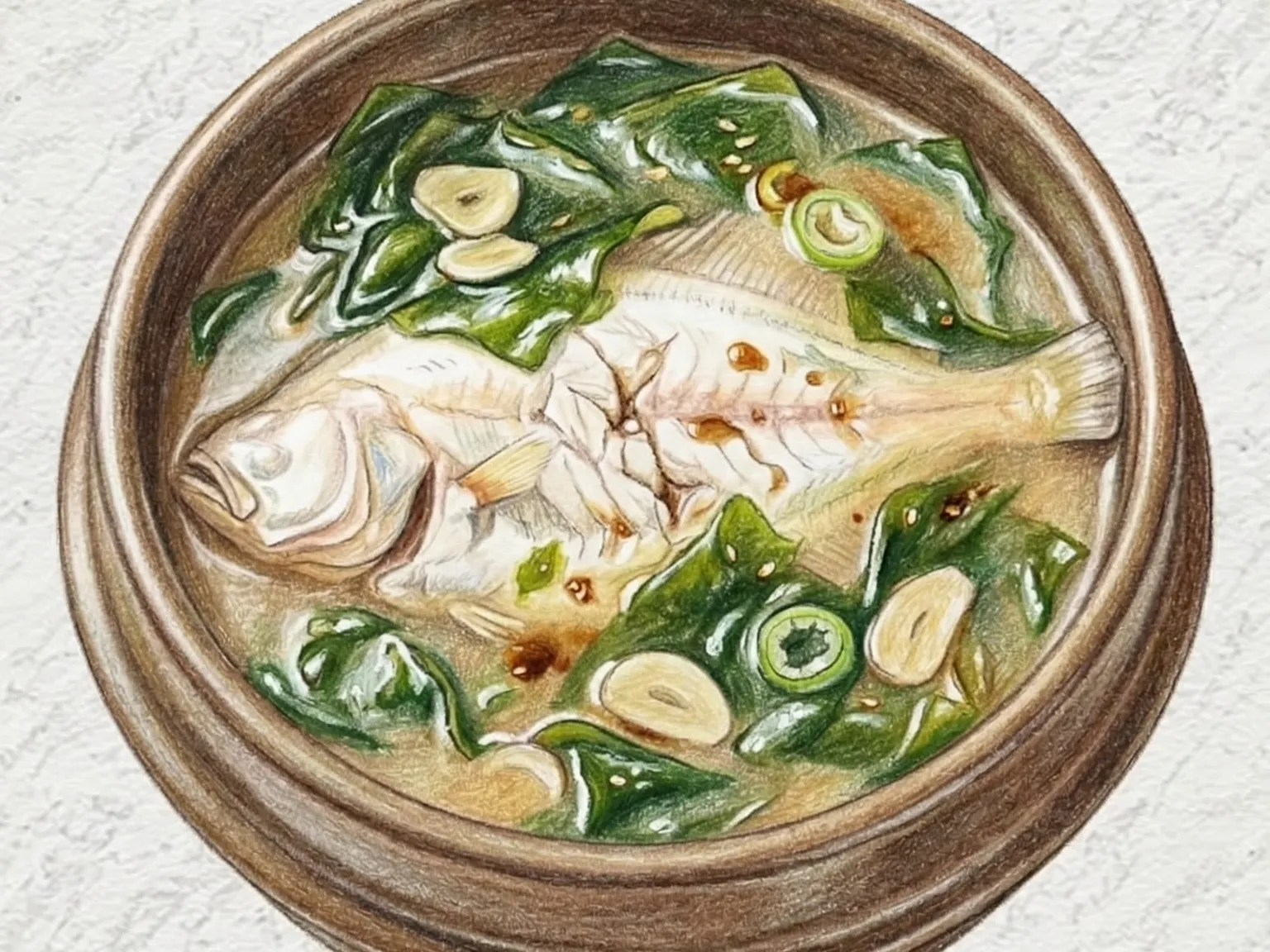
Gajami miyeok-guk is a seaweed soup centered on a whole flounder. Rehydrated seaweed is stir-fried in sesame oil first to deepen its fragrance, then the fish is added with water and simmered until the broth turns milky from the gelatin in the bones. Soy sauce and garlic are the only seasonings, keeping the focus on the flounder's mild sweetness and the mineral taste of the seaweed. Blanching the fish briefly before adding it to the pot removes any lingering fishiness, leaving a clean, nourishing bowl.
Adjust Servings
Instructions
- 1
Soak seaweed for 20 minutes, then cut into bite-sized pieces.
- 2
Stir-fry seaweed in sesame oil.
- 3
Add water and flounder; bring to a boil.
- 4
Season with soy sauce and garlic.
As an Amazon Associate, we may earn from qualifying purchases.
Tips
Nutrition (per serving)
More Recipes

Korean Oyster Seaweed Soup
Gul-miyeok-guk is a Korean seaweed soup enriched with fresh oysters, traditionally eaten for postpartum recovery and birthday celebrations. The cooking begins by sautéing rehydrated seaweed and oysters together in sesame oil, a step that coats every strand and shell in a nutty fragrance before water is added. As the soup simmers, the seaweed releases minerals and a subtle brininess that merges with the oysters' own ocean flavor. Soup soy sauce and garlic keep the seasoning grounded. The winter months, when oysters are at their fattest, are the prime season for this version, and the contrast between the slippery seaweed and the firm oyster gives each spoonful a shifting texture.

Korean Fish Soup (White Fish and Radish Clear Broth)
Saengseon-guk is a traditional Korean fish soup made with white-fleshed fish and radish in a clear broth. The radish simmers first, building a base of natural sweetness, before garlic and soup soy sauce are added for depth. The fish goes in once the radish is halfway cooked, and timing matters - it should cook only until the flesh turns opaque and begins to flake, as prolonged boiling would break it apart and cloud the broth. Tofu and sliced Korean chili peppers join near the end, adding soft texture and a mild kick. Green onion finishes the bowl with a fresh note. The result is a light, transparent soup where the fish's own clean, marine flavor does most of the work. It is the kind of straightforward home cooking that appears on Korean dinner tables throughout the year, requiring little more than fresh fish and basic pantry staples.

Korean Mallow Soup (Joseon-Era Doenjang Mallow Soup)
Auk-guk - mallow doenjang soup - has been part of Korean home cooking since the Joseon era, when auk (mallow) was one of the most commonly grown leafy greens in household gardens. The soup starts with an anchovy-kelp stock that provides a clean umami foundation. Doenjang is pushed through a sieve into the simmering broth to dissolve evenly without lumps, and garlic adds a quiet pungency beneath the fermented paste. Mallow leaves, torn by hand into rough pieces, wilt into the broth in under a minute. What sets auk-guk apart from other doenjang-guks is the mallow's distinctive texture - the leaves have a natural mucilage that gives the soup a slightly thickened, slippery quality on the tongue, unlike the clean broth of a spinach or radish version. Traditionally associated with nursing mothers in Korean folk wisdom, who ate it to promote milk production. The soup is at its best in early summer when fresh mallow is at peak tenderness.

Korean Clam Doenjang Soup
Bajirak doenjang guk is a Korean home-style soup where manila clams and doenjang combine to layer oceanic umami with fermented soybean depth. Starting the clams in cold water and bringing it to a boil draws their flavor out gradually, building a rich stock base as the temperature rises. The doenjang is dissolved through a strainer to keep the broth smooth and free of grainy particles, and its amount should be reduced from the usual quantity because the clams themselves contribute significant saltiness. Tofu and Korean zucchini add soft textures; the zucchini releases a gentle sweetness into the broth as it cooks through. Minced garlic harmonizes with the fermented aroma of the doenjang, and scallion added in the final minute preserves its fresh sharpness. No separate anchovy or kelp stock is needed because the clams provide enough umami on their own, making the soup's approach deliberately simple: just water, clams, and doenjang produce a broth with surprising depth.

Korean Seaweed Salad (Tangy Chili-Vinegar Dressed Miyeok)
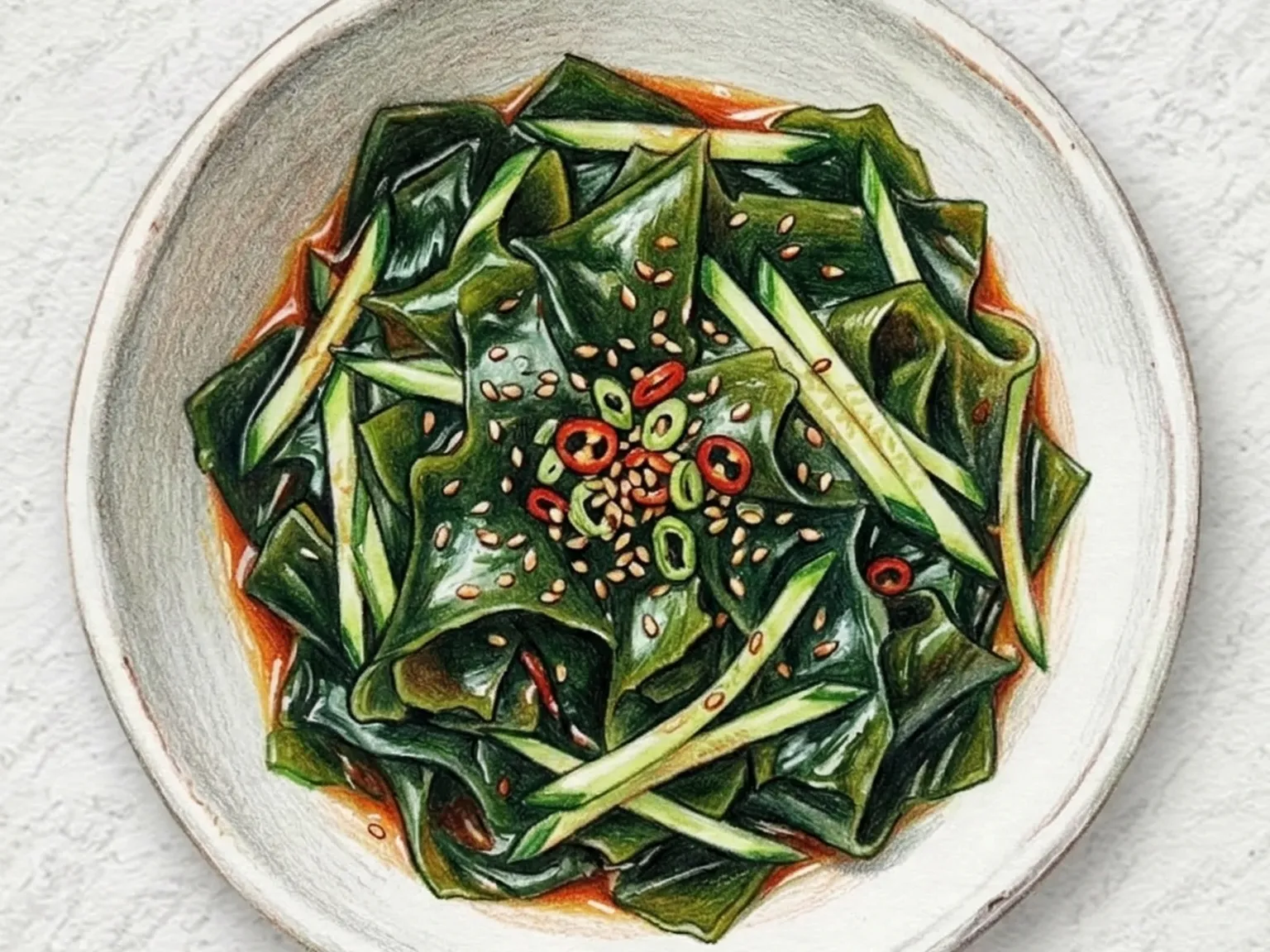
Miyeok-muchim is rehydrated seaweed dressed in cho-gochujang (vinegared chili paste) or cho-ganjang (vinegared soy sauce) - one of the most common ways Koreans consume miyeok outside of birthday soup. Thirty grams of dried miyeok expands eight to ten times its volume when soaked for twenty minutes, easily serving two - the most common beginner mistake is adding far too much dried seaweed. A brief blanch in boiling water deepens the color to a vivid green, reduces the marine odor, and a cold rinse afterward sets the slippery yet bouncy texture. Cho-gochujang dressing (gochujang mixed with vinegar and sugar) adds a sweet-sour-spicy layer that tempers the seaweed's natural brininess. Mixing in julienned cucumber creates a textural contrast between the silky seaweed and crunchy vegetable. At roughly fifty kilocalories per serving and rich in dietary fiber and iodine, this banchan is a mainstay of Korean health-conscious eating. Served chilled from the refrigerator, it is particularly refreshing in summer.

Korean Seasoned Seaweed Rice Bowl
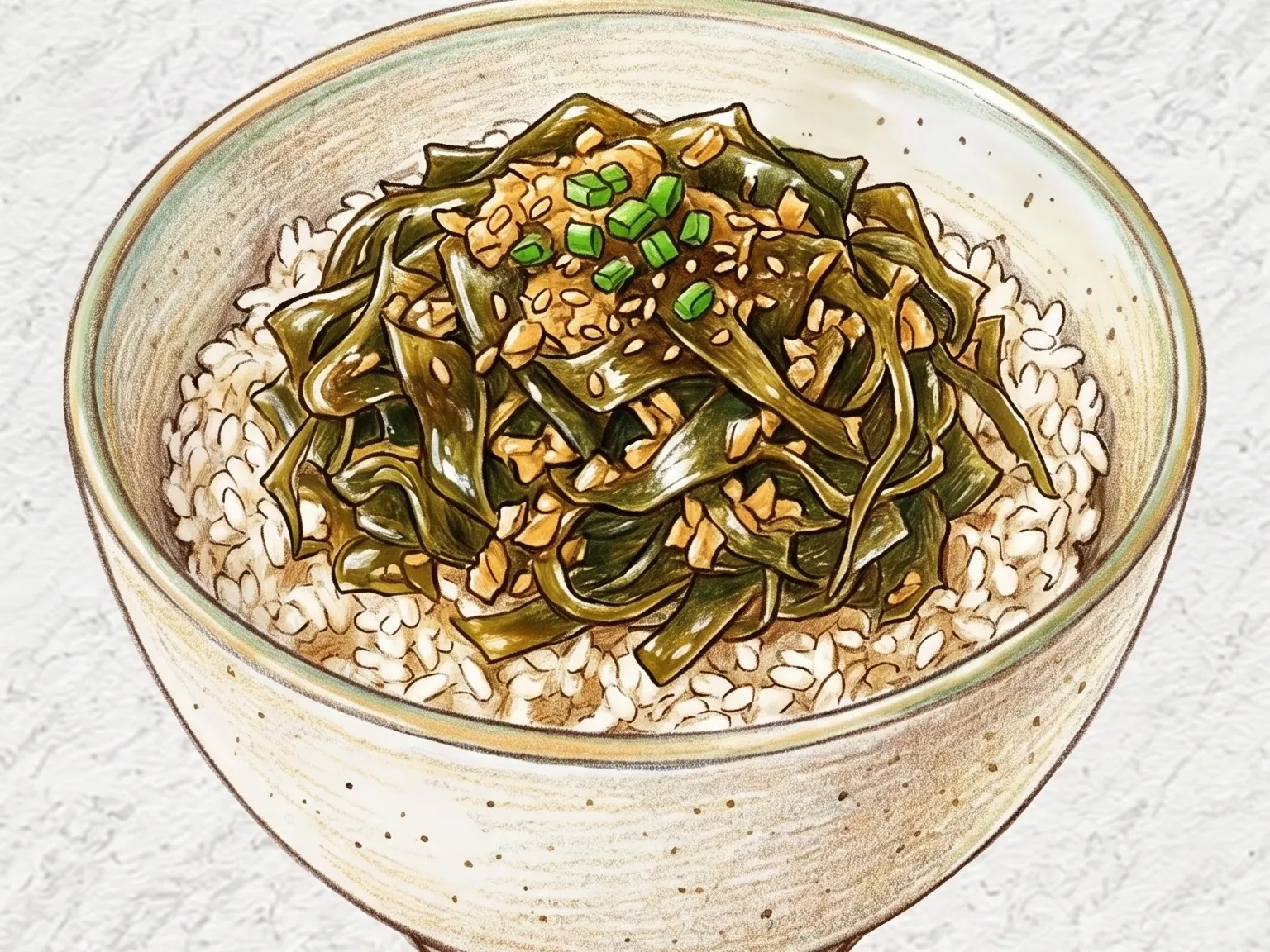
This seasoned seaweed rice bowl stir-fries rehydrated wakame with garlic in sesame oil, seasons it with soy sauce, and serves it over steamed rice. Soaking the seaweed until fully softened gives it a slippery yet slightly chewy texture that glides across the palate when eaten with rice. Toasting the garlic and seaweed together in sesame oil layers a nutty warmth over the sea-mineral base flavor. Soy sauce adds a savory edge that makes the bowl satisfying without any additional side dishes. With only five ingredients and minimal cooking time, this is one of the quickest Korean rice bowls to prepare, yet the mineral-rich character of the seaweed gives it a depth that belies its simplicity.