Korean Braised Flounder with Radish
Quick answer
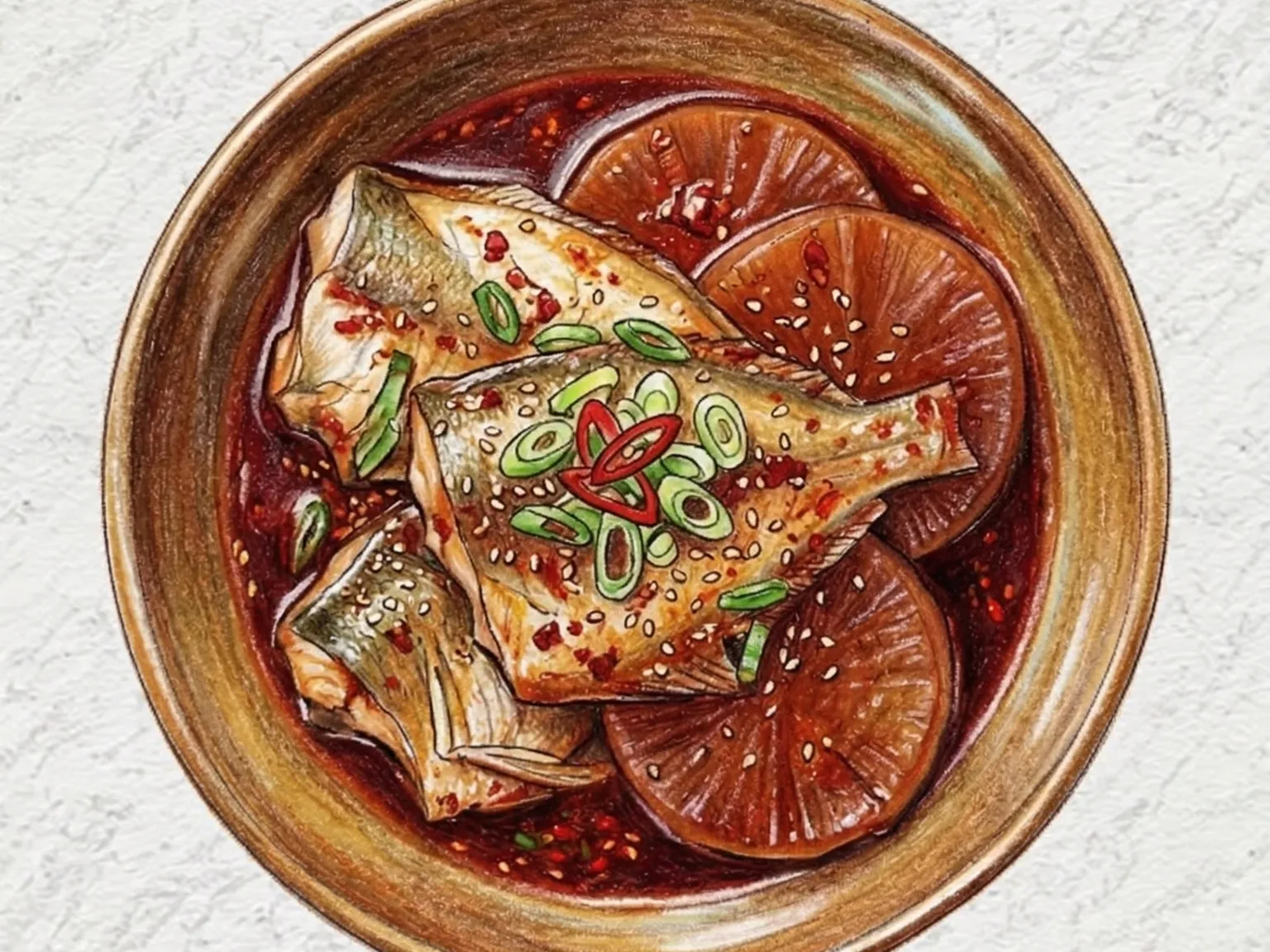
Gajami mu jorim is a Korean braised flounder dish in which flounder pieces and thick slices of Korean radish are cooked down together in a soy sauce and gochugaru broth u...
What makes this special
- Gajami mu jorim places radish to absorb both flounder fat and a spicy gochugaru seasoning.
- Radish absorbs both flounder's fat and spicy seasoning in a dual role
- Cheongyang and gochugaru create two-layered heat: sharp then lingering
Key ingredients
Core cooking flow
- 1 Clean 700 g flounder, sprinkle the surface lightly with salt, and rest 10 mi...
- 2 Slice 350 g radish into 1 cm half-moons, then cut 60 g green onion and 1 hot green chili diagonally.
- 3 Lay radish on the pot bottom, pour in 450 ml water, and simmer over medium h...
Gajami mu jorim is a Korean braised flounder dish in which flounder pieces and thick slices of Korean radish are cooked down together in a soy sauce and gochugaru broth until the liquid reduces to a concentrated, savory glaze. The radish absorbs the fat and juices released from the fish as it braises, soaking up the spicy seasoning until each slice becomes as flavorful and satisfying as the fish itself. Gochugaru and fresh Cheongyang chili provide a clean, penetrating heat, while soy sauce contributes deep umami and minced garlic adds a sharp aromatic backbone to the broth. Allowing the liquid to reduce until only a small amount remains thickens the sauce significantly, and spooning that concentrated braising liquid over plain steamed rice is one of the most common ways to finish the meal, with the sauce soaking into the grains and making it nearly impossible to stop eating. Flounder's naturally lean, delicate flesh, which pulls apart easily along the grain, pairs well with the extended braising method, which keeps the fish moist while infusing it with the bold seasonings. This combination of practical cooking technique and deep, satisfying flavor has made gajami mu jorim one of the most enduring everyday fish side dishes in Korean home cooking.
Instructions
Read the steps as a cooking flow: prep, heat, seasoning, doneness control, and finish.
- 1Season
Clean 700 g flounder, sprinkle the surface lightly with salt, and rest 10 minutes to draw out moisture and fishiness, then pat dry.
- 2Prep
Slice 350 g radish into 1 cm half-moons, then cut 60 g green onion and 1 hot green chili diagonally.
- 3Control
Lay radish on the pot bottom, pour in 450 ml water, and simmer over medium heat for 8 minutes until the radish starts to turn translucent.
- 4Season
Place the flounder on top and pour over the sauce mixed from 4 tbsp soy sauce, 1.5 tbsp gochugaru, 1.5 tbsp cooking wine, 1 tbsp garlic, and 1 tsp sugar.
- 5Control
Cover and braise over medium-low heat for 15 minutes, then add green onion and chili.
The fish is braised when the flesh starts to pull away from the bone.
- 6Finish
Spoon the braising liquid over the fish 2-3 times and reduce for 5 more minutes to finish.
After the steps
Pick a recipe that fits this dish.
Continue with shared ingredients, meal pairings, or a similar method.
Recipes That Go Well With This
More Steamed →Based on shared ingredients and meal pairing
Korean Braised Flounder with Radish
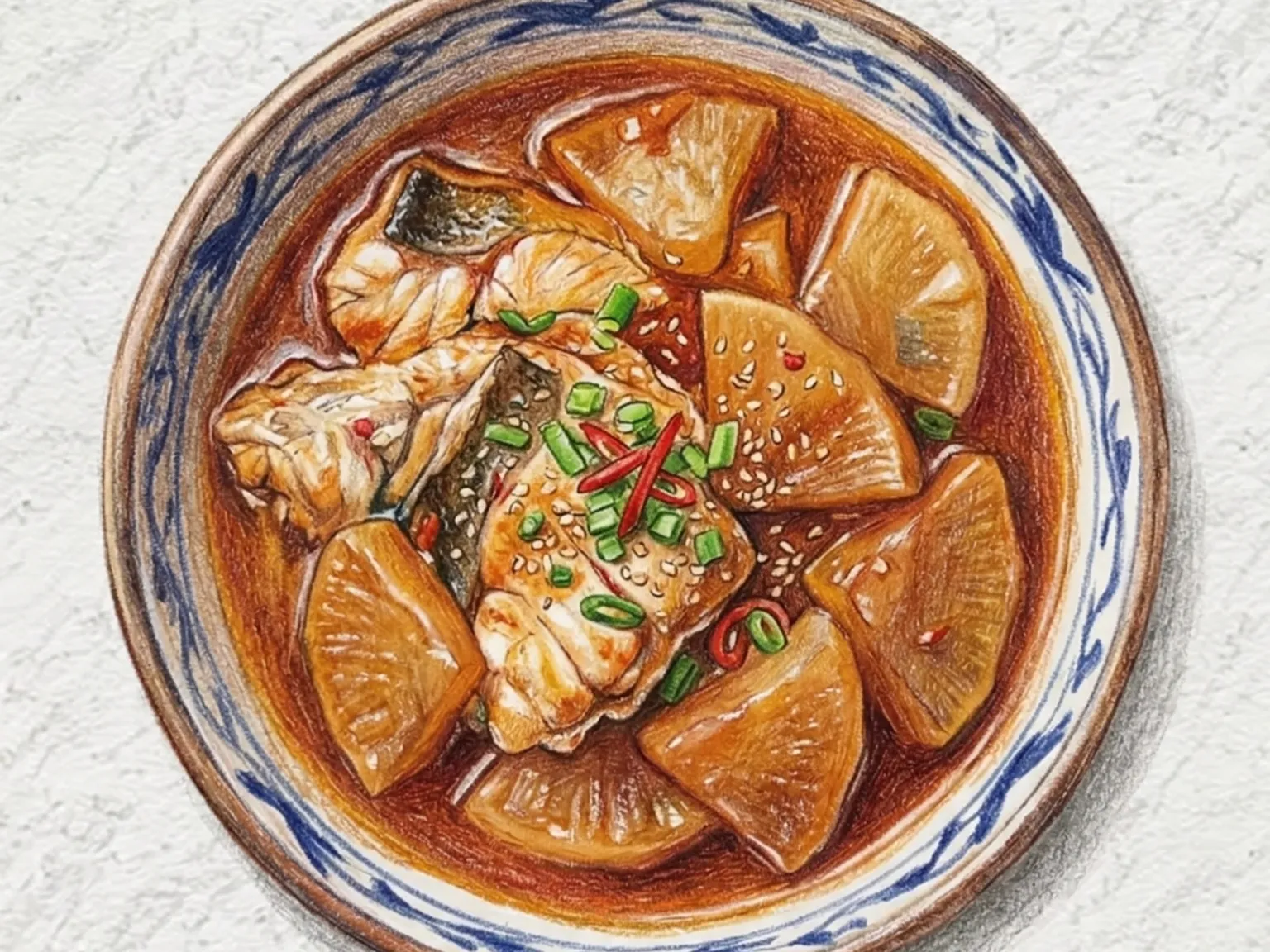
Gajami-jorim is a Korean braised flounder dish where the fish is gently simmered with Korean radish in a soy sauce and chili flake broth. The delicate flounder flesh absorbs the seasoning deeply while careful low-heat cooking prevents it from breaking apart. Radish serves a dual purpose in the dish: it draws out and neutralizes the fishy odor while contributing a clean, refreshing sweetness that adds depth to the braising liquid. Spooning the reduced sauce over rice makes it a complete, standalone meal without the need for additional side dishes. Because flounder fillets are thin, the braising time is short, and the heat should be turned off once the liquid has reduced by at least half to keep the flesh moist and tender.
Korean Soy-Braised Dotted Gizzard Shad with Radish
Baendaengi mu jorim is a Korean braised dish where small dotted gizzard shad and radish simmer together in a gochujang-based sauce. Radish lines the bottom of the pot, preventing the fish from sticking while absorbing the braising liquid as it reduces, infusing the pieces with a deep salty-sweet flavor. The sauce combines gochujang, gochugaru, soy sauce, and minced garlic, with cooking wine added to suppress any fishy odor while contributing a mild sweetness. The pot simmers covered on medium-low heat for twenty minutes, with the sauce spooned over the fish midway through to coat the surface evenly. Gizzard shad have fine, soft bones that are edible whole, and the braising process softens them further until they are barely noticeable when chewing. Onion added alongside the radish melts into the liquid, contributing natural sweetness that balances the spicy-salty punch of the gochujang sauce. The finished dish concentrates into a thick glaze that clings to both the fish and radish pieces, making it substantial enough to serve as a one-bowl meal over rice.
Korean Seasoned Bracken Fern
Gosari, the Korean name for bracken fern, is one of the oldest foraged vegetables in Korean cooking, with consumption records tracing back to the Three Kingdoms period. It is a mandatory component of bibimbap and a required dish on jesa, the ancestral rite table set for ceremonies honoring the dead. Dried gosari must soak overnight in cold water and then boil until the tough, wiry fibers relax into a distinctively springy, almost elastic chew that no fresh vegetable can replicate. The rehydrated fern is stir-fried in perilla oil with minced garlic until fragrant, then a small amount of soup soy sauce and water goes in and the pan is covered to let the liquid absorb and the fern braise briefly. This short braising step is what rounds the flavor and ensures the seasoning penetrates the fibrous strands rather than sitting only on the surface. Perilla oil is the traditional fat of choice rather than sesame oil because its green, herbal quality pairs more naturally with the woodsy, forest-floor flavor of gosari, amplifying rather than competing with it. Large batches are typically made during Chuseok or Seollal and eaten over several days, as the flavor improves and deepens as the dish sits.
Korean Braised Squid with Radish
Ojingeo mu jorim is a Korean braised dish where radish is cooked first in a soy-based liquid until fully softened, then squid is added and the whole pot is reduced in a spiced sauce of gochugaru and gochujang. Giving the radish time to cook alone is the structural key to this dish: as it slowly absorbs the liquid and breaks down, it releases its natural sweetness into the broth, which merges with the salt and gentle umami of soy sauce to build the braising liquid into something more complex than its ingredients suggest. When the spice paste goes in, the resulting flavor sits at the intersection of heat and coolness - the particular sensation of Korean chili that stings without overwhelming. The single most important technique in this recipe is the timing of the squid. Squid turns rubbery when overcooked, and the window between tender and tough is narrow, so it is added only in the last five minutes of cooking. That brief time is enough for the squid to absorb the surrounding flavors while holding the springy, snapping bite that makes the dish texturally rewarding. Green onion stirred in at the finish adds a sharp herbal lift. The reduced sauce left in the pan is deliberately left shallow rather than thick, concentrated with the flavors of both the squid and the radish, and it is best used by spooning it over rice and eating everything together.
Serve with this
Korean Cockle & Water Parsley Mixed Rice
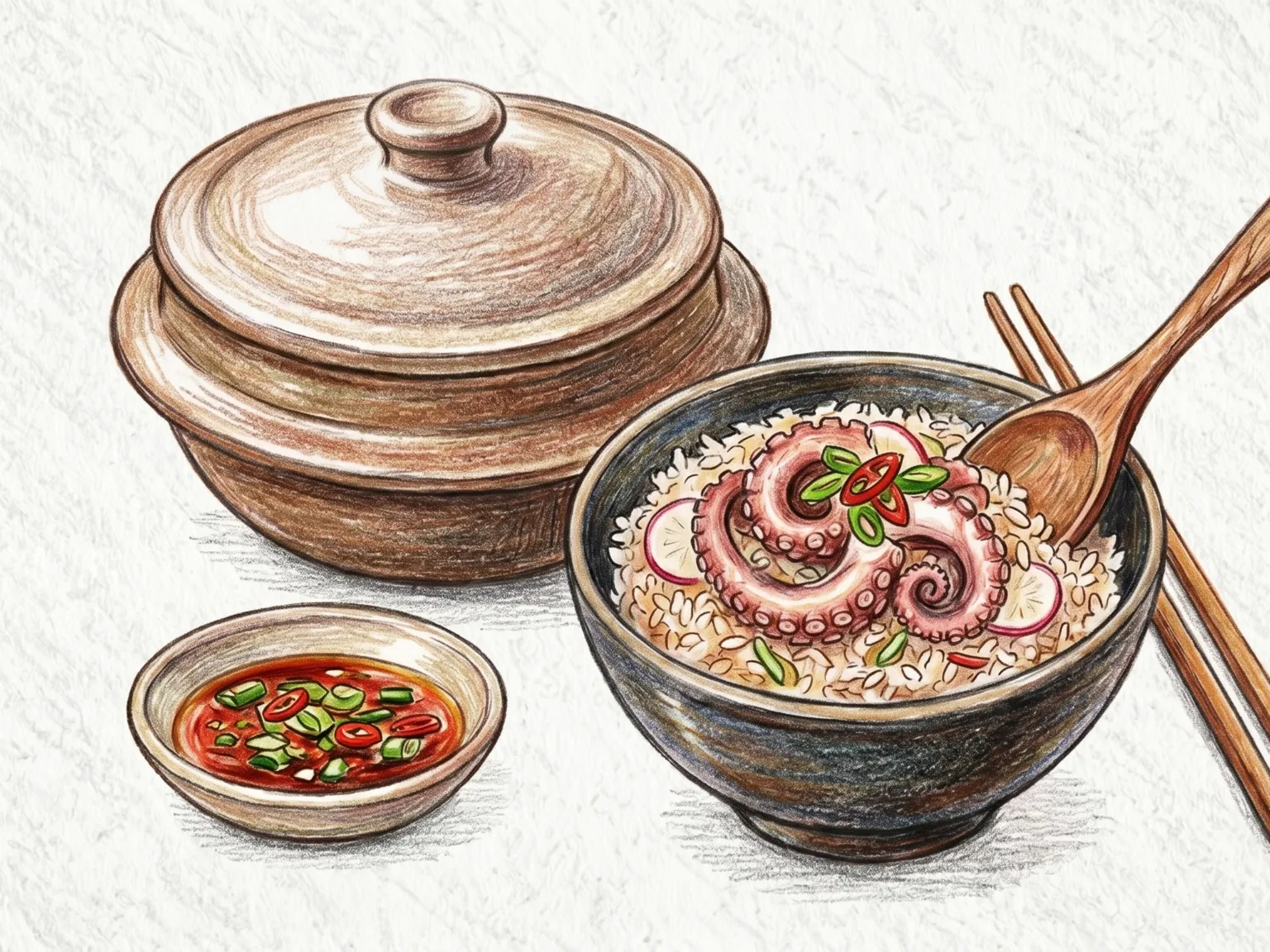
Kkomak-minari bibimbap is a seasonal rice bowl that comes together when cockles are at their peak in early spring, pairing the ocean sweetness of briefly blanched cockle meat with the clean, grassy sharpness of raw water parsley (minari). The cockle meat is rinsed in light salt water to remove any residual sand, then blanched for no more than thirty seconds in boiling water so the flesh stays springy rather than contracting into a rubbery texture. Julienned carrot and zucchini are each stir-fried separately, controlling moisture and flavor independently, then set aside to cool before assembly. A bowl of well-steamed rice is layered with the blanched cockles, the sauteed vegetables, and the raw minari placed on top last to protect its volatile fragrance from the heat below. A bibimbap sauce made from gochujang, sesame oil, minced garlic, and a touch of vinegar ties everything together when mixed, balancing the briny umami of the cockles against the brightness of the parsley. Sesame oil and toasted sesame seeds added at the end round the flavors and give the bowl a warm, nutty finish.
Galbitang (Clear Korean Beef Short Rib Soup)
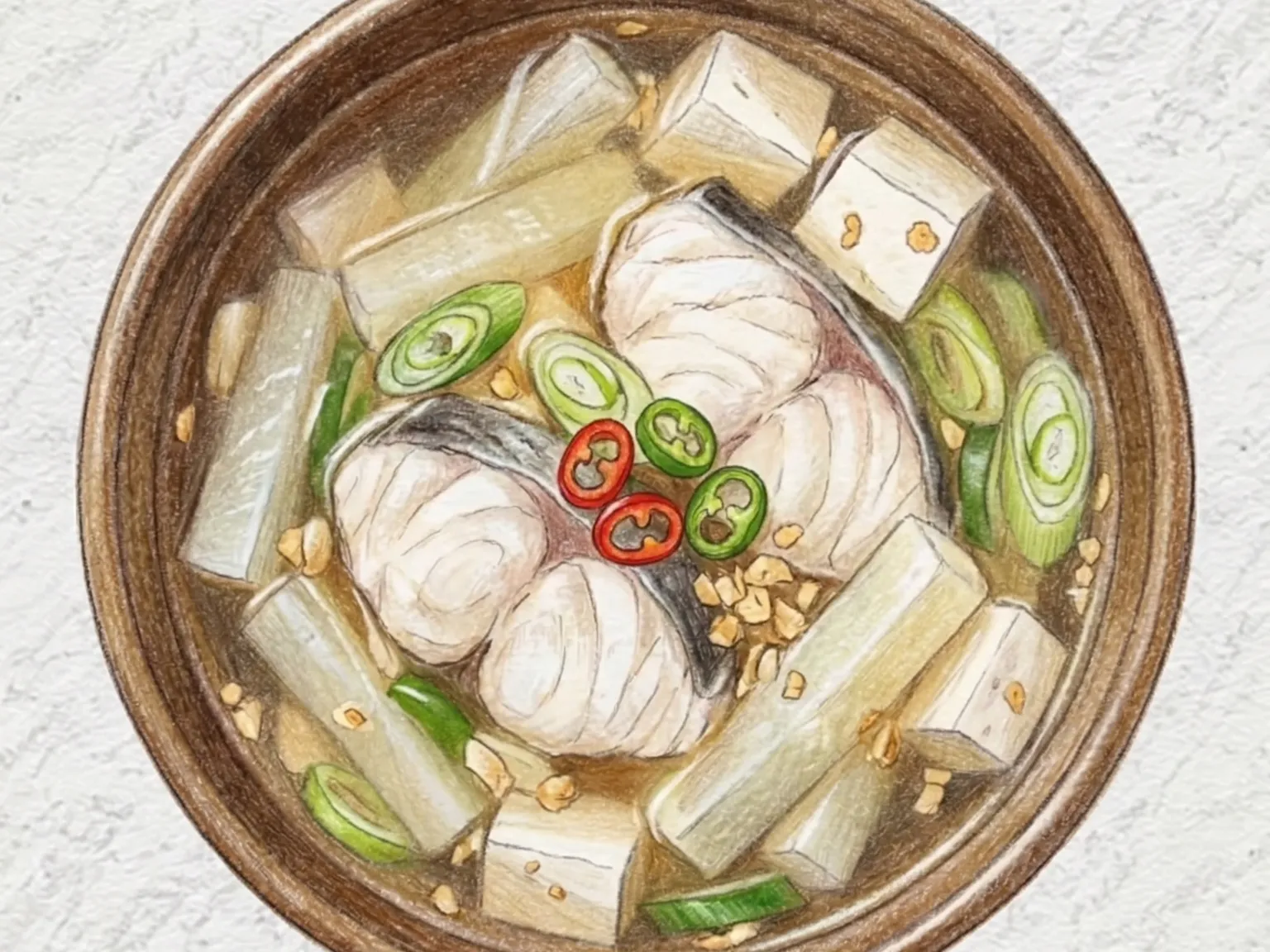
Galbitang is a clear Korean soup built from long-simmered beef short ribs, extracting a deep, clean beef flavor without the milky opacity of seolleongtang or gomtang. Before cooking, the ribs are soaked in cold water for one to two hours to draw out blood, which is what allows the finished broth to stay clear and free of off-flavors. The radish goes in from the beginning, slowly releasing a gentle sweetness as it absorbs the surrounding broth and becomes fully saturated with beef flavor. The ribs need time - the measure of doneness is the meat sliding cleanly off the bone with minimal pressure from chopsticks. Unlike bone-based broths that turn white from emulsified collagen and fat, galbitang remains translucent because the fat from the rib meat dissolves more gently, leaving a subtle richness rather than heaviness. Seasoning is deliberately restrained, using only salt and white pepper at the table so nothing interferes with the honest taste of the beef. Garnishes of sliced egg crepe and green onion add color and a fresh note. The soup is served year-round in Korean restaurants, always arriving steaming hot alongside a bowl of plain rice.
Korean Bok Choy Kimchi (Gochugaru Fermented Quick)
Cheonggyeongchae kimchi is a bok choy kimchi prepared by halving the heads lengthwise, salting them for twenty minutes, and coating each leaf layer with a paste of gochugaru, salted shrimp, anchovy fish sauce, and sweet rice paste. Keeping the salting time short preserves the crisp snap of the stems, while the leaves soften just enough to hold the seasoning. Julienned scallions and carrot add color and textural variety, and adjusting the fish sauce quantity based on the salted shrimp salinity keeps the overall salt level balanced. After four hours of room-temperature fermentation followed by refrigeration, this kimchi is ready within a day and offers a lighter, crunchier character than traditional napa cabbage kimchi.
Similar recipes
Korean Braised Mackerel with Dried Radish Greens
Siraegi godeungeo jorim is a Korean braised mackerel dish in which the fish and pre-boiled dried radish greens are cooked down with radish and onion in a chili-soy seasoning. The richness of mackerel fat and the earthy, fibrous character of dried radish greens share the same braising liquid, each amplifying what the other brings to the pot. The radish greens must be boiled thoroughly before braising to soften their tough fibers and leach out any residual bitterness, which is then washed away with a cold rinse. Mackerel seasoned lightly with cooking wine is placed over the greens and vegetables, and the pot braises over medium-low heat for more than twenty minutes so the seasoning penetrates the flesh all the way through. Spooning the braising liquid over the fish two or three times during cooking ensures an even coating on the upper surface. Radish becomes sweeter and more concentrated as it reduces, neutralizing any fishiness from the mackerel. The finished dish, spooned generously over steamed rice with its spicy braising sauce, delivers a layered depth of flavor that is unmistakably Korean.
Korean Soy-Braised Rockfish
Ureok-jorim is a Korean soy-braised rockfish simmered with Korean radish, gochugaru, garlic, and rice wine. The radish goes in first and softens in the braising liquid before the cleaned whole fish is placed on top and basted with sauce over medium heat for ten minutes. Rice wine neutralizes any fishiness, while the radish absorbs the salty braising liquid and releases its own sweetness to balance the seasoning naturally. The rockfish flesh stays mild and flakes in soft layers, with gochugaru lending a gentle warmth to the overall dish.
Korean Braised Chicken with Radish
This braise combines bone-in chicken pieces with Korean radish and potato in a soy-and-gochugaru sauce. The radish absorbs both the chicken stock and the spiced seasoning, turning amber on the outside while going translucent within. Potato edges break down during the long simmer, thickening the sauce into a sticky glaze. Gochugaru and black pepper build a layered heat that soy sauce and sugar round off, so the dish is assertively spicy without being harsh. Reducing the liquid until it barely coats the bottom concentrates all the flavors onto the surface of each piece.