Korean Gaji Dwaejigogi Bokkeum (Eggplant Pork Stir-fry)
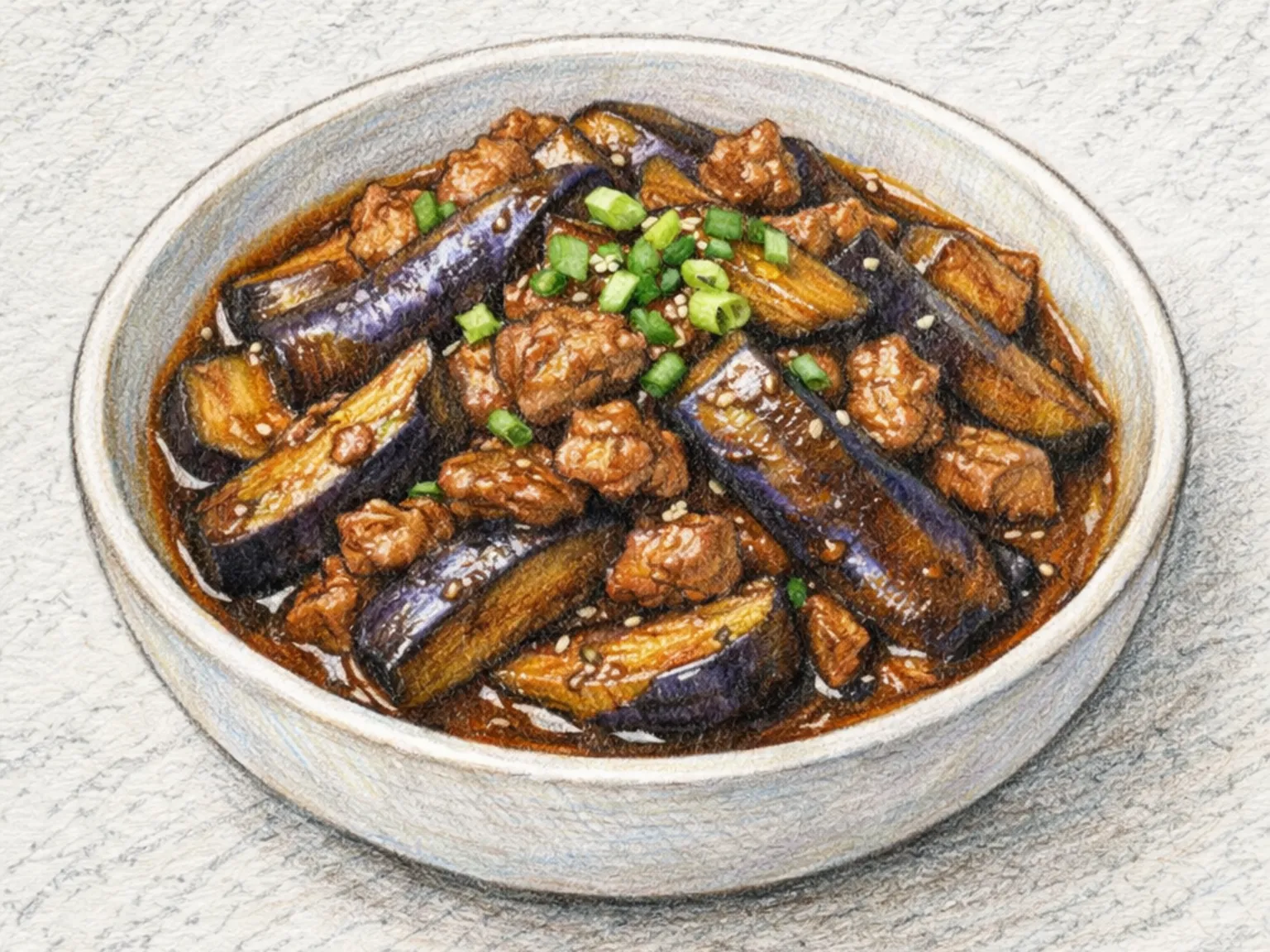
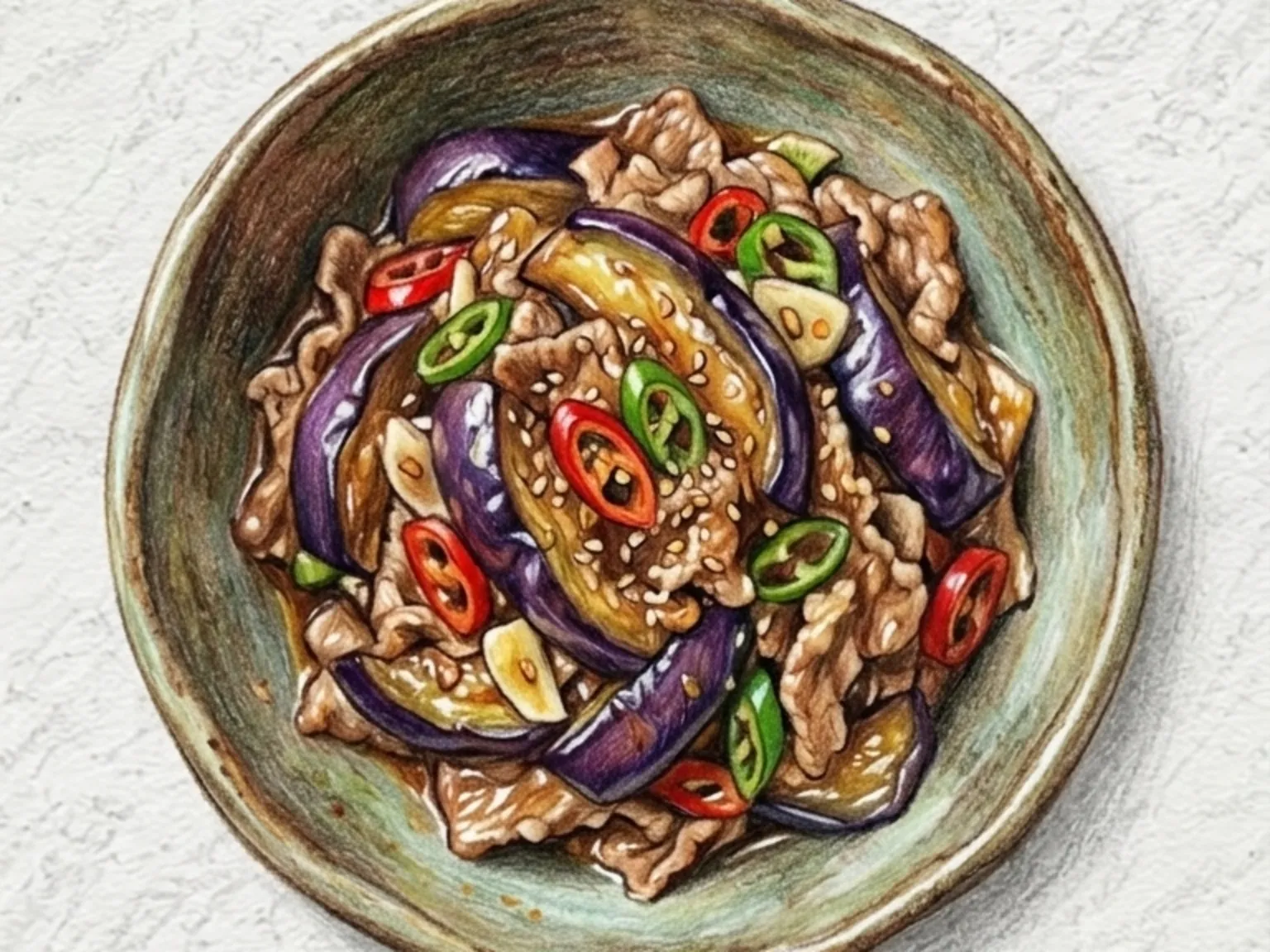
Gaji-dwaejigogi-bokkeum is a Korean stir-fry of eggplant and thinly sliced pork seasoned with garlic and fresh chili. The eggplant absorbs oil and sauce as it cooks, turning silky and melding seamlessly with the pork. Garlic infuses the dish with an intense aroma while the chili adds a clean, sharp heat throughout. It is especially flavorful in summer when eggplant is at its seasonal peak.
Adjust Servings
Instructions
- 1
Halve eggplants lengthwise and slice 1cm thick; sprinkle with a pinch of salt and rest 5 minutes.
- 2
Slice pork thin and marinate for 5 minutes with 0.5 tbsp soy sauce and half the garlic.
- 3
Heat oil and stir-fry pork over medium-high heat for 3 minutes.
- 4
Add onion and eggplant, cook 3 minutes, then add remaining garlic, soy sauce, oyster sauce, and sugar.
- 5
Stir-fry 2 more minutes over high heat until eggplant softens, then add red chili for 30 seconds.
- 6
Turn off heat, drizzle sesame oil, toss, and serve immediately.
As an Amazon Associate, we may earn from qualifying purchases.
Tips
Nutrition (per serving)
More Recipes

Korean Pork and Asparagus Stir-fry
A Korean weeknight stir-fry that pairs pork shoulder or belly with asparagus and red bell pepper in a soy-garlic sauce. The pork is sliced thin and marinated in soy sauce, minced garlic, and a pinch of sugar to coax out caramelization on the hot pan. Cooking the meat first over high heat renders out its fat, which becomes the medium for stir-frying the vegetables. Asparagus goes in next for barely a minute - just enough to turn its raw starchiness into a clean, grassy snap. Bell pepper adds pops of natural sweetness and color contrast. The sauce is restrained: soy, a touch of oyster sauce, and sesame oil, keeping the focus on the interplay between the pork's umami depth and the vegetables' brightness. The entire cook from cold pan to finished plate takes under twelve minutes, making it one of the fastest protein-and-vegetable banchan in the Korean home repertoire.

Korean Pork & Swiss Chard Stir-fry
This hearty stir-fry combines pork shoulder and Swiss chard in a doenjang-based sauce that delivers deep, earthy umami. Separating the chard stems from the leaves and adding them at different times preserves contrasting textures: the stems remain snappy while the leaves wilt into tender ribbons. Doenjang neutralizes any gamey pork notes and builds a robust savory backbone, finished with sesame oil for a nutty warmth. A touch of Korean chili flakes introduces mild heat that rounds out the dish. It pairs naturally with a bowl of steamed rice for a complete, nourishing meal.

Korean Kimchi Pork Stir-fry
Kimchi jeyuk bokkeum is a Korean stir-fry of pork shoulder seasoned with gochujang, gochugaru, and soy sauce, then cooked over high heat with well-fermented aged kimchi. The kimchi's deep acidity tempers the pork fat while amplifying the spicy kick of the chili paste. Searing the pork first builds caramelized edges, and adding kimchi and onion afterward lets the sauce reduce into a concentrated glaze. Scallion and sesame oil finish the dish, and wrapping portions in lettuce leaves softens the heat.

Korean Tomato Dalgyal Bokkeum (Tomato Egg Stir-fry)
Tomato-dalgyal-bokkeum uses a two-stage cooking method: eggs are scrambled to about 70% doneness and set aside, then returned to the pan with seared tomatoes for a final quick toss. The tomatoes release a small amount of juice when cooked briefly with oyster sauce and sugar, and the partially set eggs absorb this liquid to stay soft and moist. Bright tomato acidity, mild egg richness, and oyster sauce umami layer together without any single flavor dominating. Sharing roots with Chinese tomato egg stir-fry (xihongshi chaodan), it crosses easily into Korean home cooking.

Korean Stir-Fried Eggplant Banchan
Gaji bokkeum transforms eggplant - a vegetable Koreans have cultivated since the Goryeo period - into a quick, oil-glazed banchan where the cooking speed matters as much as the seasoning. The eggplant is sliced into half-moons, and the pan must be scorching hot before the pieces enter; any hesitation and the eggplant will steam rather than sear, turning it into a soggy mass. High heat with minimal oil produces lightly charred edges while the interior turns silky and almost custardy. Soy sauce, garlic, and sesame oil go in during the final thirty seconds, sizzling against the hot surface and coating each piece in a thin, caramelized layer. The dish has a concentrated, clean umami taste without the heaviness of a braised preparation. Korean home cooks make this as a weeknight banchan precisely because it takes under ten minutes from cutting board to table.

Korean Eggplant & Pork Pancake
Thick slices of eggplant are topped with seasoned ground pork, coated in pancake batter, dipped in beaten egg, and pan-fried until golden. The eggplant absorbs oil as it cooks, turning silky and tender, while the pork filling adds meaty substance to each piece. Minced garlic and onion round out the flavor, and the egg coating forms a thin, golden crust. A soy-based dipping sauce complements the mild eggplant and rich pork combination.