Korean Steamed Eggplant with Seasoning
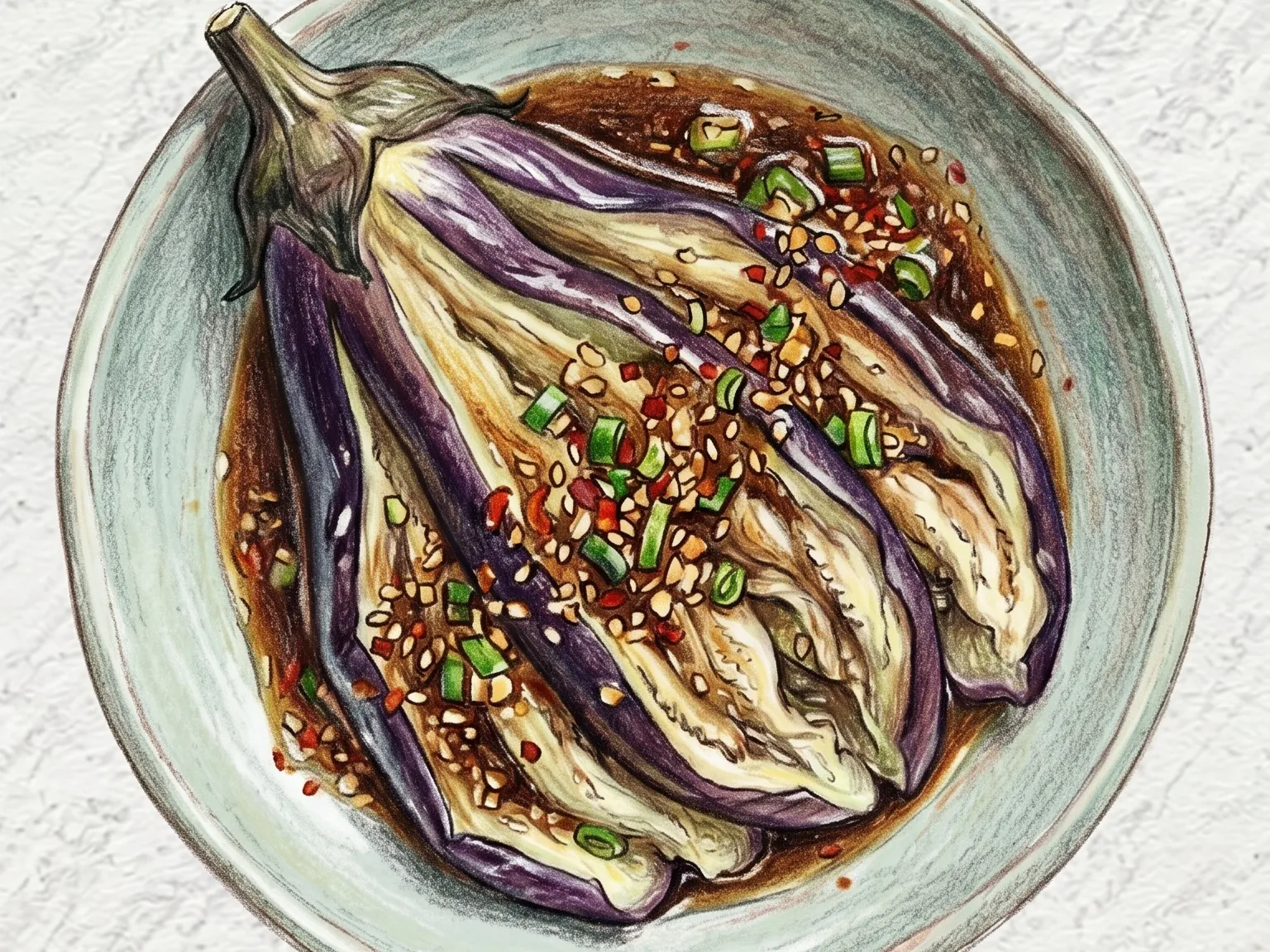
Gaji-jjim is a simple Korean steamed eggplant dish dressed with a soy sauce, gochugaru, and garlic seasoning. Steaming the eggplant whole preserves its moisture, resulting in a silky, melt-in-the-mouth texture once torn or sliced. The dressing-brightened with sesame oil and topped with sesame seeds and sliced green onion-soaks into the warm flesh quickly. With minimal ingredients and a short cooking time, this is a light vegetable banchan that appears frequently on Korean summer tables.
Adjust Servings
Instructions
- 1
Trim eggplants, halve lengthwise, and place in steamer.
- 2
Steam over strong heat for 6-7 minutes, then cool slightly.
- 3
Tear eggplant into bite-size strips.
- 4
Mix soy sauce, garlic, green onion, and gochugaru.
- 5
Toss gently with sauce, then finish with sesame oil and seeds.
As an Amazon Associate, we may earn from qualifying purchases.
Tips
Nutrition (per serving)
More Recipes

Korean Steamed Eggplant Namul
Gaji namul strips eggplant down to its quietest expression - steamed until completely soft, then dressed with just soy sauce, garlic, and sesame oil. No chili, no vinegar, no fermented paste. The eggplant is halved and steamed for seven minutes until the flesh is uniformly tender, then torn into long shreds by hand along its natural fibers. This tearing technique creates rough surfaces that grip the minimal seasoning better than knife-cut pieces would. The dressed namul has a glossy, dark sheen from the sesame oil and soy sauce soaking into the porous flesh. Among Korean namul dishes, gaji namul stands out for its exceptionally soft, almost melting texture - it practically dissolves when mixed into warm rice. A traditional banchan in Korean Buddhist temple cuisine, where simplicity is a principle rather than a limitation.

Korean Steamed Whole Garlic
Maneul-jjim is a Korean steamed whole garlic dish where cloves are slowly braised in soy sauce, oligosaccharide syrup, and sesame oil until completely tender. The raw garlic's sharp bite disappears entirely with heat, transforming into a mellow sweetness with a creamy, almost buttery texture. The syrup creates a glossy coating on each clove, and the sesame oil wraps everything in a nutty fragrance. This banchan works as a side to grilled meats or as a drinking snack, offering all of garlic's depth without any of its usual pungency.

Korean Steamed Zucchini with Salted Shrimp
This gentle braise belongs to a family of Korean jjim dishes where vegetables are steam-cooked in minimal liquid seasoned with fermented ingredients. Salted shrimp - saeujeot - is the sole seasoning base, minced and dissolved into water with garlic to create a light broth. Half-moon slices of zucchini cook covered on medium-low heat, absorbing the shrimp's briny umami as they turn translucent. The technique produces something between steaming and braising: the zucchini stays moist and intact, never waterlogged. A finish of perilla oil and sesame seeds off-heat adds a nutty fragrance. This banchan traces to Korean countryside kitchens where salted shrimp was the primary seasoning before soy sauce became widely available. It pairs naturally with steamed rice and a stronger-flavored main dish.

Korean Steamed Mixed Mushrooms
Three types of mushrooms - oyster, shiitake, and enoki - are steamed in a soy sauce and garlic seasoning. Each mushroom variety keeps its distinct texture: the meaty chew of oyster, the thick bite of shiitake, and the delicate snap of enoki. Sesame oil adds a finishing nuttiness to the minimal soy-garlic base. With just a handful of ingredients, this steamed side dish lets the natural flavors and aromas of the mushrooms come through clearly.

Korean Steamed Tofu with Soy Sauce
Dubu-jjim is firm tofu steamed and topped with a seasoning sauce of soy sauce, gochugaru, chopped green onion, garlic, and sesame oil. Cutting the tofu into thick slabs before steaming lets heat penetrate evenly, producing a surface with slight resistance and a silky interior. The soy-chili sauce drizzled on top seeps into the warm tofu, delivering salty and mildly spicy flavors in each bite. Sesame oil and seeds finish the dish with a toasted aroma. Cooked without any added oil, it is a clean, protein-rich banchan that works well on a vegetarian spread.

Korean Stuffed Eggplant Seon
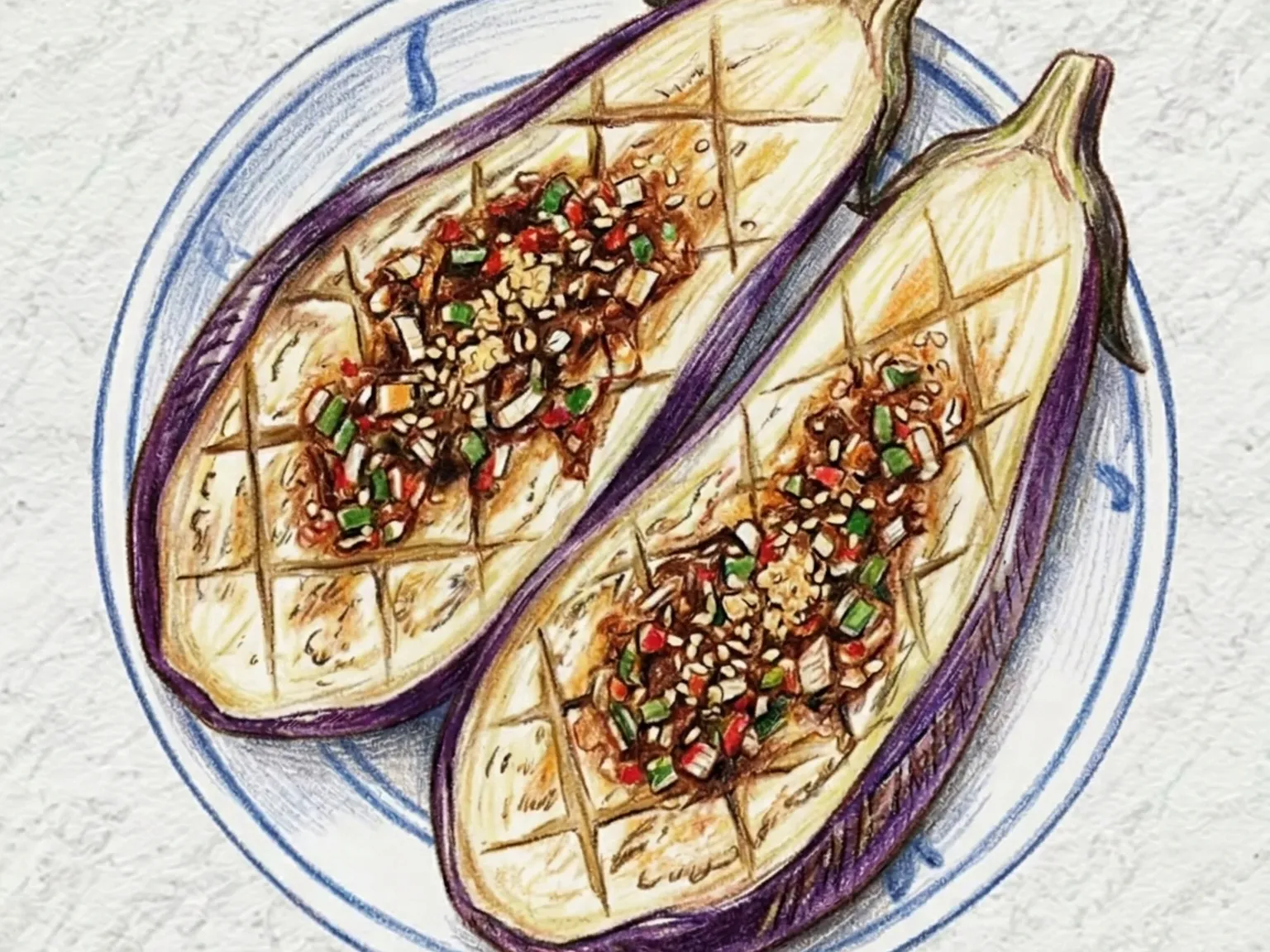
Gaji-seon is a Joseon-era royal court dish - one of the 'seon' preparations where vegetables are stuffed with seasoned fillings and steamed. The eggplant is scored deeply at intervals but not cut through, creating accordion-like pockets. A filling of minced pork or beef mixed with tofu, scallion, and sesame oil is pressed into each slit. The stuffed eggplant steams for fifteen minutes, during which the filling's juices meld with the collapsing eggplant flesh. A light soy-based sauce is drizzled over at serving. The dish requires more patience than most banchan - each eggplant is individually stuffed - and this labor-intensive nature is why it has historically been reserved for guests and celebrations. The combination of the nearly-dissolving eggplant shell and the savory, compact filling creates a textural refinement that sets seon apart from ordinary stir-fried or steamed banchan.