Korean Flower Crab Pancake
Quick answer
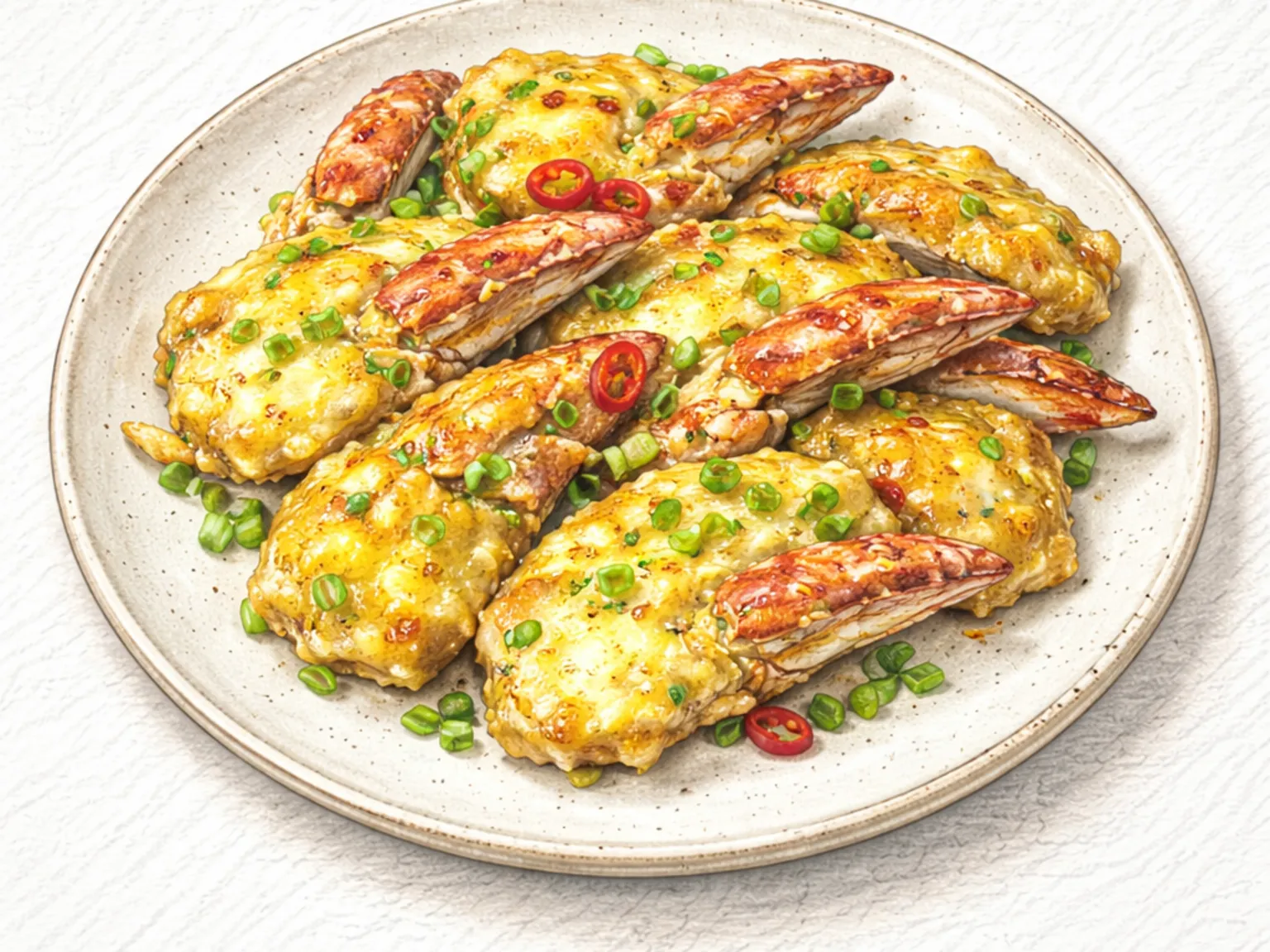
Fresh blue crab meat is picked clean, coated in a mixture of all-purpose flour and Korean pancake mix, dipped in beaten egg, and pan-fried until the surface turns golden.
What makes this special
- Fresh blue crab meat retains its natural sweetness and briny profile in this golden egg-coated jeon.
- Fresh blue crab meat keeps its sweet, briny flavor intact
- Minced ginger precisely neutralizes crab's fishy edge
Key ingredients
Core cooking flow
- 1 Open the flower crab (380 g), then remove the sand sac and gills cleanly.
- 2 Mix salt (3 g), black pepper (1 g), and minced ginger (4 g).
- 3 Combine flour (55 g) and Korean pancake mix (35 g), then coat the crab pieces in a thin, even layer.
Fresh blue crab meat is picked clean, coated in a mixture of all-purpose flour and Korean pancake mix, dipped in beaten egg, and pan-fried until the surface turns golden. The crab's natural sweetness and mild brininess stay intact throughout the process, and minced ginger cuts through any residual fishiness without announcing itself in the finished jeon. Black pepper is added in small amounts - just enough to clean up the aftertaste without competing with the delicate crab. The egg coating holds moisture inside, keeping the meat tender while the outside crisps to a light, golden crust. A generous amount of crab filling in each piece is what makes the texture satisfying.
Instructions
Read the steps as a cooking flow: prep, heat, seasoning, doneness control, and finish.
- 1Prep
Open the flower crab (380 g), then remove the sand sac and gills cleanly.
Cut it in half, scrub under cold running water with a brush, and dry every surface thoroughly with paper towel.
- 2Season
Mix salt (3 g), black pepper (1 g), and minced ginger (4 g).
Rub the seasoning lightly into the crab meat and shell gaps, then let it sit for 10 minutes so the aroma softens and the seasoning penetrates.
- 3Heat
Combine flour (55 g) and Korean pancake mix (35 g), then coat the crab pieces in a thin, even layer.
Shake off clumps carefully so the egg coating does not become heavy or gummy during frying.
- 4Prep
Beat the eggs (2) until the whites disappear into a smooth egg wash.
Dip each floured crab piece to coat all sides, then lift it out and gently shake off any runny excess.
- 5Control
Heat a pan over medium heat, add cooking oil (35 ml), and place the crab pieces shell-side down.
Cook for about 2 minutes, until the edges of the egg coating set and turn lightly golden.
- 6Finish
Flip the pieces and cook the flesh side for 2 to 3 minutes, then lower the heat and cook 2 minutes more.
Tap the shell; when it feels firm and the egg coating is not soggy, serve immediately.
After the steps
Pick a recipe that fits this dish.
Continue with shared ingredients, meal pairings, or a similar method.
Recipes That Go Well With This
More Pancakes →Based on shared ingredients and meal pairing
Korean Water Parsley Shrimp Pancake
This Korean pancake combines fresh water parsley and cocktail shrimp in a light, seasoned batter. The preparation starts by cutting cleaned water parsley into five-centimeter pieces, slicing onions thinly, and drying the shrimp to prevent oil splattering. The batter is mixed using pancake flour, cold water, an egg, and a pinch of salt until smooth. The vegetables and shrimp are folded in gently with chopsticks to keep the texture light. Cooking the batter in a well-oiled pan over medium heat for two to three minutes on each side produces a pancake with thin, crispy edges. The water parsley stems retain their crispiness even after frying, contrasting with the tender shrimp. The herbal fragrance of the parsley blends with the clean sweetness of the shrimp. It is typically cut into bite-sized pieces immediately after cooking and served warm with a soy sauce and vinegar dipping sauce.
Korean Burdock Matchstick Pancake
Burdock root, julienned into thin matchstick strips and pan-fried with onion and cheongyang chili, is a jeon with texture as its main argument. The combination of Korean pancake mix and tempura flour in the batter produces a result that is crispier than standard jeon, particularly at the edges where the thin strips of burdock protrude from the batter and catch the heat. Burdock has an earthy, faintly bitter flavor that holds up in the pan, and the onion provides sweetness alongside it. Cheongyang chili cuts through with a slow-building, lingering heat. Cold water keeps the batter loose and inhibits gluten development, so the finished jeon stays light rather than dense. Hot from the pan, the edges shatter; cooled, they turn chewy.
Manduguk (Korean Dumpling Clear Broth Soup)
Manduguk is a Korean dumpling soup in which hand-folded dumplings stuffed with ground pork, tofu, scallion, and garlic are dropped into a clear, simmering broth, typically anchovy-kelp stock or beef broth, and cooked until they float. As the dumplings cook, their thin wheat-flour wrappers release a subtle starch that gives the broth a barely perceptible body, while the filling leaks savory juices that enrich the liquid gradually. A thin drizzle of beaten egg stirred in near the finish creates silken wisps on the surface of the broth and gives the bowl a more finished appearance. Shredded egg strips and crumbled dried seaweed scattered on top add a pleasant contrast in color and a faint oceanic note to the flavor. Many Korean households serve manduguk on Lunar New Year as an alternative to tteokguk, and some combine the two by adding sliced rice cakes alongside the dumplings. Dumplings can be made in large batches and frozen raw, which means this soup can be pulled together quickly on weeknights without sacrificing any of the flavor that comes from homemade filling. A small dish of soy-vinegar dipping sauce served alongside lets each person adjust the seasoning at the table, and the light acidity of the sauce cuts through the mild broth in a way that makes the contrast between the two worth trying.
Korean Seafood Scallion Pancake
Haemul-pajeon is a Korean seafood scallion pancake built by laying scallion segments cut to six or seven centimeters in an oiled pan, topping them with sliced squid and peeled shrimp, then pouring a thin batter of Korean pancake mix and cold water over everything and cooking on medium heat. Cold water inhibits gluten development, which is the secret to shatteringly crisp edges, and the scallions pressed directly against the hot oil caramelize underneath the batter, releasing a sweet, aromatic fragrance unique to pajeon. Shaking the pan before flipping confirms the bottom has released cleanly-forcing a stuck pancake tears the delicate structure-and adding a drizzle of oil around the edges for the second side crisps the perimeter into a golden, almost fried ring. Thinly sliced red chili on top adds color and a gentle heat, completing the dish that is Korea's most iconic pairing with makgeolli rice wine.
Serve with this
Korean Grilled Eel Rice Bowl
Jangeeo deopbap is a bowl of grilled freshwater eel over steamed rice, where the key technique is building up a thick, lacquered glaze through multiple applications of a sweet-salty sauce reduced from soy sauce, mirin, sugar, and ginger juice. The eel starts skin-side down on the grill over medium heat for around five minutes to crisp the skin, then is flipped and basted repeatedly with the sauce as it finishes cooking. A single coat of sauce produces a pale, thin color, so at least two applications and ideally three or more are needed to build the characteristic glossy surface. With each additional coat, the sugars in the sauce react with heat through both Maillard browning and caramelization, layering flavor with every pass. Because freshwater eel is naturally fatty, fat drips during grilling can cause flare-ups, so heat control is important throughout the process. Sansho pepper dusted on at the end cuts through the eel's inherent richness with a sharp, numbing fragrance that balances the sweet glaze and keeps the dish from feeling heavy.
Korean Mushroom Dumpling Hot Pot
Mandu jeongol is a generous hot pot of twelve large dumplings simmered with napa cabbage, shiitake mushrooms, oyster mushrooms, and bok choy in anchovy-kelp stock. The two varieties of mushroom add layers of umami to the clear broth, while the cabbage and bok choy soften and release their natural sweetness as they cook. The dumplings cook directly in the simmering stock, their wrappers gradually turning chewy as the filling flavors seep into the surrounding liquid. Soup soy sauce and garlic provide a clean, understated seasoning that keeps the broth from overshadowing any single ingredient. The right moment to eat is when the vegetables have wilted and the dumplings float to the surface, signaling they are cooked through. The absence of any spice or strong seasoning makes this one of the more universally approachable hot pots, suited for all ages. Leftover broth absorbs cooked rice or soaked glass noodles easily, turning what remains into a satisfying finish to the meal.
Crispy Seaweed Chips
Basak gim-bugak is a traditional Korean snack made of seaweed sheets coated with glutinous rice paste and fried until crispy. The process begins by cooking a thick mixture of water, glutinous rice flour, and salt. After cooling the paste, it is spread thinly onto half of a seaweed sheet. The sheet is folded in half and coated with another thin layer of paste to build a double-layer structure. Sesame seeds are scattered on top before drying. The sheets are dried in a dehydrator or an air fryer at 80 degrees Celsius until stiff and hard. Ensuring the seaweed is completely dry, especially at the edges, is crucial for a crisp outcome. The dried pieces are flash-fried in hot oil at 180 degrees Celsius for just two to three seconds. They puff up instantly and must be removed quickly to prevent burning.
Similar recipes
Korean Mugwort Pancake (Spring Herb Savory Thin Pancake)
Young mugwort leaves, harvested in early spring, are stripped of tough stems, washed, and folded into a batter of Korean pancake mix, water, and salt. Thinly sliced onion adds a mild sweetness that balances the herb's earthy bitterness. The batter is spread thin in an oiled pan and fried on both sides until crisp - thickness is the enemy here, as a thick pancake traps steam and mutes the mugwort's fragrance. Dipped in a vinegar-soy sauce, the acidity rounds out any lingering bitterness, making ssuk-jeon one of the most distinctive seasonal pancakes in Korean cuisine.
Korean Chive Clam Jeon (Garlic Chive and Clam Seafood Pancake)
Buchu-bajirak-jeon is a seafood pancake of garlic chives and clam meat, pan-fried in a batter made with a mix of all-purpose pancake flour and rice flour. The rice flour addition increases the chew and gives the finished jeon a slightly more resilient texture than plain flour batters. Clam meat releases a briny, oceanic liquid as it cooks that seeps into the batter and flavors it throughout, while the chives add a sharp, grassy counterpoint. Minced garlic and diagonally sliced cheongyang chili worked into the batter suppress any fishiness and build a layered fragrance. A generous amount of oil in the pan over medium heat produces edges that crisp and brown like the outside of a fritter. Waiting until the bottom is fully set before flipping prevents the pancake from tearing. Served with soy dipping sauce or a seasoned soy mixture, the clean salinity of the clams comes through clearly.
Korean Kimchi Pork Jeon (Fermented Kimchi and Pork Crispy Pancake)
Well-fermented kimchi and pork shoulder are the backbone of this hearty Korean pancake. Kimchi brine is mixed directly into the batter, intensifying both the crimson color and the tangy, fermented depth of flavor. A small amount of sugar balances the acidity, while green onion and onion distribute contrasting texture throughout each bite. Pressing the pancake flat in a generously oiled pan over high heat produces deeply caramelized, crispy edges. The kimchi should not be squeezed too dry before mixing in, since residual moisture keeps the interior soft and prevents the finished pancake from becoming dense. Pork shoulder should be cut into small pieces so it cooks through before the exterior over-browns. The kimchi's seasoning is assertive enough that no dipping sauce is required, making this a complete side dish on its own.