Korean Braised Eggplant with Shrimp
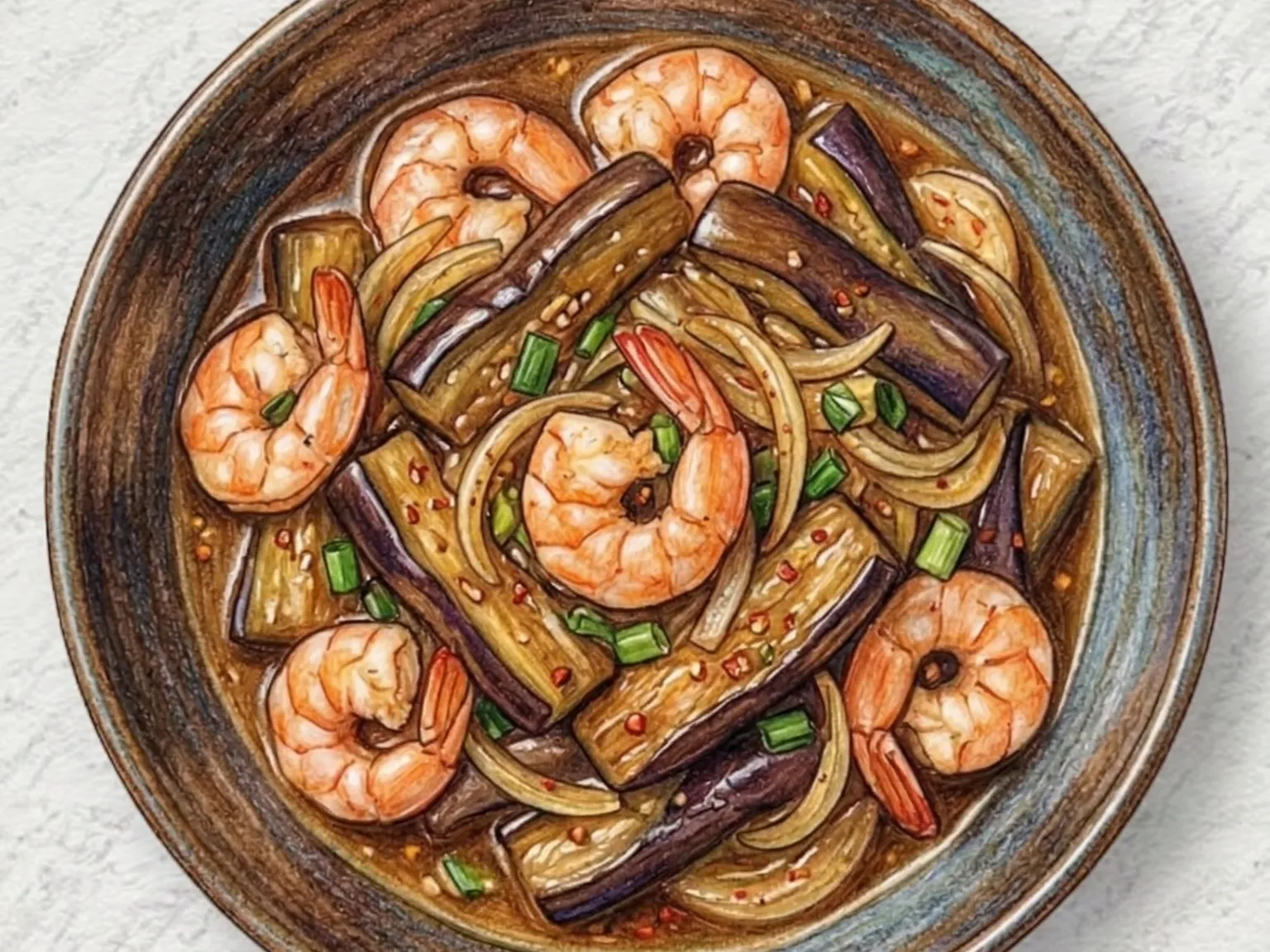
Gaji saeu jorim is a Korean braised dish pairing eggplant with medium shrimp in a soy sauce and oyster sauce base. The shrimp release their natural umami into the sauce as they cook, and the eggplant absorbs every bit of that flavor, turning soft and deeply seasoned. A small amount of gochugaru adds gentle warmth without overpowering the seafood. The contrast between the plush eggplant and the firm, bouncy shrimp gives this banchan an appealing variety of textures.
Adjust Servings
Instructions
- 1
Quarter eggplant lengthwise and cut into 5 cm pieces; peel shrimp.
- 2
Mix soy sauce, oyster sauce, garlic, chili flakes, and water.
- 3
Heat oil and stir-fry eggplant for 2 minutes to coat the surface.
- 4
Add onion and shrimp, stir-frying 2 more minutes until shrimp turns opaque.
- 5
Pour in sauce and braise for 7 minutes over medium heat until eggplant softens.
- 6
Finish with green onion for 1 minute and serve hot.
As an Amazon Associate, we may earn from qualifying purchases.
Tips
Nutrition (per serving)
More Recipes

Korean Soy Braised Eggplant
Gaji-jorim is a Korean braised eggplant dish simmered in soy sauce until the flesh is thoroughly tender and saturated with seasoning. The sweet-salty sauce permeates evenly through the eggplant as it cooks down. A finishing drizzle of sesame oil and a sprinkle of sesame seeds add a nutty aroma to each serving. Despite using only eggplant as the main ingredient, the slow braising concentrates the flavors into a compelling rice accompaniment.

Korean Braised Tofu with Shrimp
Dubu-saeu-jorim pairs pan-fried tofu with whole shrimp in a soy-based braising sauce - a combination that bridges the protein gap in banchan beyond the usual tofu-only preparations. The tofu is seared first until golden, then set aside while shrimp cook briefly in the same pan, picking up the fond. The braising sauce - soy sauce, garlic, sugar, cooking wine, and a touch of gochugaru - goes in next, and both proteins return to simmer together for five minutes. The shrimp release their marine sweetness into the sauce, which the porous tofu absorbs alongside the soy seasoning. The textural pairing matters: the tofu is yielding and soft, while the shrimp curl and firm up with a springy bite. A banchan that works equally well as a main dish over rice when made in larger quantity.

Korean Braised Eggplant with Pork
Gaji dwaejigogi jorim is a Korean braised dish of eggplant and pork shoulder in soy sauce with gochugaru. The pork renders its fat into the eggplant as they cook together, giving the vegetable a rich, meaty quality. Cooking wine helps mellow the pork while the soy-garlic base builds deep, layered flavor. A final drizzle of sesame oil ties it all together, and this dish is at its best in summer when eggplants are in peak season.

Korean Soy-Braised Deodeok Root
Deodeok-jorim is mountain root braised in soy sauce, rice syrup, garlic, and sesame oil. The root's distinctive bitter-herbal aroma softens as the sweet-salty glaze coats it during simmering, while the interior stays dense and slightly chewy. A single green chili adds a quiet heat at the finish, and sesame seeds scattered on top bring a toasted nuttiness. It is a banchan that preserves the wild, earthy character of foraged deodeok and pairs naturally with other vegetable side dishes on a Korean table.

Korean Braised Eggplant in Seasoned Soy Sauce
Gaji yangnyeom jorim is a Korean soy-braised eggplant side dish seasoned with gochugaru, garlic, and sesame oil. The eggplant pieces are lightly cooked in oil first, then simmered in the seasoning sauce until they become glossy and deeply flavored throughout. Scallions added at the end provide a fresh contrast to the rich, salty-sweet glaze. This is a reliable everyday banchan that can be made ahead and kept in the refrigerator for several days.

Korean Braised Eggplant and Tofu
Gaji dubu jorim combines eggplant and firm tofu braised together in a soy sauce and gochugaru seasoning. The eggplant soaks up the sauce and turns silky soft, while the pan-fried tofu holds its shape with a slight firmness on the outside. Garlic and green onion round out the flavor, creating a lightly spicy, umami-rich side dish. This is a practical vegetarian-friendly banchan that pairs well with plain steamed rice.