Korean Gaji Twigim Bites (Crispy Eggplant Bites)
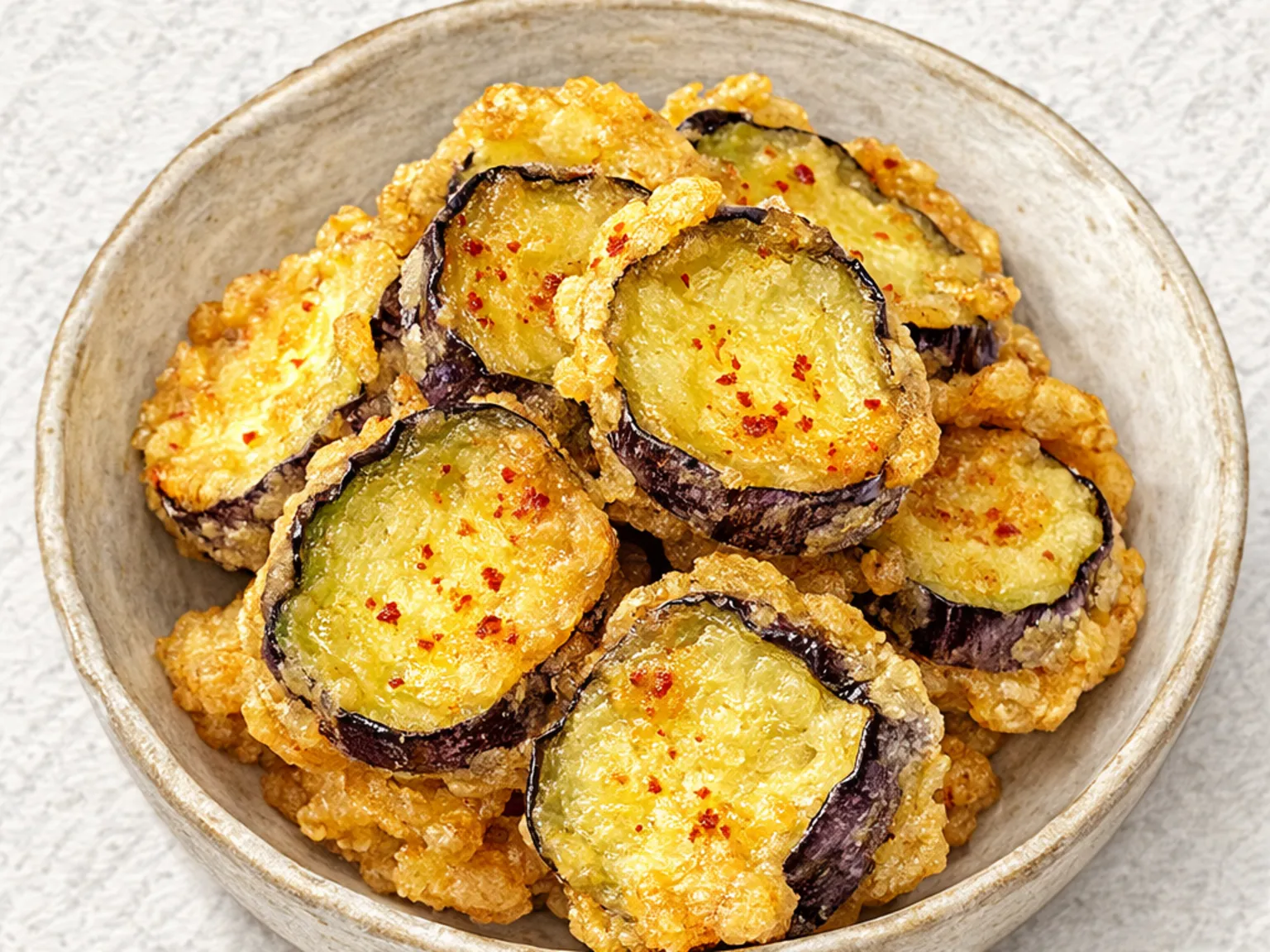
Gaji-twigim-bites cuts eggplant into bite-sized pieces and fries them in a cold batter made with sparkling water. The carbonation creates air pockets inside the coating, making it exceptionally light and crisp, while the eggplant's high moisture content keeps the interior silky as it cooks. A small addition of gochugaru to the frying mix gives the crust a subtle heat that offsets the eggplant's mildness and the oil's richness. The purple skin of the eggplant partially shows through the batter after frying, giving these bites a visual distinction from standard fried items.
Adjust Servings
Instructions
- 1
Cut eggplant into bite-sized pieces, lightly salt, and rest for 5 minutes.
- 2
Mix frying mix, sparkling water, and chili flakes into a cold batter.
- 3
Pat eggplant dry and lightly coat with batter.
- 4
Fry at 170°C for 2 minutes, then at 180°C for 1 more minute for crispiness.
- 5
Mix soy sauce, vinegar, and sugar for a dipping sauce.
- 6
Drain fried bites and serve with the dipping sauce.
As an Amazon Associate, we may earn from qualifying purchases.
Tips
Nutrition (per serving)
More Recipes

Korean Crispy Fried Chicken Skin
Dak-kkopjil-twigim seasons chicken skin with salt and pepper, dusts it in starch, and double-fries it in hot oil. The first fry renders out moisture, and the second at higher temperature puffs the skin into a cracker-like crunch with visible air bubbles throughout. The fried skin releases an intense chicken fat savoriness that needs little more than salt to taste complete. A light sprinkle of black pepper and garlic powder tempers the richness, making it a snack that is difficult to stop eating once started.

Korean Fried Squid
Cleaned squid is cut into 1 cm-thick rings, dipped in a light batter of frying mix, cold water, and egg, then deep-fried at 170 degrees Celsius for three to four minutes. Mixing the batter loosely so a few lumps remain creates an uneven coating that fries up extra crispy. The contrast between the chewy squid and the thin, airy shell is the defining feature, and the rings are served with a sprinkle of salt or a soy-vinegar dip.

Korean Crispy Fried Sundae
Soondae-twigim is deep-fried Korean blood sausage, sliced thick and coated in a batter of frying mix blended with potato starch for extra crunch. A double-frying method is used: the first round at 170 degrees Celsius cooks the inside through, followed by a brief second fry at 185 degrees that hardens the crust to a shattering crispness while the interior stays chewy and moist. Patting the sundae surface dry before battering is essential so the coating adheres evenly and does not peel off in the oil. A light dusting of chili powder and a side of mustard add heat and a sharp tang that cuts through the richness.

Korean Grilled Jjondeugi (Sweet Spicy Glazed Wheat Cracker Snack)
Jjondeugi-gui is a nostalgic Korean snack made by lightly grilling thin pressed-wheat sheets (jjondeugi) over low heat until pliable, then brushing them with a sauce of gochujang, soy sauce, sugar, oligosaccharide syrup, garlic, and sesame oil and grilling again. Heating transforms the rigid sheets into a chewy texture, while the sauce caramelizes on the surface to create a sweet-spicy glaze. The sauce must be applied in thin layers across multiple passes to avoid burning. The finished sheets are cut into bite-size pieces with scissors and served immediately.

Korean Eggplant Rice Bowl
Gaji deopbap is a Korean eggplant rice bowl where sliced eggplant is pan-fried quickly in generous oil and then braised briefly with ground pork in a soy-based sauce. Soaking the eggplant in salted water for five minutes before cooking draws out bitterness. High heat is essential - eggplant absorbs oil rapidly, and fast searing creates a lightly crisp exterior while the inside collapses into a silky, almost creamy texture. The soy, sugar, and garlic sauce reduces in two minutes into a dark glaze that coats each piece, while the ground pork adds a savory depth that makes the dish feel more substantial. The sauce pools around the base of the rice and soaks into the grains, ensuring consistent flavor throughout the bowl. Green onion and sesame oil finish the dish. Summer eggplant, when the flesh is at its softest and most yielding, produces the best results.

Korean Steamed Eggplant Namul
Gaji namul strips eggplant down to its quietest expression - steamed until completely soft, then dressed with just soy sauce, garlic, and sesame oil. No chili, no vinegar, no fermented paste. The eggplant is halved and steamed for seven minutes until the flesh is uniformly tender, then torn into long shreds by hand along its natural fibers. This tearing technique creates rough surfaces that grip the minimal seasoning better than knife-cut pieces would. The dressed namul has a glossy, dark sheen from the sesame oil and soy sauce soaking into the porous flesh. Among Korean namul dishes, gaji namul stands out for its exceptionally soft, almost melting texture - it practically dissolves when mixed into warm rice. A traditional banchan in Korean Buddhist temple cuisine, where simplicity is a principle rather than a limitation.