Greek Custard Phyllo Pie (Crispy Filo & Semolina Custard)
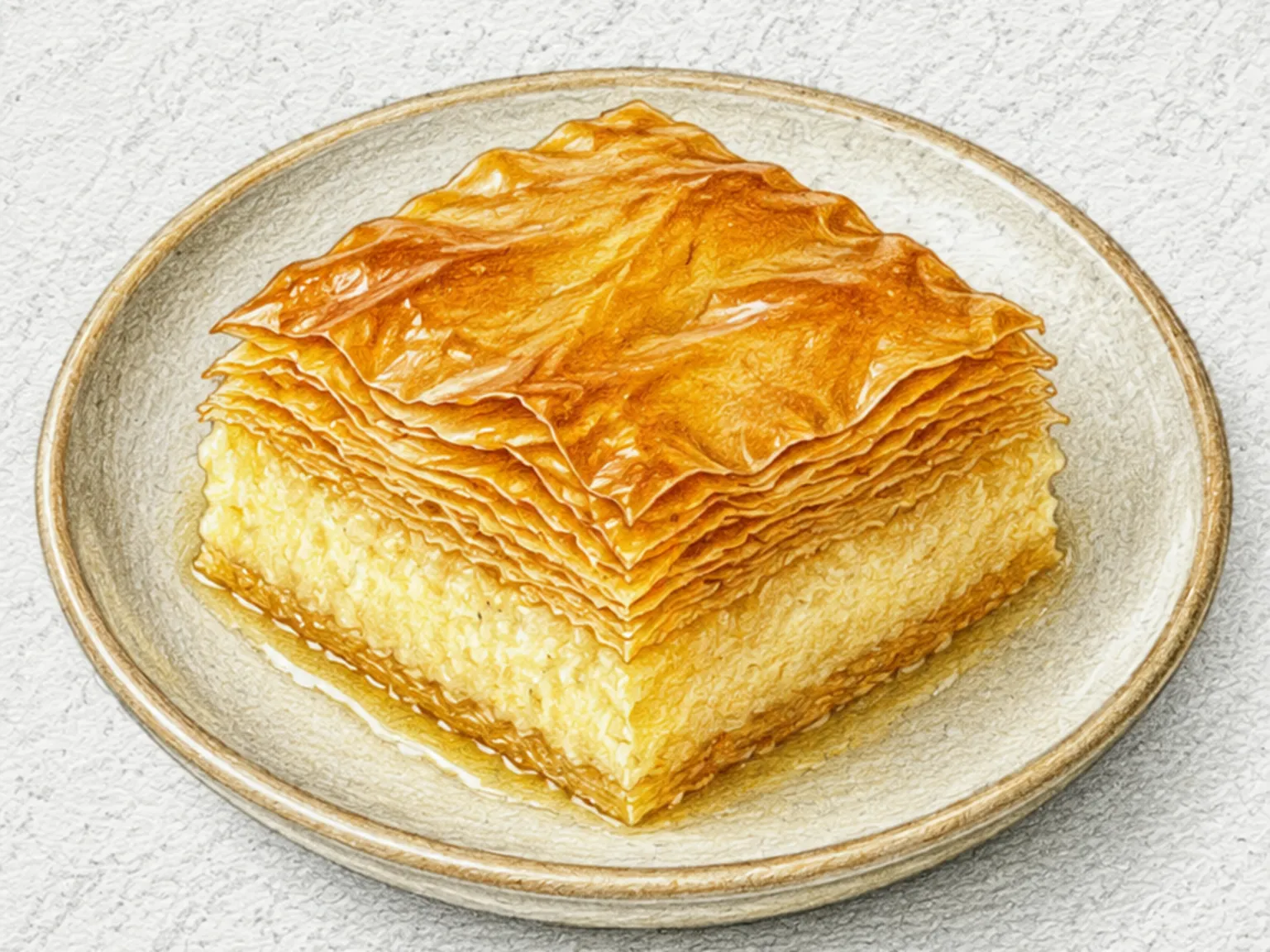
Galaktoboureko is a celebrated Greek pastry that layers crisp, buttered phyllo dough around a thick semolina custard filling, then soaks the whole assembly in cold lemon syrup. Each sheet of phyllo is brushed with melted butter before stacking, creating dozens of paper-thin layers that shatter at the first bite. The custard is cooked on the stovetop by stirring semolina into hot milk until it thickens into a smooth but faintly grainy cream, a texture distinct from flour-based custards. Pouring the cold syrup over the pastry while it is still scorching from the oven causes rapid absorption: the liquid seeps between the phyllo layers and saturates the custard without making the top soggy. The temperature contrast between hot pastry and cold syrup is what keeps the exterior crisp. Adding cinnamon or orange zest to the custard introduces a fragrant complexity that balances the sweetness of the syrup.
Adjust Servings
Instructions
- 1
Cook milk, 80 g sugar, and semolina over low heat until thickened.
- 2
Off heat, whisk in eggs and lemon zest quickly to finish the custard.
- 3
Brush pan with melted butter and layer 4 phyllo sheets, buttering each sheet.
- 4
Spread custard evenly, then top with the remaining 4 buttered phyllo sheets.
- 5
Score the top and bake at 180°C for 40–45 minutes until crisp and deep golden.
- 6
Boil remaining sugar, honey, and 60 ml water for syrup and pour over the cooled pie.
As an Amazon Associate, we may earn from qualifying purchases.
Tips
Nutrition (per serving)
More Recipes

Spanakopita (Greek Spinach and Feta Phyllo Pie)
Spanakopita is a Greek savory pie where spinach is sauteed with onion to drive off moisture, then combined with crumbled feta cheese, beaten eggs, and fresh dill to make a filling that is layered between sheets of buttered phyllo dough and baked at 190 degrees Celsius for thirty-five to forty minutes. Removing as much water from the spinach as possible is the single most important step - any residual moisture soaks through the thin pastry and prevents it from crisping. Phyllo sheets dry out within minutes of being exposed to air, so they must be kept under a damp towel and worked one at a time, each brushed with melted butter before stacking. Four layers on the bottom and four on top provide enough structure and crunch. Scoring the surface before baking allows steam to escape and helps the layers puff and separate into distinct, flaky sheets.

Chess Pie
Chess pie is a custard pie from the American South made with the most elemental pantry ingredients: butter, sugar, eggs, a small amount of flour, and cornmeal. Despite this simplicity, the result is rich and complex. During baking, the top develops a crackled, lightly caramelized crust that shatters when a fork breaks through, revealing a dense, gooey custard beneath. Cornmeal contributes a subtle grittiness and a faint corn sweetness, while a splash of vinegar or buttermilk introduces just enough acidity to keep the sweetness from becoming one-dimensional. The filling sets around the edges but stays slightly trembling at the center - a sign that it was pulled from the oven at exactly the right moment. Served at room temperature, the custard softens into an almost fudge-like consistency. It is the kind of pie that proves how few ingredients are needed to produce something deeply satisfying.

Coconut Cream Pie
Coconut cream pie fills a blind-baked pastry shell with a thick, silky custard made from coconut milk, whole milk, egg yolks, and cornstarch. The custard is cooked on the stovetop until it thickens enough to coat the back of a spoon, then poured into the cooled crust and refrigerated until firmly set. The coconut flavor is prominent - rich and tropical - without being artificially sweet. A generous layer of whipped cream on top lightens the dense custard, and toasted coconut flakes scattered across the surface provide a crunchy, nutty accent. When sliced, the pie holds its shape cleanly, revealing distinct layers of golden crust, pale custard, and white cream.

Avgolemono Soup (Greek Egg-Lemon Chicken Rice Soup)
Avgolemono - from the Greek avgo (egg) and lemoni (lemon) - is a soup that has warmed Greek households for centuries, with roots reaching back to the Sephardic Jewish communities of the Byzantine Empire who brought egg-lemon sauces to the eastern Mediterranean. Chicken broth is simmered with short-grain rice until the grains swell and release their starch, thickening the liquid slightly. The defining step is tempering: beaten eggs and fresh lemon juice are whisked together, then a ladle of hot broth is stirred in slowly to raise the temperature without scrambling the eggs. This tempered mixture returns to the pot off heat, transforming the broth into a velvety, pale-yellow cream with a bright acidity that hits the palate before the warmth of the chicken stock settles in. The soup must never boil after the eggs go in - gentle heat is the only way to maintain the silky emulsion. Shredded chicken stirred in at the end makes it a complete meal. Greeks consider avgolemono the definitive comfort food for cold days and recovery from illness.

Chicken Souvlaki (Greek Lemon Herb Grilled Chicken Skewer)
Chicken souvlaki marinates bite-sized chicken thigh pieces in lemon juice, olive oil, garlic, and oregano, then threads them onto skewers and grills over medium-high heat. The acidic lemon marinade lightly denatures the surface proteins, allowing the seasoning to penetrate deeper, while olive oil reduces moisture loss on the grill. Dried oregano layered with the citrus creates the clean, herbal character typical of Greek grilled dishes. Thigh meat's higher fat content keeps it from drying out or toughening under high heat, maintaining a glossy, moist surface. Plain yogurt served alongside provides a cool, creamy contrast to the smoky char, and wrapping everything in warm pita bread makes it a complete meal.

Greek Salad (Chunk-Cut Vegetable Toss with Feta)
Greek salad, known as horiatiki, is a traditional dish that arranges large-cut tomatoes, cucumber, bell pepper, and red onion with Kalamata olives, topped with a whole block of feta cheese and finished with extra virgin olive oil and dried oregano. The vegetables are intentionally cut into large chunks rather than finely diced, preserving each ingredient's distinct texture and flavor. The olive oil coats the fresh vegetables in richness, while a small amount of red wine vinegar adds a sharp acidity that balances the natural sweetness of the tomatoes. Feta is placed whole on top in the traditional Greek manner - diners break it themselves, and as the crumbled cheese mixes with the olive oil, it forms a natural dressing that clings to the vegetables.